Quick Trail Map
- What Dispersed Camping in California Actually Means
- 5 Dispersed Camping Areas I Keep Going Back To
- How to Find a Legal Spot Without a Reservation
- Rules, Fire Restrictions, and the Fines Nobody Warns You About
- Gear That Actually Matters (and What You Can Skip)
- Mistakes I See Every Single Trip
- Reader Questions I Get All the Time
I've slept on dirt roads from Modoc to the Mojave. Some nights were great. One involved a ranger knocking on my window at 6 a.m. because I'd parked on a restoration site I mistook for a pullout. That's the thing about dispersed camping California style: it's free, it's quiet, but nobody hands you a map. This guide is the map I wish I'd had.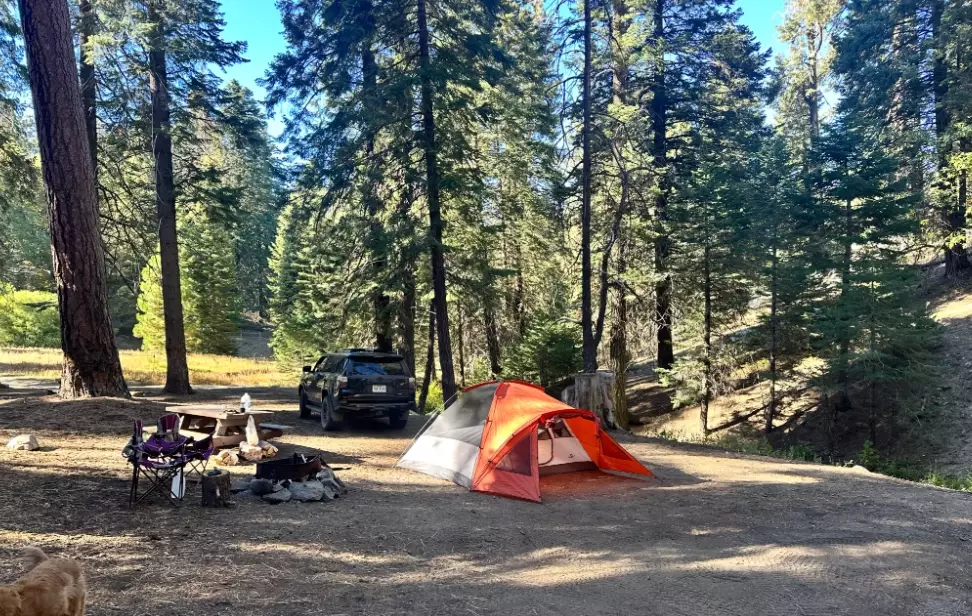
What Dispersed Camping in California Actually Means
Dispersed camping means camping outside a developed campground—no vault toilet, no picnic table, no fee envelope. In California, the vast majority of it happens on Bureau of Land Management (BLM) land and in national forests. You pull off a designated road, find a flat spot that's already been used, and set up.
It is not the same as "boondocking on private land" or "sleeping in a Walmart lot." Those are different beasts with different rules. Dispersed camping is specifically a public-lands activity, and the rules vary by agency.
5 Dispersed Camping Areas I Keep Going Back To
Here's my short list—not the most Instagram-famous spots, but the ones where I've reliably found a spot on a Friday night.
| Area | Nearest Town | Access Road | Best For | Watch Out For |
|---|---|---|---|---|
| Alabama Hills | Lone Pine (Hwy 395) | Movie Road off Whitney Portal Rd | Rock formations, sunrise photography | Gets packed on holiday weekends; no water |
| Mojave National Preserve border (BLM) | Baker, CA (I-15) | Kelbaker Rd | Solitude, dark skies | Summer heat; cell signal vanishes |
| Los Padres National Forest (Mt. Pinos area) | Frazier Park (I-5) | Lockwood Valley Rd | Cooler summer nights near LA | Fire restrictions are strict mid-summer |
| Modoc National Forest | Alturas (Hwy 395) | County Rd 56 | True remoteness, few people | Long drive from anywhere; bring everything |
| Carrizo Plain National Monument (adjacent BLM) | Santa Margarita (Hwy 58) | Elkhorn Rd | Spring wildflowers, open plains | Roads turn to clay when wet |
Alabama Hills, Inyo County
Movie Road is the classic. I've camped there three times. The first time I rolled in at 9 p.m. and every pullout was taken. The trick is to drive past the first two miles—most people stop at the first rock pile they see. Keep going toward the Whitney Portal side and you'll find quieter pockets.
No fee. No permit. Vault toilets at the main Movie Road lot only. Nearest gas and groceries in Lone Pine, about 10 minutes away.
Mojave BLM near Kelbaker Road
This is where I go when I want to hear nothing. The pull-offs along Kelbaker are sandy and flat. I once spent a night here in March and saw exactly zero other vehicles. Bring water—there is none. Baker is 30 minutes north for supplies (and the world's tallest thermometer, if that's your thing).
How to Find a Legal Spot Without a Reservation
Here's the workflow I use. It takes about 15 minutes before a trip.
Step 1: Open the BLM's California recreation map or the Forest Service's Motor Vehicle Use Map (MVUM) for the forest you're targeting. The MVUM shows exactly which roads allow dispersed camping—this is the document rangers actually use.
Step 2: Cross-check with the agency's current fire restrictions page. In a dry year, the whole forest can close to camping overnight. I've seen this happen in August in Los Padres.
Step 3: Look at satellite view for existing pullouts. You want a spot with a visible dirt patch and, ideally, a rock fire ring. Those are signs of prior use—and prior use is usually legal use.
Step 4: Call the district ranger office. Not the national hotline—the local district. I've gotten beta on road conditions and closed gates that no website mentioned.
Rules, Fire Restrictions, and the Fines Nobody Warns You About
Dispersed camping is free, but it isn't lawless. The fines are real. I've talked to a BLM ranger who said the most common citation is camping in a closed area—usually a restoration zone marked only by a small sign that people drive right past.
Fire rules change by season and by agency. In general: you need a California Campfire Permit (free, online, takes 10 minutes) for any open flame outside a developed campground, including a camp stove. That's a detail most people miss—your backpacking stove counts.
Pack out everything. Not just trash—food scraps and gray water too. I've watched a fox drag a paper towel out of a fire ring 20 feet from where a camper left it. That's the kind of thing that gets areas closed.
How long can you stay?
Most BLM areas cap it at 14 days in any 28-day period. Some forests are stricter—7 days. Check the specific district order. If you're a remote worker living out of a van, this matters more than anything else in this article.
Gear That Actually Matters (and What You Can Skip)
I've overpacked plenty. Here's what earns its space.
Worth it: a 5-gallon water jug (you will use more than you think), a small folding shovel (for cat holes and leveling), a satellite messenger (cell service is a myth in most dispersed areas), and a portable fire ring or fire pan if you're in a sensitive area.
Skip: the giant camp kitchen setup, the generator (most areas have quiet hours, and nobody loves you running it at 7 a.m.), and the rooftop tent if you're on a tight forest road—low branches are a real problem.
Mistakes I See Every Single Trip
New campers make the same three errors. First, they arrive after dark. Finding a legal, flat spot in the dark is a nightmare—arrive with at least an hour of light. Second, they camp too close to water. The 200-foot setback from lakes and streams isn't a suggestion; it's a regulation in most forests, and it's there for wildlife. Third, they underestimate the cold. Desert nights in the Mojave drop 30 degrees after sunset. I've shivered through a June night in a 40-degree bag—my fault, not the desert's.
Reader Questions I Get All the Time
Can I disperse camp near Lake Tahoe without getting a ticket?
Yes, but not in the basin itself. The Tahoe Basin has its own strict rules. You need to drive over a pass into the surrounding national forests—Eldorado or Tahoe National Forest—and follow the MVUM. The basin campgrounds and pullouts are heavily patrolled.
What's the biggest mistake first-timers make with fire restrictions?
Assuming a campfire is allowed because the fire danger sign says "moderate." The sign is a general rating; the district order is the law. Call the ranger station, not the fire hotline.
Do I need a permit for BLM dispersed camping in California?
Generally no. Most BLM field offices in California don't require a permit for casual, short-term dispersed camping. But some areas—like designated wilderness or special recreation management areas—do. The ranger office will tell you in one phone call.
Is dispersed camping safe for solo travelers?
It's as safe as you make it. I camp solo often. The risk isn't people—it's isolation when something breaks. A satellite messenger and a plan left with someone who knows your route matter more than any self-defense tool.