There's camping, and then there's island camping. Waking up to the sound of waves, having a beach as your front yard, and falling asleep under a sky unpolluted by city lights—it's a different kind of magic. But let's be honest, planning a trip to a remote island campground isn't the same as driving to your local state park. It requires more logistics, a different mindset, and a packing list that leaves no room for error. I've spent over a decade chasing these secluded shores, from the misty Pacific Northwest to the sun-drenched Caribbean, and I've learned the hard way what makes or breaks an island adventure.
This guide cuts through the generic advice. We'll look at three standout island camping destinations with concrete details you can use to plan, dive deep into the nitty-gritty of logistics most blogs gloss over, and tackle the gear questions that keep first-timers up at night.
Your Island Camping Jumpstart
Top 3 Island Camping Destinations
Forget vague suggestions. Here are three distinct remote island camping experiences, each with its own personality, challenges, and rewards. I've included the practical details—addresses, ferry info, fees—so you can start booking.
1. San Juan Islands, Washington
This archipelago in the Salish Sea is my top pick for a temperate, adventure-filled escape. It's not tropical, but the rugged beauty, orca whales, and dense evergreen forests are breathtaking. The camping here feels wild but is surprisingly accessible.
Key Campground: Moran State Park on Orcas Island is the crown jewel. Don't let "state park" fool you—it's massive, with lakes, mountains, and miles of trails. The South Beach Campground within the park offers walk-in sites right on the pebble beach. You'll need to reserve these the minute they open (6 months in advance on the Washington State Parks website).
Address: 3572 Olga Rd, Olga, WA 98279.
Camping Fee: $20-$45 per night, plus a $10 reservation fee.
Season: Year-round, but services are limited from October to April. May-September is prime.
Getting There: This is the big one. You must take a Washington State Ferries ride from Anacortes. Reservations for your vehicle are absolutely essential in summer. Without one, you might wait for 4+ hours. The ferry ride itself is part of the adventure—keep an eye out for seals and eagles.
Don't Miss: Hiking to the top of Mount Constitution for 360-degree views. Kayaking from the beach at your campsite. The town of Eastsound for a great meal after days of camp cooking.
2. Florida Keys, Florida
For the classic tropical island campgrounds vibe with warm water and palm trees, the Florida Keys are hard to beat. It's a string of islands connected by the Overseas Highway, offering a mix of convenience and isolation.
Key Campground: Bahia Honda State Park. The sand here is some of the best in the Keys, and the water is a stunning turquoise. The Bayside Campground loops offer more protection from wind, while the Sandspur area feels more remote. Book up to 11 months in advance on the Florida State Parks reservation site—it sells out instantly.
Address: 36850 Overseas Hwy, Big Pine Key, FL 33043.
Camping Fee: $36-$42 per night (plus tax and reservation fee) for a standard site. RV sites with hookups are more.
Season: Open year-round. Winter and spring are ideal (75-85°F). Summer is hot, humid, and buggy, but cheaper and less crowded.
Getting There: Drive down US-1 (Overseas Highway). You'll need a car. No ferry required, which simplifies logistics but means you're not on a truly remote island.
Don't Miss: Snorkeling at Looe Key (book a trip from nearby Marathon). Sunset at the old railroad bridge. Stargazing—the lack of big city lights makes for great night skies.
3. Haleakalā National Park, Maui, Hawaii
This is next-level island camping. You're not just *on* an island; you're camping at 10,000 feet inside the crater of a dormant volcano. The landscape is Martian—reddish cinder cones, silversword plants, and vast, silent plains. It's cold, it's high-altitude, and it's unforgettable.
Key Campground: The Hōlua Campground inside the crater. This is a backcountry site. You hike or bike in 3.7 miles on the Halemauʻu Trail, descending 1,400 feet into the crater. You need a permit, not just a reservation. Permits are available online 30 days in advance and are extremely competitive.
Address: Haleakalā National Park, Kula, HI 96790. The trailhead is at 7,990 ft on Crater Road.
Camping Fee: The permit itself is cheap ($10-15), but you must also pay the park entrance fee ($30 per vehicle, valid 3 days).
Season: Accessible year-round, but weather is highly variable. Winter can bring freezing temps and high winds. Summer is more stable but still cold at night.
Getting There: Fly to Kahului (OGG). Rent a car and drive about 2 hours up the winding road to the summit area. You'll start your hike from the Halemauʻu trailhead parking lot.
Don't Miss: The sunrise above the clouds from the summit (requires a separate, often sold-out, reservation). The absolute silence and clarity of the stars at night. The challenging but rewarding hike out.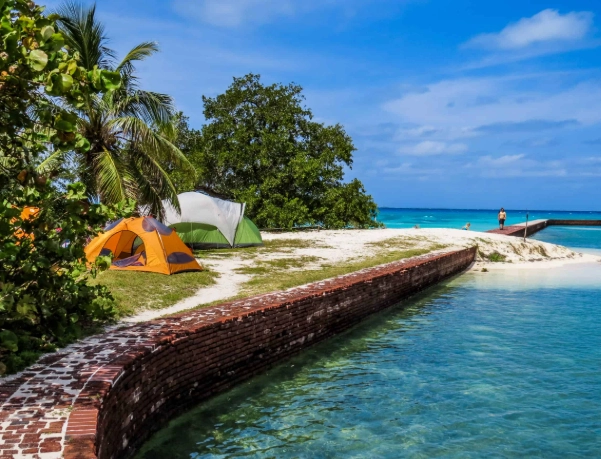
| Destination | Best For | Key Challenge | Booking Lead Time |
|---|---|---|---|
| San Juan Islands, WA | Wildlife, hiking, kayaking, temperate climate | Securing ferry & campsite reservations | 6 months (site), 2 months (ferry) |
| Florida Keys, FL | Warm water, beaches, snorkeling, sun | Extreme campsite competition & summer bugs | 11 months |
| Haleakalā, HI | Unique volcanic landscape, stargazing, solitude | Altitude, cold temps, strenuous hike-in | 30 days (permit) |
How to Plan Your Island Camping Trip?
This is where most people trip up. They get excited about the destination but underestimate the planning. Here’s the framework I use for every trip.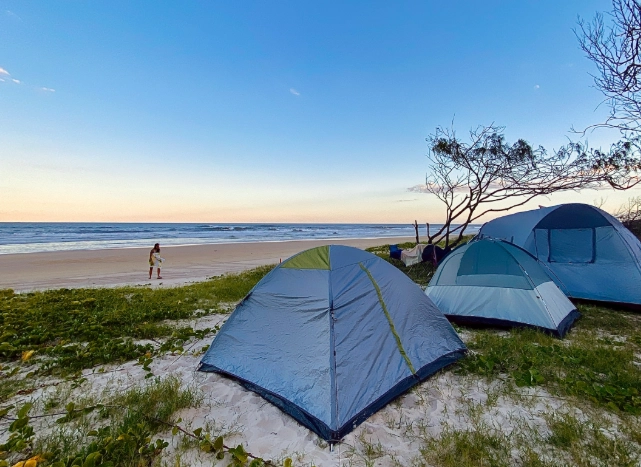
Booking and Permits: The Golden Rule
For popular best island camping spots, the reservation window is your first and most critical battle. Mark your calendar. Set an alarm. These sites aren't first-come, first-served; they're a digital race. For state and national parks, understand the difference between a reservation (you paid for a spot) and a permit (you have permission to be in a backcountry zone, often with specific rules). Hawaii's Hōlua site requires both a park entry and a backcountry permit. Missing this detail could turn you around at the trailhead.
Transportation Logistics: More Than a Ferry Ticket
If a ferry is involved, book your vehicle passage the second it becomes available. Washington State Ferries releases schedules in blocks; know the date. A common, painful mistake is booking a campsite for Friday-Sunday but only getting a ferry for Saturday morning. You lose a night you paid for. Always build in a buffer day on the mainland before and after your island dates. Weather can cancel ferries.
For drive-to islands like the Keys, your car is your base. Make sure your rental agreement allows for parking at remote trailheads or campgrounds if you're doing a hike-in. Some companies have restrictions.
Food and Water: Assume Nothing
You cannot rely on island stores having what you need, or being open. Treat your food plan like a backcountry expedition. Pre-cook and freeze meals if you have a cooler. Dehydrated meals are light and reliable. Calculate your water needs (2 gallons per person per day for drinking and cooking is a safe start), then add 50% more. Many island campgrounds have potable water, but pumps break. I always carry a backup water filter like a Sawyer Squeeze.
Leave No Trace Principles: They Matter More Here
Island ecosystems are fragile. There's no "away." Pack out all your trash, including food scraps and toilet paper (use wag bags or a dedicated trash system). Human waste is a major issue. Use established pit toilets when available. In true backcountry sites without facilities, you'll need to learn and practice proper cathole techniques far from water sources. This isn't glamorous, but it's non-negotiable for preserving these places.
What are the Essential Gear and Packing Tips?
Your gear list makes or breaks your comfort. Island environments throw unique curveballs: constant salt air, relentless wind, and sand that gets into everything.
Shelter and Sleep Systems: Wind is Your Enemy
A flimsy dome tent will fail you. Prioritize a low-profile, storm-worthy tent with strong guylines and robust stakes. Freestanding tents are easier to set up on sand or rock. For the sand, use special sand stakes or deadman anchors (bury a stuff sack filled with sand tied to your guyline).
Your sleeping bag rating should be 10 degrees lower than the forecasted low. Coastal and high-altitude island nights are almost always colder and damper than you expect. A sleeping pad with a high R-value is crucial for insulation from the cold ground.
Cooking and Hydration: Keep It Simple and Secure
A reliable canister stove is fine for most trips. In constant wind, a windscreen is mandatory. I've seen more dinners spoiled by wind cooling a pot than by rain. Store all food, trash, and scented items (toothpaste, sunscreen) in a hard-sided bear canister or a certified rodent-proof container. Island raccoons and birds are notoriously clever.
Beyond your water filter, bring electrolyte tablets. The sun and salt can dehydrate you faster than you realize.
Clothing and Safety: The Layering Mantra
Think in layers: a moisture-wicking base, an insulating mid-layer (fleece or puffy), and a waterproof/windproof shell. Avoid cotton entirely—it stays wet and cold. Quick-dry pants and shirts are ideal. Footwear: camp shoes (sandals or crocs) are a luxury that feels like a necessity after a day in boots.
Safety Kit Must-Haves: A physical map and compass (cell service is a myth), a headlamp with extra batteries, a basic first-aid kit, a whistle, a multi-tool, and a satellite communicator like a Garmin inReach Mini. On a remote island, you cannot count on calling 911.
Island Camping FAQs
How do I handle waste on a remote island with no facilities?
This is the top logistical headache. For solid human waste, you must dig a cathole 6-8 inches deep and at least 200 feet from any water, camp, or trail. In many fragile or high-use island areas, and always above the tide line, you are now required to pack it out using a dedicated waste bag system like a WAG Bag or Restop. It sounds intense, but it's simple in practice and critical for protection. For all other trash—every wrapper, bit of food, and used tissue—you pack it out in doubled ziplock bags. There are no exceptions.
What's the biggest mistake first-time island campers make?
Over-relying on a single ferry or transportation schedule. They book the last ferry of the day to get to the island and the first ferry off. If the evening ferry is canceled due to weather or mechanical issues, you're stranded on the mainland, missing your first paid night. If the morning ferry off is full or delayed, you miss your flight home. Always build in at least one buffer day on either side of your island stay. The cost of an extra night in a mainland hotel is cheap insurance against travel chaos.
Are there any island camping spots accessible without a car?
Absolutely, and they're some of the best. The San Juan Islands are a great example. You can take a passenger ferry (like the Victoria Clipper from Seattle) or a bus to Anacortes and walk onto the state ferry. On the islands, use the seasonal shuttle buses, rent a bicycle, or kayak to your campground. Maine's Acadia National Park has island campgrounds (like Duck Harbor on Isle au Haut) reachable by mail boat from Stonington. It requires more planning and lighter gear, but it's deeply rewarding.
Is island camping safe during hurricane season?
It adds a significant layer of risk that you must actively manage. In the Atlantic/Caribbean, hurricane season runs June-November. You should never camp on a vulnerable barrier island if a storm is forecast. The real danger is being trapped. Always have a reliable weather source (NOAA radio, satellite weather) and a clear, flexible evacuation plan. Know where the nearest solid shelter is on the mainland. For this reason, I generally advise beginners to avoid peak hurricane season (August-October) for camping in regions like the Florida Keys or the Caribbean. The Pacific has a different storm cycle, but always check regional forecasts.