You’ve packed the tent, the sleeping bags, the marshmallows. But if you’re heading to a lake or river, the real adventure starts with a rod in your hand. Camping fishing isn’t just fishing near your tent; it’s a complete fusion of two outdoor skills. It’s about efficiency, simplicity, and making the most of your time in the wilderness. I’ve spent over a decade combining these passions, and I’ve seen folks bring a full tackle shop for a weekend trip, or worse, forget the one thing that would have made the difference between a fish dinner and another can of beans.
This guide cuts through the noise. We’ll talk about the specific gear that pulls double duty, how to find fish when you’re new to an area, and the art of cooking your catch over a campfire. Forget the generic advice. This is the stuff you learn after a few seasons of trial, error, and untangling lines in the dark.
Quick Navigation: What You'll Learn
Gear Essentials: The Camping Angler's Kit
Space is premium in a backpack or car. Every item must earn its spot. The goal isn't to bring your entire home tackle box, but a curated, multi-purpose selection.
Let’s start with the rod. A 6 to 7-foot medium-action spinning rod is the Swiss Army knife of camping fishing. It can handle a variety of lures and fish sizes. I’m a big fan of two-piece or even four-piece travel rods—they pack down small. Pair it with a 2000 or 2500 size reel spooled with 6-10 lb braided line. Braid is thinner, stronger, and doesn’t have memory, which means fewer tangles after being packed away.
Your tackle selection should be ruthless. Here’s a minimalist kit that covers 90% of freshwater scenarios:
- Terminal Tackle: A small box with assorted hooks (size 4-8), split shot weights, barrel swivels, and a few bobbers. That’s it.
- Soft Plastics: A handful of 3-inch curly tail grubs in natural colors. They work with a simple jig head and catch everything.
- Hard Baits: One inline spinner (like a Mepps #2), one small crankbait that dives 4-6 feet, and a topwater popper for dawn and dusk. This trio covers different water depths and conditions.
- Live Bait Backup: If regulations allow, a small container of worms or powerbait. Sometimes, when the fish are finicky, simplicity wins.
Now, for the camping crossover items. This is where you save weight and space.
| Camping Item | Fishing Use | Why It Works |
|---|---|---|
| Multi-tool or Pocket Knife | Cutting line, removing hooks, cleaning fish. | Essential for both campsite and fishing tasks. Avoid bringing a separate fillet knife. |
| Headlamp | Early morning or late evening fishing, tying knots in low light. | Hands-free light is a game-changer. Get one with a red light mode to preserve night vision. |
| Ziploc Bags (Gallon & Quart size) | Storing wet lures, keeping caught fish cold, organizing tackle. | They’re waterproof and lightweight. I always pack extras. |
| Small Towel or Bandana | Drying hands, handling fish, wiping down gear. | A dry grip is crucial for handling hooks and fish safely. |
| Cooler (for car camping) | Obviously, for keeping your catch fresh. But also to store live bait. | Pre-chill it with frozen water bottles to save on ice. |
How to Find Fish on a New Lake or River
You’ve arrived at your campsite, lake sparkling in front of you. Where do you even start? Most anglers waste hours fishing barren water. The secret isn’t magic; it’s reading the environment.
First, talk to the locals. Not just other anglers, but the camp host, the ranger, or the folks at the nearest bait shop. A casual “Catching anything?” can lead to gold. “They’re hitting on small spinners off the north point” is intel you can’t get from a map.
Next, look for structure. Fish are lazy and like cover. From shore, target:
- Points and Drop-offs: Underwater points that extend into the lake are highways for fish. Cast past the point and retrieve over it.
- Downed Trees & Lily Pads: Prime ambush spots for bass and panfish. Pitch your lure right next to the cover.
- Inlets & Outlets: Moving water brings oxygen and food. Fish often congregate where a stream enters or leaves a lake.
Time of Day is Everything
Your fishing schedule should adapt to the fish’s, not your desire for a midday nap. The best windows are almost always dawn and dusk. Low light makes fish feel secure to feed in shallower water. I plan my day around this: up before sunrise for a few hours of serious fishing, relax during the midday lull, then hit the water again as the sun dips.
Midday isn’t hopeless, though. If it’s sunny, fish go deeper. This is when that crankbait that dives a bit deeper, or a weighted rig, can pay off. Or, just take a swim yourself.
Camp Cooking: From Catch to Plate
This is the ultimate reward. That moment you’re eating a fish you caught and cooked over your own fire is what camping fishing is all about. But a lot of people mess it up by overcomplicating it.
Cleaning: Do it immediately after catching, near the water. A sharp knife on your multi-tool is fine. For panfish like bluegill or trout, I often just gut them, leave the head on, and cook them whole. The skin gets crispy and the meat stays moist. For larger fish, fillet if you prefer. Have a dedicated Ziploc bag for guts and heads to pack out or dispose of properly far from camp.
The Simplest Campfire Methods:
- Pan-Fry: A cast iron skillet is a camping treasure. A little oil, some salt, pepper, and maybe a sprinkle of lemon pepper. Cook skin-side down first until crispy. It’s foolproof.
- Grill: If you have a campfire grate or a grill on your fire pit. Brush the fish with oil to prevent sticking. Cook directly over the coals, not flames.
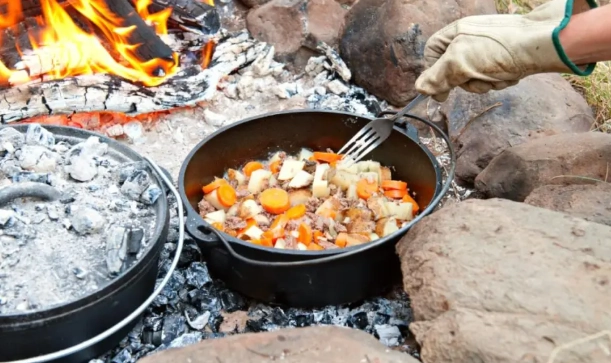
- Foil Packets: The no-mess champion. Place a fillet or whole fish on heavy-duty foil. Add slices of lemon, onion, butter, and herbs. Seal the packet tightly and toss it right into the coals for 10-15 minutes. The steam cooks it perfectly.
Don’t forget sides. Pre-mix some pancake batter and use it to make hushpuppies in the same oil you fried your fish. Or chop some potatoes and onions for a quick campfire hash.
Common Camping Fishing Mistakes (And How to Dodge Them)
I’ve made these so you don’t have to.
Overpacking Tackle: You brought five boxes of lures and used three. Next trip, pack one small box with proven winners. The mental relief of less clutter is real.
Ignoring the Weather Front: A sudden drop in barometric pressure (often before a storm) can turn fish on like a switch. A bright, sunny day after a cold front can shut them down completely. Check a simple weather app. If a front is moving in, that might be the prime time to fish, even if it’s drizzling.
Forgetting the License & Regulations: This is a trip-ender. Regulations change by state, park, and even specific lake. Is it catch-and-release only? Are there size limits? The U.S. Forest Service and state wildlife agency websites are the authoritative sources. Print the rules or save a screenshot on your phone. I once saw a family have their gear confiscated at a popular national park lake because they didn’t check the special bait restrictions.
Not Having a Backup Plan: The fish aren’t biting. It happens. Have a plan B: a hiking trail to explore, a book to read, a swim. The pressure to “catch dinner” can ruin the vibe. It’s a camping trip, not a fishing tournament.
Your Camping Fishing Questions Answered
What’s the best way to keep fish fresh for a multi-day camping trip without a reliable cooler?
If you’re in a cooler-free situation (like backpacking), your best bet is to catch, clean, and cook immediately. For short-term storage of a few hours, clean the fish, place it in a wet cloth sack (like a cotton pillowcase), and keep it in the shade, preferably near a cool stream or suspended in the water (in a secure bag where currents can’t take it). This mimics a refrigerator's evaporative cooling. For longer storage, traditional methods like smoking or salting at camp are the only reliable options, but they require extra preparation.I’m camping with young kids. How can I make fishing while camping fun and successful for them?
Ditch the fancy gear. Get them a simple spincast combo (the push-button kind). Use a small hook, a bobber, and a piece of worm. Fish for sunfish or bluegill—they’re abundant, bite readily, and are easy to reel in. Keep sessions short, 20-30 minutes max. The goal isn’t a trophy, it’s the bobber going down. Have snacks ready and celebrate every catch, no matter how small. The moment it feels like a chore, pack it up and go skip rocks.Is it safe to eat fish from any lake or river I’m camping near?
No, and this is critical. Many water bodies have consumption advisories due to mercury, PCBs, or other contaminants. These are especially common for larger, predatory fish. Always check the local health department or environmental agency’s fishing guidelines for the specific body of water. They’ll have advisories like “Limit consumption of bass to one meal per month.” When in doubt, especially with fish for children or pregnant women, practice catch-and-release.What’s one piece of gear you thought was useless but now never camp without?