I remember my first camping trip with a camera—I hauled a bulky DSLR, three lenses, and a tripod, only to end up with blurry, overexposed shots of a sunset. Sound familiar? Camping photography isn't just about snapping pics; it's about telling stories of adventure, from starry skies to crackling campfires. But let's cut the fluff. If you want photos that make friends jealous and memories that last, you need more than luck. This guide dives into the nitty-gritty, based on a decade of mistakes and triumphs in the outdoors.
What You'll Learn in This Guide
Essential Gear for Camping Photography: What You Really Need
Forget packing everything. I've seen campers lug around gear they never use. Start with the basics, and build from there.
Camera Bodies: DSLR vs Mirrorless
DSLRs like the Nikon D5600 are durable and have long battery life—key for multi-day trips. Mirrorless cameras, say the Sony a7 III, are lighter and better for video, but batteries drain faster. I lean towards DSLRs for remote camping; that extra weight pays off when you're shooting in cold weather where batteries die quickly.
Lenses: Wide-Angle for Landscapes, Telephoto for Wildlife
A wide-angle lens (e.g., 16-35mm f/4) is non-negotiable for vast scenes. For wildlife, a telephoto like a 70-300mm zoom lets you capture eagles or deer without disturbing them. But here's a tip: a nifty fifty (50mm f/1.8) costs under $200 and is perfect for campfire portraits. I skipped it once and regretted it when the light faded.
Support Gear: Tripods, Filters, and More
A tripod isn't optional—it's your best friend for sharp shots. Get a carbon fiber one if you can; it's lighter. Polarizing filters cut glare on water, and ND filters help with long exposures. Don't forget spare batteries and memory cards. On a trip to Yosemite, I ran out of cards and had to delete photos on the spot. Painful.
Pro Insight: Many beginners overspend on cameras and skimp on tripods. A $50 tripod wobbles in wind, ruining night shots. Invest in a stable model from brands like Manfrotto or Peak Design.
Mastering Light and Composition in the Wild
Light in nature is unpredictable. You can't move the sun, but you can plan around it.
Golden Hour and Blue Hour Magic
Golden hour (hour after sunrise/before sunset) gives warm, soft light. Blue hour (just before sunrise/after sunset) is ideal for silky skies. Use apps like PhotoPills to track these times. I missed a sunrise shot in Grand Teton because I didn't check—lesson learned.
Dealing with Harsh Midday Sun
Midday light creates harsh shadows. Shoot in shaded areas or use a diffuser. For landscapes, include clouds or water to balance exposure. A polarizer helps here too.
Rule of Thirds and Leading Lines
Place horizons on the top or bottom third of the frame. Use trails or rivers as leading lines. But rules are guidelines—sometimes breaking them, like centering a mountain peak, works better. I've found that simplicity often beats complex compositions in camping shots.
Shooting Specific Camping Scenes: From Stars to Campfires
Each scene demands different techniques. Let's get practical.
Astrophotography: Capturing the Milky Way
You need a dark sky, a fast lens (f/2.8 or wider), and a sturdy tripod. Set your camera to manual: ISO 3200, shutter speed 20 seconds, aperture wide open. Focus manually on a bright star. Scout locations using the International Dark-Sky Association's map—I've had success in places like Joshua Tree National Park. One mistake: not checking moon phases; a full moon washes out stars.
Campfire and Low-Light Portraits
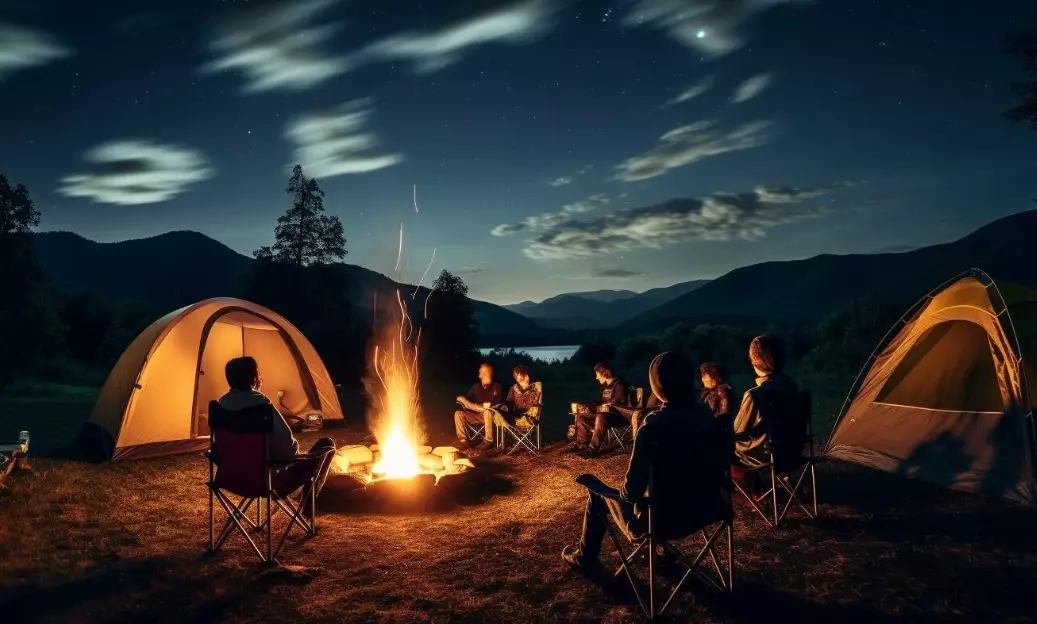
Campfire light is warm but tricky. Use a fast prime lens (like 35mm f/1.8) and shoot at wide apertures. Keep ISO under 1600 to reduce noise. For portraits, position subjects near the fire, but avoid direct flames that cause overexposure. I once ruined a group shot by using flash—it killed the ambiance.
Landscape Panoramas
Use a tripod and shoot in portrait orientation, overlapping shots by 30%. Merge later in Lightroom. For water scenes, a slow shutter speed (1/4 second or slower) creates smooth flows. A neutral density filter is essential here.
| Scene | Recommended Settings | Gear Tip |
|---|---|---|
| Milky Way | ISO 3200, 20s, f/2.8 | Use a remote shutter to avoid shake |
| Campfire Portraits | ISO 800, 1/60s, f/1.8 | Shoot raw for better editing |
| Waterfalls | ISO 100, 1s, f/11 | ND filter required |
Post-Processing Tips for Outdoor Photos
Editing can save mediocre shots. I use Adobe Lightroom, but free tools like Darktable work too.
Basic Adjustments in Lightroom
Start with exposure and contrast. Boost shadows to reveal details in dark areas—camping shots often have deep shadows. Reduce highlights if skies are blown out. A subtle clarity bump adds punch.
Enhancing Stars and Reducing Noise
For astrophotography, increase dehaze and saturation slightly. Use noise reduction sparingly; too much softens stars. I apply local adjustments to brighten the Milky Way core. For noise, shoot at lower ISOs if possible—it's better than fixing in post.
One thing I hate: over-editing. I've seen photos where the sky looks neon purple. Keep it natural; camping is about authenticity.
Common Mistakes and How to Avoid Them
We all mess up. Here's what to watch for.
Overpacking gear: I used to bring a heavy telephoto lens for wildlife, but on most trips, I never used it. Now I stick to two lenses max.
Ignoring weather: Check forecasts. Rain can ruin gear, but it also creates dramatic shots. A waterproof cover is a must. I learned this the hard way in the Scottish Highlands—my camera fogged up for days.
Not scouting locations: Arrive early to find angles. Use apps like AllTrails to plan photo spots. On a recent trip to Banff, I spent an hour hiking to a lake only to find poor lighting. Scout at different times if you can.
Forgetting backup power: Solar chargers are great for long trips. I recommend brands like Anker—they've saved my shoots multiple times.
Frequently Asked Questions
Camping photography is a journey. Start simple, learn from errors, and most importantly, enjoy the process. Your photos will improve with each trip. Now get out there and shoot—the wild is waiting.