Quick Guide
- The First C: Cutting Tools – Your Primary Multiplier
- The Second C: Combustion – Mastering the Art of Fire
- The Third C: Cover – More Than Just a Tent
- The Fourth C: Container – The Key to Hydration
- The Fifth C: Cordage – The Backcountry Duct Tape
- Putting the 5 C's into Practice: Building Your System
- Beyond the Gear: The Mindset is the Sixth C
- Frequently Asked Questions About the 5 C's
Let's be real. When you first hear about survival skills, your mind might jump to extreme scenarios from movies – building elaborate shelters, hunting with handmade spears, the whole nine yards. It can feel overwhelming, like you need to be a special forces operator just to go for a decent hike. That's where the beauty of the 5 C's of survival comes in. It's not some complicated military manual; it's a simple, incredibly effective mental checklist. A way to organize your thinking and your gear around the absolute core human needs in a tough spot.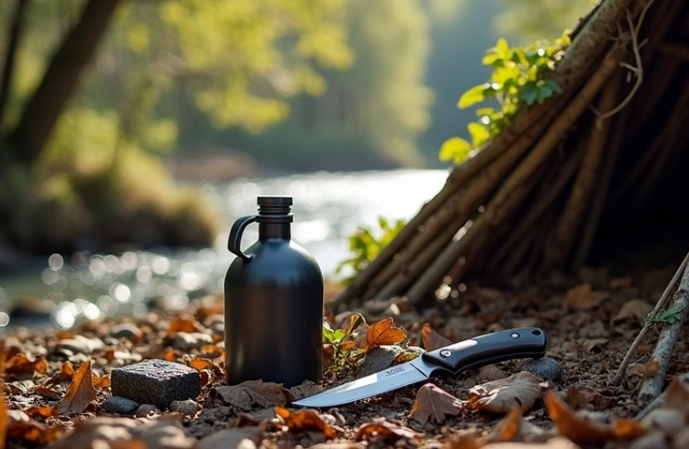
So, what are the 5 C's of survival? In a nutshell, they are five categories of items and skills considered fundamental for wilderness and emergency preparedness: Cutting, Combustion, Cover, Container, and Cordage. The idea is that if you have a reliable tool for each of these functions, you dramatically increase your ability to meet basic needs like making tools, staying warm, getting shelter, purifying water, and securing things. It's a system that cuts through the noise.
The genius of this framework is its focus on capability, not just stuff. It's about having tools that perform multiple jobs, reducing what you need to carry while increasing what you can do. Whether you're planning a three-day backpacking trip, putting together a car emergency kit, or just want to be more self-reliant, understanding the 5 C's is your foundation. It answers the question of "what do I really need?" before you even ask it.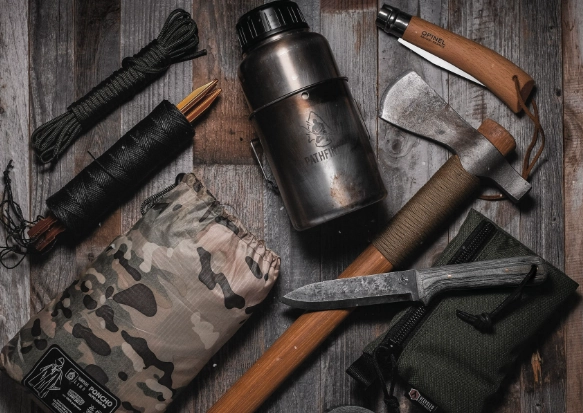
The First C: Cutting Tools – Your Primary Multiplier
Let's talk about the knife. It's usually the first thing people think of, and for good reason. A good cutting tool is arguably the most important of the 5 C's of survival because it's a force multiplier. It's not just for cutting; it's for carving, prying, digging, preparing food, making other tools, and even self-defense in the direst circumstances. Without a way to cut, your ability to efficiently manipulate your environment plummets.
The debate over the "best" survival knife is endless and, frankly, a bit tedious. You've got fixed blades versus folding knives, full tang versus partial tang, steel types, blade shapes... it's easy to get lost. Here's the thing: the best knife is one that's sharp, strong enough for the tasks you expect, and that you actually have with you. A small, sharp folding knife you always carry is infinitely more useful than a giant Rambo knife sitting in your closet.
But cutting tools aren't just knives. A small folding saw can be a game-changer for processing firewood far more efficiently than a knife, saving you calories and time. A sturdy multi-tool adds screwdrivers, pliers, and scissors to your repertoire. The principle is to cover your cutting needs across scales – fine work, heavy work, and everything in between.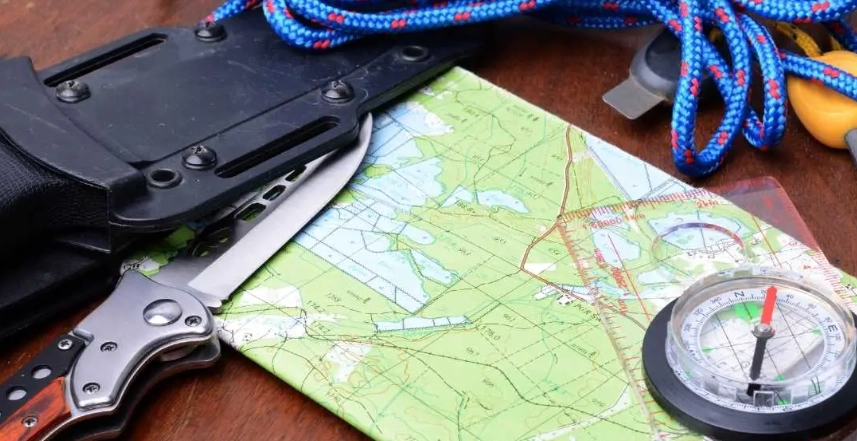
Safety is non-negotiable. Always cut away from your body, keep your fingers clear, and ensure your work area is stable. The U.S. Forest Service has straightforward guidelines on knife and saw safety that are worth reviewing. It's basic stuff, but it prevents trips from turning into emergencies.
| Tool Type | Best For | Considerations |
|---|---|---|
| Fixed Blade Knife | Heavy-duty tasks, batoning wood, food prep, reliability. | Requires a sheath, generally not for casual carry. Look for full tang construction. |
| Folding Knife | Everyday carry (EDC), fine carving, light tasks. | Mechanism can fail if dirty or broken. Not for prying or heavy batoning. |
| Folding Saw | Efficiently cutting branches and small logs for shelter or fire. | Cuts on the pull stroke. Much safer and faster than a knife for wood gathering. |
| Multi-Tool | Versatility, repairs, small precise tasks (pliers, scissors). | Often a compromise on blade quality. A great supplement, not always a primary. |
I started with a cheap department store knife that couldn't hold an edge. It was frustrating. Upgrading to a simple, quality blade made every task easier and safer. That's the lesson – invest in quality for your primary cutting tool.
The Second C: Combustion – Mastering the Art of Fire
Fire. It's magic, science, and a lifeline all rolled into one. In the context of the 5 C's of survival, combustion is about the ability to reliably create a flame. Why is it so critical? Well, fire provides warmth to stave off hypothermia, a very real and deadly threat. It purifies water by boiling it. It cooks food, making it safer and more digestible. It provides light, wards off animals, and offers a massive psychological boost. The morale difference between a cold, dark night and one with a crackling fire is immeasurable.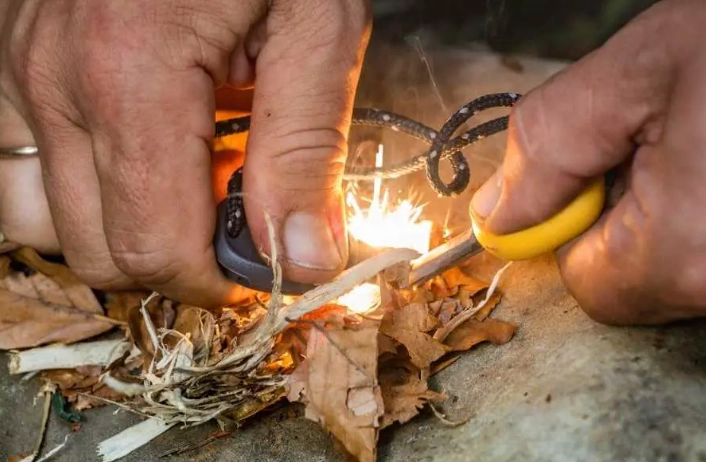
But here's the common mistake: relying on a single method. I've been there. You pack a Bic lighter and think you're set. Then it gets wet, or the flint wheel gums up, or it runs out of fuel. If you're asking yourself "what are the 5 C's of survival?", the answer for combustion is always: have backups. The rule of thumb is three ways to make fire.
- Primary: Something modern and easy. A butane lighter (like a Bic) or a refillable metal lighter. Keep it in a plastic bag.
- Secondary: Something stormproof. A ferrocerium rod (ferro rod) is fantastic. It throws hot sparks (around 3000°F) even when wet, and it works at altitude and in wind. It takes a bit of practice but is incredibly reliable.
- Tertiary: A classic backup. Waterproof matches or a magnifying lens (solar ignition). This is your "oh-no" option.
And you can't forget tinder! All those ignition sources are useless if you're trying to light a damp log. Carry man-made tinder like cotton balls soaked in petroleum jelly, commercial tinder cubes, or even dryer lint. Knowing how to find and prepare natural tinder (like birch bark, fatwood, or bird nests) is a crucial skill that pairs with your tools.
The ability to make fire under adverse conditions – when you're cold, tired, and maybe a bit scared – is what separates theory from practice. It's why so much emphasis is placed on this "C." According to the CDC, hypothermia is a leading cause of death in outdoor emergencies. Your combustion tools are your first line of defense against that.
The Third C: Cover – More Than Just a Tent
When we hear "cover," a tent is the obvious image. But within the 5 C's of survival philosophy, cover is broader. It's about protection from the elements. This includes clothing on your body, a primary shelter like a tent or tarp, and the knowledge to create an emergency shelter from natural materials.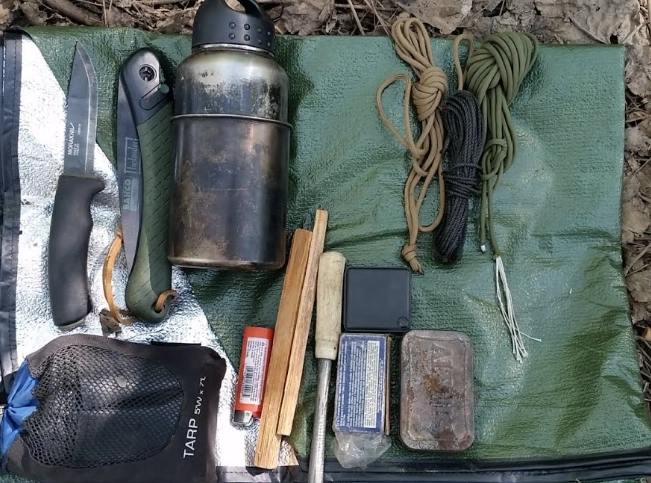
Your first layer of cover is always the clothing you wear. Dressing in layers (moisture-wicking base, insulating middle, waterproof/windproof outer shell) allows you to regulate temperature and stay dry. Cotton kills – it absorbs moisture and loses its insulating properties when wet. Wool and synthetics are your friends.
For shelter, the classic item is a tarp. A simple 8x10 foot silicone-nylon or polyethylene tarp is incredibly versatile. With some cordage (see the fifth C!), you can rig it up as a lean-to, an A-frame, a diamond fly – countless configurations to block rain, wind, and sun. It's lighter and more adaptable than many tents for survival purposes. A lightweight emergency bivvy or space blanket is also a staple, providing crucial reflective heat in a compact package.
But what if you have nothing? That's where skill comes in. Knowing how to build a debris hut, a lean-to with a ridgepole, or how to use a fallen tree for cover is the ultimate backup. The American Red Cross highlights shelter as a top priority in wilderness survival, right after addressing any medical issues. Your shelter is what gives you the time and safety to address other problems.
Think of Cover as your mobile base of operations. It's what stops the environment from sapping your energy and will.
The Fourth C: Container – The Key to Hydration
You can only last about three days without water. In a survival situation, finding and purifying water is often the most immediate, pressing challenge. The Container "C" solves the "how do I carry and treat it?" problem. A durable vessel allows you to collect, transport, store, and purify water.
The classic is the single-wall stainless steel water bottle or canteen. Why metal? Because you can put it directly into a fire to boil water, the surest method of purification. Boiling kills pathogens like bacteria, viruses, and protozoa. A 32-ounce bottle is a good standard size. Nalgene-style plastic bottles are tough and light, but you can't boil in them.
But don't stop at one. A collapsible soft water bladder or even a heavy-duty food-grade plastic bag adds capacity without much weight or space. You can use these to collect water from sources, then treat it.
Speaking of treatment, while boiling is primary, having a backup chemical method (iodine or chlorine dioxide tablets) or a small filter (like a straw or pump filter) is wise. Filters are great for improving taste and removing particulates, but know their limits – most don't filter viruses, so in areas where that's a concern, follow filtering with chemical treatment or boiling.
A container isn't just for water, either. It can be used to cook food (again, the metal one), store foraged edibles, or even as a signaling device (the reflective surface). When you're evaluating your gear, ask if your container is metal and can it go on a fire? If the answer is yes, you've got a solid foundation for this C.
The Fifth C: Cordage – The Backcountry Duct Tape
Cordage might seem humble compared to a knife or firestarter, but it's the connective tissue of survival. It's what turns a tarp into a shelter, secures a splint, hangs a food bag away from bears, repairs gear, creates a fishing line, or crafts a trap. Good cordage is strong, durable, and versatile.
Paracord (specifically Type III 550 paracord) is the superstar here. It's rated for 550 pounds, has a core of several inner strands that can be used for finer tasks like fishing or sewing, and is relatively cheap. You can wear it as a bracelet or wrap it around a water bottle handle to always have some with you.
But not all cordage is created equal. Bank line (tarred nylon twine) is excellent for bushcraft—it's water-resistant, doesn't slip easily, and is great for lashings. A spool of utility cord or even heavy-duty dental floss can serve in a pinch for repairs.
The skill with cordage is knowing knots. You don't need to know fifty. Learn a handful well: the bowline (creates a fixed loop that won't slip), the taut-line hitch (an adjustable loop for guylines on a shelter), the square knot (for joining two ropes of similar size), and the prusik knot (for climbing or creating adjustable tension systems). Practice them until you can tie them in the dark with cold fingers.
I keep about 50 feet of paracord and 25 feet of bank line in my pack, plus the bracelet on my wrist. I've used it for everything from replacing a broken pack strap to rigging a rain fly in a thunderstorm. It's one of those items you don't appreciate until you desperately need it.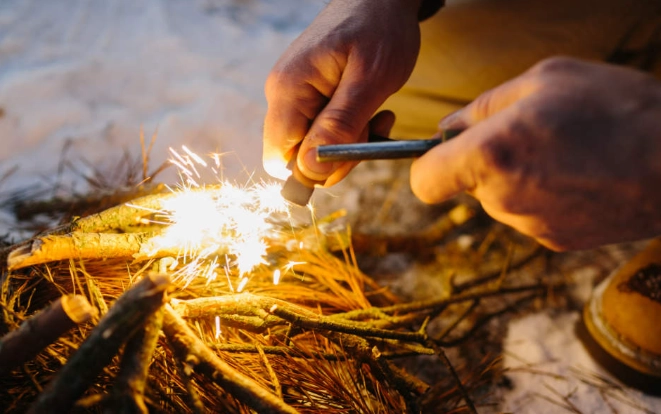
Putting the 5 C's into Practice: Building Your System
Understanding what the 5 C's of survival are is step one. Step two is integrating them. They don't work in isolation; they're a system. Your cordage rigs your tarp (Cover). Your knife (Cutting) prepares firewood for your ferro rod (Combustion). You boil water from a stream in your metal bottle (Container).
Start by building a small kit, often called a "PSK" or Personal Survival Kit, that fits in an Altoids tin or a small pouch. It should have a miniature version of each C:
- Cutting: A razor blade or a small folding knife.
- Combustion: A mini ferro rod, a few waterproof matches, and some tinder.
- Cover: A large heavy-duty trash bag or a small emergency space blanket.
- Container: A condom or a zip-top bag (for water carrying, can be used for solar disinfection), and a couple of water purification tablets.
- Cordage: 10-20 feet of paracord or strong fishing line.
This tiny kit, carried always, addresses the core question of "what are the 5 C's of survival?" in a practical, pocket-sized way. Then, scale up. For your daypack, upgrade each item: a real knife, a larger ferro rod and lighter, a proper poncho or small tarp, a metal bottle, and 50 feet of paracord.
For your car kit or extended backpacking trips, you scale up again: a saw, multiple fire sources, a full-sized tarp or tent, a large pot for boiling, and multiple types of cordage.
The goal isn't to carry the most gear, but the most useful, interconnected gear.
Beyond the Gear: The Mindset is the Sixth C
Gear is useless without knowledge and the right mindset. You could argue there's a sixth C: Calm. Or Common sense. Panic is your biggest enemy. The 5 C's provide a framework to fight panic. When things go wrong, you don't have to think of a hundred problems. You run down your mental checklist: Do I have a way to cut? Can I make fire? Do I have shelter? What about water? Can I tie things down?
This structure gives you actionable steps. It turns a vast, scary situation into a series of manageable tasks. Practice using your gear in your backyard or on casual outings. Try building a fire with your ferro rod in the rain. Set up your tarp with your paracord in different configurations. Sharpen your knife. This builds muscle memory and confidence, so when stress is high, your actions can be almost automatic.
Frequently Asked Questions About the 5 C's
Do the 5 C's have a priority order?
Not really a strict hierarchy, as needs shift with the situation. In a cold, wet environment, getting a fire going (Combustion) and shelter (Cover) might be immediate. In a hot desert, finding and purifying water (Container) jumps to the top. However, a Cutting tool is often needed to efficiently achieve the others (process wood for fire/shelter), so it's frequently considered the foundational starting point.
Can I substitute a lighter for a Ferro Rod as my main fire source?
A lighter is a fantastic primary because it's so easy. But it should never be your *only* source. Lighters fail when wet, run out of fuel, or break. A ferro rod is a nearly indestructible backup that works in all conditions. Always follow the redundancy rule for fire.
Is a water filter enough, or do I need a metal container to boil?
A good filter is excellent for convenience and improving taste. However, boiling is considered the "gold standard" for guaranteed purification against all pathogens. A metal container gives you that ultimate capability. Many experienced outdoorspeople carry both: a filter for daily drinking and the metal bottle/boiling option as a fail-safe or for cooking.
I'm on a tight budget. Where should I start?
Focus on one quality item at a time, and prioritize based on your most common activities. A sturdy fixed-blade knife and a metal water bottle are excellent first investments. For cordage, real paracord is cheap. A Bic lighter and a bag of cotton balls soaked in vaseline are extremely affordable combustion starters. A heavy-duty painter's plastic drop cloth is a huge, cheap tarp. You can build a very effective kit without spending a fortune.
Are the 5 C's only for wilderness, or are they useful for urban emergencies?
The principles are universal. In a power outage after a storm (urban emergency), you still need: a way to cut (knife/multi-tool for opening things, making repairs), a way to make light/heat (candles, lighter, camp stove), shelter (staying warm in your home, sealing windows), a way to hold and purify water (bathtub, containers, bleach for purification), and cordage (tying things down, repairs). The specific tools change, but the core needs are the same.
Look, the outdoors can be unpredictable. But your preparation doesn't have to be. By internalizing the logic of the 5 C's of survival—Cutting, Combustion, Cover, Container, Cordage—you move from being a passive participant to an active problem-solver. You stop carrying random gear and start carrying a purpose-built system. That shift in thinking, more than any single piece of equipment, is what truly prepares you for the unexpected twists on the trail or in life. Now get out there, be safe, and maybe practice tying a bowline while you watch TV tonight.