In This Guide
- Why Build a Bushcraft Shelter Anyway?
- The Golden Rule: Location is Everything
- Choosing Your Bushcraft Shelter Design
- The Step-by-Step: Building a Robust Lean-To Shelter
- Essential Gear (You Don't Need Much)
- Common Bushcraft Shelter Mistakes (I've Made Them All)
- Safety and Ethics: The Unbreakable Rules
Let's be honest. There's something almost magical about walking into the woods with little more than a knife and some cordage, and a few hours later, having a roof over your head that you built with your own hands. It's not just about survival; it's about connection. A connection to the land, to the materials, and to a simpler way of doing things. That's the heart of bushcraft, and the shelter is its home.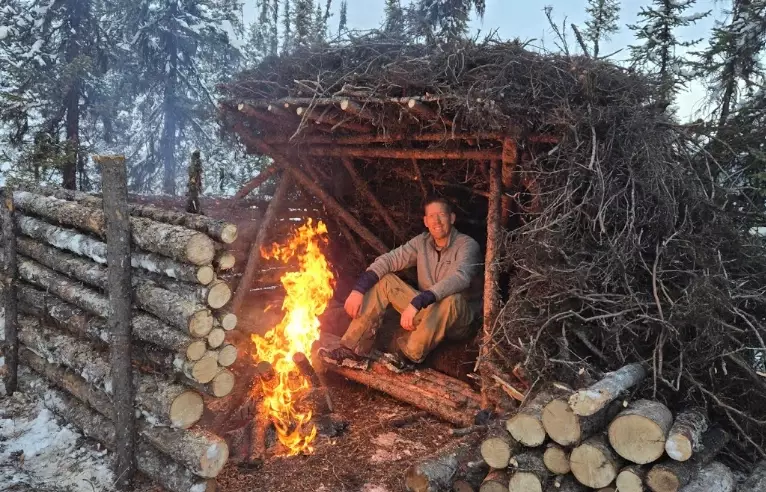
I remember my first attempt. It was more of a sad pile of sticks than a proper bushcraft shelter. The roof leaked, the frame wobbled, and I spent a cold, damp night questioning all my life choices. But that failure taught me more than any success ever could. It taught me to respect the fundamentals.
So, you're thinking about ditching the nylon hotel and building something real? Good. This isn't a military manual. It's a practical guide from someone who's made the mistakes so you (hopefully) don't have to. We'll walk through why you'd even bother, how to pick the perfect spot, the main designs you can choose from, and the step-by-step process of turning trees into a home.
Why Build a Bushcraft Shelter Anyway?
It's a fair question. Modern tents are lightweight, waterproof, and set up in minutes. Why go through the hassle?
The answer is in the experience itself. A bushcraft camping shelter is immersive. You're not just a visitor in the landscape; you're using its resources to become part of it. There's a deep satisfaction in that. It's also a phenomenal skill. If you ever find yourself in a real pinch without your gear, knowing how to make a shelter from natural materials isn't just cool—it's critical.
It forces you to observe. You start noticing which trees have straight saplings, where the dry ground is, how the wind moves through a valley. You learn to read the land in a way you never do when you just plop a tent down.
But it's not all romantic. It's hard work. Your hands will get dirty, you might get frustrated, and your first one probably won't be perfect. That's okay. It's part of the process.
The Golden Rule: Location is Everything
You can build the most beautifully crafted shelter in the world, but if you put it in the wrong spot, you're going to have a bad time. This is the single most important decision you'll make.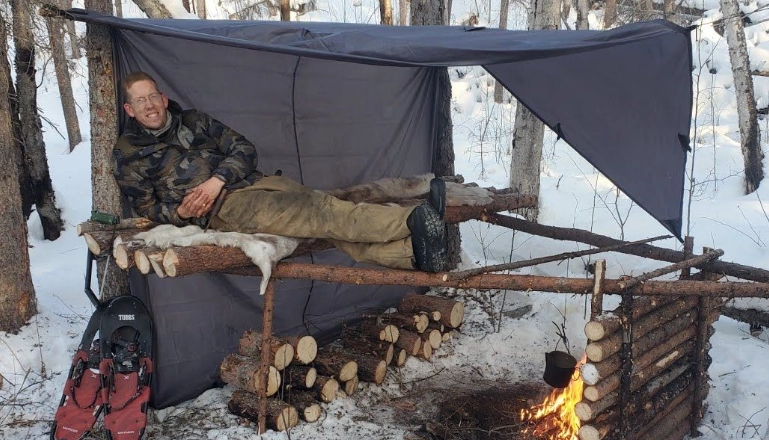
What are you looking for? I use a simple checklist I call the WATER rule.
- Wind: Is it sheltered? Avoid hilltops and ridges where wind will whip through. Look for natural windbreaks like dense stands of trees or rock faces.
- Animals: Any signs of large game trails, nests, or dens? You don't want to build on a bear highway or under a wasp nest.
- Terrain: Flat, dry ground is king. Avoid valleys or depressions where cold air and water settle (these are called "frost pockets").
- Elements: Look up! Check for "widowmakers"—dead branches or whole trees that could fall on you. Also, consider the sun's path for morning warmth.
- Resources: Is there a good supply of dead, downed wood for your frame and bedding? Is there a water source nearby, but not so close that you risk flooding or bugs?
I once got lazy and set up a nice-looking lean-to a little too close to a stream. It seemed idyllic. By 2 AM, the temperature dropped, the damp rose from the ground, and I felt like I was sleeping in a refrigerator. Never again. High and dry is the way.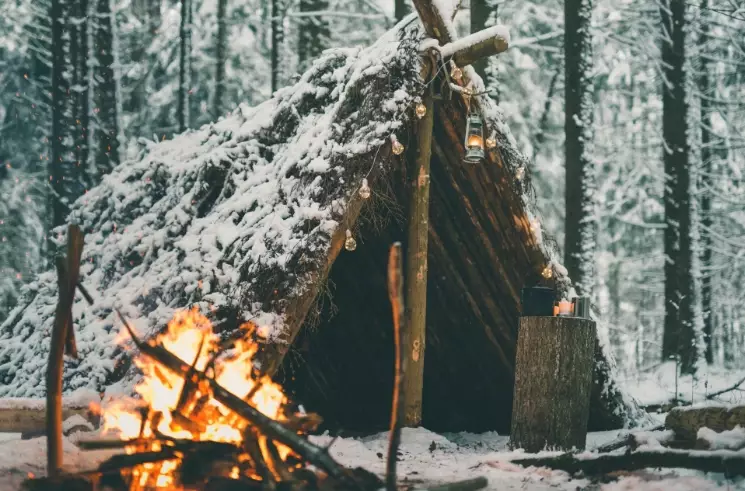
Choosing Your Bushcraft Shelter Design
There's no single "best" bushcraft shelter design. The best one is the one that suits your environment, your available time, and the weather you expect. Here’s a breakdown of the most common and practical types.
The Lean-To: Your Go-To Starter Shelter
This is the classic, the one you probably picture. It's simple, quick to build, and highly effective. You prop a long ridgepole between two trees or on a forked stake, then lean a bunch of poles against it at an angle. That's your frame. Then you shingle it with leafy branches, bark, or a tarp if you have one.
Best for: Quick overnighters, relatively good weather, when you have a fire. You build the fire right in front of the open side, and the slanted roof reflects the heat back on you. It's a wonderful combo.
Downside: It's open on one side, so it offers less protection from wind or blowing rain if it shifts direction. It's also not the warmest by itself—it needs that fire.
The A-Frame Debris Hut: The Insulation King
If you need warmth without a big fire, or you're in a real survival situation, this is your shelter. It looks like a small, triangular tent made of sticks, which you then bury under a massive pile of leaves, ferns, moss, and forest duff. I'm talking two to three feet thick. That debris layer is what provides incredible insulation.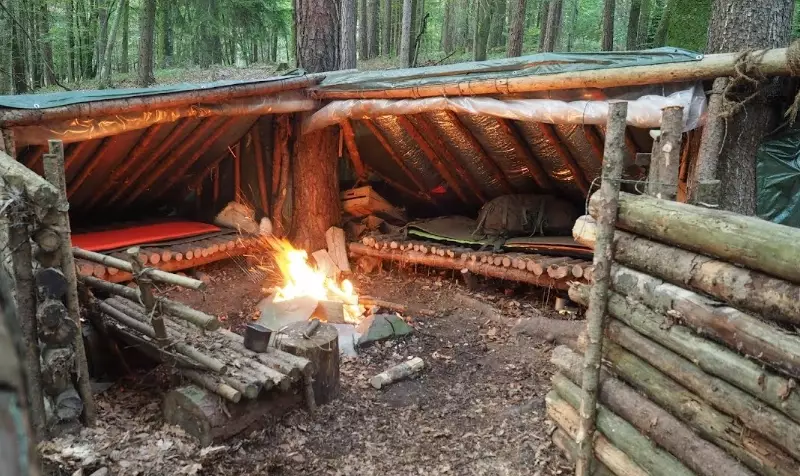
The process is more involved. You build a sturdy A-shaped frame, create a lattice of smaller sticks over it, and then pile on the debris. The entrance is small, often just a crawl hole you can plug.
Best for: Cold weather camping, survival scenarios where fire isn't an option, or when you want the ultimate stealth camp.
Downside: It's labor-intensive. Gathering that much debris takes time and energy. It can also feel a bit claustrophobic, and if the debris is damp, it can be a chore to dry out.
The Wedge Tarp or Fly: The Hybrid Approach
This is where modern gear meets old-school skill. You use a tarp or a specially designed bushcraft tarp (heavier duty than an ultralight one) as your primary roof, but you build a natural frame for it. It might be a simple lean-to frame or a more complex dome.
Why bother? Speed and certainty. In pouring rain, getting a natural thatch roof waterproof can be tricky. A tarp gives you instant, guaranteed dry cover. You still get to practice your framing and lashing skills, and you can often build a more spacious shelter.
Best for: Wet climates, trips where weight isn't the absolute prime concern, or when you want a comfortable bushcraft camping basecamp for multiple days.
So which one to pick? Here’s a quick comparison to help you decide on the spot.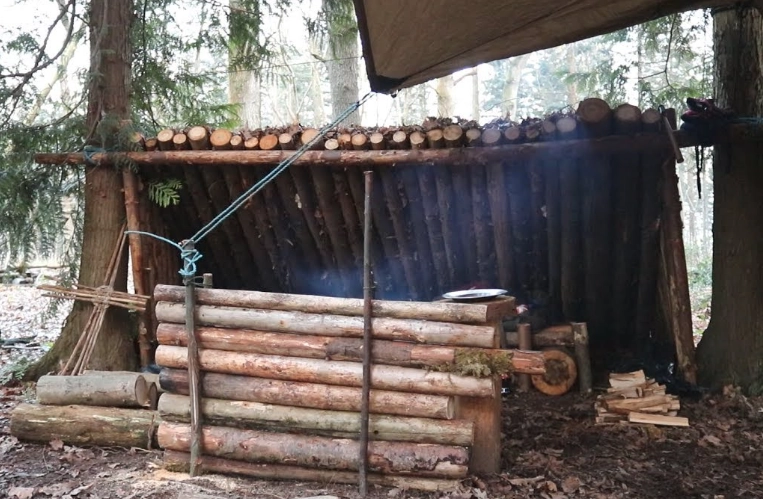
| Shelter Type | Best For This Weather | Build Time | Skill Level | Key Advantage |
|---|---|---|---|---|
| Lean-To | Mild, dry, or with a fire | 1-2 hours | Beginner | Simple, great with fire, good visibility |
| A-Frame Debris Hut | Cold, windy, survival | 3-5 hours | Intermediate | Superior insulation, very protective |
| Wedge Tarp Hybrid | Rainy, variable, basecamp | 1-2 hours | Beginner to Intermediate | Fast, reliably dry, versatile |
The Step-by-Step: Building a Robust Lean-To Shelter
Let's get our hands dirty. I'll walk you through building a solid lean-to, as the principles apply everywhere. Grab your knife and paracord.
Step 1: The Ridgepole and Supports
Find a straight, sturdy log, about 8-10 feet long and as thick as your wrist. This is your spine. Don't cut a live tree for this if you can avoid it; look for a solid deadfall. Your two supports can be Y-shaped branches lashed together, or simply two trees about 7-8 feet apart. The ridgepole should sit about chest-high. Lash it securely. If your knots are shaky, the whole thing will be shaky. The timber hitch and square lashing are your best friends here. The National Outdoor Leadership School (NOLS) has excellent, free resources on essential outdoor knots that are worth bookmarking.
Step 2: The Ribs (The Rib Cage)
Now gather a dozen or more straight poles, 6-7 feet long. These will lean against the ridgepole at a 45-60 degree angle. This angle is important—too steep and rain runs right off but offers less cover; too shallow and it sags and pools water. Space them a few inches apart. Make sure the butt ends are dug into the ground or secured with rocks so they don't slip.
Step 3: The Lattice (The Net)
This is what most beginners skip, and it's a mistake. Lay smaller sticks, vines, or even your paracord horizontally across the slanted ribs, weaving them in and out. This creates a grid. Why? It gives your roofing material (the thatch or leaves) something to grip onto. Without it, your first gust of wind or heavy rain will strip your roof bare. It turns a pile of sticks into a cohesive structure.
Step 4: Thatching (The Roof)
Here's where you make it waterproof. Starting at the BOTTOM of the frame, layer bundles of leafy branches, bark slabs, ferns, or broad grasses. Imagine shingling a house. Each higher layer should overlap the one below it, so water runs down and off without sneaking in. Make it thick. I mean, really pile it on. A thin layer is useless. For bark, birch or cedar are fantastic if available in your area. The U.S. Forest Service's online materials on local tree identification can be a huge help for knowing what you're working with.
How do you know it's thick enough? You shouldn't be able to see light through it from the inside.
Step 5: The Bedding (Your Mattress)
Your shelter is useless if you're lying on cold, damp ground. Insulation from below is non-negotiable. Gather armfuls of dry leaves, ferns, pine needles, or dry grass. Pile it inside your shelter at least a foot deep. Really. Compress it by lying on it. This dead air space is what keeps the earth's chill away from you. It's more important than you think.
Essential Gear (You Don't Need Much)
The philosophy is minimalism, but a few key tools make the job safer and better.
- A Good Knife: A fixed-blade bushcraft knife with a 4-5 inch blade is the MVP. It's for carving, notching, and processing wood. Don't cheap out here.
- Saw: A folding saw (like a Bahco Laplander) is a game-changer. It makes collecting ridgepoles and ribs infinitely easier and safer than batoning with a knife.
- Cordage: 50-100 feet of paracord. It's for lashing. Even if you master natural cordage, having paracord saves immense time and stress.
- Tarp: Even a small one (6x8) is a multi-tool: emergency roof, ground cloth, rain catcher, gear cover.
- Headlamp: Because you will inevitably still be tweaking your shelter as the sun goes down.
Common Bushcraft Shelter Mistakes (I've Made Them All)
Let's save you some grief. Here are the top blunders that turn a good night into a miserable one.
Building Too Big: It's tempting to build a palace. Don't. A smaller space is easier to heat with your body warmth. Just big enough to lie down and store your pack is perfect.
Skimping on the Bedding: That thin layer of leaves you thought was enough? It's not. Ground cold is relentless. Pile it high.
Poor Site Selection (Again): It bears repeating. That slightly sloping, rocky spot near the pretty meadow will have you sliding into a corner all night. Flat. Dry. Check for widowmakers.
Using Green Wood for the Frame: It's heavy, saps your energy to cut, and doesn't offer any real advantage for a temporary structure. Dead, standing wood (gray, no bark) is usually strong, light, and perfect.
Forgetting About Runoff: Dig a small trench around the uphill side of your shelter to divert water away. A simple ditch a few inches deep can save you from a midnight mud bath.
Safety and Ethics: The Unbreakable Rules
Bushcraft isn't about conquering nature; it's about participating in it responsibly.
Leave No Trace: This is paramount. When you break camp, dismantle your shelter completely. Scatter the materials naturally. Fill in any holes. The goal is for the next person (or animal) to have no idea you were there. The Leave No Trace Center for Outdoor Ethics provides the definitive guidelines we should all follow.
Fire Safety: If you have a fire, keep it small, contained in a ring of stones, and never, ever leave it unattended. Drown it with water until it's cold to the touch. A bushcraft shelter won't protect you from a forest fire you started.
Tell Someone Your Plans: Always let a reliable person know where you're going and when you'll be back. A bushcraft camping shelter is for adventure, not for getting lost.
Answering Your Bushcraft Shelter Questions
You've got questions. Here are the real ones I get asked all the time.
Look, the path to a great bushcraft camping shelter is paved with okay shelters and a few terrible ones. Each one teaches you something. You'll learn what a stable lashing feels like, how to spot the perfect ridgepole from 50 yards away, and just how many leaves it really takes to be warm.
The goal isn't perfection. It's the quiet confidence that comes from knowing you can walk into the woods and create a safe, dry place to rest using what's around you. It's one of the most fundamentally human skills there is.
So start simple. Find a safe, legal place to practice. Build a small lean-to on a nice afternoon, even if you don't sleep in it. Get a feel for the wood, the knots, the angles. The wilderness will teach you the rest.
Just remember to scatter the sticks when you're done.