Let's be honest. Instant coffee granules dissolved in lukewarm water is a survival tactic, not a camping pleasure. The good news? Making genuinely great coffee outdoors is simpler, cheaper, and more rewarding than you think. It transforms your morning ritual from a caffeine delivery system into a moment of pure, quiet satisfaction. Forget the fancy cafe—your brew, the sound of birds, and the fresh air is the ultimate luxury. This guide cuts through the noise. We'll walk through choosing your gear, mastering a few key techniques, and avoiding the common pitfalls that leave you with bitter, gritty disappointment.
Your Camping Coffee Brewing Roadmap
The Gear Breakdown: From Simple to Sophisticated
Your choice of brewer dictates your process, clean-up, and final cup. There's no single "best" option—only the best for your style of trip. Are you backpacking and counting every ounce? Car camping with a full kitchen setup? The table below lays it out clearly.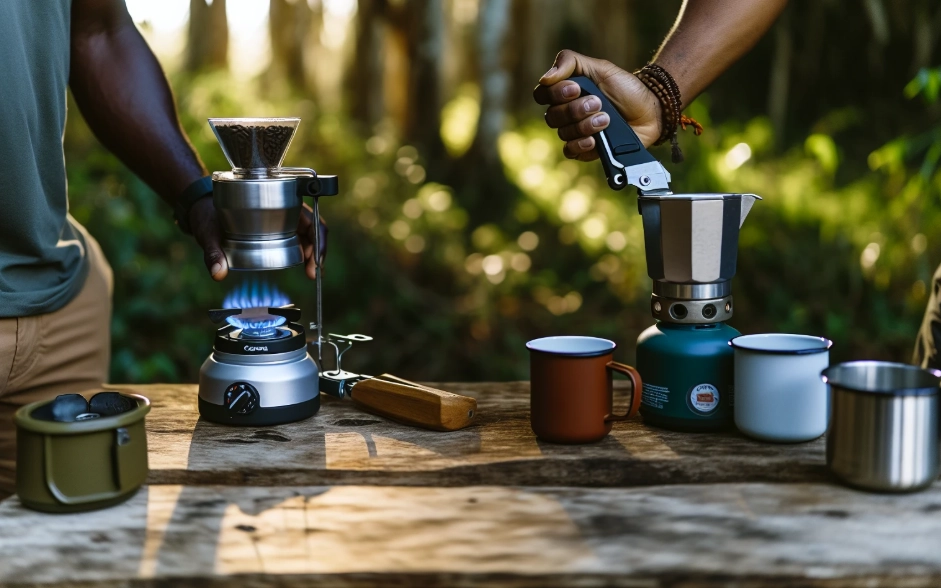
| Brewing Method | Best For | Weight / Bulk | Clean-up Effort | Approx. Cost | My Personal Take |
|---|---|---|---|---|---|
| French Press (Insulated) | Car camping, groups, full-bodied coffee lovers. | High (glass is heavy, get stainless steel). | Medium (grinds disposal). | $25 - $60 | The crowd-pleaser. Makes multiple cups of rich coffee, but cleaning out the sludge is a chore. |
| AeroPress / AeroPress Go | Backpacking, solo travelers, clarity seekers. | Very Low (the Go kit is incredibly compact). | Very Easy (pop the puck of grounds into trash). | $30 - $40 | My go-to for 90% of trips. Versatile, nearly unbreakable, and makes a clean, smooth cup. The learning curve is worth it. |
| Pour-Over (Collapsible Silicone) | Lightweight backpacking, control freaks. | Extremely Low (folds flat). | Easy (toss filter and grounds). | $15 - $30 | Great for those who love the ritual. Requires a steady hand and a good gooseneck kettle for best results, which isn't always practical. |
| Percolator | Nostalgia, cowboy campfires, large groups. | Very High (usually large steel pots). | Difficult (stuck grounds, soot). | $20 - $50 | Tastes like childhood camping trips—often over-extracted and bitter. I avoid it for quality, but it's iconic. |
| Moka Pot (Small) | Car camping, espresso-like drink craving. | Medium (stovetop required). | Medium (need to disassemble). | $25 - $40 | Powerful and satisfying, but easy to burn on a camp stove. A high-risk, high-reward option. |
Most beginners make the same mistake: they buy a cheap, bulky French press because it's familiar. If you're hiking more than a mile to your site, you'll hate carrying it. For most people, the AeroPress Go is the sweet spot. It's an all-in-one kit (includes mug) that makes a brilliant, adaptable cup and cleans up in seconds.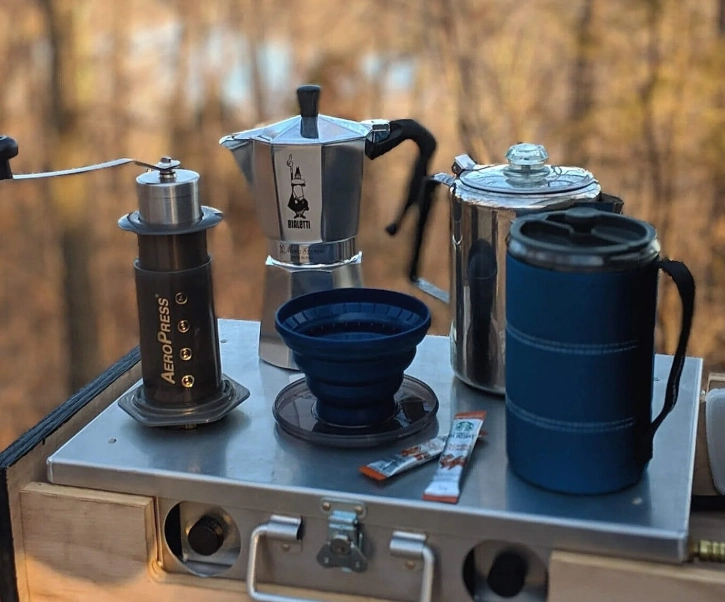
How to Master Your Chosen Brewing Technique
Gear is half the battle. Technique is what separates drinkable coffee from memorable coffee. Let's assume you've chosen the AeroPress, as it's the most popular and versatile for good reason.
The Foolproof AeroPress Camping Method
I've made hundreds of AeroPress coffees on trails and at campsites. This method is forgiving and works great with pre-ground coffee if you don't have a grinder.
First, heat your water. You don't need a rolling boil. In fact, boiling water (212°F/100°C) scalds coffee, making it bitter. Aim for about 195°F (90°C). If your water is boiling, just let it sit off the heat for 30 seconds.
While it cools slightly, assemble the AeroPress in the inverted method. This is a game-changer for avoiding premature dripping. Screw the filter cap on empty. Then flip the whole thing upside down so the plunger is on the bottom, and the brew chamber is open to the sky.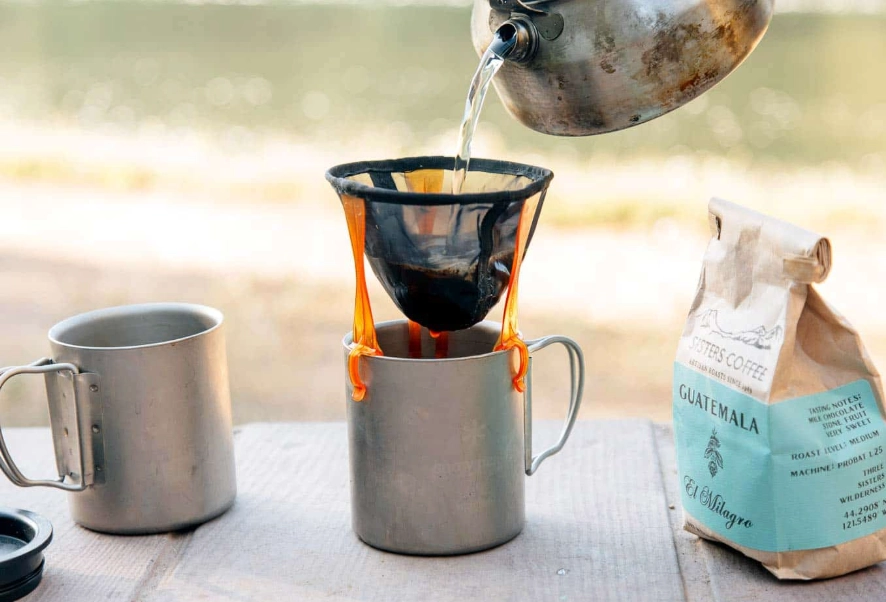
Add your coffee. One full AeroPress scoop (about 15g) is perfect for one mug. If you have a scale, even better.
Start your timer. Pour in hot water up to the number "2" mark. Quickly stir for 10 seconds to ensure all grounds are wet. Then, fill the rest of the chamber with water.
Let it steep for 1 minute. This is where the magic happens. Place your mug on top, and in one confident motion, flip the entire AeroPress onto the mug. Press down slowly and steadily. You should feel gentle resistance. If it's hard to press, your grind is too fine; if it gushes through, it's too coarse.
Unscrew the cap, eject the puck of spent grounds into your trash bag, and give it a quick rinse. Done.
What About a French Press?
It's simpler but requires patience. Use a coarse grind—finer grounds will slip through the mesh and make your coffee muddy. Add coffee to the pot (a good ratio is 1:15, coffee to water), pour your hot water, give it a quick stir, and put the lid on with the plunger pulled all the way up. Do not press yet.
Let it steep for 4 full minutes. Then, press down slowly and evenly. Pour all the coffee out immediately into mugs. Leaving it sitting on the grounds in the pot will continue to extract, turning it bitter.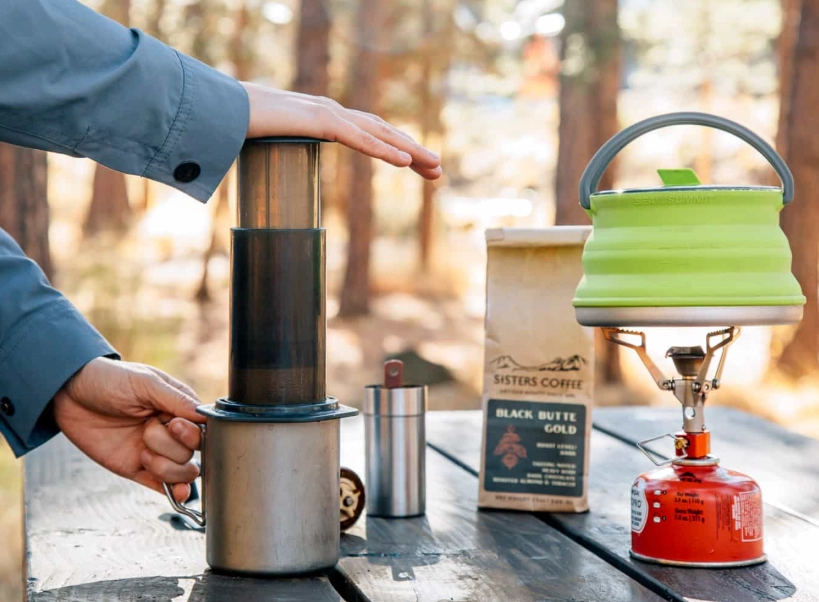
The Two Secret Ingredients: Your Coffee and Water
You can have the best gear and perfect technique, but if you start with stale coffee and bad water, you'll lose.
Coffee: Pre-ground coffee from the supermarket is convenient but goes stale fast. For a weekend trip, it's fine. For a better experience, buy whole beans and have your local roaster grind them for you just before you leave. Specify your brew method (e.g., "medium for AeroPress"). For the ultimate fresh cup, a small manual grinder like the 1Zpresso Q2 is a revelation. The difference in aroma is night and day.
What coffee to choose? Medium roast single-origins (like a Colombian or Ethiopian) are fantastic and forgiving. Dark roasts can taste ashy if your water is too hot. Experiment at home first.
Water: This is the most overlooked factor. The mineral content in water drastically affects extraction. Hard, mineral-heavy water mutes flavor. Soft, distilled water makes coffee taste sharp and sour.
If your campsite has a potable water tap, you're likely fine. If you're filtering stream water, know that most backpacking filters (like Sawyer or Katadyn) don't soften water—they just remove pathogens. The mineral "hardness" remains. For the purist, you can carry a small bottle of your preferred water from home for coffee. It sounds extreme, but it works.
I learned this the hard way on a trip to the Sierra Nevada. The granite-filtered water was so soft my coffee tasted unbearably sour. I had to add a tiny pinch of salt to my cup to balance it—a weird but effective hack.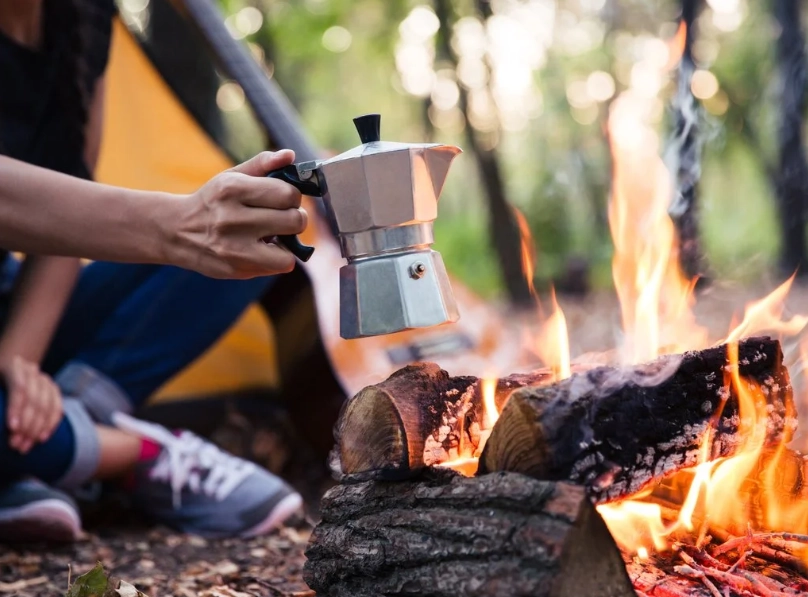
How to Pack Like a Pro (And Avoid Mess)
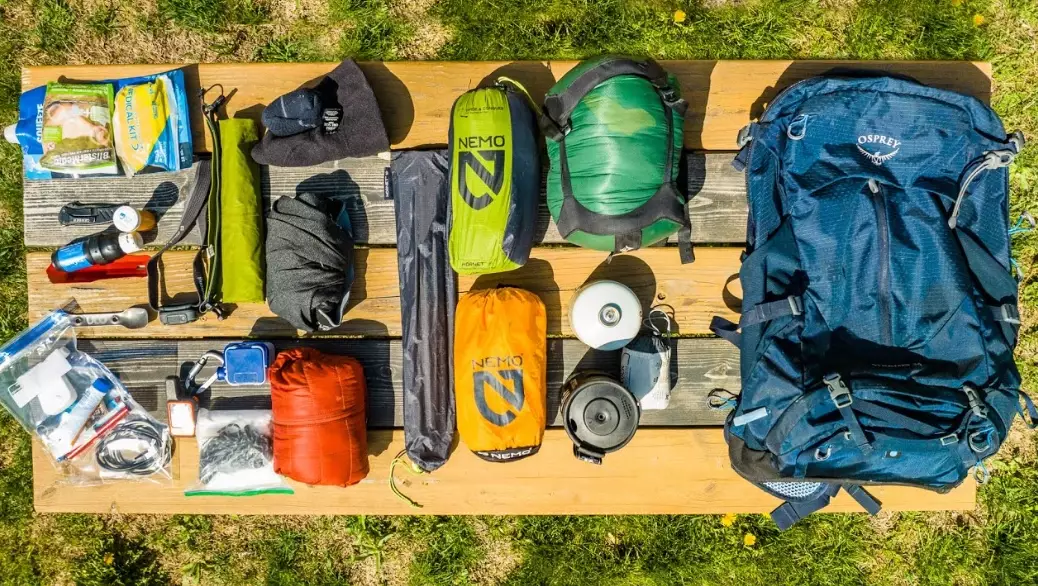
Organization is key to a stress-free morning. Here's my system:
- Airtight Container: Store your coffee beans or grounds in a small, hard-sided container like a Talenti jar or a dedicated vacuum canister. This keeps moisture and odors out.
- Dedicated "Coffee Kit" Bag: Use a small stuff sack or zip-top bag for everything: brewer, filters, coffee, a tiny measuring spoon, and a small cloth. It all lives together.
- Waste Management: Bring a few extra small zip-top bags. One is for your used coffee grounds (they make great odor-masking trash until you can dispose of them properly). Another is for the damp cloth you use to wipe things down.
- The Cloth: A small, quick-dry microfiber towel is invaluable for wiping drips, drying your brewer, and cleaning your hands.
Pack your kit so it's the last thing in your backpack at night and the first thing you can access in the morning. No one wants to unpack their entire tent to find the coffee.