In This Guide
- Why You Absolutely Need a Portable Water Purifier for Camping
- Breaking Down the Types: How Each Portable Camping Water Purifier Works
- Side-by-Side Comparison: Which Portable Water Purifier for Camping is Right for YOU?
- The Nitty-Gritty: What to Look for on the Label
- Real-World Use: Your Step-by-Step Guide to Actually Using the Thing
- Common Pitfalls and How to Avoid Them
- Your Portable Water Purifier for Camping Questions, Answered
I've been there. I've trusted a "clear" lake only to spend the next 48 hours in a tent wishing for modern plumbing. I've also had a cheap filter fail on me mid-backpacking trip. Not fun. So, this isn't just a theoretical rundown. It's a distilled (pun intended) version of lessons learned, product testing, and a lot of research to save you the headache—literally and figuratively.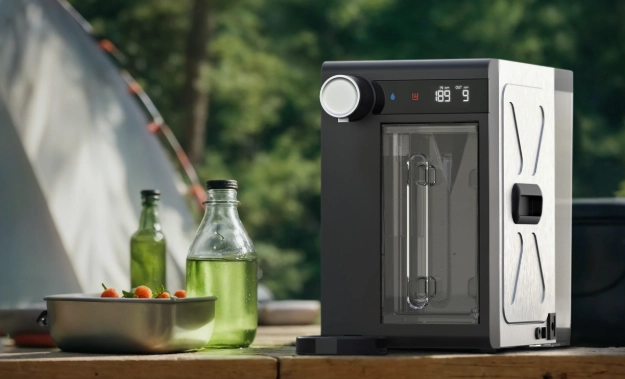
We're going to break down everything. Not just the "what" but the "why" and the "how the heck do I use this thing." From the simple squeeze bottles to the techy UV wands, we'll look at what each type of portable camping water purifier does, who it's for, and where it might let you down.
Why You Absolutely Need a Portable Water Purifier for Camping
First off, let's clear something up. There's a big difference between thinking stream water is clean and knowing it's safe. Water that looks pristine can still be hosting microscopic uninvited guests like bacteria (think E. coli, Salmonella), protozoa (Giardia, Cryptosporidium—the big bads of backpacker's diarrhea), and viruses (Hepatitis A, norovirus).
It's also a massive weight and space saver. Carrying all the water you need for a 3-day trek is borderline impossible. Being able to collect and treat water from lakes, rivers, and springs means you can travel lighter, farther, and more comfortably. It turns a scarce resource into an abundant one.
For authoritative information on health risks from untreated water, the U.S. Centers for Disease Control and Prevention (CDC) has a comprehensive guide on backcountry water treatment that's worth a look. It confirms that treatment is non-negotiable.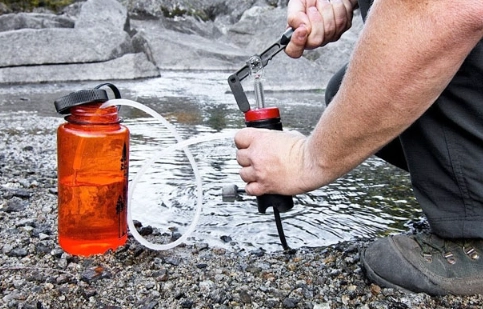
Breaking Down the Types: How Each Portable Camping Water Purifier Works
This is where choices get overwhelming. They all promise clean water, but their methods are wildly different. Understanding the core technology is key to picking the right one for your trip.
1. Pump Purifiers: The Old Reliable
You see these in a lot of classic camping photos. A hose goes into the water source, you work a handle, and after some pumping, clean water comes out another hose into your bottle. Inside, water is forced through a very fine filter element (often a hollow fiber membrane) that physically blocks pathogens. Many also include a carbon core to improve taste and smell by reducing chemicals.
The Good and The Not-So-Good:
- Pros: Highly effective against bacteria and protozoa. You can filter directly into a clean container. Good for filtering large volumes for groups. Durable if maintained well.
- Cons: Requires manual effort (can be tiring). Heavier and bulkier than other options. Can freeze and damage the internal filter if not careful. Doesn't typically remove viruses unless specifically stated (look for "purifier" not just "filter").
I have one that's served me well for years on canoe trips where we base camp and need lots of water. But I wouldn't take it on a fast-and-light backpacking trip. Too heavy.
2. Gravity Purifiers: The Lazy Genius
My personal favorite for group camping. The concept is beautifully simple. You fill a dirty water bag, hang it from a tree, and let gravity pull the water through a filter and into a clean water bag or reservoir below. No pumping, no squeezing. You set it up and forget it while you set up your tent.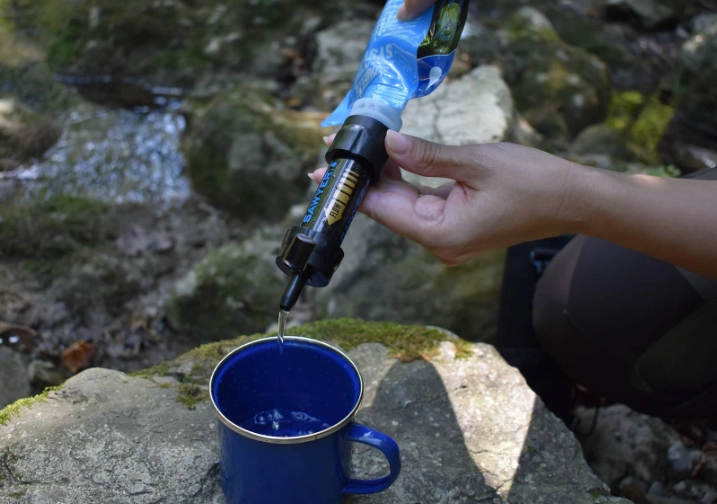
They use similar filter technology to pumps (hollow fiber membranes) but leverage gravity. It's the ultimate portable water purifier for camping if you're at a semi-permanent site and need to filter 4+ liters at a time with zero effort.
The downside? The initial setup time. Filling the dirty bag, finding a good hanging spot. And if you're just stopping for a quick lunch on the trail, it's overkill. Also, the bags can be prone to punctures if you're rough with them.
3. Squeeze Bottles and Straws: The Ultimate in Simplicity
These are the kings of lightweight and speed. A squeeze system is just a bottle with a filter built into the lid. You fill the bottle from the stream, screw the lid on, and squeeze. Clean water shoots out. A straw is even simpler—you just put one end in the water source and suck from the other.
These are fantastic solo backpacking options. They're tiny, weigh almost nothing, and are ready in seconds. But their capacity is limited, they can be hard to use in very shallow water, and the squeeze bags can wear out. I had one develop a tiny crack in the silicone after a season of use. Annoying.
4. UV Light Purifiers: The Techy Solution
This is where it feels like science fiction. A UV purifier, usually a pen-like device, uses short-wavelength ultraviolet light to scramble the DNA of microorganisms, rendering them harmless. You stir it in your water bottle for 60-90 seconds, and you're done. No pumping, no squeezing, no waiting for gravity.
It's incredibly effective against bacteria, viruses, and protozoa. The water taste is completely unchanged because you're not filtering anything out. It's just zapping the bugs.
Perfect for travelers going to places with questionable tap water, or for campers who hate the physical effort of other methods and don't mind the electronics. Not so perfect for long trips off the grid without a reliable way to recharge.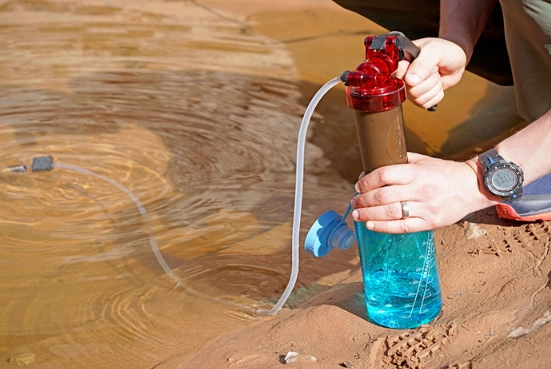
Side-by-Side Comparison: Which Portable Water Purifier for Camping is Right for YOU?
Okay, so that's the theory. Let's put it in a table to make the decision easier. Think about your most common type of trip as you read this.
| Type | Best For | Weight & Bulk | Speed (for 1L) | Key Limitation |
|---|---|---|---|---|
| Pump Purifier | Group trips, base camps, filtering large volumes | High (often 1lb+) | 2-3 minutes of pumping | Physical effort, maintenance, doesn't kill viruses (check label) |
| Gravity System | Group camping, family trips, lazy filtering | Medium-High | 5-15 minutes (hands-free) | Setup time, needs a hanging point |
| Squeeze Bottle/Straw | Solo backpacking, ultralight travel, quick sips | Very Low | 1-2 minutes (of squeezing/sucking) | Small capacity, not for groups, bag durability |
| UV Light Purifier | Tech-users, clear water sources, virus concerns | Low (device itself) | ~1 minute (+battery check) | Needs power, doesn't filter particles |
See how that clarifies things? If you're a solo hiker counting every ounce, the squeeze or straw is calling your name. Car camping with the family? A gravity system will save your sanity. Worried about viruses in certain regions? You're looking at a purifier-rated pump or a UV light.
The Nitty-Gritty: What to Look for on the Label
Marketing terms are flashy. The fine print matters. Here's your cheat sheet.
"Filter" vs. "Purifier": This is the big one. In the U.S., the Environmental Protection Agency (EPA) regulates these terms. A water filter is designed to remove bacteria and protozoa. A water purifier must meet a higher standard and remove or inactivate viruses as well. If you're camping in the backcountry of North America, a filter is usually sufficient. If you're traveling internationally or in areas with known sewage contamination, a purifier is a safer bet. The EPA's drinking water site provides context on these standards.
Micron Rating: This tells you how small a particle the filter can catch. For camping:
- 1.0 micron or less: Catches protozoa like Giardia (about 5-10 microns) and bacteria (about 0.2-4 microns). Good.
- 0.2 microns or less: Catches almost all bacteria. Better.
- 0.02 microns or less: Can catch some viruses (though virus removal is more about purification standards). Best.
Flow Rate: How fast does the water come out? A rate of 1 liter per minute is decent. Slower than that, and you'll be pumping or squeezing for a while to fill a big pot. Gravity systems often list a "time to fill a 4L bag"—that's useful.
Filter Lifespan: This is usually given in liters. A 1,000-liter filter might last a solo hiker years. A family of four on a two-week trip might chew through that faster. Know your usage and have a rough idea of when to replace the cartridge. It's not something you want to guess about.
Real-World Use: Your Step-by-Step Guide to Actually Using the Thing
Buying the right portable water purifier for camping is half the battle. Using it correctly is the other half. Here's a universal guide, regardless of type.
Step 1: Source Selection. Don't just use the first puddle you see. Look for flowing water over stagnant water. Avoid water right downstream of a campsite or animal trail. If you can, collect from a fast-moving section in the middle of the stream. A little foresight makes your purifier's job easier.
Step 2: Pre-filter if Needed. Is the water full of leaves, sand, or silt? Use a bandana, a dedicated pre-filter cloth, or even just let it settle in a container for a few minutes. Getting the big gunk out first protects your primary filter from clogging prematurely. This is crucial for any pump, gravity, or squeeze filter.
Step 3: Follow the Manufacturer's Instructions. Exactly. I know it sounds obvious. But for UV lights, that means stirring for the full time. For pumps, it means keeping the intake hose off the bottom. For squeeze filters, it means not letting the dirty water touch the clean output spout. These instructions are written for a reason.
Step 4: Maintain Your Gear in the Field. For filters, this usually means backflushing. When the flow slows to a trickle, it's clogged with gunk. Most come with a syringe to force clean water backwards through the filter to clear the pores. Do this regularly. It'll massively extend the life of your cartridge.
Step 5: Store it Wet or Dry? This depends. Hollow fiber membrane filters (most pumps, gravity, squeeze systems) MUST be kept wet. If they dry out completely, the microscopic pores can crack, rendering them useless. If you're storing it for the season, you need to use a preservative solution. Ceramic filters can usually dry out. UV lights? Just take the batteries out. Check your manual!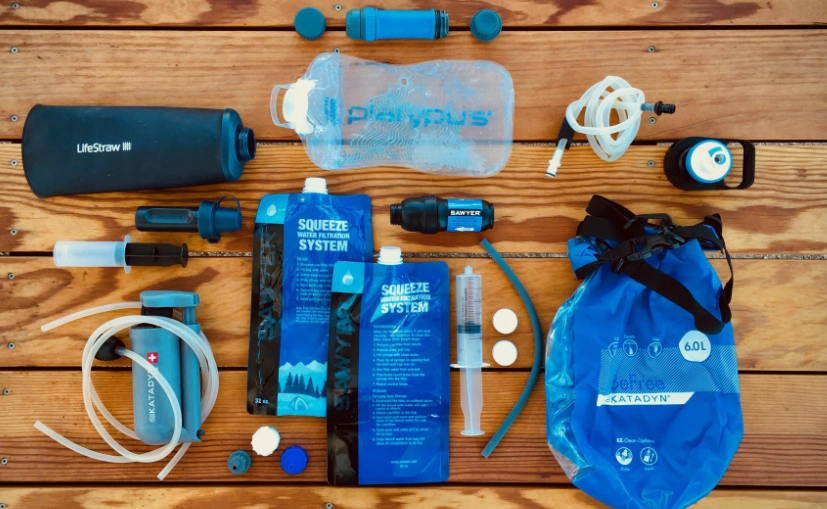
Common Pitfalls and How to Avoid Them
Even with the best gear, mistakes happen.
Cross-Contamination: This is the #1 way people get sick even with a purifier. You treat the water perfectly, then scoop some into your clean bottle with a dirty hand, or let the dirty hose touch the lip of your clean bottle. Have a system. Keep your "dirty" gear (collection bag, pre-filter cloth) separate from your "clean" gear (drinking bottle, cooking pot). Be paranoid about it.
Freezing the Filter: Water expands when it freezes. If there's water inside the filter cartridge and it freezes, it can rupture the delicate internal fibers. If you're camping in freezing temps, sleep with your filter in your sleeping bag. Seriously. Treat it like your water bottle.
Ignoring Chemical Contaminants: Most portable water purifiers for camping are designed for biological nasties. They don't do much for pesticides, heavy metals, or chemical runoff. If you're near farmland, mining operations, or heavy industry, you need a filter with a heavy-duty activated carbon element, or you should consider bringing your water from a known safe source. This is a often-overlooked gap in many guides.
Your Portable Water Purifier for Camping Questions, Answered
Look, at the end of the day, the best portable water purifier for camping is the one you'll actually use consistently and correctly. It's the piece of gear that quietly does its job, trip after trip, giving you the confidence to drink deeply from a mountain stream and the freedom to explore beyond the next water cache.
It's not about having the most expensive tech. It's about understanding the threats, matching a tool to your needs, and developing the simple habits to use it right. Do that, and you've solved one of the biggest logistical and safety challenges of camping. Now go find some water to treat.