Quick Navigation
Let's be honest. We've all been there. You pump up your air bed at the campsite, full of hope for a good night's rest. You crawl in, it feels okay for a minute, and then... you start to feel the cold ground creeping up. Or worse, you wake up at 3 AM with your hip on the dirt because the darn thing sprung a leak. It's miserable.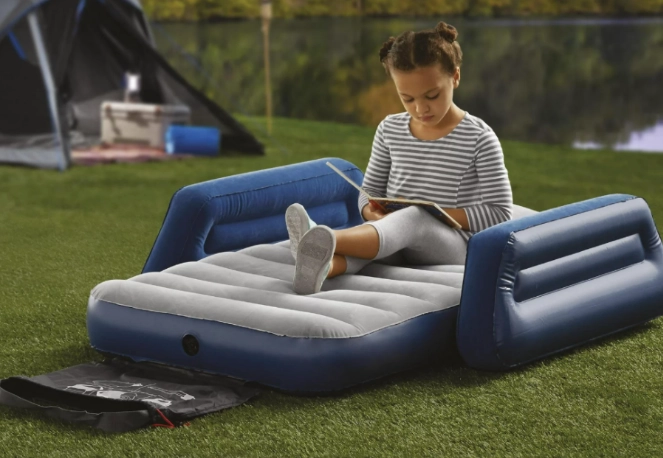
That search for a solid alternative to an air bed for camping? It's a real quest. You're not just looking for a different piece of gear; you're looking for reliable comfort, something that won't betray you in the middle of the night.
The good news is, the world beyond the basic air mattress is vast and full of fantastic options. Whether you're a lightweight backpacker counting every ounce or a car camper who wants to bring the comfort of home, there's a perfect sleep solution waiting for you. This guide is here to cut through the noise and help you find it.
Why look beyond the air bed? Air beds are popular because they're cheap, familiar, and pack small. But for regular camping, their downsides are hard to ignore: they're terrible insulators (you'll get cold), prone to punctures, often bulky when packed, and can be unstable. Exploring an alternative to an air bed for camping usually means trading a bit of that initial convenience for huge gains in warmth, durability, and peace of mind.
The Contenders: Breaking Down Your Best Options
So, what's out there? The main categories of camping sleep systems break down into a few families, each with its own personality. Think of it like choosing a vehicle. An air bed is like a flashy scooter—fun in theory, but not great for a cross-country trip in the rain.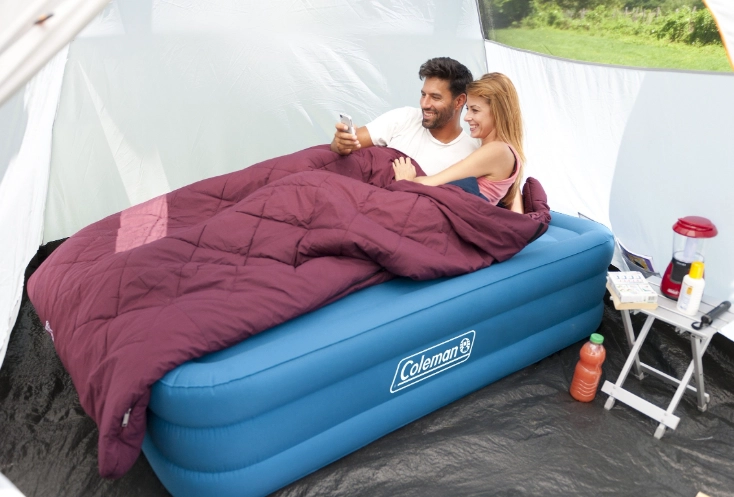
The Simple & Bombproof Choice: Closed-Cell Foam Pads
These are the classic, no-nonsense pads. Think of the iconic blue or silver roll-up mat. They're made from a solid sheet of foam filled with tiny closed air cells.
- Why they're great: They are virtually indestructible. No leaks, ever. They also provide excellent insulation from the ground (high R-value for their weight) because the foam itself traps heat. They're also the lightest and cheapest option out there. Just unroll and sleep.
- The trade-off: Comfort. They're thin, usually less than an inch. Side sleepers often find them too firm. They're also bulky to carry—you have to strap them to the outside of your pack, which can be awkward.
The Sweet Spot for Many: Self-Inflating Sleeping Pads
This is what many consider the ultimate alternative to an air bed for camping. They combine open-cell foam inside with an air valve. You open the valve, the foam expands and sucks in air, and then you top it off with a few breaths.
Brands like Therm-a-Rest pioneered this, and they remain a gold standard. The beauty is in the balance.
- Why they're great: Fantastic comfort-to-weight ratio. The foam provides cushioning and insulation, so they're much warmer than a plain air bed. They're more compact than foam pads and come in a wide range of thicknesses and sizes. The convenience factor is high—set it and forget it for a few minutes while it inflates itself.
- The trade-off: They can be pricier. They are also heavier than air-only pads or foam pads. While durable, the fabric top and bottom can be abraded, and the foam inside can eventually lose some loft over many years.
If you ask a group of seasoned campers for their pick as the best all-around alternative to an air bed, a lot of hands will go up for the self-inflating pad.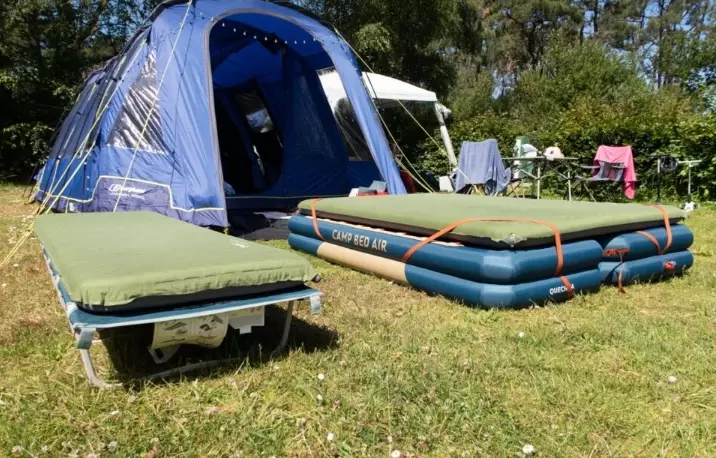
The Luxury Sleepers: Insulated Air Pads
These look like a standard air bed but are packed with technology. They are essentially air chambers, but inside they have synthetic insulation or reflective materials (like the shiny stuff in survival blankets) to trap heat. Brands like Sea to Summit and Exped excel here.
They pack down incredibly small—often the size of a water bottle. They are also the most comfortable option for side sleepers, as many are 3 or even 4 inches thick. You're literally sleeping on a pocket of air you can adjust to your preferred firmness.
The key is the insulation. A regular air bed gets cold because the air inside moves around, conducting your body heat down to the cold ground. These pads have baffles or layers that stop that convection, giving them a high R-value (a measure of thermal resistance).
- Why they're great: Supreme comfort, incredible pack size, and excellent warmth for their weight. Perfect for backpackers who want a plush sleep.
- The trade-off: They are more expensive. They require you to blow them up (some come with schnazzy pump sacks), which can be a chore after a long day. And while durable, they are still susceptible to punctures—though repair kits are simple to use.
The Off-the-Ground Option: Camping Cots
This is a completely different approach. Instead of padding between you and the ground, you eliminate the ground entirely. A camping cot lifts you up on a fabric sling supported by a frame.
For car campers, this can be a game-changer.
- Why they're great: Amazing comfort that feels like a real bed. Easy to get in and out of. Fantastic airflow underneath in hot weather. It also creates storage space under the cot for your gear.
- The trade-off: They are heavy, bulky, and not suitable for backpacking. They also provide zero insulation from the air below you, so in cold weather, you'll need a sleeping pad on top of the cot for warmth. Setup can be more involved.
If you hate the feeling of being on the floor and have the space to transport it, a cot is a brilliant and often overlooked alternative to an air bed for camping.
The Budget-Friendly Hybrid: Futon or Foldable Mattresses
These are less common but worth a mention for certain campers. We're talking about thin, roll-up foam mattresses, sometimes with a fabric cover, that are a step up from a basic foam pad.
They're more substantial than a foam pad but don't have the inflation features of the other options. You often see them used in overlanding or van life setups where space isn't as critical as it is for backpacking.
They're cheap, comfortable enough for many, and have no parts to fail. But they are bulky and offer moderate insulation.
Head-to-Head: How to Choose Your Champion
Alright, so you've met the players. How do you decide which alternative to an air bed is right for YOU? It comes down to your personal camping style. Asking yourself a few key questions will point you in the right direction.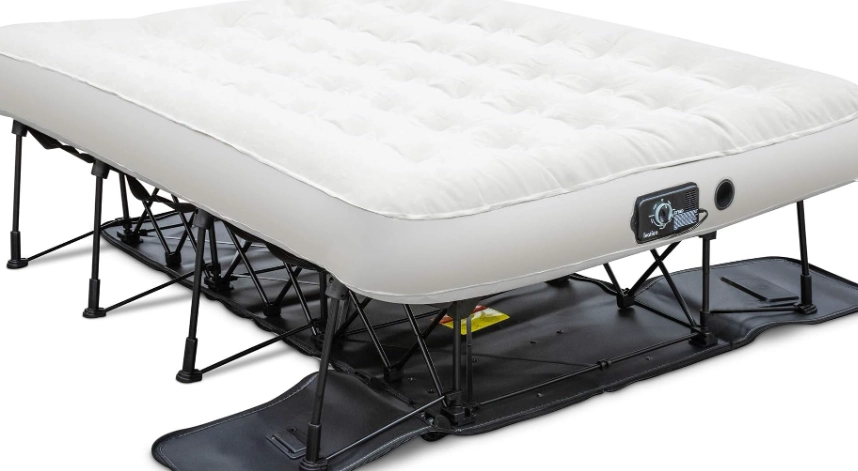
| Alternative Type | Best For... | Warmth (R-Value) | Pack Size & Weight | Comfort Level | Durability | Price Range |
|---|---|---|---|---|---|---|
| Closed-Cell Foam Pad | Backpackers on a budget, winter camping base layer, ultra-reliable minimalists. | Good to High (R-2 to R-5+) | Bulky / Very Light | Low to Medium (Firm) | Excellent | $20 - $80 |
| Self-Inflating Pad | The balanced all-rounder. Car campers and backpackers who value comfort & warmth. | Good to Very High (R-3 to R-8+) | Medium / Medium | Medium to High | Very Good | $60 - $250 |
| Insulated Air Pad | Weight-conscious backpackers, side sleepers, luxury seekers wanting max comfort. | Medium to Very High (R-3 to R-7+) | Very Small / Light | Very High (Plush) | Good (needs care) | $100 - $400+ |
| Camping Cot | Car, canoe, or base campers. Those with back issues or who want easy in/out. | Low (R-0, needs a pad on top) | Very Bulky / Heavy | Very High (Bed-like) | Good to Excellent | $70 - $300 |
| Foldable Foam Mattress | Car campers on a tight budget, overlanders, family camping extras. | Medium | Bulky / Medium | Medium | Good | $30 - $150 |
See how that breaks it down? Your primary mission is to match the gear to your trip.
The Golden Question: Are you carrying your gear on your back (backpacking) or in your vehicle (car camping)? This single factor will immediately narrow your field. If you're backpacking, weight and pack size are king—look hard at insulated air pads or slim self-inflators. If you're car camping, your world opens up to cots and thicker, more luxurious pads.
What About Staying Warm? The R-Value Deep Dive
This is the big one. The number one reason people ditch air beds is because they get cold. Understanding R-value is crucial when choosing your alternative to an air bed for camping.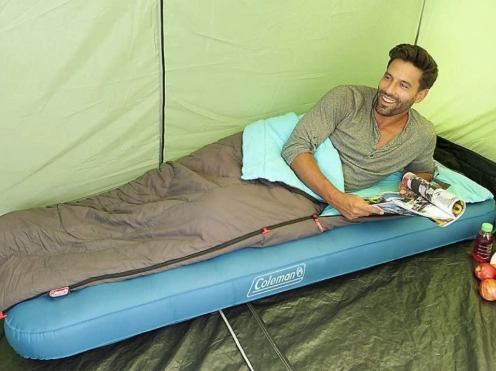
R-value measures thermal resistance. Higher number = better insulation = warmer sleep. Here’s a rough guide:
- R-1 to R-2: Summer only. Warm nights above 50°F (10°C).
- R-3 to R-4: Three-season. Good for most spring, summer, and fall conditions down to freezing.
- R-5 and above: Winter/cold-season camping. You need this for snow or temps well below freezing.
A standard air bed has an R-value of about 1 or less. It's basically a blanket of cold air. That's why you freeze. A good camping pad will have a tested, standardized R-value (look for ASTM standards). When you're looking at an insulated air pad or a self-inflator, the R-value is your best indicator of whether you'll sleep warm.
My personal rule? I always go one R-value higher than I think I need. It's easier to vent a warm pad by loosening a valve than it is to magically create warmth you don't have.
Common Questions (The Stuff You're Actually Wondering)

Pro Tips & Pitfalls to Avoid
Choosing the gear is half the battle. Using it right is the other half.
First, always use a groundsheet. A simple piece of tyvek or a footprint for your tent protects the bottom of your pad (or cot) from abrasion and punctures. Clear your sleeping area of sharp sticks and pinecones. It seems obvious, but in the dark, we all get lazy.
For inflatable pads, inflate them at home first. Leave them inflated for a few hours to check for slow leaks. Discovering a leak in your living room is infinitely better than at the campsite. Also, your lungs put moisture into the pad. For winter camping, use a pump sack (a stuff sack with a tube) to keep the interior dry and prevent frost buildup inside the pad, which can ruin insulation.
With self-inflating pads, the care is different. When packing up, don't just cram it in. Open the valve, roll it tightly from the end opposite the valve to push the air out, then close the valve. This protects the internal foam structure. Store it at home unrolled or loosely rolled with the valve open.
For cots, practice setup at home. Some modern folding cots are intuitive, but others have tricky mechanisms. You don't want to be wrestling with it by flashlight.
Wrapping It Up: Your Path to Perfect Camp Sleep
The journey to find the right alternative to an air bed for camping is really about understanding your own needs and being honest about your priorities. Is it weight? Is it never being cold again? Is it feeling like you're in your own bed?
There's no single "best" answer for everyone. The best camping mattress is the one that gets *you* a great night's sleep so you can enjoy your days outside to the fullest.
Start with that car camping vs. backpacking question. Then think about your sleeping style (side, back, stomach). Then consider the temperatures you camp in. That three-part filter will eliminate most options and leave you with one or two clear winners.
Investing in a proper sleeping pad or cot isn't just buying gear; it's buying better trips. That money translates directly into energy, mood, and memories. After a decade of camping, I can tell you that the single biggest upgrade to my enjoyment wasn't a fancier stove or a brighter lantern—it was finally ditching that miserable, cold air bed and finding a sleep system that actually worked.
Your back (and your camping partners) will thank you.