Group camping is the best way I know to turn a weekend into a story you’ll tell for years. It’s also the quickest way to test a friendship if you don’t plan it right. The magic isn’t just in the campfire or the stars; it’s in the shared effort, the inside jokes that form by the fire, and the collective sigh of relief when the rain fly goes up seconds before a downpour. But that magic doesn’t happen by accident. A smooth group trip is a minor logistical miracle. I’ve seen trips fall apart over who forgot the coffee and trips become legendary because someone thought to bring a portable speaker and a trivia game. The difference is in the details nobody talks about until they’re a problem.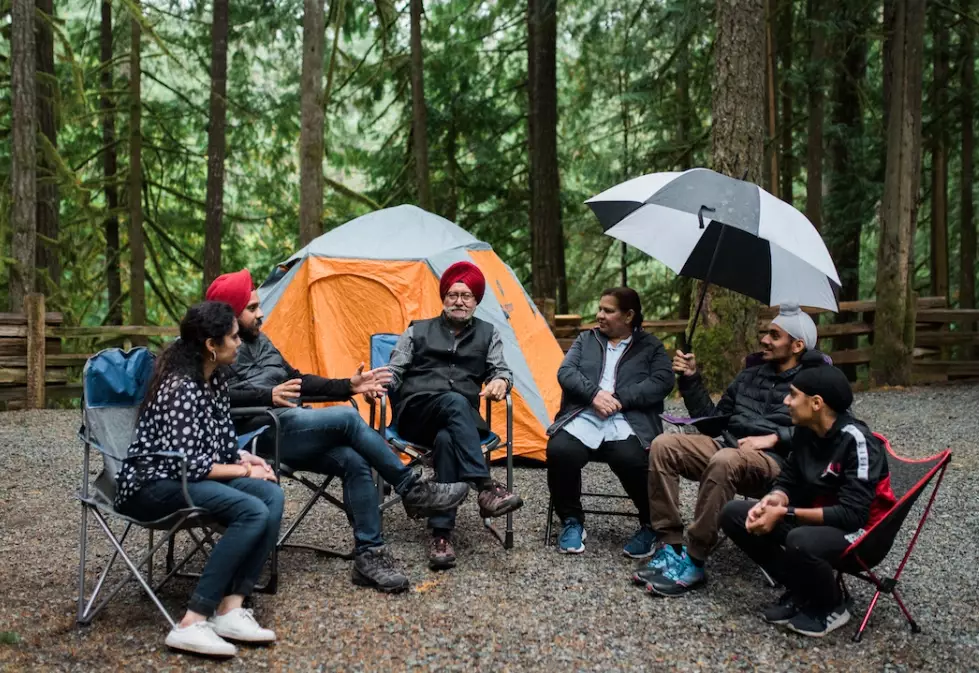
Your Quick Trip Planner
How to Choose the Perfect Group Camping Site
Picking a spot is your first major decision, and it sets the tone for everything. It’s not just about a pretty view.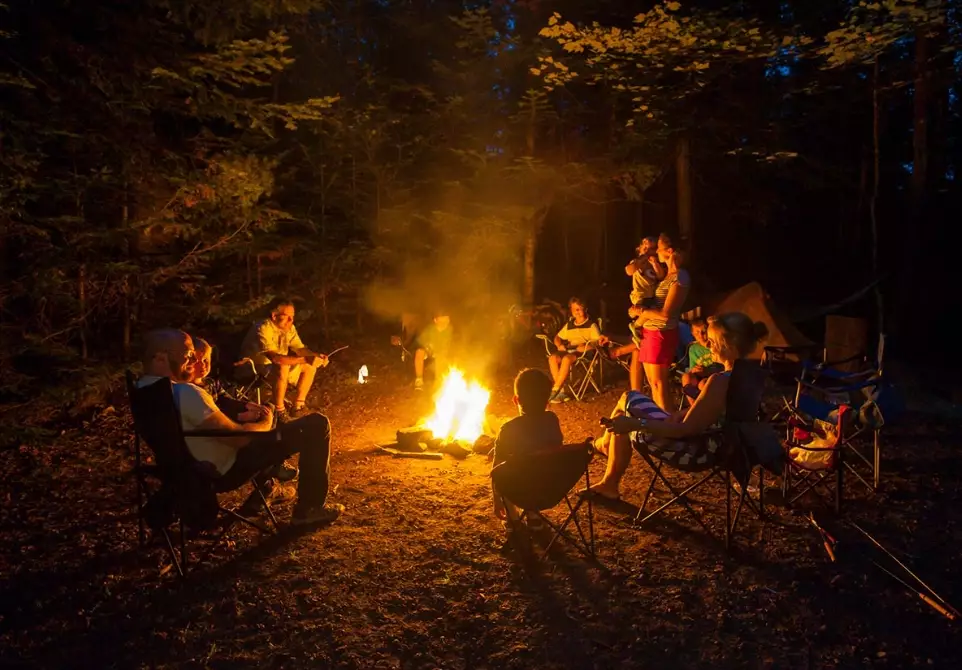
Think About Your Group's DNA First
Are you a crew of hardcore hikers who want backcountry challenges, or a mix of families with toddlers who need a flat path to the bathroom? Be brutally honest. That friend who says they’re “up for anything” might not be after a mile hike to a primitive site with no cell service. Matching the site to the group’s lowest common denominator of comfort ensures no one is miserable.
Site Type and Amenities: The Make-or-Break Details
You’re looking for two things: space and facilities.
Drive-in Group Sites: These are gold. Reserved for larger parties, they often have multiple picnic tables, a large communal fire ring, and space for several cars. They book fast. Examples include the group loops in places like Yosemite National Park or many Recreation.gov-managed campgrounds. The fee is higher but covers the whole group.
Adjacent Standard Sites: The more common approach. Book 2-3 regular campsites next to each other. Call the campground directly—the online booking map doesn’t always show which sites are truly adjacent. Ask, “Which sites (e.g., A12, A13, A14) can we combine into a group area?”
Check for: Potable water spigots (how far?), bear lockers (size and number?), restroom type (flush toilets vs. vault toilets—a big deal for some), and firewood availability.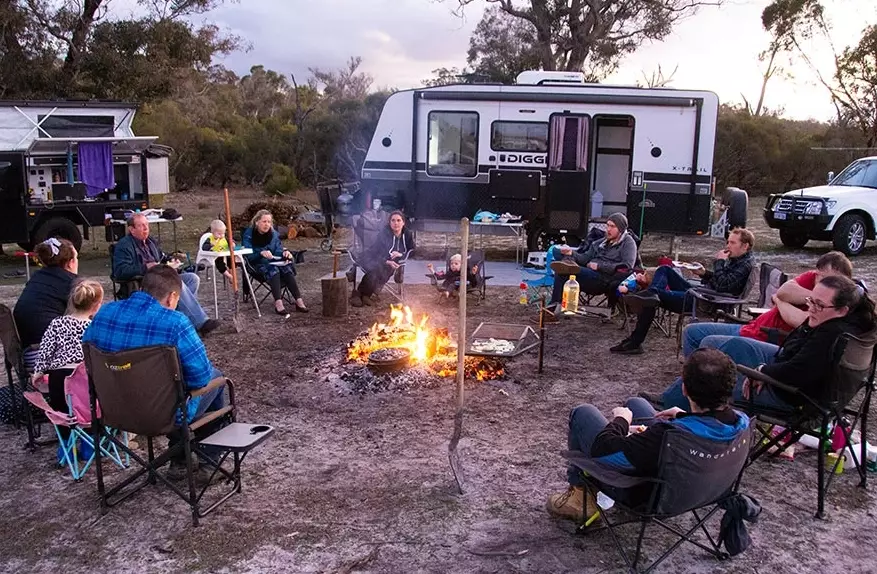
The Nuts and Bolts of Group Planning & Logistics
This is where friendships are proven. The goal is shared responsibility, not one martyr doing all the work.
The Pre-Trip Huddle: More Than Just a Chat
One group video call, two weeks out. Agenda:
- Shared Document: A live Google Doc or Sheet is your command center. It should have: master packing list, meal plan, assigned gear, emergency contacts, and driving directions.
- Money Talk: Decide on a budget per person for shared items. Use an app like Splitwise from the start. Designate one person to buy communal food (with receipts), another to book the site. Reimburse them immediately via Venmo/PayPal—don’t let IOU’s linger.
- Meal Planning That Actually Works: Don’t just say “we’ll figure it out.” Assign meals to small teams. Team A does Friday dinner (tacos), Team B does Saturday breakfast (pancakes and bacon), etc. This distributes the cooking labor and ensures you have all ingredients. Plan one-pot or foil-packet meals—they’re simpler for groups.
The Transportation Puzzle
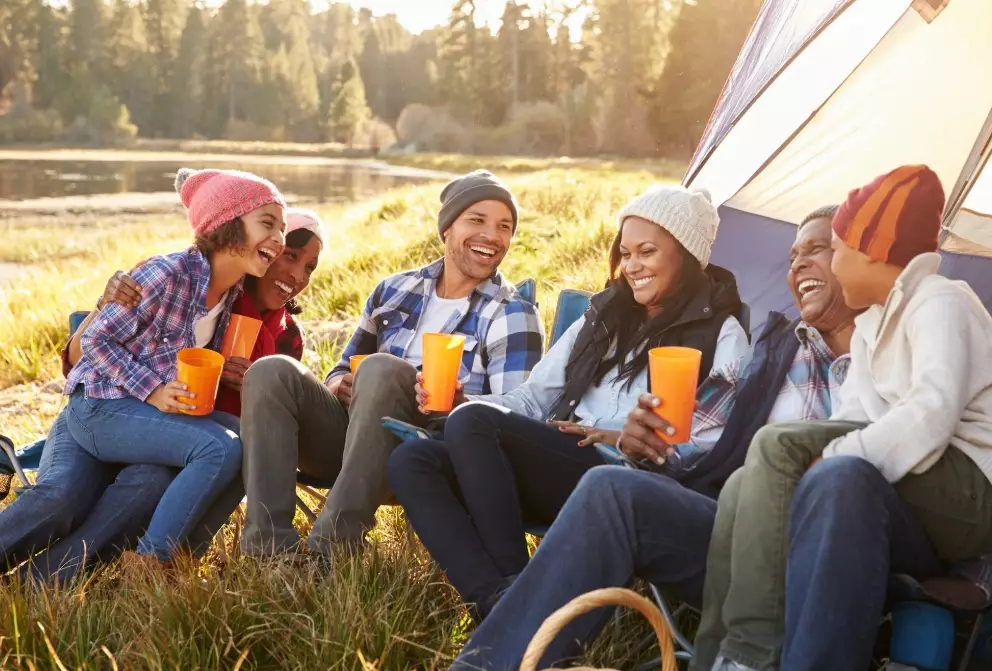
Carpooling is eco-friendly and fun, but be smart. Don’t cram all the food into one car that gets a flat tire. Distribute shared gear and food across multiple vehicles. And for the love of all that is holy, share the location pin of the exact campsite, not just the campground entrance. “Meet at Pine Grove Campground” leads to 45 minutes of driving in circles.
The Non-Negotiable Group Camping Packing List
Forget the generic lists. Here’s what you actually need for a group, broken into who brings what.
| Item Category | Personal Responsibility (Each person brings) | Group/Shared Responsibility (Assign to individuals!) |
|---|---|---|
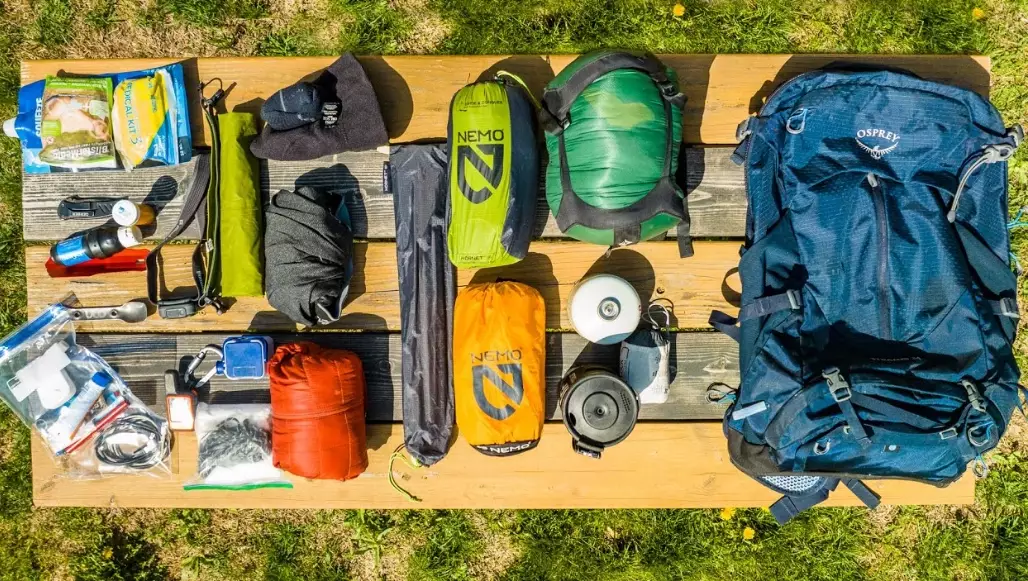
| Shelter & Sleep | Tent, sleeping bag, pad, pillow, headlamp. | Extra tarps & paracord (for a rain shelter or sun shade), mallet (for stubborn tent stakes), battery-powered lantern for the common area. |
| Kitchen & Food | Personal mug, bowl, plate, utensils, water bottle. | Large camp stove with 2+ burners, fuel canisters (bring extras), large cooler(s) with ice, communal cookware set (pots, frying pan, spatula), collapsible wash bins, biodegradable soap, dish towels, trash bags (heavy-duty), water jugs (5+ gallon). |
| Comfort & Safety | Personal clothing, toiletries, medications. | Full first-aid kit (not just bandaids), group-size bug spray & sunscreen, fire extinguisher (small can), multi-tool/knife, maps (paper, in case), power bank for group phone charging. |
| Fun & Social | — | Camp chairs for all (assign who brings how many), portable speaker, games (cards, frisbee, cornhole), roasting sticks for marshmallows. |
My personal rule: if it’s critical for safety or meal prep (stove, water filter, first-aid), have a backup person assigned. I once watched a group stare at a pile of food because the one person with the stove forgot it. It wasn’t funny.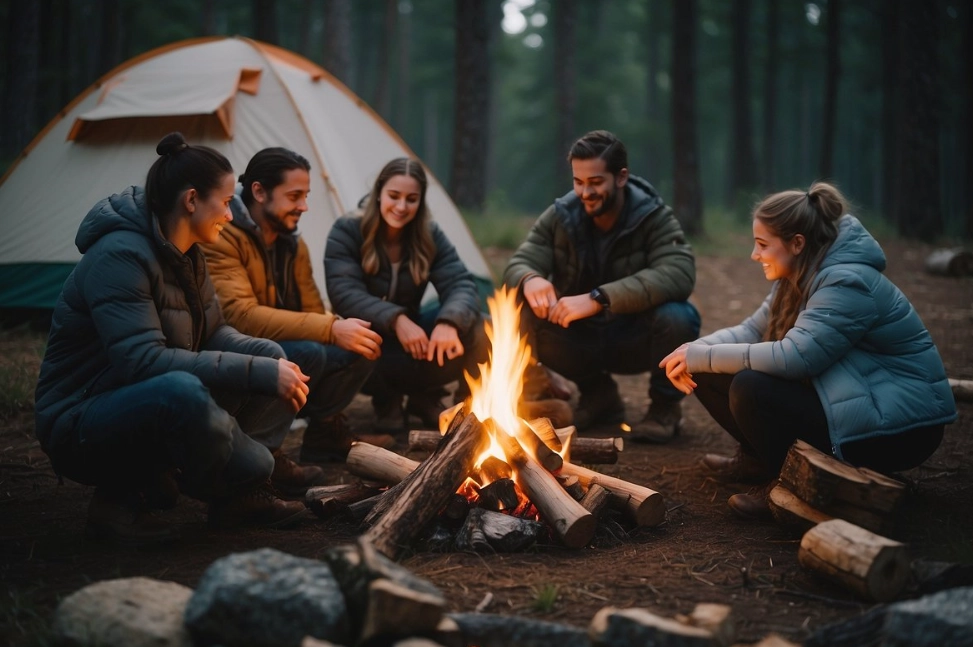
Setting Up Camp: Creating Your Base for Fun
How you arrange your temporary home matters more than you think.
Zoning is Key: Think of your site in zones. Designate a Kitchen/Cooking Zone (downwind from tents, on a stable table), a Social/Fire Zone (clear of trip hazards, with chairs in a circle), and a Sleeping Zone (on the flattest, highest ground). Keep tents at least 20 feet from the fire ring if possible—sparks happen.
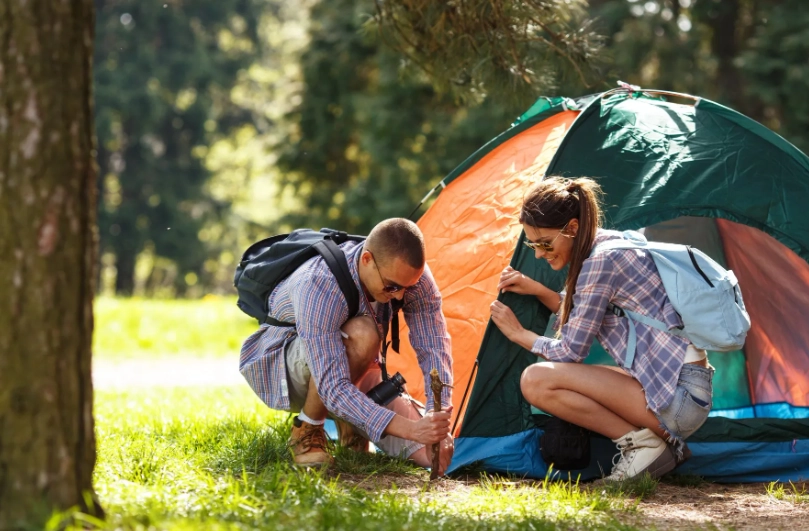
The First 60 Minutes Rule: When you arrive, everyone focuses on communal setup first. Get the shared tarp up, the kitchen organized, the water jug filled. Then people go set up their personal tents. This builds team spirit and ensures you have a functional base before fatigue sets in.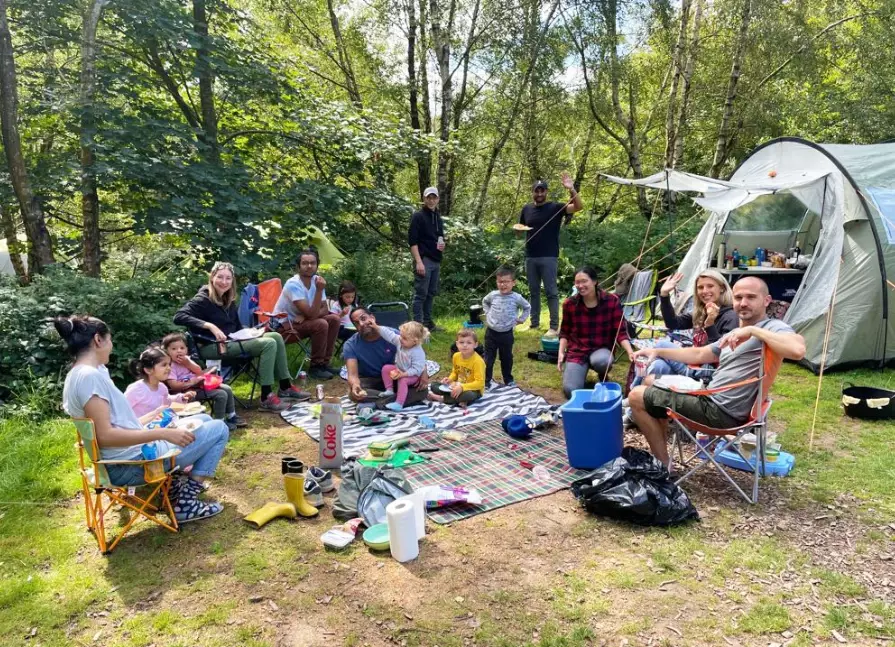
When Things Go Sideways: Handling Common Group Issues
It won’t all be perfect. Here’s how to handle the classics.
The Weather Turns: This is why you have those extra tarps. String one up high over the social area. Have a tent designated as the “game tent” where people can crowd in to play cards. Embrace it—rainy days make for the best memories if you’re prepared.
Conflicting Energy Levels: The early birds want to hike at dawn; the night owls are just getting to bed. Normalize this split. Plan one or two “whole group” activities (like a midday lake swim or big dinner), but let people opt in or out of others without guilt. Announce plans, don’t demand participation.
Clean-Up Drift: People naturally wander away from dishes. The trick isn’t nagging, it’s systemizing. Assign a clean-up crew for each meal (the people who didn’t cook). Have the wash station ready to go before the meal even starts.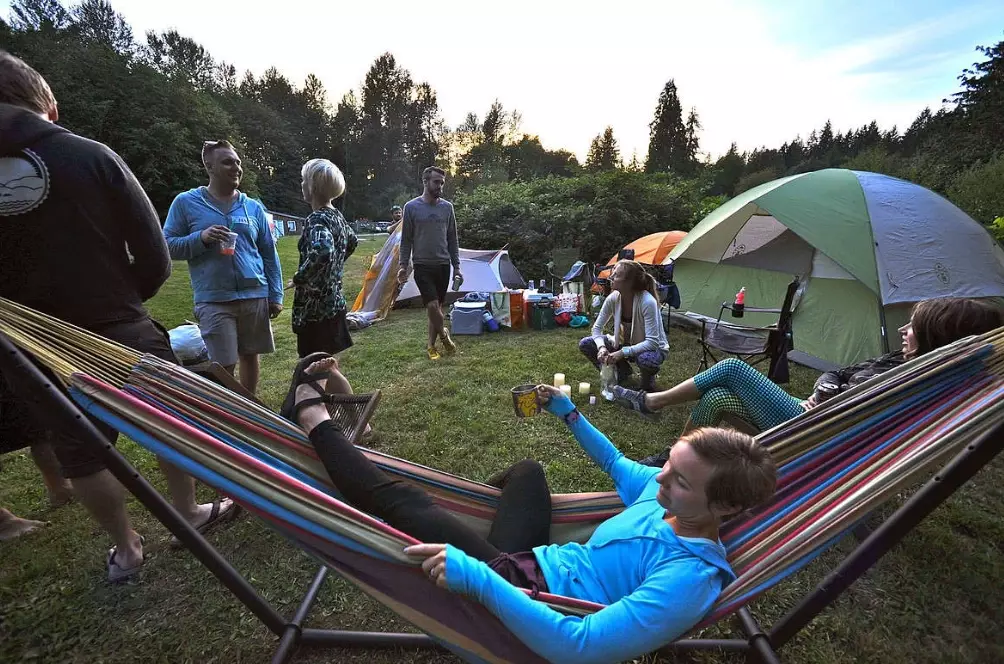
Your Group Camping Questions, Answered
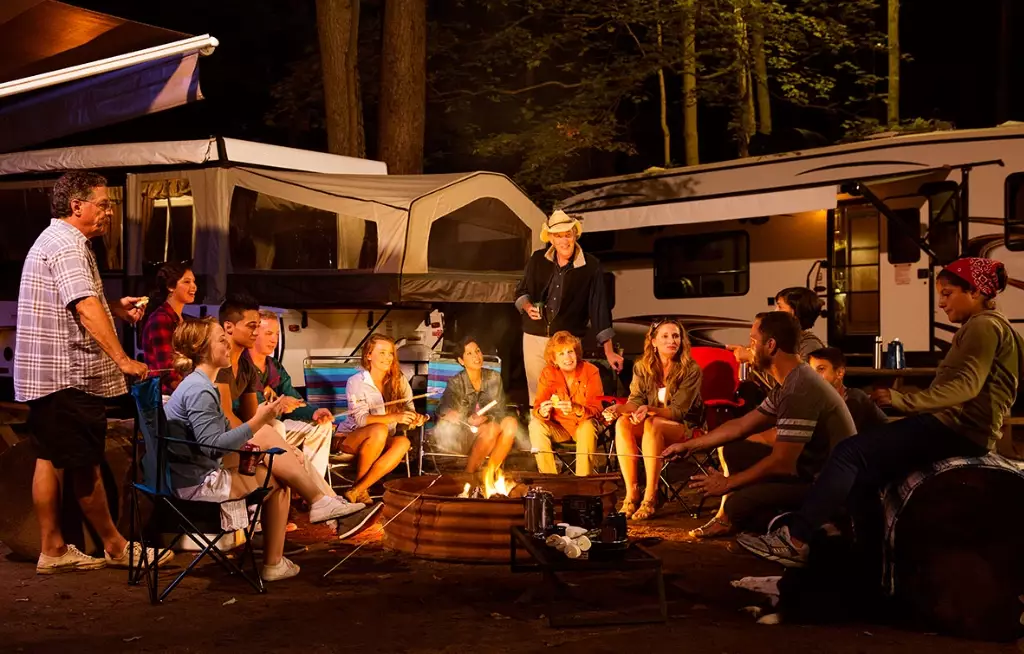 The real success of a group camping trip isn’t measured by perfect weather or gourmet meals. It’s measured by the fact that you want to do it all over again next year. That happens when everyone feels like they contributed, were considered, and had space to enjoy themselves. It’s about shared logistics leading to shared laughter. Now go book that site, start that shared doc, and get ready for one of the best weekends you’ll have all year.