You've probably heard it before: camping is good for you. It gets you outside. It's fun. But when you're staring at another weekend of Netflix and household chores, that vague notion isn't always enough to make you pack up the car and head for the hills. I get it. I've been there.
After over a decade of guiding trips and spending countless nights under canvas—from soggy misadventures to perfect, star-filled evenings—I've come to see camping not as a hobby, but as a fundamental reset button. The benefits aren't just poetic ideas; they're physiological, psychological, and deeply practical. This isn't about becoming a wilderness expert. It's about understanding how a simple shift in your environment can quietly repair parts of modern life that wear you down.
Let's talk about what actually happens when you trade your ceiling for a canopy of leaves.
The Unbeatable Sleep Reset
This is the benefit people feel first, and it's backed by solid science. A landmark study published in Current Biology found that a weekend of camping reset participants' circadian clocks by over 80%. That's the technical way of saying their bodies realigned with the sun.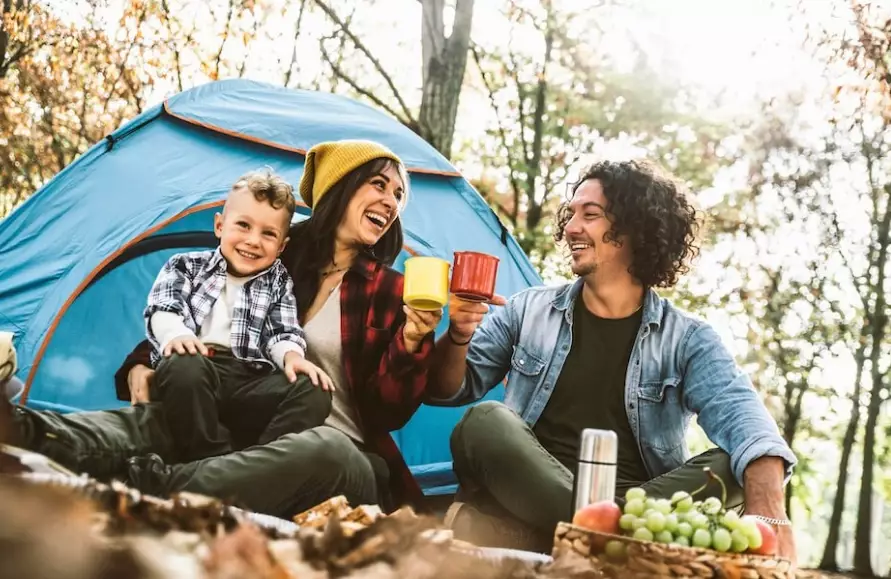
Here’s how it works in your tent. At home, artificial light—especially the blue light from screens—tricks your brain into thinking it's still daytime, suppressing melatonin (the sleep hormone). You might feel tired, but your body isn't primed for deep, restorative sleep.
Camping cuts that cord. The bright, broad-spectrum light of morning hits your eyes, firmly signaling "day." As dusk falls, the absence of artificial light allows melatonin to rise naturally. The result? You feel genuinely sleepy earlier, and you tend to wake up feeling alert, not groggy. It's not just "fresh air." It's your biology working as intended.
I remember a friend, a chronic insomniac who relied on sleep aids, joining me for a three-day trip. The first night was rough. The second night, he slept nine solid hours. He was stunned. The fix wasn't a pill; it was the rhythm of light and dark his body had been craving.
The #1 Mistake That Wrecks Camp Sleep
It's using your headlamp or phone like a reading light in the tent after dark. That burst of blue light directly in your face is like a caffeine shot to your pineal gland. If you need light, use the red-light setting on your headlamp—it preserves your night vision and doesn't disrupt melatonin. Better yet, just go to sleep. The stars will still be there tomorrow.
The Mental Health Shift: Beyond "Reducing Stress"
Yes, camping reduces stress. But that phrase is overused. Let's be specific about the how.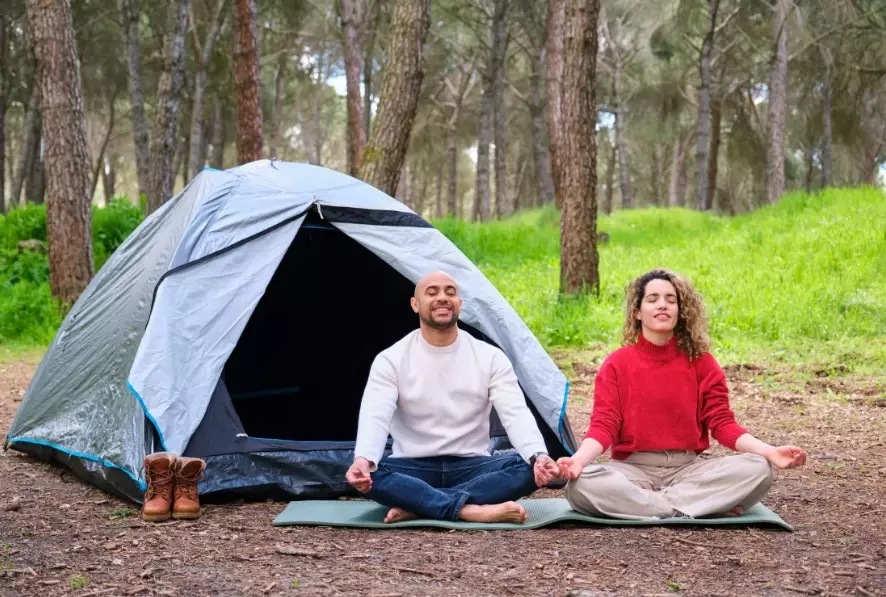
First, it forces a digital detox. You're not just avoiding work emails. You're removing the constant, low-grade anxiety of notifications, social comparison, and the endless scroll. This mental space doesn't just empty; it gets filled with something else: sensory input from your surroundings. The sound of wind in the trees, the smell of pine, the focus required to set up a tent. This is a form of mindfulness you don't have to try hard to achieve. It happens automatically.
Second, it creates a sense of mastery and self-reliance. In a world where we outsource everything (food, entertainment, problem-solving), successfully building a fire, cooking a meal on a stove, or navigating a trail gives a tangible hit of accomplishment. It's a direct counter to feelings of helplessness or anxiety.
Research, like that aggregated by the American Psychological Association on nature's impact on well-being, consistently shows that time in natural environments lowers cortisol (the stress hormone), reduces rumination (that loop of negative thoughts), and improves mood and cognitive function. Camping isn't a passive view of nature from a car window; it's an immersive bath in it.
The Art of the Real-World Reconnect
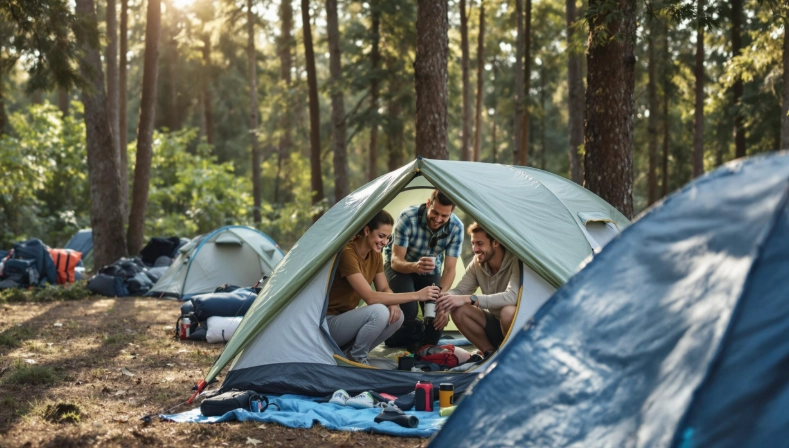
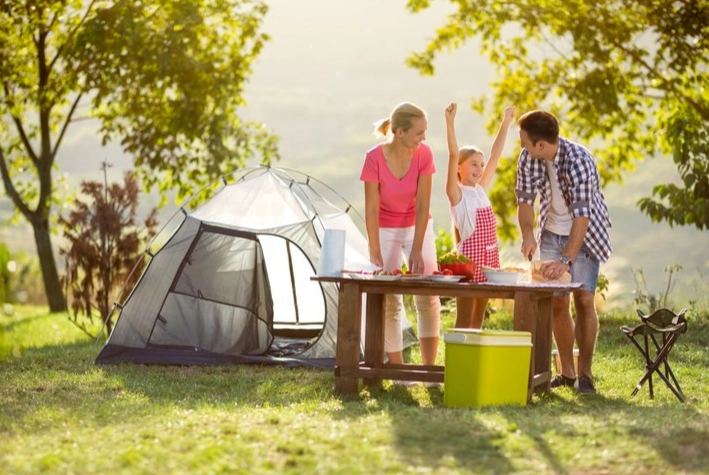 Think about your last dinner with friends or family. How often did phones come out? Camping strips away those distractions and creates a shared, low-stakes project. You're working together toward a common goal: a comfortable camp, a good meal, a warm fire.
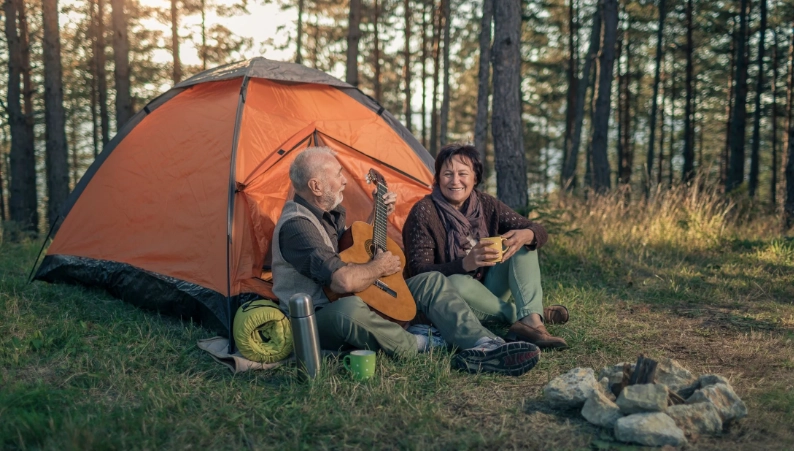
Conversations happen differently. Without the background noise of media, talk deepens. You solve small problems together. You share silence comfortably. For families, it gives kids a chance to see parents in a different, capable light. For friends, it builds camaraderie through shared experience, not just shared consumption.
It's also a fantastic way to meet people. Campgrounds have a unique, friendly vibe. It's easy to strike up a conversation about someone's gear, their dog, or a nearby hiking trail. This organic social interaction is a world away from the often performative nature of online connection.
Building Confidence Through Practical Skills
This benefit is often overlooked, but it's profound. Camping teaches micro-skills that build macro-confidence.
- Resourcefulness: You learn to improvise. Forgotten a mallet? Use a rock. Rainfly leaking? Apply some seam sealer. This mindset translates off the trail.
- Basic Preparedness: You learn to read a weather forecast seriously, to pack a proper first-aid kit, to understand the importance of layering clothing. This fosters a sense of security and competence.
- Environmental Stewardship: Practicing Leave No Trace principles (resources for which are meticulously detailed by the Leave No Trace Center for Outdoor Ethics) gives you a direct, respectful relationship with the natural world. You learn to take only pictures, leave only footprints.
These aren't survivalist skills for a dystopian future. They're life skills that make you feel more capable and grounded in an increasingly abstract world.
How to Actually Get These Benefits (A Realistic Start)
Convinced of the benefits but feeling intimidated? The biggest barrier is overcomplication. You don't need to hike 10 miles into the backcountry.
Start with Car Camping. Drive to a established, front-country campground in a state or national park. These often have amenities like picnic tables, fire rings, potable water, and restrooms. Your car is right there with all your gear. It's camping with a safety net.
Your First-Timer Gear Shortlist (Skip the Fancy Stuff)
Borrow, rent, or buy used. Focus on the essentials for comfort and safety.
- Shelter: A simple 3-4 person dome tent (more space is better for beginners). Practice setting it up in your yard first.
- Sleep: A sleeping pad (insulated is best) is more importantthan a fancy sleeping bag. It insulates you from the cold ground. A decent rectangular sleeping bag rated 10-20°F below your expected low temp.
- Cooking: A basic propane camp stove (like a Coleman classic). Don't rely solely on building a fire for cooking—it's harder than it looks.
- Light: A headlamp (with a red-light mode) for each person.
- Clothing: NO COTTON. It gets wet and stays wet. Synthetic or wool layers only. A warm hat, even in summer.
Book a site for a Friday and Saturday night. One night often feels rushed; two lets you settle in. Pick a location within 2 hours drive. The goal is ease, not epicness.
 The true benefit of camping isn't found in a checklist. It's in the subtle recalibration that happens when you step outside the daily script. It's the deep sleep, the clear-headed quiet, the satisfaction of a simple meal you cooked yourself, and the real conversation under a sky full of stars. It's a reminder that you're part of a larger, slower, more resilient system.
So pick a weekend. Borrow a tent. Keep the menu simple. Don't aim for perfection. Just go. The benefits are waiting, not in the gear you buy, but in the experience you allow yourself to have.