You’re setting up camp, the fire is crackling, and you notice a cluster of bright red berries nearby. Your first thought might be, "Are those edible?" Or maybe you see a plant with three leaves and wonder if it’s the infamous poison ivy. This is where camping plant identification shifts from a niche hobby to an essential outdoor skill. It’s not just about naming things; it’s about safety, deepening your connection to the landscape, and unlocking a whole new layer of the camping experience. But get it wrong, and the consequences can range from an itchy rash to a medical emergency. I’ve been there—once mistook a young water hemlock for wild parsnip, a mistake I won’t make twice. Let’s get you confident in the basics.
What’s in This Guide?
Why Bother Identifying Plants While Camping?
Most campers think plant ID is for botanists. I thought so too, until a close call changed my mind. The reasons are practical.
Safety is the non-negotiable reason. A handful of common plants can ruin your trip. Poison ivy, oak, and sumac cause blistering rashes. Some mushrooms and berries are lethally toxic. Knowing what to avoid is your first line of defense.
It makes camping more engaging. Suddenly, the green blur around your tent resolves into individual characters. That tall plant with umbrella-like flowers is Queen Anne’s Lace. That soft moss is perfect for showing kids how nature retains water. Your hikes become scavenger hunts.
It fosters respect for the environment. When you can name a plant, you’re less likely to trample it carelessly. You start noticing how different plants indicate wet soil, dry slopes, or recently disturbed ground. You become a participant in the ecosystem, not just a visitor.
The One Rule for Safe Plant Identification
Forget color. Forget a single feature. The biggest mistake beginners make is latching onto one characteristic—"red berries means edible!" or "three leaves, avoid!"—and ignoring the rest.
You must use a combination of multiple features for a positive ID. It’s like a detective building a case. Here’s what you need to observe, in this order:
- Leaves: Shape (oval, lance-shaped, heart-shaped), arrangement (alternate, opposite, whorled), edge (smooth, toothed, lobed), and surface (hairy, waxy, smooth).
- Stems: Are they square, round, hollow, or solid? Do they have hairs, thorns, or milky sap?
- Flowers & Fruits: Shape, color, number of petals, how they’re grouped (cluster, single bloom).
- Growth Pattern: Is it a tall single stalk, a low-growing carpet, a vine, a shrub, or a tree?
- Habitat: Is it in a sunny meadow, a dense forest, a swampy area, or a dry rocky slope?
Pro Tip from the Field: Take a photo of the entire plant first, then get close-ups of leaves (top and underside), stems, and any flowers or fruit. This sequence mimics the identification process and gives you a complete reference.
Plants You’re Likely to See: The Good, The Bad, and The Itchy
Let’s get specific. This table covers plants you’ll probably encounter across many North American campsites. Memorizing these will cover 80% of your needs.
| Plant Name | Key Identifying Features | Typical Habitat | Risk / Note |
|---|---|---|---|
| Poison Ivy | "Leaves of three, let it be." Leaves are shiny or dull, with smooth or notched edges. Can be a vine, shrub, or ground cover. White berries in late summer/fall. | Woodland edges, trailsides, roadsides, riverbanks. Sun and shade. | HIGH. Contains urushiol oil causing severe, itchy rash. Even dead vines can cause reaction. |
| Poison Oak | Also "leaves of three," but leaves resemble oak leaves (lobed). Grows as a shrub. | Primarily western North America, in chaparral, forests. | HIGH. Same urushiol oil as poison ivy. Same precautions apply. |
| Stinging Nettle | Heart-shaped, toothed leaves in opposite pairs. Stem is square. Covered in tiny, hollow stinging hairs. | Damp, rich soil near streams, trails, forest clearings. | MODERATE. Brushing against it causes a painful, burning sting that fades in hours. (Young leaves are edible if cooked thoroughly!). |
| Wild Raspberry/Blackberry | Thorny canes (stems). Leaves are compound with 3-5 toothed leaflets. Flowers are white/pink. Fruit is an aggregate drupelet (the familiar berry). | Sunny openings, roadsides, forest edges. | LOW/EDIBLE. Thorns are the main hazard. Berries are safe and delicious when ripe (dark red/black). |
| Dandelion | Basal rosette of jagged-toothed leaves. Single, hollow flower stalk with a bright yellow composite flower. "Puffball" seed head. | Lawns, meadows, disturbed ground. Everywhere. | EDIBLE. Entire plant is edible (leaves best young, roots can be roasted). A great, safe beginner plant. |
| Queen Anne’s Lace (Wild Carrot) | Feathery, fern-like leaves. Tall, hairy stem with a flat-topped cluster (umbel) of tiny white flowers. Often a single dark red/purple flower in the center of the umbel. Smells like carrot when crushed. | Sunny fields, roadsides. | CAUTION. Edible root, but easily confused with deadly Poison Hemlock which has smooth, purple-spotted stems and a foul smell. Do not forage without expert guidance. |
See the pattern? Poison hemlock looks like Queen Anne’s Lace to the untrained eye. That’s why the multi-feature check is critical. Don’t just see a white flower cluster and think "carrot." Check that stem.
Never, ever eat a wild plant based solely on an app or a single online photo. Apps like iNaturalist or PictureThis are fantastic tools for generating leads, but they are not infallible, especially with toxic look-alikes. Use them to narrow down possibilities, then verify with a regional field guide or expert.
Your Plant ID Toolkit: Beyond the Phone App
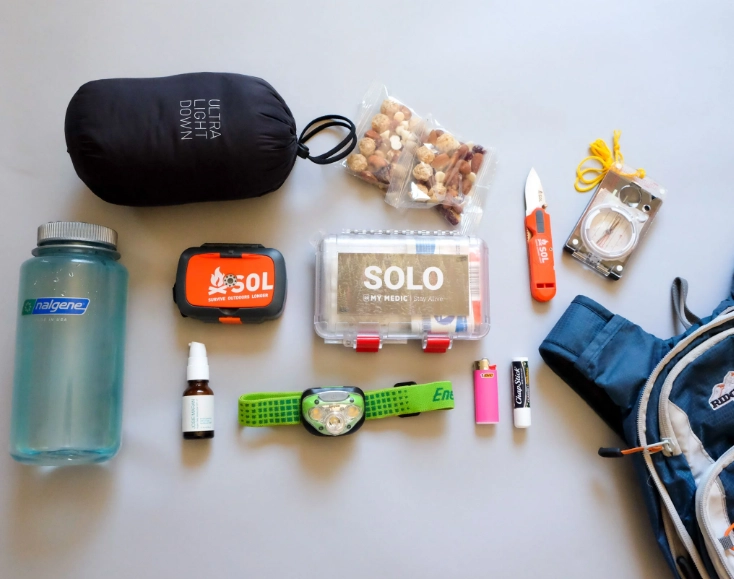
Relying on your phone’s spotty campground signal is a bad plan. Here’s what should be in your pack:
- A Physical Field Guide for Your Region: This is your bible. National Audubon Society Field Guides or Peterson Field Guides are classics. Get one specific to your camping area (e.g., "Plants of the Pacific Northwest").
- A Hand Lens (10x magnification): This $10 tool reveals crucial details: hair on a stem, the structure of a flower, the pores on a leaf. It’s a game-changer.
- Your Phone (Used Smartly): Take those reference photos I mentioned. Use apps offline. Many, like Seek by iNaturalist, allow pre-downloading plant packs. Use them to suggest an ID, then confirm with your book.
- A Notebook and Pencil: Sketching a plant forces you to observe every detail. Note the location, date, and habitat. This log becomes personal and invaluable.
For pre-trip learning, websites like the Lady Bird Johnson Wildflower Center database or your state’s university cooperative extension service website are goldmines of reliable, region-specific information.
A Real-World Camping Plant ID Walkthrough
Let’s put it all together. Imagine you’re camping in the Pacific Northwest and find a berry-bearing shrub.
Step 1: Observe from a distance. It’s a woody shrub, about 4 feet tall, growing in a partly shaded area near a stream.
Step 2: Examine leaves. They are oval, about 2 inches long, arranged alternately on the stem. The leaf edges are smooth. The underside is slightly paler.
Step 3: Examine stems & branches. The branches are reddish-brown. No thorns. No milky sap.
Step 4: Examine flowers/fruit. No flowers. It has dangling clusters of small, bright red, translucent berries. Each berry has what looks like a tiny "belly button" on the end.
Step 5: Consult resources. Your Pacific Northwest field guide’s shrub section, keyed to "alternate leaves, smooth edges, red berries." You land on Red Huckleberry (Vaccinium parvifolium). The description matches perfectly: habitat (moist forests), red twigs, distinctive red berries with a "persistent calyx" (that belly button).
Step 6: Final verification. Cross-reference with a second source—maybe a foraging book you brought confirms huckleberries are edible and choice. You taste one berry (the universal edibility test starts with a tiny taste on the lips, then tongue, waiting for reaction). It’s tart and sweet. Success! You’ve safely identified a camp-side snack.
This process took five minutes and turned a mystery plant into a known quantity. That’s the power of a system.
Your Camping Plant ID Questions Answered
Start small on your next trip. Pick one plant near your tent and try to identify it using the steps above. Maybe it’s just the common dandelion. That’s a win. You’ve moved from seeing generic "greenery" to recognizing a specific resident of your temporary home. That shift in perspective—from passive camper to engaged observer—is where the real magic of camping plant identification happens. It slows you down, makes you look closer, and turns every campsite into a living classroom. Stay curious, stay cautious, and enjoy the view.