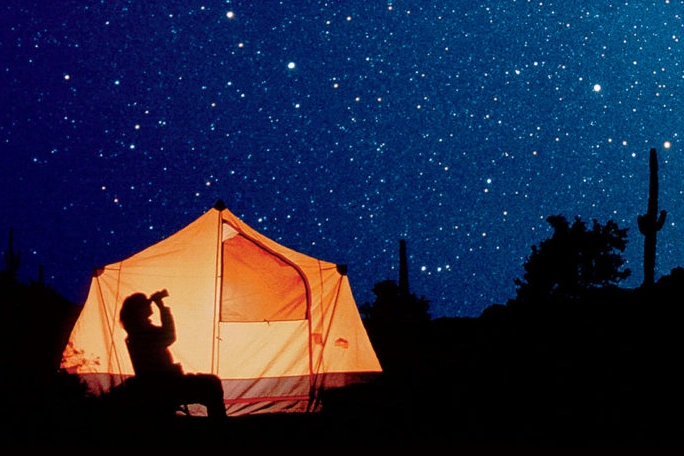
You're sitting around the campfire after a long day of hiking. The stars are out, the air is crisp, and someone passes you a bag of store-bought cookies. It's fine, but imagine pulling a warm, golden-brown loaf of bread or a gooey chocolate cake from your campfire instead. That's the magic of camping baking. It transforms a meal from fuel into an event, and it's not as hard as you think. Forget the complex setups; with a Dutch oven and some know-how, you can become the campsite's star baker. I've burned my share of biscuits to get here, and I'm going to show you how to avoid those mistakes.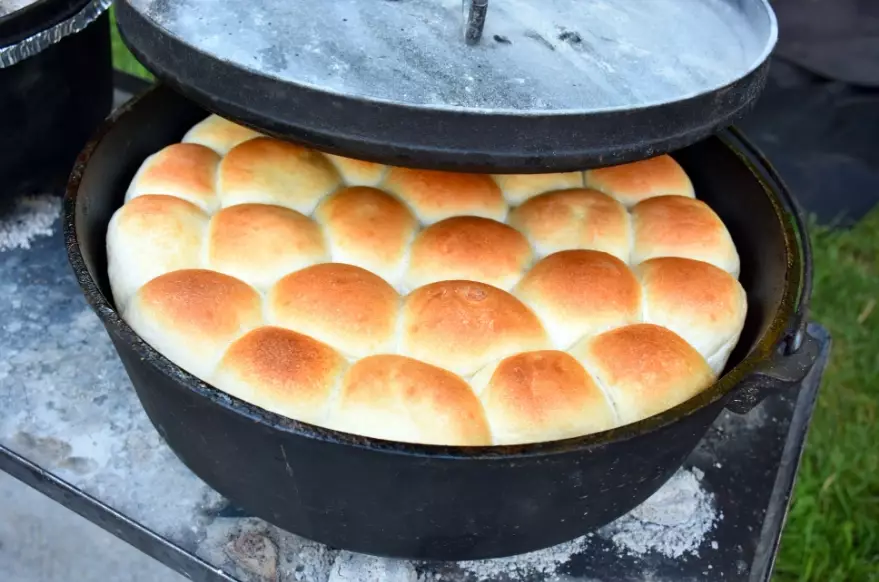
What You'll Learn in This Guide
Your Camp Kitchen Baking Hub: The Dutch Oven
Let's cut to the chase. For real camping baking, you need a Dutch oven. Not the fancy enameled one from your kitchen, but a cast iron one with a lipped lid. The lip is crucial—it holds hot coals on top. This creates an all-around oven environment. I made the mistake of trying to bake in a regular pot once. The bottom scorched while the top stayed doughy. A total waste of ingredients and morale.
You have two main choices: bare cast iron or enameled cast iron. For campfire use, bare cast iron is the undisputed champion. It's tougher, handles direct flame and coal heat better, and you can scrape it clean with less worry. Enamel can chip with the rough-and-tumble of camping. Seasoning your Dutch oven (building up a layer of polymerized oil) is key. A well-seasoned pot is naturally non-stick and rust-resistant. The National Park Service even has historical notes on Dutch oven cooking, underscoring its timeless role in outdoor life.
Size matters. A 10-inch or 12-inch oven (measured across the top) is the most versatile. It's big enough for a loaf of bread or a small cake but not so huge it's unwieldy. Weight is a factor—a 12-inch can weigh over 15 pounds. If you're backpacking, this isn't for you. But for car camping, it's essential gear.
How to Master Campfire Heat for Baking
This is where most people fail. Your home oven has a thermostat. Your campfire does not. You're managing two heat sources: the coals underneath and the coals on the lid.
A good rule of thumb is the 3:1 ratio. For every coal on the lid, place three coals underneath. This mimics a 350°F (175°C) oven. Want it hotter? Add more coals evenly. Need it cooler? Remove some. But here's the nuance everyone misses: coal placement, not just count, controls hot spots. Don't just dump coals in a ring. For even baking, spread the bottom coals in a circle that matches the pot's diameter. Place the lid coals in a checkerboard pattern, not a solid pile. This prevents a single scorching spot on your bread's top.
You need a good bed of mature coals, not roaring flames. Let your fire burn down for 30-45 minutes until you have a bed of glowing, ash-covered embers. Use a small shovel or long-handled tongs to move them. I keep a metal bucket of water nearby for safety when moving coals.
| Target Oven Temp | Coals Under Oven (10-inch) | Coals On Lid (10-inch) | Best For |
|---|---|---|---|
| ~325°F (163°C) | 6-8 coals | 2-3 coals | Slow baking, fruit cobblers |
| ~350°F (177°C) | 9-10 coals | 3-4 coals | Breads, cakes, biscuits (standard) |
| ~375°F (191°C) | 12-14 coals | 4-5 coals | Pizza, cornbread, roasting |
Rotate the entire Dutch oven a quarter turn every 10-15 minutes, and give the lid a quarter turn in the opposite direction. This evens out any minor heat variations in your coal bed.
3 Foolproof Camping Baking Recipes to Start With
Start simple. These recipes require minimal prep, common ingredients, and forgive small temperature fluctuations.
1. No-Knead Campfire Bread
This is my go-to. The long, slow rise develops flavor, and the wet dough creates a fantastic crust. Mix it at home, let it rise in the cooler, and bake it at camp.
Ingredients: 3 cups all-purpose flour, 1.5 cups warm water, 1 tsp salt, 1/4 tsp instant yeast.
At Home (12-24 hrs before): Mix everything in a large bowl until no dry flour remains. Cover with plastic. Let sit at room temp for 12-18 hours. It will be bubbly and doubled. Gently scrape it into a well-oiled, parchment-paper-lined bowl for transport. Cover and refrigerate in your cooler.
At Camp: Let the dough come near room temp for an hour. Preheat your Dutch oven with coals for 350°F for 15 minutes. Carefully lift the dough by the parchment and lower it into the hot pot. Put the lid on with coals. Bake for 30 minutes. Remove the lid and bake for another 15-20 minutes until deep golden brown. The smell alone is worth it.
2. Dump-and-Stir Chocolate Cake
Yes, cake. It's a huge morale booster. Use a pre-mixed dry ingredient bag to save time.
Dry Mix (pre-bag at home): 1.5 cups flour, 1 cup sugar, 1/4 cup cocoa powder, 1 tsp baking soda, 1/2 tsp salt.
At Camp: Dump the dry mix into a bowl. Add 1 cup water, 1/3 cup vegetable oil, 1 tbsp vinegar (white or apple cider), and 1 tsp vanilla. Mix until just combined. Pour into a greased 9-inch round pan or a greased Dutch oven. Bake at 350°F for 25-35 minutes. A toothpick should come out clean. Let it cool for 10 minutes before digging in.
For your third recipe, try a savory option like Cheesy Garlic Pull-Apart Biscuits. Use a store-bought tube of biscuit dough. Cut each biscuit into quarters. Toss in a bag with melted butter, garlic powder, and grated Parmesan. Dump them into a greased Dutch oven and bake at 375°F for 15-20 minutes until puffed and golden. It's idiot-proof and always disappears.
The 5 Most Common Camping Baking Mistakes (And How to Fix Them)
- Impatience with the Fire. Baking over flames guarantees a burnt bottom. Wait for coals.
- Not Preheating the Dutch Oven. You must preheat it with coals for at least 10 minutes. A cold pot starts your bake in a heat deficit.
- Peeking Too Often. Every time you lift the lid, you lose massive heat and steam. Trust your coals and timer. One quick check at 2/3 of the cook time is enough.
- Using the Wrong Fuel. Softwoods like pine create coals that burn fast and hot, then fizzle. Hardwoods like oak, maple, or hickory create long-lasting, consistent coals. Bring your own hardwood charcoal briquettes as a reliable backup—they're predictable.
- Ignoring Wind. Wind cools coals rapidly. Build a windbreak with rocks or sit in a sheltered spot. You may need 25% more coals on a windy day.
Gear Beyond the Oven: What Really Matters
You don't need a full kitchen. Focus on these:
- Heavy-Duty Gloves: More important than any fancy tool.
- Long-Handled Tongs or Shovel: For moving coals safely.
- Compact Mixing Bowls with Lids: The lid turns the bowl into a storage container.
- Flexible Silicone Spatula: Scrapes batter cleanly and is easy to wash.
- Small Sifter or Whisk: For combining dry ingredients and eliminating lumps.
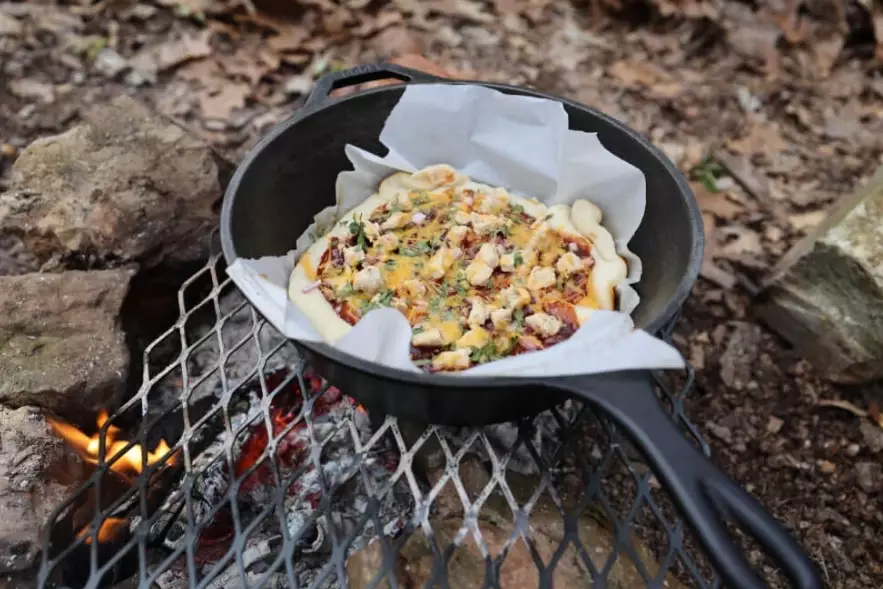
- Parchment Paper Rounds: Cut to fit your Dutch oven. They are the ultimate non-stick solution and make cleanup a breeze. This is my number one secret weapon.
A small, lightweight digital thermometer can help you check internal doneness (bread is done at 190-200°F internally), but it's not essential once you get the feel.
Your Camping Baking Questions Answered
 How do I clean my cast iron Dutch oven after baking at the campsite?