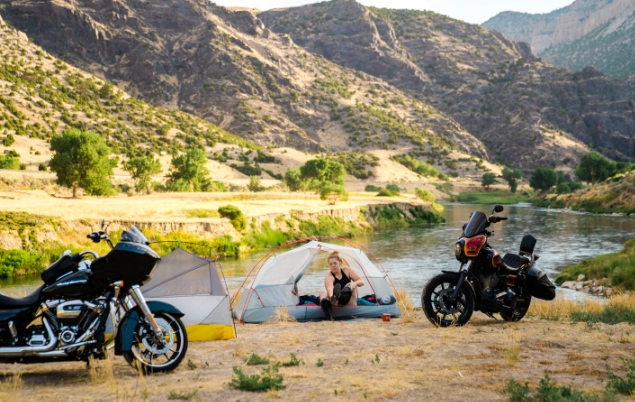
I remember the first time I tried to go off-grid. My phone died on day two. My camera followed. The little LED lantern sputtered out by night three. I spent more time worrying about battery percentages than looking at the stars. That trip ended with a desperate drive to the nearest town with an outlet. It felt like cheating. There had to be a better way.
That's when I got serious about solar camping. It's not just about being green, though that's a nice bonus. It's about real freedom. Freedom from the buzz of a generator, from the hunt for an electrical hookup, from that low-battery anxiety that creeps into your mind. You can set up camp anywhere the sun touches and have power for lights, phones, a small fridge, even a laptop if you need it.
But let's be honest. The world of portable solar is confusing. Watts, amp-hours, monocrystalline, MPPT controllers. It's easy to buy the wrong thing. I've made those mistakes so you don't have to.
Your Solar Camping Roadmap
Understanding the Basics: It's a System, Not Just a Panel
This is the most important concept. A solar panel by itself is almost useless for camping. You can't plug your phone directly into it. Why? The sun isn't constant. Clouds pass. The angle changes. The panel's output is a trickle of power that needs to be collected, stored, and regulated.
You need three core components:
- The Solar Panel: This captures sunlight and converts it to Direct Current (DC) electricity. Its power is measured in watts (W). More watts means it can potentially capture more energy per hour.
- The Battery (Power Station/Solar Generator): This is your reservoir. It stores the energy from the panel so you can use it anytime—day, night, or during a rainstorm. Capacity is measured in watt-hours (Wh) or amp-hours (Ah). This is your most important purchase.
- The Charge Controller: This is the brain. It manages the flow of energy from the panel to the battery, preventing overcharging (which can damage or destroy a battery). Good portable power stations have this built-in. If you're connecting a panel directly to a standalone battery, you must use one.
How to Choose the Right Portable Solar Panel for Camping
Walk into any store or browse online, and you'll see a dizzying array. Let's break down the real differences.
Panel Type: Rigid vs. Folding vs. Flexible
Folding Rigid Panels: These are the workhorses. They're made of durable, efficient monocrystalline cells mounted on a hard, foldable frame. They're relatively efficient, last a long time, and often come with a kickstand. They're my top recommendation for most campers. The downside? They can be a bit bulky when folded.
Flexible Panels: Lightweight and can be curved. Great for permanently mounting on an RV or boat roof. For ground camping, they're less ideal. They're less efficient, more prone to heat damage, and without a rigid back, they're harder to angle at the sun unless you lay them flat (which reduces efficiency).
Small Rigid Panels: Those little 10-20W panels that plug directly into a USB power bank. These are perfect for very low-power needs—keeping a phone and a headlamp charged on a solo hike. They are not for powering a fridge or a CPAP machine.
Key Specs That Actually Matter
Ignore the marketing fluff. Look for these:
- Monocrystalline Cells: More efficient than polycrystalline, especially in less-than-ideal light. Worth the extra cost.
- MPPT vs. PWM Charge Controller: If your panel has a built-in controller, MPPT (Maximum Power Point Tracking) is superior. It can be up to 30% more efficient at converting solar energy, particularly on cold or cloudy days. Most high-quality panels and all-in-one power stations use MPPT now.
- Output Ports: Look for a panel with a DC output (like an 8mm port or Anderson connector) to charge a power station and a USB-C PD output. USB-C PD can charge modern phones and laptops much faster than standard USB.
| Best For... | Recommended Panel Size | Battery Capacity Needed | Sample Power Use (per day) |
|---|---|---|---|
| Weekend Warrior (Phones, lights, speaker) | 60W - 100W | 200Wh - 500Wh | Phone (10Wh), LED Lantern (5Wh), Speaker (15Wh) = ~30-50Wh |
| Family Camping (Adds tablets, drone, string lights) | 100W - 200W | 500Wh - 1000Wh | Add 2 tablets (60Wh), drone (50Wh), lights (20Wh) = ~150-200Wh |
| Comfort/Overlanding (12V Fridge, CPAP, fan) | 200W+ (or dual 100W) | 1000Wh+ | 12V Fridge (300-600Wh), CPAP (100Wh), Fan (50Wh) = 500Wh+ |
Building Your Solar Camping Kit: A Step-by-Step Guide
Let's build a kit for a common scenario: a couple camping for 3-4 days, wanting to run a small 12V fridge, charge phones and a camera, and have camp lighting.
Step 1: Calculate Your Power Needs (The Math You Can't Skip)
This is where everyone guesses wrong. Get the manual for your devices or look for a label. Find the wattage or the amp draw.
- 12V Fridge: Let's say it averages 3 amps. 3A x 12V = 36 watts. If it runs 1/3 of the time (a common compressor cycle), that's 36W x 8 hours = 288 watt-hours (Wh) per day.
- Phone: 0.5A x 5V = 2.5W. Charging for 2 hours = 5Wh.
- LED String Lights (10ft): 5W. Run for 5 hours = 25Wh.
- Daily Total: ~320 Wh.
For a 3-day trip with no sun (a safety buffer), you'd need at least 960 Wh of battery capacity.
Step 2: Choose Your Battery (The Heart of the System)
Based on our math, we need a power station around 1000Wh. Brands like EcoFlow, Jackery, and Bluetti are popular. Look for one with a pure sine wave inverter if you'll ever plug in sensitive electronics. The U.S. Department of Energy has useful primers on battery storage technology that explain these concepts in depth. For our kit, an EcoFlow River 2 Pro (768Wh) or a Jackery Explorer 1000 (1002Wh) would be good targets.
Step 3: Size Your Solar Panel (The Refueling System)
You need to recharge that 1000Wh battery. A 200W panel, under perfect conditions, might produce 800-1000Wh in a full sunny day. But conditions are never perfect. Clouds, angle, dust. A good rule is to assume 4-5 hours of good sun. So a 200W panel might give you 800-1000Wh. That's a good match to recharge our battery in one full day. For faster recharging or for cloudy climates, you could go for a 300W panel or two 160W panels.
Step 4: Don't Forget the Cables & Accessories
- Long Extension Cable: A 15-20 foot cable lets you place the panel in the sun while your camp and battery are in the shade. This is non-negotiable.
- Angle Adjuster/Kickstand: Angling the panel directly at the sun can increase output by 30-40% compared to laying it flat.
- Microfiber Cloth: Dust and pollen on the panel can cut output by 10% easily. A quick wipe makes a difference.
Real-World Setup and Pro Tips That Nobody Talks About
You've got the gear. Now, how do you make it work in the real world?
Morning Ritual: As soon as you get up, set up the panel. Don't wait until the battery is low. Think of it like refilling your water bottles at a stream—do it while you can. Place it in full, direct sun. Use the long cable. Angle it roughly towards the sun. A simple compass app can help you point it south (in the northern hemisphere).
The Shade Problem: If even one strip of your panel is in shade, it can cut power by 50% or more. Seriously. I've watched output plummet because of the shadow from a single tent guy-line. Clear the area.
Heat is the Enemy: Solar panels get less efficient when they get scorching hot. A cool, sunny day is actually better than a blazing hot one. If possible, allow for some airflow under the panel.
Here's a personal story that taught me a lesson. I was in the high desert, brilliant sun. My 100W panel was only putting out 30W. I was baffled. Turns out, the high altitude and intense sun had triggered the panel's over-temperature protection. I propped it up higher for airflow, poured a little water on the back to cool it (carefully!), and the output jumped back to 85W. Now I always check panel temperature with my hand.
Security: A $300 solar panel sitting unattended can walk away. I use a thin cable lock through the panel's grommets and around a tree or my tire. It's not Fort Knox, but it's a deterrent.
Your Solar Camping Questions, Answered
Here are the questions I get asked most, with answers based on a decade of trial and error.
Solar camping transforms the experience. It turns a campsite from a place you survive into a place you can truly live for a while, with the comforts you choose. It's a bit of an investment upfront, and there's a learning curve. But once you've had your coffee from a fridge that's been humming along for days in the middle of nowhere, powered by nothing but sunlight, you'll never want to go back. Start with the battery, size the solar to match, and embrace the quiet, independent power of the sun.