You've picked your destination, dusted off the tent, and are ready for stars and campfires. Then you hit the booking site and see the total: a nightly rate, plus a reservation fee, plus a vehicle fee... wait, what? Camping fees can feel like a hidden maze just when you thought you were escaping to simplicity. I've been there, staring at a checkout screen that was $50 higher than expected. It's not just you.
Understanding camping costs isn't about pinching pennies until the fun is gone. It's about making informed choices. Knowing the difference between a $15 state forest site and a $45 private RV resort with a pool lets you pick the experience you actually want. It helps you avoid that sinking feeling when you realize your "budget" trip needs a second budget.
Your Camping Fees Roadmap
What You're Actually Paying For: The Fee Breakdown
Let's cut through the jargon. A camping fee is rarely one single charge. It's a bundle. Think of it like a concert ticket: there's the base price, then the service fee, then maybe a facility charge. Here’s what each part typically covers.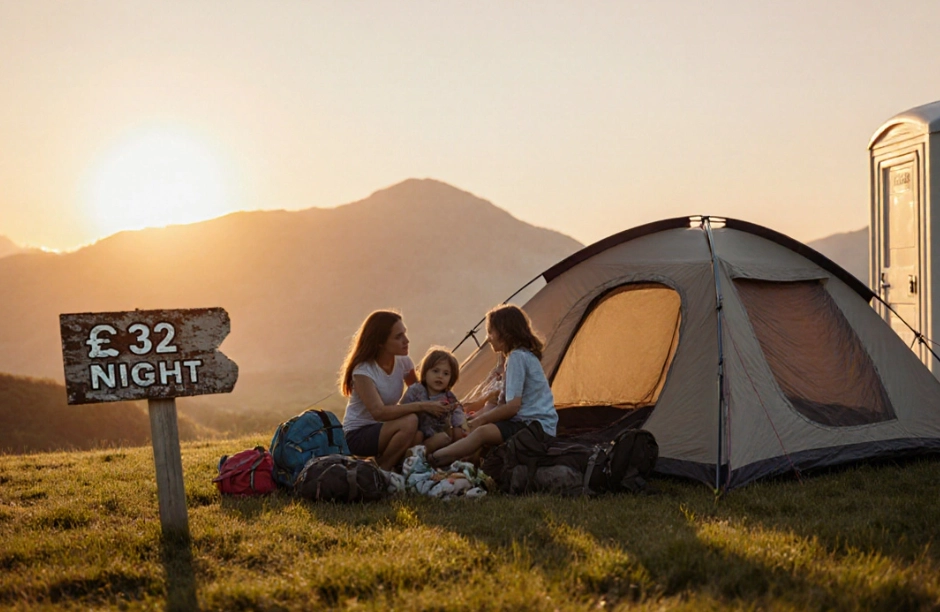
The Core Components
Nightly Site Fee: This is the main event. It rents you the patch of dirt (or gravel) for your shelter. For a basic tent site with a picnic table and fire ring at a U.S. National Forest or similar public land, this can range from $15 to $30. For a full-hookup RV site at a popular private campground near a tourist destination, expect $50 to $100+.
Reservation Fee: This is the cost of using the booking platform. Recreation.gov, the portal for most federal lands, charges a non-refundable $8 fee per transaction (not per night). ReserveCalifornia charges $7.99. Private sites like ReserveAmerica have similar fees. It's a flat fee, so booking a 7-night stay in one transaction is smarter than seven one-night bookings.
Entrance or Vehicle Fee: This is where many get tripped up. The camping fee does not usually include the cost to enter the park or recreation area. For a major National Park like Yellowstone or Grand Canyon, the vehicle entrance pass is $35 (good for 7 days). This is separate from your reserved campsite cost. State parks have their own day-use or entrance fees.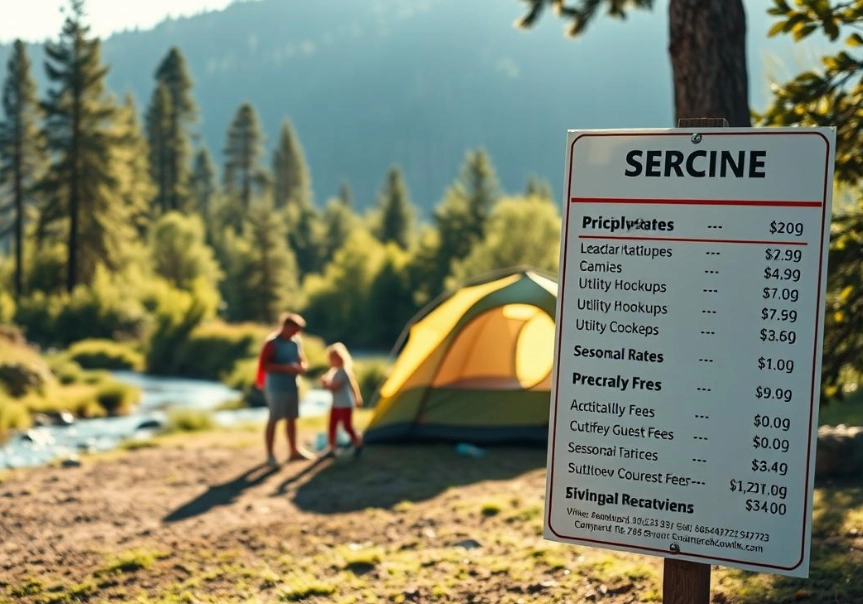
Utility and Amenity Add-Ons
These are optional but common. If you're in an RV, you'll see fees for electric hookups (30-amp vs. 50-amp), water, and sewer. Tent campers might pay extra for "premium" sites with better views, more privacy, or direct lake access. Some campgrounds charge for amenities like Wi-Fi, cable TV, or pool access, even if you don't plan to use them. Always check the site details.
How to Find and Decode Camping Fees Before You Go
Guessing is a bad strategy. The information is out there, but you need to know where to look. Relying solely on a campground's vague "rates start at..." banner can lead to disappointment.
Step 1: Identify the Land Manager. Is it a U.S. National Park? A State Park? A county park? A private KOA? This tells you which reservation system to use. The National Park Service site will link to Recreation.gov. California State Parks use ReserveCalifornia. This is the most crucial first step.
Step 2: Go Directly to the Source Reservation System. Don't rely on third-party summaries. Go to Recreation.gov, find the specific campground, and use the booking calendar. It will show you the exact nightly fee for each available date and site type. This is the only way to see real-time pricing and availability.
Step 3: Read the Fine Print on the "Fees" Page. Every official campground page has a section titled "Fees" or "Rates." This is where they list the separate entrance fee, any extra vehicle fees (often $5-10 for a second car), pet fees, and cancellation policies. The U.S. Forest Service and Bureau of Land Management (BLM) sites are particularly good at listing these details.
For example, checking a hypothetical "Pine Ridge Campground" on Recreation.gov might reveal: Nightly Fee: $24.00, Extra Vehicle: $8.00, Reservation Fee: $8.00, Park Entrance Fee: $10.00 (or free with pass). Your total for one night with two cars becomes $50.
What Drives the Cost Up or Down? The Key Factors
Why is one spot $20 and another $80? It's not random. A few key factors create that spread.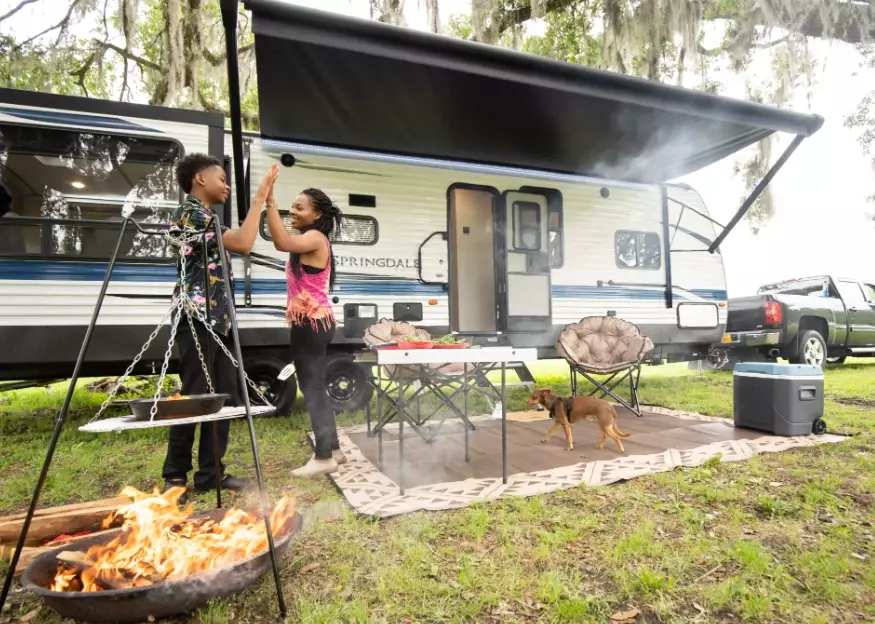
| Factor | Lower Cost Example | Higher Cost Example | Why It Matters |
|---|---|---|---|
| Land Manager | USFS/BLM Dispersed Site | Private RV Resort | Public lands prioritize access; private businesses prioritize profit and amenities. |
| Location & Demand | State Forest, 2 hrs from city | Campground inside Yosemite Valley | Scarcity and proximity to iconic scenery command premium prices. You pay for the address. |
| Amenities | Vault toilet, no water | Flush toilets, showers, laundry, pool, store | Maintaining infrastructure costs money. Showers and treated water aren't free. |
| Site Type | Standard tent site | RV site with full hookups (E/W/S) | Utility hookups require significant underground infrastructure and maintenance. |
| Season & Day of Week | Mid-week in October | Friday/Saturday in July | Peak demand allows for premium pricing. Off-season rates can be 30-50% lower. |
I once paid a small fortune for a site in Moab, Utah. It was essentially a gravel parking lot. But it was a 10-minute drive from Arches National Park in peak season. I was paying for location, not the site itself. Knowing that helped me accept the cost.
Pro Strategies to Save Money on Camping Fees
You don't have to sacrifice the experience to save money. A few tactical shifts can keep more cash in your pocket for s'mores supplies.
Embrace Dispersed Camping. On most National Forest and BLM land outside of developed campgrounds, you can camp for free. This is dispersed camping. The fee is $0. The trade-off? No services. You need to be self-sufficient, practice Leave No Trace rigorously, and often need a high-clearance vehicle to access spots. Resources like the U.S. Forest Service website and apps like iOverlander can help you find legal, established dispersed areas.
Target Off-Season and Mid-Week. This is the single easiest switch. A campground might have a $24 standard rate and a $34 premium rate for Friday/Saturday. Go from Sunday to Thursday. You save $20 on a 2-night weekend trip right there. In shoulder seasons (spring/fall), rates often drop, and crowds vanish.
Invest in an Annual Pass. If you camp more than a few times a year, look beyond the America the Beautiful pass. Many states offer annual passes that waive day-use entrance fees to state parks. In Washington, the "Discover Pass" is $35 annually and is required for vehicle access to state parks and lands. If you go twice, it pays for itself. It won't cover camping, but it removes that separate line item.
Book Longer Stays. Some campgrounds, especially private ones, offer weekly or monthly rates that are significantly discounted per night. If you have the time, this can be a huge saving.
Volunteer. Many public campgrounds host volunteer camp hosts. In exchange for a set number of hours per week (like 20-30) doing light maintenance or greeting campers, you get your site for free. This isn't a last-minute tactic, but for retired folks or digital nomads, it's a fantastic way to stay for months at minimal cost.
The Hidden Costs (That Aren't on the Bill)
The reservation receipt doesn't tell the whole story. These are the costs that sneak up on you during the trip itself.
Firewood. You can't bring your own wood from home due to pest quarantine laws (this is a big, often-ignored rule). Buying a bundle of firewood at the campground or a local store costs $5-$10 per night. A week of campfires adds up.
Ice. If you're not in an RV with a fridge, you'll be buying ice every other day to keep the cooler cold. That's another $5-$7 a pop.
Shower Tokens. Many state park and forest service campgrounds with shower facilities don't include unlimited showers in the site fee. You pay $1-2 in quarters for 5-10 minutes of hot water. Forget your quarters? That's a problem.
Last-Minute Gear. The classic. You arrive and realize you forgot a mallet, a tarp, or a can opener. The camp store has you covered—at a 100% markup. A $5 mallet becomes $12. These small purchases bleed the budget dry.
My personal hidden cost nemesis is the camp chair. I always think mine is in the car. It never is. I've bought three over-priced camp chairs in my life out of sheer frustration.
Your Top Camping Fee Questions Answered
At the end of the day, camping fees are the ticket to your adventure. Seeing them not as a frustrating hurdle but as a map of choices—developed vs. primitive, peak vs. off-season, public vs. private—puts you in control. You decide where your money goes and what experience you get in return. Now that you know the lay of the land, you can pitch your tent (or park your rig) exactly where you want, for a price that feels right.