Let's be honest. Most camping trips are about relaxation, marshmallows, and starry nights. But the moment you step off the beaten path, even just a little, the game changes. A turned ankle, a sudden storm, a wrong turn on a trail—these things happen. That's when generic "camping tips" fail you, and real camping survival skills take over. This isn't about preparing for a zombie apocalypse; it's about the practical, often overlooked knowledge that transforms a potential crisis into a manageable situation. It's the difference between panic and a calm, "Okay, I know what to do."
Your Quick Guide to Camping Survival
- The Non-Negotiable Core: The Rule of Threes
- How to Master Fire Starting in Any Condition
- Finding and Purifying Water: Your Top Priority
- Building an Emergency Shelter in 30 Minutes or Less
- Food Foraging Basics and Emergency Signaling
- The Most Critical Survival Skill Nobody Talks About
- Your Camping Survival Questions Answered
The Non-Negotiable Core: The Rule of Threes
Before we dive into techniques, you need a framework. Survival instructors live by the "Rule of Threes." It's a simple priority list that cuts through the noise:
- You can survive 3 minutes without air (think drowning, choking).
- You can survive 3 hours without shelter in a harsh environment (extreme heat or cold).
- You can survive 3 days without water.
- You can survive 3 weeks without food.
See the order? Shelter often trumps water, which trumps food. In a cold, rainy situation, getting dry and warm is more urgent than scrounging for berries. This rule shapes every decision you'll make.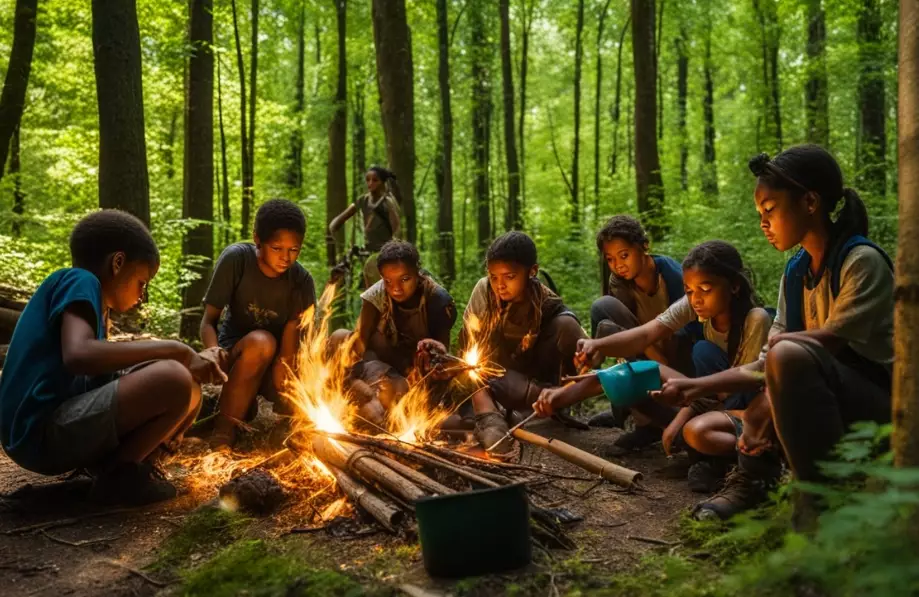
How to Master Fire Starting in Any Condition
Fire is warmth, light, comfort, a way to purify water, and a signal. It's also where people mess up the most. They bring one lighter, try to light a damp log, and give up.
The Fire Trinity: Fuel, Air, Heat
You need all three. The classic mistake is poor fuel preparation.
Tinder: This catches the initial spark. Dryer lint in a baggie is classic. Better? Fatwood shavings, birch bark, or even a cotton ball rubbed with petroleum jelly. Have multiple types.
Kindling: Small twigs, from pencil-lead to pencil thickness. Must be bone-dry. Snap them to hear a crisp sound.
Fuelwood: Larger pieces that sustain the fire. Start with wrist-sized, move to arm-sized.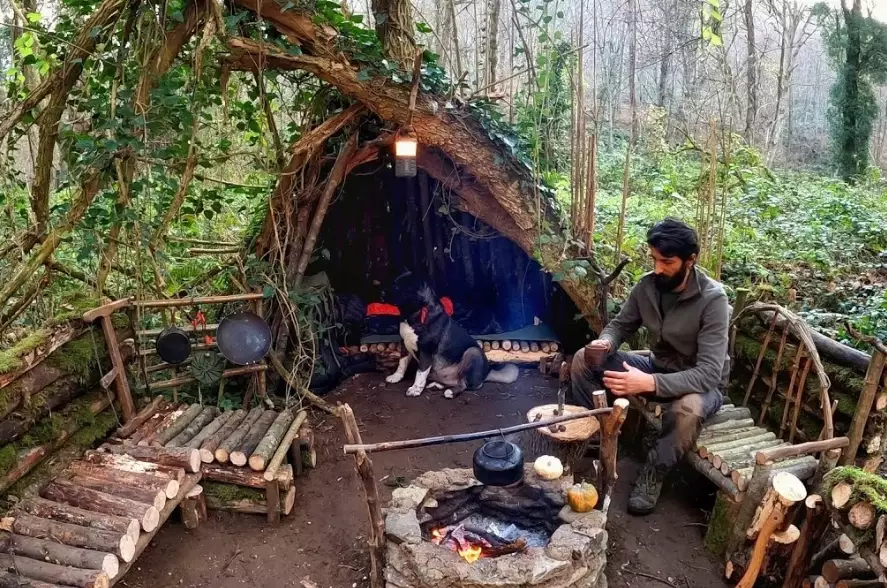
Practical Fire Methods Beyond the Lighter
Your lighter fails. Now what?
- Ferrocerium Rod: My top recommendation. Shaves off super-hot sparks (3000°F) even when wet. Practice with it at home. Scrape, don't saw.
- Fresnel Lens: A credit-card-sized magnifier. Works only in bright sun, but requires zero consumables. Focus the dot on your tinder until it smokes.
- Battery and Steel Wool: Touch the terminals of a 9V battery to fine-grade steel wool. It'll instantly ignite. A weird but effective backup.
Finding and Purifying Water: Your Top Priority
Three days without water. That clock starts ticking fast if you're active. Finding it is one thing; making it safe is mandatory.
Where to Look
Follow animal tracks downhill. Look for depressions in the landscape. In the morning, tie absorbent cloth around your ankles and walk through dew-covered grass, then wring it out. Digging in a dry riverbed at the outer bend might yield seepage.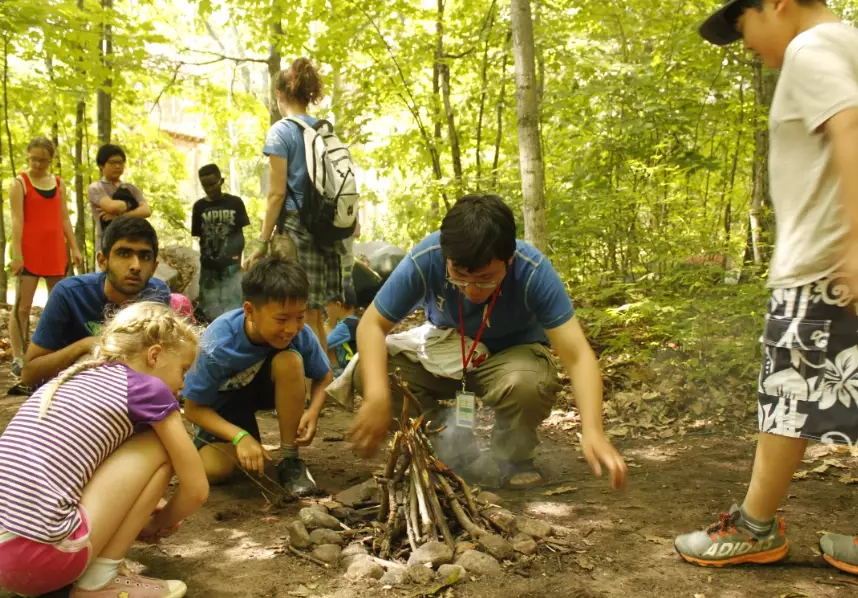
Purification: The Only Way to Be Sure
Giardia and other nasties are invisible. Assume all natural water is contaminated.
>Pro: Fast, improves taste. Con: Doesn't stop viruses (rare in N. America), can clog.>Pro: Lightweight, treats viruses. Con: Wait time (30 mins-4 hrs), can leave taste.>Pro: Fast, no taste. Con: Needs batteries, doesn't work in murky water.| Method | How It Works | Pros & Cons |
|---|---|---|
| Boiling | Rolling boil for 1 minute (3 mins at high altitude). | Pro: 100% effective against all pathogens. Con: Uses fuel, takes time, water tastes flat. |
| Pump Filter | Physical filter blocks bacteria/protozoa. | |
| Chemical Treatment | Drops or tablets (e.g., Aquamira, Potable Aqua). | |
| UV Light Pen | UV-C light scrambles pathogen DNA. |
My system? A pump filter for quick, great-tasting water most of the time, and iodine tablets as a lightweight, absolute backup. Boiling is my emergency fallback.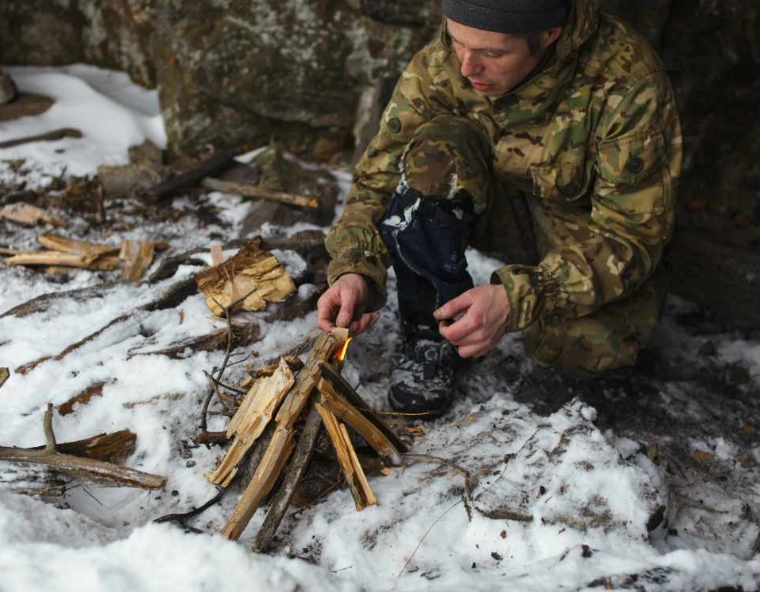
Building an Emergency Shelter in 30 Minutes or Less
Hypothermia can set in at 50°F (10°C) if you're wet and windy. Your tent is ideal, but if you're without it, you need to create a micro-climate.
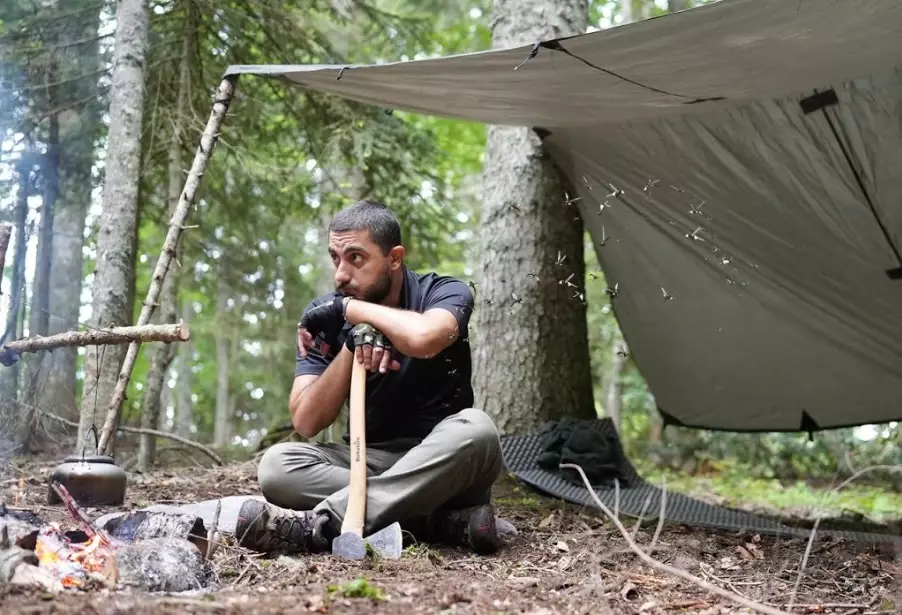
The lean-to is the fastest. Find a long, sturdy branch. Prop one end on a rock, stump, or crook of a tree. Lay smaller branches closely against the "spine" at a steep angle. Pile on leaves, ferns, or pine boughs—thicker than you think. The goal is to break the wind and trap your body heat. Your shelter should be just big enough for you to curl up in. Bigger is colder.
The debris hut is more enclosed and warmer. Create a ridgepole with a long branch, propping it about hip-high at one end. Stack ribs along both sides, then pile at least two feet of debris on top. Crawl in from the low end.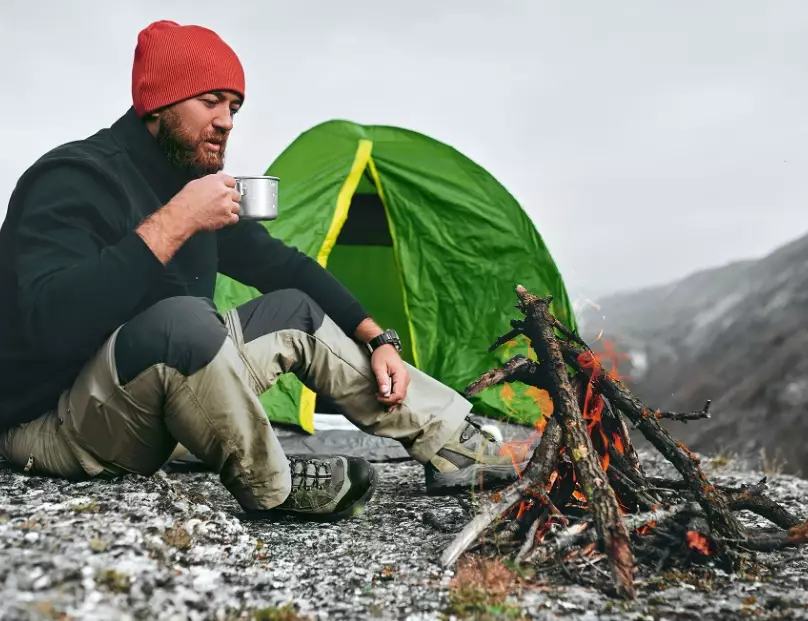
Food Foraging Basics and Emergency Signaling
Food is a low priority, but knowing a few things boosts morale. Never eat anything you cannot 100% positively identify. Universal edibles in North America include:
- Cattails: The rootstock (rhizome) is starchy. The young shoots taste like cucumber.
- Dandelions: The entire plant is edible. Leaves (bitter), flowers, and roots.
- Acorns: Require leaching to remove bitter tannins. Boil in several changes of water.
It's often more calorie-efficient to conserve energy than to forage wildly.
Getting Rescued: Signaling 101
If you're lost, your goal is to be seen. Stay put if you've told someone your plans.
- Visual: A signal fire is gold. Create smoke by adding green vegetation to a bright fire. Three fires in a triangle is the international distress signal. A whistle carries farther and requires less energy than yelling. A signal mirror can be seen for miles by aircraft.
- Auditory: Three blasts on a whistle, three shouts, three gunshots—any group of three signals distress.
- Ground Signals: Use rocks, logs, or trampled grass to create large symbols (X, SOS, arrow) in an open area.
The Most Critical Survival Skill Nobody Talks About
It's not fire or shelter. It's your mind. Panic kills. It leads to poor decisions, wasted energy, and dehydration from rapid breathing.
When things go wrong, stop. Literally, S.T.O.P.
Sit down. Think. Assess your situation against the Rule of Threes. Observe your resources, the terrain, the weather. Plan your next move, and only that move. Don't think about being lost for three days. Think about getting water in the next hour. Then building a shelter before dark.
This mental discipline is what allows you to apply the physical skills. I've seen well-equipped people fall apart because they couldn't manage their fear. Practice mindfulness on easy hikes. It's training for when it counts.