Quick Navigation
The Real Risk: It’s not just about a stomach ache. According to the U.S. Centers for Disease Control and Prevention (CDC), waterborne pathogens like Cryptosporidium, Giardia, bacteria (E. coli, Salmonella), and viruses (Norovirus, Hepatitis A) are a serious threat in untreated natural water sources worldwide, even in remote, pristine-looking areas. Getting sick miles from a trailhead isn't just uncomfortable; it can be dangerous.
So, how do you avoid my mistake? You start by asking the right questions. This guide is here to cut through the marketing jargon and give you the straight talk. We’ll break down the different types of purifiers, pit them against each other, and I’ll share my hands-on thoughts on specific models—the good, the bad, and the ones that surprised me. My goal is to make sure your only memories from camp are the good ones.
Before You Buy: What Makes the Best Camping Water Purifier for YOU?
Jumping straight to a “top 5” list is a recipe for buying the wrong thing. The best water purifier for camping is the one that fits your specific trip, group, and style. Forget one-size-fits-all. Let’s lay the groundwork.
The Non-Negotiables: What Are You Filtering Out?
This is the most critical question. Not all filters are purifiers, and the difference can land you in a backcountry bathroom.
- Bacteria & Protozoa (Cysts): This is the bare minimum. Think E. coli, Salmonella, Giardia, Cryptosporidium. Any decent “water filter” will handle these. They’re relatively large microbes.
- Viruses: These are much, much smaller. In areas with heavy human or animal activity (popular hiking trails, farming areas, developing countries), viruses become a real concern. Most basic filters cannot remove viruses. You need a “purifier” that uses either chemical treatment, UV light, or a very fine filter membrane (like a hollow fiber with an absolute pore size of 0.01 microns or less).
- Chemicals & Taste: This is about activated carbon. It won’t remove pathogens, but it’s fantastic for stripping out pesticides, industrial chemicals, and that nasty “swampy” taste or chlorine aftertaste. It makes water actually taste good.
- Sediment & Debris: A pre-filter or a durable membrane helps with silty, muddy water, preventing your main filter from clogging instantly.
A quick rule of thumb from my own misadventures: If you’re in a remote North American wilderness, a filter is often enough. If you’re anywhere with significant human traffic, near agricultural runoff, or traveling internationally, you need a purifier that handles viruses. When in doubt, go for the higher level of protection.
Your Camping Style: Solo Backpacker or Family Basecamp?
Your answer here will immediately rule out half the options.
The Solo or Duo Backpacker: Every ounce counts. You’re filtering a liter or two at a time, directly into your bottle or reservoir. Speed is nice, but weight and pack size are king. You’re probably looking at a straw filter, a squeeze system, or a compact pump.
The Family or Group Basecamp: You need volume. You’re cooking, cleaning, and hydrating multiple people. The thought of pumping one liter at a time is a nightmare. Here, a gravity-fed system is a game-changer. Hang it from a tree, let it work while you set up tents, and you’ve got gallons of clean water ready. Bulk and weight matter less because it’s usually car-camped.
The Practical Stuff: Weight, Speed, and Maintenance
These are the daily realities of using your gear.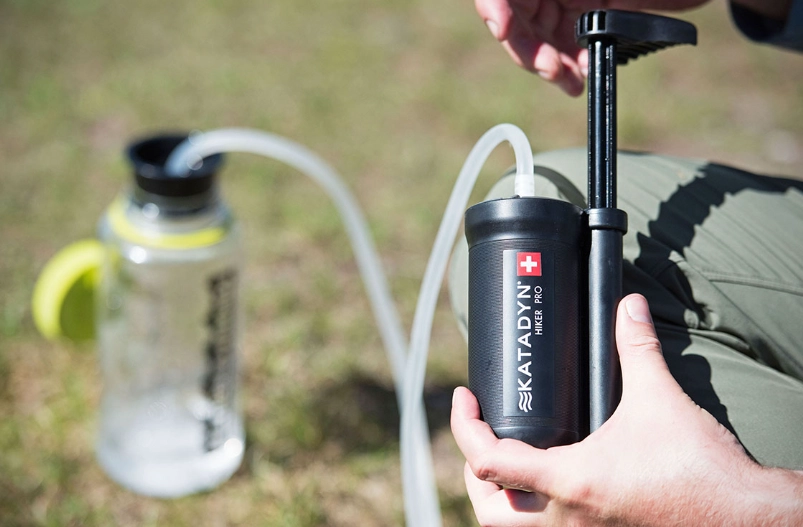
| Factor | What to Consider | Why It Matters |
|---|---|---|
| Weight & Packed Size | Straws are tiny. Pumps are bulky. Gravity systems pack down but have a “bag” volume. | Directly impacts your pack weight and space for food and other gear. |
| Flow Rate | Measured in liters per minute (L/min). A fast pump might do 1.5 L/min, a gravity system 2+ L/min, a squeeze bag might be 0.5 L/min. | How long do you want to spend filtering? After a long hike, you just want to drink. |
| Durability & Ease of Use | Can it freeze? Can the membrane be cleaned? Are parts field-maintainable? | A broken filter in the field is useless. Simple, robust designs win. |
| Filter Lifespan | Rated in liters (e.g., 1,000L, 10,000L). Consider the cost of replacement filters. | Long-term cost and logistics. A 100,000L gravity filter is cheaper per liter than a 1,000L straw. |
| Cold Weather Performance | Hollow fiber membranes can be damaged if water inside freezes. Some require special care. | Critical for winter camping or high-altitude trips where temps drop below freezing. |
Okay, with that foundation, let’s get into the meat of it: the different types of systems. This is where you’ll find your frontrunner for the title of best water purifier for camping.
Head-to-Head: The Five Main Types of Camping Water Purifiers
Each type has its superpower and its kryptonite. I’ve used them all, and I have strong opinions.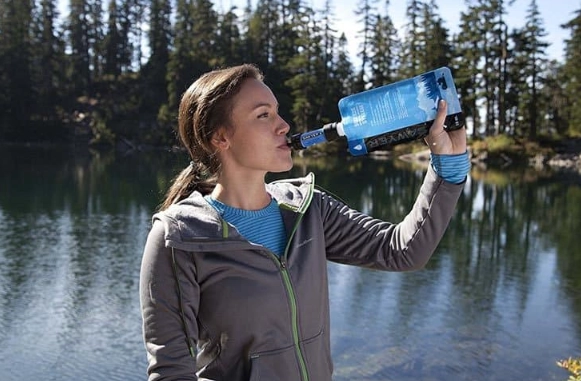
Pump Purifiers: The Old-School Workhorse
You remember these. A hose in the water source, a hose in your bottle, and a hand pump in the middle. They feel robust, like you’re doing something.
The Good: They give you control. You can pull from shallow puddles or deep pools. Many offer excellent filtration down to 0.2 microns (bacteria/protozoa) and some even integrate carbon for taste. The flow rate is consistent, and you’re not reliant on gravity or squeezing.
The Not-So-Good: They’re bulky. They’re heavy. And the pumping action gets really old when you need to filter 6 liters for dinner. They also have more moving parts, which means more potential failure points. I’ve had pump handles feel clunky and stiff, especially in colder weather.
Bottom Line: A reliable choice for small groups or general use, but they’ve largely been surpassed by more convenient options for most campers. I keep one in my car emergency kit, but it rarely sees the trail anymore.
Gravity-Fed Systems: The Lazy Genius
This is, hands down, my favorite system for basecamp or group camping. It’s pure simplicity: fill a dirty bag, hang it higher than a clean bag, and let physics do the work. You’re free to do other things.
The first time I used a good gravity system, it felt like cheating. After a long day of hiking with my friends, we got to camp. While they were still fiddling with pumps and squeeze bottles, I had hung my system from a tree branch. By the time our tents were up, we had a 4-liter bag of crystal-clear, great-tasting water ready for everyone. Zero effort. It was a revelation.
The Good: Effortless for large volumes. Perfect for cooking. Most use a hollow fiber filter and a carbon core, tackling pathogens and taste simultaneously. The flow rate is often very good.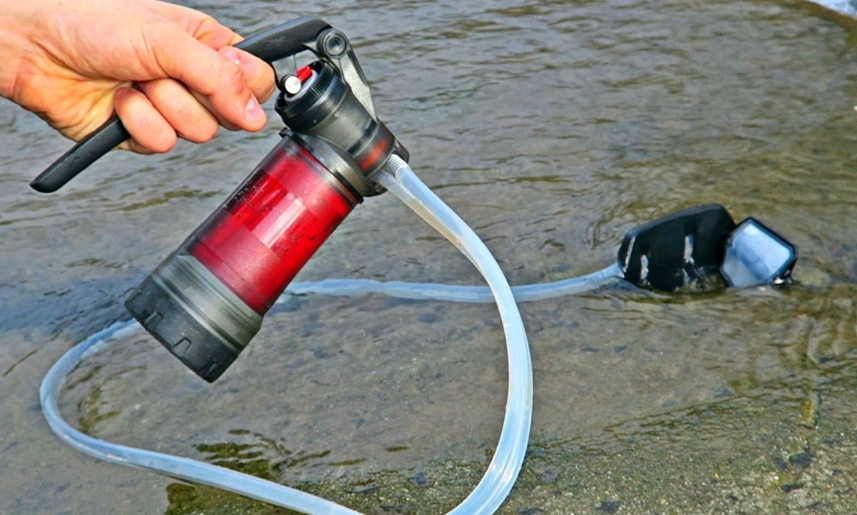
The Not-So-Good: You need a place to hang it. In a treeless alpine environment, this can be tricky (you can lay it on a rock, but flow slows). The initial fill of the dirty bag requires you to go to the water source. The systems don’t pack down super small because of the bags.
Bottom Line: If you camp with more than two people or value convenience over ultralight weight, a gravity system is arguably the best water purifier for camping you can buy. It’s a set-it-and-forget-it machine.
Straw-Style Filters & Squeeze Systems: The Ultralight Champions
This category includes personal straws you drink through and squeeze pouches/bottles where you filter as you drink or squeeze into another container. They’re incredibly popular for a reason.
The Good: Unbeatable for weight and simplicity. Throw it in your pack and forget it. Need a drink? Find water and go. Most are hollow fiber filters, effective against bacteria and protozoa. They’re also usually the most affordable entry point.
The Not-So-Good: Volume is a challenge. It’s hard to filter water for cooking or for your friends. The flow rate can be slow, especially as the filter starts to clog. Some squeeze bags feel flimsy and I’m always paranoid about puncturing them. And critically, almost none remove viruses unless specifically stated.
Bottom Line: The undisputed king for the solo ultralight backpacker or as an emergency backup. For purifying large amounts or protecting against all threats, you’ll need to look elsewhere or pair it with chemical treatment.
UV Light Purifiers: The Techy Solution
These look like a big pen. You swirl it in your water bottle for a set time (usually 60-90 seconds), and the UV-C light scrambles the DNA of bacteria, viruses, and protozoa, rendering them harmless.
The Good: Incredibly effective against all microorganisms, including viruses. It’s chemical-free and doesn’t alter water taste. It’s fast for a single bottle. Great for international travel where virus risk is high.
The Not-So-Good: It needs batteries (or USB charging). If the batteries die, you’re out of luck. It does nothing for sediment, chemicals, or taste—if your water looks like chocolate milk, it will still look like chocolate milk after treatment. You have to treat each container individually. And I’ve found they can be finicky with very cold or turbid water; the sensor sometimes won’t activate.
Bottom Line: A fantastic purifier for clear water where the primary concern is microbiological. It’s not a filter. I often pair a UV purifier with a simple sediment pre-filter for the best of both worlds. It’s a powerful tool, but not a standalone solution for all scenarios.
Filter Bottles: The All-in-One Convenience
Think Brita bottle, but for the outdoors. The filter is built into the lid or straw of the bottle itself.
The Good: Supreme convenience. Fill and drink. No separate parts to assemble. Great for day hikes, festivals, or travel.
The Not-So-Good: Limited capacity. You’re only filtering what you can drink from that bottle. Filter life is usually shorter. And again, most are just filters, not full purifiers. The flow rate can be slow if you’re thirsty.
Bottom Line: A convenient option for personal, on-the-go hydration where you have frequent access to water sources. For multi-day camping where you need to stockpile water, they fall short.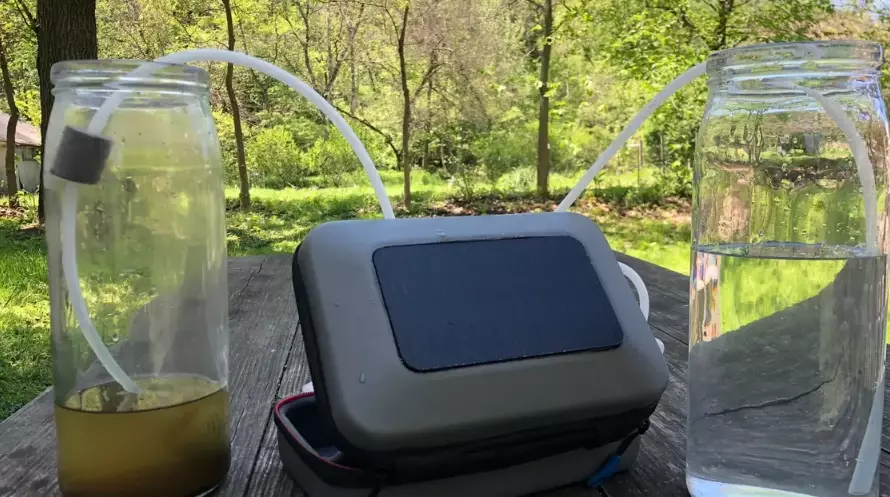
The Contenders: My Hands-On Picks for Best Water Purifier for Camping
Based on years of use, testing, and seeing what holds up (and what doesn’t), here are my top recommendations in different categories. These aren't just spec sheet winners; they're tools I’ve trusted.
The All-Rounder Champion: Platypus GravityWorks
If I could only have one system for most of my camping trips, this would be it. The GravityWorks is the embodiment of the gravity-fed philosophy done right.
How it works: Two 4-liter bags (one dirty, one clean) connected by a hose. The filter hangs in the middle. Fill the dirty bag, hang it, and open the valve.
What it filters: Its 0.2 micron hollow fiber filter gets bacteria and protozoa. It has a carbon core that seriously improves taste. It does not remove viruses.
Why I like it: The flow rate is fantastic—a full 4 liters in under 2.5 minutes. The bags are tough and have great handles. The whole system is intuitive and reliable. It’s the heart of our group camps.
The downsides: It’s overkill for a solo overnight. The filter is not field-cleanable in the traditional sense (you backflush it), which is fine. And remember, no virus protection.
My take: For group camping in North American wilderness, it’s nearly perfect. It’s the benchmark. If you want a similar system with virus protection, look at the MSR Guardian pump (which is heavy) or pair the GravityWorks with chlorine dioxide drops for a viral threat.
The Ultralight Backpacker's Dream: Sawyer Squeeze (or Mini)
This is the filter you see on every thru-hiker’s pack on the Appalachian Trail. For good reason.
How it works: It’s a hollow fiber filter that screws onto a standard soda bottle or its included squeeze pouches. You can drink directly from it (with the provided straw) or squeeze filtered water into another bottle.
What it filters: 0.1 micron absolute—so bacteria and protozoa. No carbon, so taste isn’t improved. No viruses.
Why I like it: It weighs almost nothing. It’s versatile: squeeze bag, in-line on a hydration bladder, or as a straw. It has a massive rated lifespan (100,000 gallons for the Squeeze, 100,000 liters for the Mini). It’s field-cleanable by backflushing with a clean syringe.
The downsides: The flow rate slows down over time and requires cleaning. The squeeze bags are notoriously fragile (I’ve had two fail). In very cold water, the flow is a trickle. It’s a personal use item.
My take: For the solo backpacker counting grams, the Sawyer Squeeze is arguably the best water purifier for camping on a weight-to-performance basis. Just be gentle with the bags, or use a Smartwater bottle instead. The Sawyer Mini is even smaller but has a much slower flow rate—I find it frustrating for anything more than very occasional use.
The Family & Basecamp Powerhouse: Katadyn Base Camp
This is GravityWorks’ bigger, burlier cousin. It’s designed for one thing: producing huge amounts of water with minimal fuss.
How it works: Same gravity principle, but with a massive 10-liter dirty bag and a pro-style filter element.
What it filters: 0.2 microns for bacteria/protozoa, plus a carbon core.
Why I like it: That 10-liter capacity is a game-changer for big groups or long stays without water access. The filter has a huge surface area, so the flow rate stays high for a long time. It feels incredibly durable.
The downsides: It’s big and heavier. Packing the empty 10-liter bag takes up space. It’s more expensive.
My take: If you regularly camp with 4+ people or on extended expeditions, the Base Camp is worth the investment. It turns water from a chore into a non-issue.
The Budget-Friendly & Reliable Workhorse: Katadyn Hiker Pro
This is the pump I recommend if you want a pump. It’s been around forever because it works.
How it works: Classic hand pump with pre-filter, ceramic depth filter, and carbon core.
What it filters: 0.2 microns plus carbon for taste. No viruses.
Why I like it: It’s simple, repairable, and feels solid in the hand. The ceramic filter can be scrubbed clean when it clogs, extending its life dramatically. It’s a “buy it for life” kind of tool in the pump world.
The downsides: It’s a pump. You have to pump. It’s not fast by today’s standards. It’s not lightweight.
My take: If you distrust “newfangled” bags and hollow fibers, or need a filter for truly terrible, silty water (the pre-filter and ceramic handle it well), the Hiker Pro is a trustworthy, no-nonsense choice. It’s the old guard, and it still earns its keep.
Your Questions, Answered: The Camping Water Purifier FAQ
Wrapping It Up: Making Your Choice
So, after all this, what’s the best water purifier for camping? You probably already know.
If you’re a solo backpacker trying to shave ounces, get a Sawyer Squeeze. Pair it with a Smartwater bottle and call it a day.
If you camp with a partner or small group and value ease, the Platypus GravityWorks 2.0L or 4.0L system is a home-run investment. It just makes life better.
If you have a large family or basecamp, scale up to the Katadyn Base Camp for its huge capacity.
If you travel to areas with a high virus risk, look at a purifier like the MSR Guardian pump or a SteriPEN Ultra UV purifier combined with a pre-filter.
The right choice eliminates worry. It lets you focus on the crackle of the fire, the vastness of the stars, and the simple joy of a cold, clean drink of water after a long day on the trail. That’s what you’re really buying. Not just a piece of gear, but the confidence to drink deeply from your adventure.
Stay safe out there, and happy camping.