Quick Guide
- Why Choose Primitive Camping Gear Anyway?
- The Core of Your Kit: Non-Negotiable Primitive Camping Gear
- Beyond the Basics: The Supporting Cast of Gear
- Skills Over Stuff: The Real "Gear" You Need to Pack
- Building Your First Primitive Camping Gear Kit: A Practical List
- Common Questions About Primitive Camping Gear (The Stuff You're Actually Wondering)
- Final Thoughts: It's a Journey, Not a Destination
Let's be honest. Modern camping can feel like you're just moving your living room into a prettier zip code. Air mattresses that need pumps, stoves that sound like jet engines, gadgets that need USB ports everywhere. Where's the adventure in that?
That's where primitive camping gear comes in. It's not about suffering. It's about simplicity, skill, and a deeper connection to the place you're in. It's the difference between being a spectator and a participant in the outdoors.
I remember my first attempt at a "back-to-basics" trip. I brought a fancy new knife but forgot a simple way to sharpen it. I had a tarp but no clue about effective knots. I spent one long, damp night realizing that the right primitive camping gear is useless without the know-how to use it. This guide is what I wish I'd had.
Why Choose Primitive Camping Gear Anyway?
You might be wondering why anyone would willingly leave behind a comfortable inflatable pad for a closed-cell foam one. It's a fair question.
First, there's the weight and simplicity. A lot of bushcraft gear is lighter and has fewer parts to break. No pump to fail, no battery to die. When your stove is a small twig fire you built yourself, you're not worried about finding the right fuel canister.
Then there's the satisfaction. There's a unique feeling that comes from boiling water on a fire you started with a ferro rod, or sleeping under a shelter you tied together. It builds confidence in a way that clicking a lighter or inflating a pad just doesn't.
It also forces you to engage with your environment. You learn to identify good tinder, select a sheltered spot, read the weather. You become part of the scene, not just an observer with a lot of nylon.
But let's not romanticize it. It can be harder. It's often dirtier. And if you don't know what you're doing, it can be outright miserable or unsafe. That's why choosing your core primitive camping gear is so critical.
The Core of Your Kit: Non-Negotiable Primitive Camping Gear
Think of this as the foundation. Forget these, and you're not primitive camping—you're just unprepared.
The Cutting Tool: Your Most Important Piece of Gear
This is the heart of bushcraft. It's your knife, your splitter, your featherstick maker, your dinner prep tool. The choice here is huge.
A lot of folks get obsessed with giant, Rambo-style knives. In my experience, that's mostly for show. For 95% of tasks around a primitive camp, a fixed-blade knife with a 4 to 5-inch blade is perfect. Look for a full tang (the metal runs the full length of the handle) for strength. Scandavian grind (or "Scandi" grind) is a favorite for woodworking because it's superb for carving and control.
My personal go-to is a Morakniv Companion. It's not the most expensive, but it's a workhorse, holds an edge well, and if I lose it over a cliff (which has happened), I'm not crying over a $300 loss.
Don't forget a way to sharpen it. A small, portable sharpening stone is a piece of primitive camping gear that's often overlooked until you're trying to baton wood with a dull butter knife.
Shelter: Staying Dry Without the Polyester Palace
Your shelter is your sanctuary. In the primitive camping world, this often means a tarp, a hammock, or a minimalist tent, paired with natural materials.
A good silicone-coated nylon or polyester tarp is incredibly versatile. With it and some paracord, you can create a dozen different shelters—the A-frame, the lean-to, the diamond fly. The key isn't just the tarp itself, but your knowledge of knots (like the taut-line hitch and bowline) and an understanding of site selection. Always look for natural windbreaks and avoid setting up in a drainage path when it rains.
Hammock camping fits beautifully with primitive camping gear ethos. A simple gathered-end hammock, a underquilt for insulation, and a tarp overhead is a lightweight, comfortable system that gets you off the ground. No need to clear a tent platform.
If you go the ground route, forget the thick, inflatable pads. A closed-cell foam pad is the classic primitive choice. It's cheap, indestructible, and provides insulation no matter what. It's not as plush, but you get used to it. Pair it with a natural bed of leaves or pine boughs (where allowed and sustainable) for extra comfort.
Fire: The Original Camping Appliance
This is where skill truly separates from gear. You can have the best tools, but if you don't know how to use them, you'll be eating cold beans.
Fire Starters:
- Ferrocerium Rod (Ferro Rod): My absolute favorite. It throws super-hot sparks (around 3,000 °F) even when wet. It takes practice to direct the sparks onto your tinder bundle, but it's the most reliable primitive method. A ½ inch by 6-inch rod will last for thousands of strikes.
- Waterproof Matches or a Lighter: Let's be practical. Carrying a Bic lighter as a backup isn't cheating. It's smart. Primitive camping gear is about skill, but safety first. Use your ferro rod for your main fire, keep the lighter dry for emergencies.
- Magnesium Fire Starter: The block you shave scrapings from. It works, but I find it fussy. The shavings can blow away, and it's an extra step. A good ferro rod is simpler.
The real magic isn't the starter—it's the tinder and the structure. You need to prepare a tinder bundle (fine, dry, fluffy material like birch bark, cedar shavings, or commercial tinder like cotton balls soaked in petroleum jelly). Then build a small teepee or log cabin structure of progressively larger kindling around it. The common mistake? Smothering the initial flame by adding wood too big, too fast.
And for heaven's sake, know the fire regulations for your area. The U.S. Forest Service and local land managers have strict rules, especially in dry seasons. A key part of primitive camping is leaving no trace, and that includes your fire ring.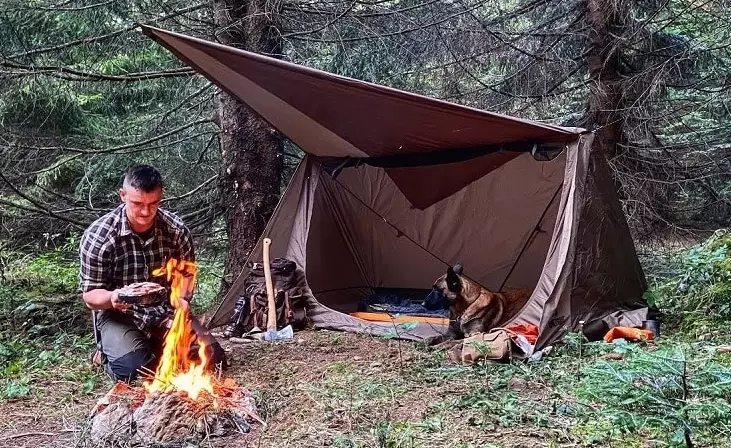
Beyond the Basics: The Supporting Cast of Gear
Once you've got cutting, shelter, and fire covered, these items turn a survival situation into a comfortable camp.
Cooking and Water
A single-wall stainless steel or titanium bottle is a bushcraft classic. You can boil water right in it over the fire (just don't let it sit directly in the coals without water inside, or you'll melt the solder). Add a simple metal cup that nests around it, and you have a pot.
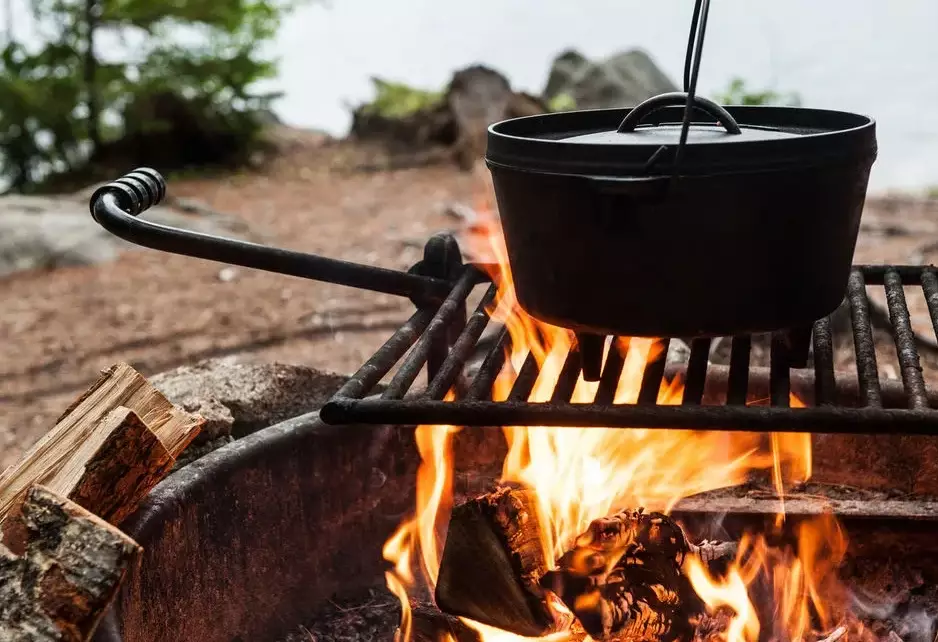
For a more substantial cook kit, a small, handled billy pot is perfect. You can suspend it over the fire or rest it on rocks at the edge.
Water purification is non-negotiable. Giardia is not a primitive experience you want. While boiling works, it's fuel- and time-intensive. A reliable modern filter, like a Sawyer Squeeze or Katadyn BeFree, is a tiny piece of modern tech that earns its place in any primitive kit. I don't mess around with water. Chemical treatments (iodine/chlorine dioxide) are a good backup.
Navigation and Light
A good old-fashioned map and compass are the gold standard. They don't run out of batteries, and learning to use them is a fundamental wilderness skill. Your phone's GPS is a fantastic backup, but it should not be your primary. Period.
For light, a headlamp is still king for hands-free work. But for around camp, a simple candle lantern or even a carefully managed oil lamp (like a Uco original) provides a warm, ambient light that feels right at home. It's slow, soft, and won't wreck your night vision.
The "Oh, Crap" Kit: First Aid and Repair
Your first aid kit should be tailored to your skills. At a minimum: blister care (moleskin is a miracle worker), various bandages, antiseptic wipes, gauze, medical tape, tweezers, and any personal medications. A compact emergency blanket (the crinkly silver kind) is great for shock or as an extra shelter layer.
A small repair kit is pure bushcraft ingenuity. Include: duct tape (wrap some around your water bottle), a sewing needle and strong thread, a few safety pins, and a length of thin wire. This can fix a torn pack, a broken strap, or a malfunctioning piece of gear.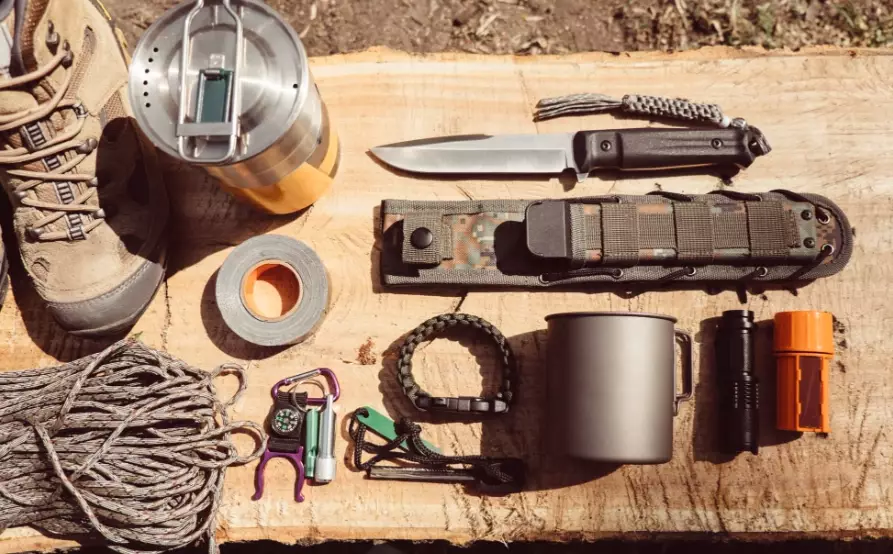
Skills Over Stuff: The Real "Gear" You Need to Pack
The best primitive camping gear in the world is useless without knowledge. This is the software to your hardware.
Knots. Learn five: the bowline (makes a fixed loop), the taut-line hitch (adjustable tension for tarps), the clove hitch (quick attachment), the square knot (joining ropes), and the trucker's hitch (for getting things really tight). Practice them at home with your eyes closed.
Firecraft. As discussed. Practice in your backyard. Try it in the rain. Learn what natural tinders work in your area.
Site Selection. Look for flat ground, natural drainage, wind protection, and a safe distance from your fire and food storage area. The National Park Service's backcountry guidelines are a great resource for ethical practices.
Food Storage. This is critical for safety and ethics. In bear country, this means a bear canister or a proper bear hang using the PCT method (hanging your bag 10 feet off the ground and 4 feet out from a tree trunk). Even in non-bear areas, hanging food protects it from raccoons, mice, and other critters. Nothing ruins a trip like a mouse chewing through your pack for a snack.
Leave No Trace (LNT). This is the most important skill. Primitive camping often involves more direct interaction with the environment, so the principles are crucial: plan ahead, travel and camp on durable surfaces, dispose of waste properly (including human waste—carry a trowel!), leave what you find, minimize campfire impacts, respect wildlife, and be considerate of others. The Leave No Trace Center for Outdoor Ethics is the definitive source.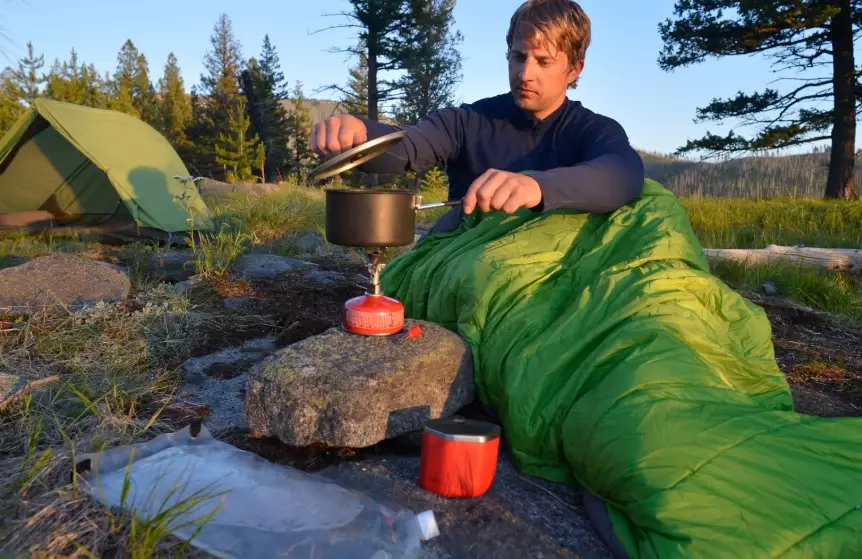
Building Your First Primitive Camping Gear Kit: A Practical List
Feeling overwhelmed? Start here. This is a minimalist but functional kit for a weekend in moderate weather.
The Foundation:
- Fixed-blade knife (4-5" blade, full tang)
- Folding saw (for processing larger wood without batoning)
- Small sharpening stone
- Ferro rod with scraper
- Bic lighter (in a waterproof case)
- Headlamp (with extra batteries)
- Baseplate compass and topographic map of the area
Shelter & Sleep:
- 10' x 10' or 8' x 10' tarp
- 50-100 feet of paracord (for guylines and ridge line)
- Closed-cell foam sleeping pad
- Sleeping bag or wool blanket rated for expected lows
Sustenance:
- Stainless steel bottle (1 liter) and nesting cup
- Small billy pot
- Water filter or purification tablets
- Simple food (dehydrated meals, trail mix, jerky)
- Small spice kit (salt, pepper, a favorite blend)
Safety & Utility:
- Personalized first aid kit
- Emergency blanket
- Repair kit (duct tape, needle/thread, wire)
- Trowel (for catholes)
- Biodegradable soap (small bottle)
- Bear bag kit (stuff sack, 50' of thin cord) or bear canister
My first kit looked a lot like this, stuffed into an old external-frame pack. It wasn't pretty, but it worked. I've since upgraded pieces here and there, but the core categories remain the same.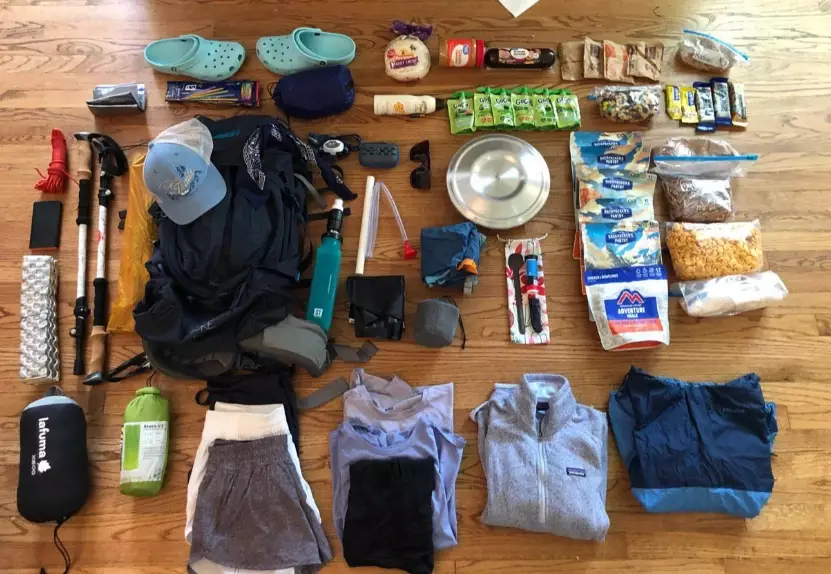
Common Questions About Primitive Camping Gear (The Stuff You're Actually Wondering)
Final Thoughts: It's a Journey, Not a Destination
Building your primitive camping gear collection and learning the skills is a lifelong process. You'll try things that don't work (I once spent an hour trying to start a fire with a bow drill I made on the spot—humbling failure). You'll find what gear truly works for you.
Start small.
Maybe your first trip is just practicing fire and cooking in your backyard. Then an overnight close to the car. Gradually increase the distance and the challenge.
The reward isn't just a lighter pack or cooler photos. It's a quiet confidence that comes from knowing you can handle yourself with a few simple tools. The woods feel different when you're not just passing through, but truly living there, even for a night.
It turns a campsite into a home, and a hike into an adventure. And that's something no battery-powered gadget can ever provide.