Quick Navigation
- Why Even Bother? The Allure of Desert Camping
- The Non-Negotiables: Preparing for Your Desert Trip
- Your Desert Survival Kit: Gear That’s Not Optional
- Picking Your Spot: Where Can You Go Camping in the Desert?
- On the Ground: Desert Camping Tips and Tricks
- Navigating the Challenges: Safety and Health
- Answering Your Burning Questions (FAQ)
- My Personal Take: The Good, The Bad, The Gritty
Let’s cut straight to the chase. Can you go camping in the desert? Absolutely, you can. But – and this is a massive but – it’s nothing like pitching a tent by a forest lake. It’s a whole different ball game. It’s raw, it’s challenging, and if you don’t respect it, it can go from breathtaking to dangerous real quick.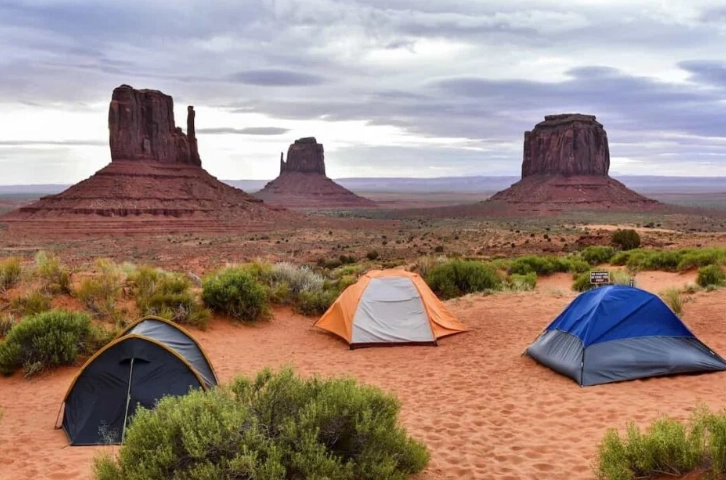
I’ve done it a few times, in places like the Mojave and around Joshua Tree. The silence at night is something you can’t get anywhere else. The sky looks like someone spilled a bucket of diamonds. But I’ve also been miserably cold after sunset and felt the sun baking me like an oven by 9 AM. It’s not for the faint of heart, but if you’re prepared, it’s an unbeatable experience. This guide isn’t about selling you a dream; it’s about giving you the straight facts so you can decide if desert camping is for you and, more importantly, how to do it safely.
Why Even Bother? The Allure of Desert Camping
Before we dive into the nitty-gritty of survival, let’s talk about the “why.” Why would anyone willingly choose to sleep in what is essentially a giant, dry oven? Well, the rewards are pretty unique.
The landscapes are surreal. Think vast, open spaces, bizarre rock formations, and colors that change with the light. The air is often incredibly clear, making for stargazing that will ruin you for life. You won’t find a darker sky or a more brilliant Milky Way. The solitude is profound. In popular forest campsites, you might hear your neighbors. Out in the desert, you might be the only human for miles. It’s a hard reset for the mind.
It’s not just about surviving; it’s about connecting with an ancient, starkly beautiful environment.
The Non-Negotiables: Preparing for Your Desert Trip
You can’t just wing it. Desert camping demands planning. The central question, “can you go camping in the desert,” is answered by your preparation.
Timing is Everything: When to Go
This might be the most critical decision. Summer in deserts like the Sonoran or Sahara can be lethally hot. Honestly, I’d avoid it unless you’re a very experienced hot-weather adventurer.
- The Sweet Spot: Late fall, winter, and early spring. Think October through April for most North American deserts. Days are pleasantly warm, nights are cool to cold.
- Shoulder Seasons: Be prepared for more temperature volatility. A sunny March day can be lovely, but the night can still dip below freezing.
- Check the Forecast Religiously: Not just for rain, but for wind. Sandstorms or high winds can turn a trip miserable and dangerous, shredding tents and reducing visibility to zero.
Know Before You Go: Permits and Regulations
This is where many first-timers trip up. Land management varies wildly.
Some places require permits for backcountry camping. Some have designated sites you must book months in advance (looking at you, popular national park campgrounds). Others, like vast stretches of BLM land, often allow “dispersed camping” – camping anywhere as long as you follow Leave No Trace principles. The BLM’s recreation page is an invaluable resource for understanding these rules.
Your Desert Survival Kit: Gear That’s Not Optional
Forget your fancy glamping gear. Desert camping gear is about function and durability. Here’s a breakdown of what you truly need.
| Category | Essential Items | Why It's Critical for the Desert |
|---|---|---|
| Shelter & Sleep | Sturdy 3-season tent, sleeping bag rated for low temps, insulated sleeping pad. | Wind is a tent-killer. Cold desert nights demand warmth. The ground sucks heat; a pad is insulation, not just comfort. |
| Hydration System | Water containers (jug/bladder), electrolyte supplements, wide-brimmed hat. | You need more water than you think. Electrolytes prevent hyponatremia. A hat is primary sun defense. |
| Navigation & Safety | Detailed paper maps, compass, GPS device, fully charged power bank, first-aid kit, signaling mirror/whistle. | Landmarks look similar. Phones die. You must be able to self-navigate and signal for help if needed. |
| Clothing | Light-colored, loose, long-sleeved shirts/pants, warm layers (fleece/puffy), sturdy boots, sunglasses. | Sun protection is key. Temperature swings require layering. Sand and rocks destroy flimsy footwear. |
The Water Math: You’re Probably Not Bringing Enough
This is the biggest mistake. The rule of thumb is one gallon (about 4 liters) of water per person, per day. And that’s just for drinking and basic cooking. If you’re hiking, add more. In extreme heat, you might need double.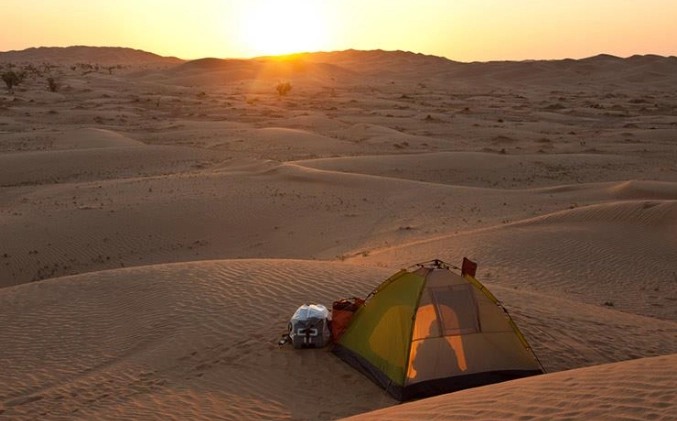
I plan for 1.5 gallons per day, minimum. It sounds like overkill until you’re halfway through a hike and your mouth feels like cotton. Always have a reserve – never drink your last liter unless it’s a true emergency. Stash an extra sealed gallon jug in your car.
Shelter from the Storm (and Sun and Wind)
Your tent needs to be tough. Dome tents with low profiles handle wind better than tall cabin tents. Make sure all guylines are used and stakes are solidly in the ground – sand can be loose, so use special sand stakes or deadman anchors (tying stakes to buried rocks).
A footprint is non-negotiable. It protects the tent floor from sharp rocks and thorns. And about your sleeping bag: check its temperature rating. A 20°F (-6°C) bag is a good start for winter desert camping. Pair it with a sleeping pad that has a high R-value (insulation rating). The cold comes from the ground.
Picking Your Spot: Where Can You Go Camping in the Desert?
Not all deserts are the same. Your experience will vary hugely depending on location.
- High-Desert (e.g., Great Basin, parts of Colorado Plateau): Higher elevation means cooler temps, even pine trees sometimes. Nights can be very cold. Less extreme heat risk.
- Low-Desert (e.g., Sonoran, Mojave): Classic, stark landscapes with cacti and Joshua Trees. Wider temperature swings. Potentially extreme daytime heat.
- Sand Sea Deserts (e.g., parts of Sahara, Arabian): The iconic dune experience. Navigation is extremely challenging. Water scarcity is absolute.
For beginners, I’d recommend starting in an established campground in a high-desert or on the edge of a low-desert during the cool season. It gives you a safety net (often pit toilets, sometimes water, other people around) while you learn the ropes. Once you’re confident, you can venture into dispersed camping in BLM areas for true solitude.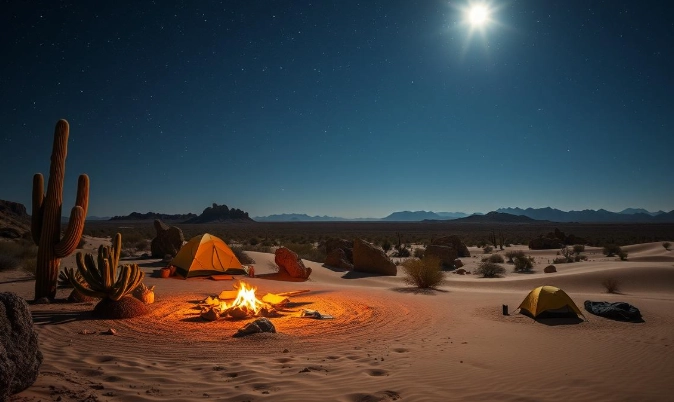
Research is your best friend here. Read recent trip reports, not just the glossy brochures.
On the Ground: Desert Camping Tips and Tricks
Okay, you’ve got your permit, your 10 gallons of water, and your rock-solid tent. You’ve arrived. Now what?
Setting Up Camp Like a Pro
Look for natural windbreaks, like a small rock wall or the lee side of a hill. Avoid dry washes (arroyos) – they can flash flood during rain, even if it’s raining miles away. Pitch your tent on durable surfaces like sand, gravel, or rock, not on cryptobiotic soil (that black, crusty soil that’s alive and takes decades to grow).
Get your camp set up before sunset. Doing this in the dark, with temperatures plummeting, is a recipe for frustration. Use rocks to weigh down everything – tent corners, tablecloths, loose gear. The wind picks up at the weirdest times.
The Daily Rhythm: Beat the Heat
Embrace a siesta schedule. Be active in the early morning and late afternoon. During the peak heat of the day (10 AM to 4 PM), find shade, hydrate, read, or nap. This is how animals and experienced desert dwellers cope. Fighting the midday sun is a losing battle and drains your water reserves fast.
Leave No Trace in the Desert
This is crucial. The desert ecosystem is fragile and recovers painfully slowly.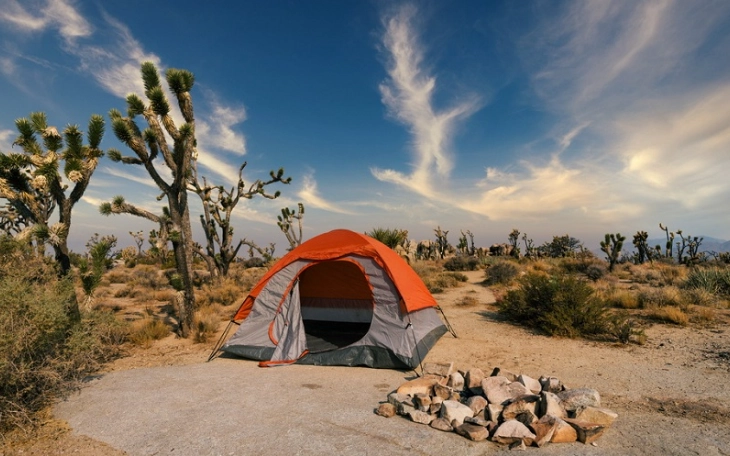
Navigating the Challenges: Safety and Health
Let’s talk about the scary stuff so you can avoid it.
Dehydration and Heat Illness
Drink water consistently, don’t wait until you’re thirsty. Eat salty snacks. Watch for signs in yourself and others: dark urine, dizziness, headache, nausea, cessation of sweating. If someone shows signs of heat exhaustion (cool, moist skin, heavy sweating) or heat stroke (hot, dry skin, confusion), get them to shade, cool them with water, and seek help immediately.
Wildlife Encounters
Most desert animals want nothing to do with you. The main issues are the small ones. Shake out your boots and clothes before putting them on in the morning (scorpions and spiders). Keep a clean camp to avoid attracting rodents, which can attract snakes. Give all wildlife a wide berth.
Getting Lost
This is a real risk. Tell someone your detailed plan and when to expect you back. Use your paper map and compass to track your position regularly, not just when you think you’re lost. If you do get lost, STOP. Stay put, conserve energy and water, and signal for help. Wandering aimlessly is the worst thing you can do.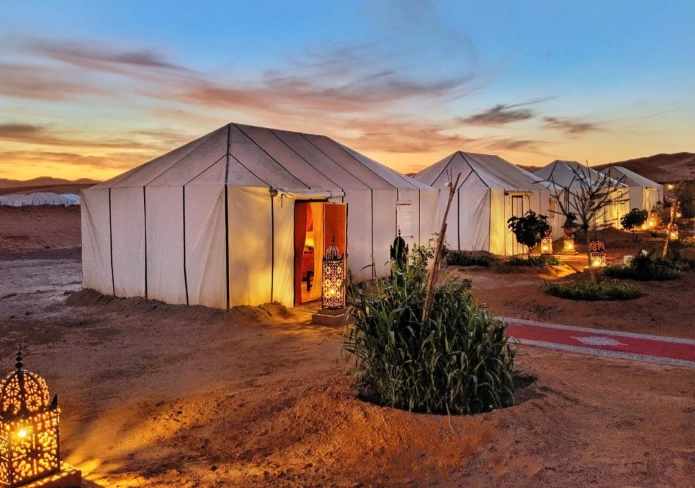
Answering Your Burning Questions (FAQ)
My Personal Take: The Good, The Bad, The Gritty
Let’s be real. Desert camping isn’t always Instagram-perfect. The wind can howl all night, making sleep impossible. Fine sand gets into everything – your food, your sleeping bag, your teeth. The temperature swings are brutal. One trip, I went from sweating in a t-shirt at 4 PM to wearing every layer I owned, including my rain jacket, by 8 PM, and I was still chilly.
But then you wake up before dawn, brew coffee as the sky turns violet and orange, and watch the first sunlight hit a distant mesa. The air is crisp and silent. You feel like you’ve earned that view. That’s the trade-off. The discomfort makes the beauty sharper.
So, can you go camping in the desert? Yes, a thousand times yes. But it demands respect, preparation, and a willingness to embrace the elements. It’s not a casual weekend away. It’s an adventure. Do your homework, pack with care, and you’ll unlock one of the most profound and stunning camping experiences on the planet. Start small, be safe, and let the desert’s vast, quiet beauty do the rest.
The desert doesn’t care about your plans. Be ready for it, and you’ll be rewarded.