Your Camping Packing Blueprint
- Why Bother With a Camping Checklist at All?
- The Core Pillars of Any Good Camping Packing List
- The Master Camping Checklist Table: From Essential to Luxury
- Customizing Your List: What Kind of Camping Are You Doing?
- The Forgotten Items & Common Mistakes
- Packing & Organization: Your Checklist in Action
- Answering Your Camping Checklist Questions
- After the Trip: The Most Important Step
Let's be honest. You've probably searched for a camping checklist before. You find a massive, intimidating PDF with 200 items, half of which you don't need, and you end up throwing your hands up and just winging it. I've been there. I've shown up to a campsite without a can opener, with a tent missing its poles (a long, cold story), and once, incredibly, without a sleeping bag. Those nights taught me more than any generic list ever could.
The problem with most camping checklists is they're one-size-fits-none. A backpacker heading into the wilderness for a week needs a completely different set of gear than a family pulling up to a drive-in site for the weekend. A list that treats them the same is useless.
So this isn't just another list. This is a system. A guide to building your perfect camping checklist. We'll break down the absolute essentials, talk about the nice-to-haves, and I'll even point out some gear I think is overhyped. We'll cover car camping, backpacking, family trips, and even some seasonal considerations. By the end, you'll know not just what to pack, but how to think about packing.
It's the difference between surviving your trip and actually enjoying it.
Why Bother With a Camping Checklist at All?
Seems like a basic question, right? But it's the core of it. A good checklist does three things that just "packing from memory" never will.
First, it reduces pre-trip stress. The mental load of trying to remember if you packed the headlamps, the camp chairs, the coffee filters—it's exhausting. You waste brainpower you could be using to get excited about the trip. Writing it down (or using a digital list) offloads that stress onto paper.
Second, it prevents the single worst moment of any camping trip: the realization you forgot something critical. That sinking feeling when you arrive after dark and can't find your flashlight. Or when it starts to drizzle and you remember your rain jacket is hanging in the garage. A checklist is cheap insurance against that gut punch.
And third, it makes you a better packer over time. You use your list, you make notes on it. "Didn't use the extra tarp." "Needed more socks." "That giant lantern was overkill." Your next checklist becomes a refined, personalized tool based on your actual experience, not some blogger's guess.
The Core Pillars of Any Good Camping Packing List
Before we dive into specific items, let's talk categories. Every camping trip, regardless of style, rests on five pillars. If one of these pillars collapses, your trip gets shaky. Your checklist should be organized around them.
Shelter & Sleep: This is non-negotiable. You need a safe, dry place to sleep and the gear to stay warm (or cool) doing it. Tent, stakes, rainfly, sleeping bag, sleeping pad, pillow.
Sustenance: Food and water. Not just the food itself, but everything to store it, prepare it, cook it, and clean up afterward. This category is where lists often get bloated or, conversely, dangerously sparse.
Clothing & Personal: This is highly weather and activity-dependent. The key here is layering and preparing for the worst weather you might realistically encounter, not just the forecast.
Tools & Safety: The "fix-it" and "don't-die" kit. Knife, first aid, navigation, light sources, fire starters, repair kits. This is the pillar that separates seasoned campers from beginners.
Comfort & Extras: The fun stuff. The camp chairs, the games, the book, the fancy coffee press. These items transform a basic survival outing into a relaxing getaway. They're the first to get cut for backpacking, but they're the soul of a car camping trip.
Keeping these pillars in mind helps you audit your own list. If you have three pages of "Comfort & Extras" but only a vague "first aid kit" under "Tools & Safety," you know where your priorities need to shift.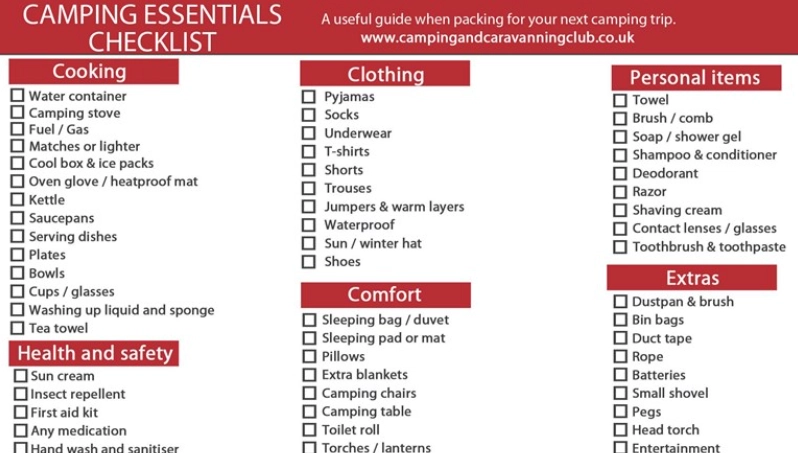
The Master Camping Checklist Table: From Essential to Luxury
Okay, here's the meat of it. The table below breaks down items by category and priority. "Essential" means you really shouldn't go without it. "Important" means your trip will be significantly less comfortable or convenient without it. "Situational/Luxury" means it's for specific conditions or pure enjoyment.
| Category | Essential Items | Important Items | Situational / Luxury Items |
|---|---|---|---|
| Shelter & Sleep | Tent (with poles, stakes, rainfly), Sleeping Bag, Sleeping Pad, Ground Tarp/Footprint | Pillow, Tent Repair Kit (seam sealer, tape), Mallet for stakes, Battery-powered tent fan (summer) | Camping Cot, Large Canopy/Gazebo, Inflatable Sofa, String Lights for camp |
| Sustenance | Water (or purification), Food, Cooler, Camp Stove & Fuel, Lighter/Matches, Biodegradable Soap, Trash Bags | Camp Table, Water Jug with spigot, Spices/Condiments, Dishwashing basin, Can Opener/Bottle Opener | Portable Coffee Maker, Cooler with Bluetooth speakers, Dutch Oven, Portable Blender (seriously, I've seen it) |
| Clothing & Personal | Weather-appropriate layers, Rain Jacket, Sturdy Shoes, Extra Socks, Sun Hat, Sunglasses | Camp Shoes (sandals/crocs), Warm Hat/Beanie, Quick-dry towel, Toiletries (toothbrush, etc.) | Robes, Specialized hiking apparel, Full-length mirror (again, seen it) |
| Tools & Safety | Headlamp/Flashlight + batteries, First Aid Kit, Multi-tool/Knife, Map & Compass/GPS, Fire Extinguisher/Water bucket | Paracord/Rope, Duct Tape, Whistle, Solar Power Bank, Bear Spray (in bear country), Trowel (for catholes) | Satellite Messenger, Portable Power Station, Full Tool Kit, Weather Radio |
| Comfort & Extras | (For car camping: Camp Chair) | Camp Table (if not under Sustenance), Lantern, Book/Journal, Basic games (cards) | Hammock, Portable Projector, Rug for tent floor, Elaborate speaker system |
See how that works? It's a framework, not a prescription.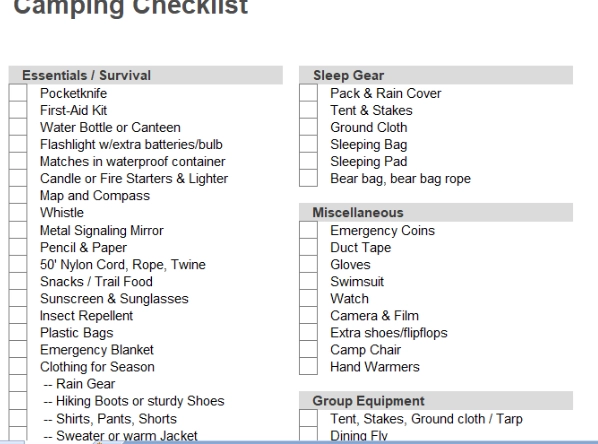
Customizing Your List: What Kind of Camping Are You Doing?
This is where the magic happens. Take the master table above and filter it through your specific trip.
The Family Car Camping Checklist Focus
You have space. You're likely close to your car. Your priorities are comfort, convenience, and keeping everyone (especially kids) happy and safe.
Add Heavily To: Comfort & Extras, Sustenance. Think about entertainment (games, toys, bikes), comfort (more chairs, maybe a cot for an achy back), and meal simplicity. Pre-making and freezing meals is a game-changer.
Safety Specifics: A more comprehensive first-aid kit is wise. Include children's medications, more band-aids (they will be used), and perhaps even a list of emergency contacts and nearby urgent care locations. The REI family camping checklist has some great, kid-specific pointers that are worth a look.
My Family Trip Hack: We have a dedicated "camp kitchen" bin. It never gets unpacked. It has plates, cups, utensils, sponges, soap, a roll of paper towels, basic spices, and a cheap percolator. When we decide to go camping, that bin goes straight in the car. It eliminates 20 small packing decisions every single time.
The Backpacking/Overnight Hike Checklist Focus
Every ounce matters. Your goal is to carry the minimum required for safety and basic comfort. Luxury is measured in grams.
Cut Mercilessly From: Comfort & Extras. That extra chair? No. Giant lantern? No. Multiple cooking pots? Probably not.
Invest In: Multi-use items. A pot that is also your bowl. A sleeping pad that doubles as a seat. A bandana that's a towel, pot holder, and pre-filter for water.
Safety Specifics: Your navigation tools (map, compass, GPS) move from "important" to "absolutely essential." A water purification system is not optional. A small, lightweight emergency shelter (like a bivy) might be wise. I always carry a Ten Essentials kit as defined by organizations like the U.S. Forest Service—it's the gold standard for backcountry safety.
Weight Check: Literally weigh your pack. A good target for a beginner is to keep your total pack weight (including food and water) under 30% of your body weight. It's harder than it sounds.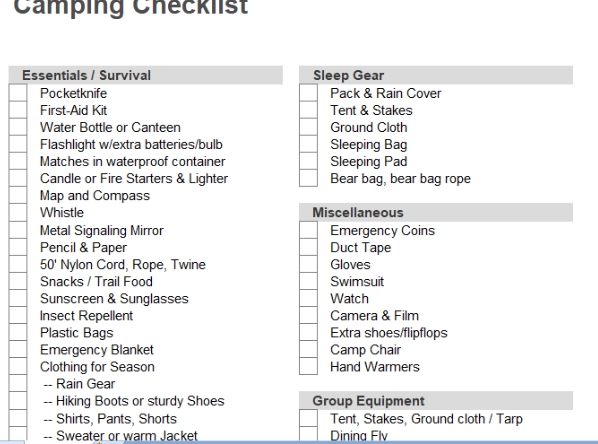
The Cold Weather/Winter Camping Checklist Focus
This is a different beast. Mistakes are less about inconvenience and more about danger. Your camping checklist becomes a survival checklist.
Shelter & Sleep is King: You need a sleeping bag rated for temperatures colder than you expect. An insulated sleeping pad is not a luxury—it's what stops the cold ground from sucking heat from you all night. A four-season tent or a sturdy three-season with good snow shedding ability is key.
Clothing Strategy: Cotton kills. It absorbs moisture and loses all insulating power. You want synthetics or wool for base and mid-layers. Pack extra socks and gloves—they will get wet. A down or synthetic puffy jacket is essential for camp.
Sustenance: You burn more calories staying warm. Pack more high-energy food. A stove that works reliably in freezing temps (white gas is good) is critical, as melting snow may be your only water source. Keep fuel canisters and water filters in your sleeping bag at night to prevent them from freezing.
The Forgotten Items & Common Mistakes
Even with a good checklist, things get missed. Here are the usual suspects—the items that aren't flashy but will ruin your day if they're absent.
Cash Money: Many campgrounds, especially in national parks or remote areas, have fees for firewood, showers, or even entry at self-pay stations that don't take cards. That $20 in small bills is a lifesaver.
A Towel (and not just any towel): A quick-dry backpacking towel is small and amazing. A giant, fluffy cotton bath towel will stay wet for days, smell musty, and take up half your pack. Choose wisely.
Extra Batteries: For your headlamp, your lantern, your GPS. It's always the first night, in the pitch black, when your light flickers and dies. Test them before you go.
Critter Defense: This isn't just about bears. Raccoons, mice, and squirrels are masterful food thieves. A rope to hang a food bag, or a hard-sided bear canister/bear-proof cooler is essential in many areas. The National Park Service has excellent, region-specific guidance on proper food storage. Ignoring this can be dangerous for you and the animals.
The Biggest Mistake? Not checking the weather at the elevation of your campsite. The valley might be sunny and 75°F (24°C), but the mountain lake where you're camping could be 45°F (7°C) and rainy. Pack for the destination, not the driveway.
Packing & Organization: Your Checklist in Action
A list is useless if your gear is a chaotic mess in the back of the car. How you pack is as important as what you pack.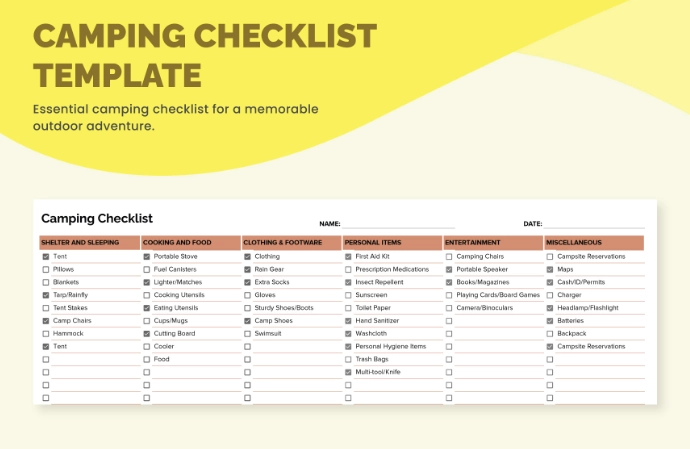
The Bin System: I swear by clear plastic storage bins with locking lids. One for the kitchen. One for tools and safety gear. One for shelter (tent, stakes, mallet, tarp). They stack, they keep things dry in transit, they keep critters out at night, and you can see what's inside.
Loading Order: Pack your car in reverse order of need. The stuff you won't need until you make camp (sleeping bags, tent) goes in first, deep in the trunk. The stuff you might need on the drive or immediately upon arrival (snacks, rain jackets, first aid kit) goes last, so it's easily accessible.
The First-Night Bag: If you're arriving late, the last thing you want to do is unpack the entire car in the dark. Pack one bag or bin with exactly what you need to get through the first night: headlamps, sleeping bags/pads, a change of clothes, toiletries, and a bottle of water. That's all you grab. You can set up the perfect camp in the morning.
Answering Your Camping Checklist Questions
After the Trip: The Most Important Step
Your job isn't over when you get home. This is when you make your checklist infinitely more valuable for next time.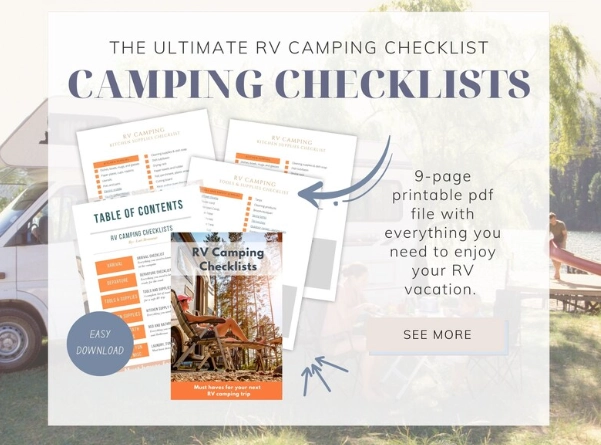
Unpack Immediately. I know, you're tired. Do it anyway. Air out your tent and sleeping bag, even if it's just in the garage. Empty and clean your cooler. Throw away trash. This prevents mold, mildew, and mysterious smells that will haunt you on your next trip.
Restock. Go through your first-aid kit, your repair kit, your fire-starting kit. Replace what you used. Replenish consumables like soap, bug spray, and sunscreen.
Annotate Your List. This is the golden step. On your master checklist (digital or paper), make notes. "Not enough long socks." "Didn't touch the playing cards." "Need a bigger water jug." "That new stove worked great!" This turns a generic guide into your personal, expert playbook for the next adventure.
Look, a camping checklist isn't about being rigid or obsessive. It's about freedom. It's the tool that clears the mental clutter so you can focus on what really matters: the smell of pine trees, the sound of a crackling fire, the weirdly satisfying process of boiling water for coffee over a tiny stove, and the feeling of being completely unplugged. It's about making sure the logistics don't get in the way of the experience.
Start with the framework here. Tweak it. Break it. Make it yours. And then get out there. Your perfect campsite is waiting.