Quick Guide
- The Physical Health Perks: Your Body on Nature
- The Mental & Emotional Reset: Unplugging to Reconnect
- The Social & Relational Benefits: Connection Beyond Wi-Fi
- Breaking Down the Benefits: A Quick-Reference Table
- Addressing the Real Objections & Questions (The FAQ)
- Making It Work For You: A Realistic Approach
Let's be honest for a second. When you think about the benefits of camping, your mind probably jumps to the obvious stuff. Fresh air, right? A break from the city. Maybe some nice photos for Instagram.
But what if I told you that the real perks of pitching a tent go so much deeper? I'm not just talking about a vague sense of "feeling good." I'm talking about measurable, science-backed shifts in your body, your brain, and your relationships. The kind of changes that stick with you long after you've shaken the pine needles out of your sleeping bag.
I've been camping in everything from glorified backyards to spots so remote I wondered if I'd ever find my way back. And every single time, I come home feeling like I've hit a reset button I didn't even know I had. It's not always comfortable (more on that later), but it's always, always worth it.
So, let's ditch the surface-level chat. Let's dig into the real goods. What benefits can you *actually* get from camping?
The Core Idea: Camping isn't just a vacation; it's a form of immersive therapy. It forces your system—biological, psychological, social—to operate in the environment it was originally designed for. The results can be pretty profound.
The Physical Health Perks: Your Body on Nature
We'll start here because it's the most tangible. You don't need a study to tell you your lungs feel clearer after a day in the woods. But the specifics are fascinating.
Sunlight, Sleep, and Your Internal Clock
This is a big one, and it hits fast. Modern life has our circadian rhythms completely messed up. Screens, artificial lights, irregular schedules—it's a recipe for poor sleep and low energy.
Camping fixes this almost by accident. You wake up with the sun (like it or not). You're bathed in natural light all day, which tells your body to suppress melatonin. Then, as dusk falls and you're sitting by the fire or just in the dim glow of a lantern, your pineal gland gets the signal: Time to wind down. The production of melatonin, the sleep hormone, starts rising naturally.
A study published in Current Biology found that after just a weekend of camping, participants' internal clocks shifted to align almost perfectly with sunrise and sunset. Their melatonin levels began rising earlier in the evening. The result? People fell asleep easier and felt more alert in the morning.
I can vouch for this. At home, I'm a night owl. On a camping trip, by 9:30 PM, I'm fighting to keep my eyes open. And I wake up at 6 AM feeling weirdly refreshed, not groggy. It's a different kind of tired and a different kind of rested.
Confession: The first morning of a camping trip, waking up at dawn, I'm usually grumpy. "Why am I doing this?" I think. But by that afternoon, my energy is steady and clean. No 3 PM coffee crash. It's a trade I'll take.
Air Quality and Respiratory Benefits
This isn't just about escaping car exhaust. Forests release phytoncides—natural oils that protect trees from germs and insects. For us, breathing these in seems to boost the activity of our natural killer (NK) white blood cells, part of our immune system's defense against infections and even tumors. Research from Japan on "forest bathing" (Shinrin-yoku) has documented this immune-boosting effect.
So, that deep, clean smell of the woods? It's literally medicine.
Movement in Disguise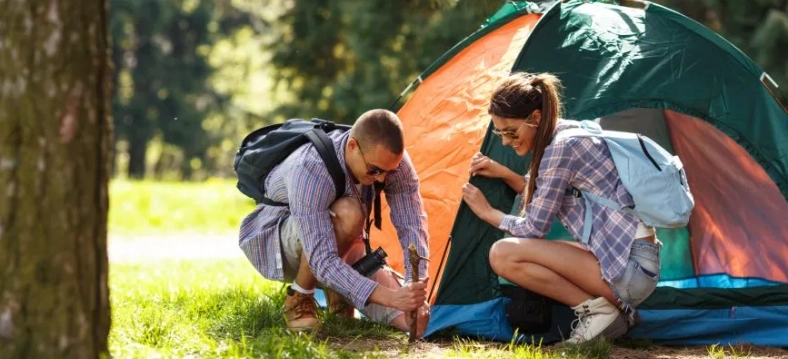
You're not "going for a workout," but you are constantly doing functional, low-impact movement: gathering firewood, hiking to the water source, setting up camp, exploring. It's varied, it's purposeful, and it doesn't feel like a chore on a treadmill. Your body gets a full range of motion without the repetitive stress of gym machines.
Think about the benefits you can get from camping in terms of physical activity—it's the difference between reading a textbook about a language and being immersed in a country where it's spoken. Your body just learns to move again.
The Mental & Emotional Reset: Unplugging to Reconnect
This, for many people, is the holy grail. The mental benefits of camping are what keep folks coming back. It's not just "relaxation." It's a cognitive overhaul.
The Digital Detox (That Actually Works)
You can try a digital detox at home. But your phone is right there. The laptop is in the other room. The pull is magnetic.
Camping, especially in areas with spotty or no service, creates a forced boundary. And it's incredible what happens when that constant drip-feed of notifications, emails, and social comparison stops. The mental static fades. You're not multitasking. Your attention, which is normally fragmented into a hundred pieces, starts to coalesce.
This isn't just anecdotal. Research suggests that constant digital multitasking can increase stress and reduce our ability to focus on single tasks deeply. Camping provides the environment to rebuild that focus.
What benefits can you get from camping mentally? The space to have a single, uninterrupted thought from start to finish. The ability to watch a fire for an hour without feeling bored. It's a mindfulness practice that doesn't require you to sit cross-legged and chant.
Interesting Side Effect: This digital downtime often leads to a surge in creativity. Without external inputs, your brain starts making its own connections. I've solved work problems and gotten ideas for projects while filtering water or staring at a lake—things that eluded me for weeks at my desk.
Stress Reduction Through Direct Experience
Stress in the modern world is often abstract and chronic: a looming deadline, financial worries, social anxieties. It's a low-grade hum that's hard to switch off.
Camping replaces abstract stress with concrete, manageable tasks. Your "problems" become immediate and solvable: put up the tent before it rains, find dry tinder, cook dinner. You engage in what psychologist Mihaly Csikszentmihalyi calls "flow" activities—tasks that are challenging enough to be engaging but within your skill level. This state is inherently satisfying and stress-relieving.
Furthermore, exposure to natural environments is consistently linked to lower levels of cortisol, the primary stress hormone. The sights and sounds of nature (birdsong, rustling leaves, water) have a restorative effect on our directed attention, allowing our brains to recover from mental fatigue. The American Psychological Association highlights numerous studies on the mental health benefits of time in nature.
You're not just "getting away." You're giving your nervous system a different, healthier set of inputs.
Building Resilience and Confidence
Let's not romanticize it. Stuff goes wrong. It rains. You forget the can opener. The bugs are relentless. You get a little lost on a trail.
But here's the secret: navigating these small, real-world adversities is a massive confidence builder. You figure out how to rig a tarp. You MacGyver a solution for the can. You find your way back using a landmark.
Each solved problem is a little deposit in your mental resilience bank. You prove to yourself, in a very tangible way, that you can handle discomfort and uncertainty. That confidence leaks back into your everyday life. A stressful work meeting feels less daunting when you've recently weathered a thunderstorm in a tent.
The Social & Relational Benefits: Connection Beyond Wi-Fi
This is perhaps the most underestimated area. What benefits can you get from camping with others? It transforms relationship dynamics.
Quality Time, Redefined
At home, "spending time" with family or friends often means being in the same room while everyone is on a different screen. Communication is transactional.
Camping strips that away. You're working on shared goals (setting up camp, cooking). You're sitting around a fire with nothing to do but talk. The conversations meander. You tell stories. You laugh at the same ridiculous mishap. You're not just sharing space; you're sharing an experience.
For families, it's golden. Kids aren't begging for tablets. They're exploring, building forts, getting dirty. Parents aren't distracted by chores or phones. You interact in a more natural, collaborative way. The National Park Service discusses how outdoor experiences strengthen family bonds and create lasting memories.
My most honest conversations with my closest friends have happened on camping trips. There's a vulnerability that comes with being out there, a little bit silly and unpolished, that you just don't get over a manicured brunch.
Learning and Teaching in Real-Time
Camping is a great equalizer and a great teacher. The kid might be better at identifying animal tracks. The tech-obsessed teen might be the one to figure out the camp stove. Everyone has a role and a chance to contribute a skill. It builds mutual respect and interdependence that's hard to replicate in a structured home environment.
Breaking Down the Benefits: A Quick-Reference Table
Let's summarize the key areas we've covered. This table lays out the main benefits you can get from camping, what's actually happening, and the tangible outcome.
| Benefit Area | The Mechanism (Why It Happens) | The Tangible Outcome For You |
|---|---|---|
| Physical Health | Natural light resets circadian rhythm; phytoncides boost immunity; functional, varied movement. | Deeper, more restful sleep; stronger immune response; improved fitness without "exercising." |
| Mental Well-being | Forced digital detox reduces cognitive load; natural environments lower cortisol; concrete problem-solving induces flow. | Reduced stress & anxiety; improved focus & creativity; increased resilience & self-confidence. |
| Social Connection | Shared, screen-free goals and experiences; collaborative environment; undistracted time. | Stronger bonds with family/friends; improved communication; shared memories and inside jokes. |
| Perspective & Appreciation | Contrast with daily comforts; immersion in natural cycles; reduced sensory bombardment. | Greater gratitude for simple comforts; sense of being part of something larger; mental clarity. |
Addressing the Real Objections & Questions (The FAQ)
Okay, so the benefits sound great. But I know what you're thinking. Let's tackle the common hurdles head-on. Because knowing what benefits you can get from camping is one thing; overcoming the barriers to getting there is another.

Making It Work For You: A Realistic Approach
You're convinced of the benefits. Now, how do you actually capture them without getting overwhelmed?
First, reframe your goal. Your goal is not to become an expert mountaineer. Your goal is to spend a night or two in a natural environment. That's it.
Start small. Book a site at a state park 45 minutes away for a Friday night. Go with a friend who has some experience, or make it a low-stakes adventure with your partner. Pack simple food you already know how to cook (hot dogs, foil-packet veggies, sandwiches).
Embrace the imperfections. Something will go slightly wrong. That's part of the story and part of the benefit—learning to adapt. The fire might be stubborn. You might forget the salt. Laugh about it.
Intentionally unplug. Put your phone in the car on airplane mode, or just use it as a camera. Be bored. Watch the clouds. Listen.
The Takeaway: You don't have to love every minute of it to reap what benefits you can get from camping. I don't. I sometimes hate the packing, I occasionally get frustrated, and I'm always a bit relieved to shower when I get home. But the overall net effect on my mood, my sleep, my relationships, and my perspective is so overwhelmingly positive that I keep going back. The feeling of calm and centeredness that follows me home is the real trophy.
So, what benefits can you get from camping?
A body that remembers how to sleep.
A mind that can finally hear itself think.
Connections that feel real again.
And the quiet, sturdy confidence that comes from knowing you can handle a little rain, a little darkness, and still find your way to a beautiful morning.
That's more than a weekend activity. That's a reset. And it's waiting for you, just outside.