Guide Overview
- Breaking Down the Cost: It's More Than Just the Site Fee
- The Reservation System: Your Key to Actually Getting a Spot
- Annual Passes & Discounts: Are They Worth It?
- Beyond the Basic Campsite: Yurts, Cabins, and Glamping
- My Top Tips for Managing (and Reducing) Your Camping Fees
- Common Questions About Oregon State Park Camping Fees
- Putting It All Together: A Sample Budget
Let's be honest, the first thing that pops into your head when planning a camping trip is probably "how much is this going to cost me?" I've been there, scrolling through websites, trying to decipher fee structures that seem designed to confuse. Well, if Oregon's stunning coastline, dense forests, and high desert are calling your name, you're in the right place. Figuring out Oregon State Park camping fees doesn't have to be a puzzle. This guide is going to walk you through every single cost, from the obvious site rental to the sneaky little extras they don't always shout about. I'll also throw in some hard-won tips from my own booking blunders and successes.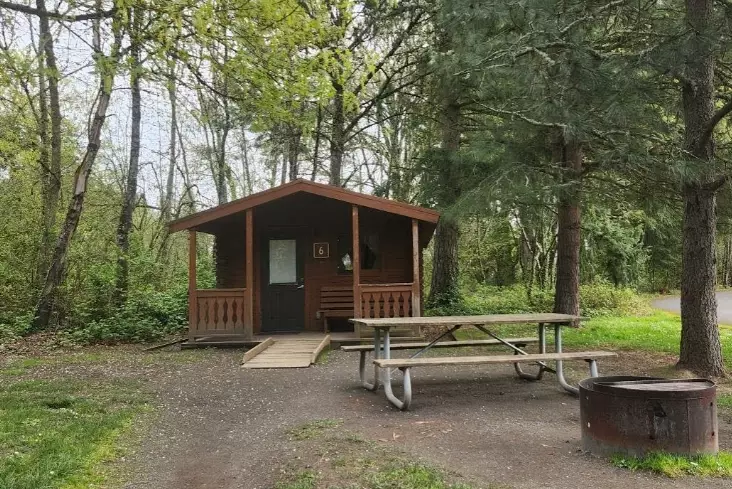
We're not just talking numbers on a page. We're talking about how to actually get a spot at those impossible-to-book coastal gems, whether an annual pass is worth it for you, and how to avoid the disappointment of showing up to a "full" park. I remember once planning a spur-of-the-moment trip to Cape Lookout, only to find every single site booked solid for months. Lesson learned the hard way. So, consider this your cheat sheet.
Breaking Down the Cost: It's More Than Just the Site Fee
When you see a listed price for a campsite, that's rarely the final amount you pay. Oregon's system has a few layers, and understanding them is key to budgeting. Think of it like buying a concert ticket—there's the face value, then the service fee, then the processing fee...
The Standard Nightly Rates
Oregon State Parks categorize their campsites. The Oregon State Park camping fees you see advertised usually refer to these base categories. Here’s the typical breakdown you can expect:
| Campsite Type | Typical Nightly Fee Range | What You Get | Best For |
|---|---|---|---|
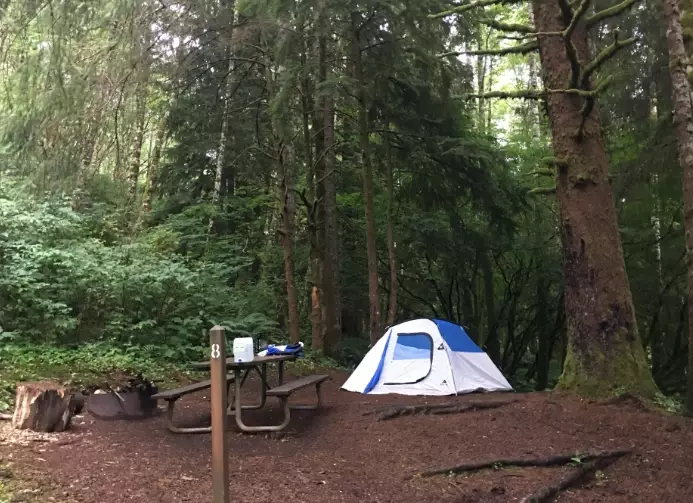
| Basic Tent Site | $17 - $21 | A parking spur, tent pad, picnic table, fire ring. Shared water spigots and restrooms nearby. | Budget campers, backpackers, minimalists. |
| Standard RV/Tent Site (No Hookups) | $19 - $24 | Larger parking spur for a small RV or trailer, same amenities as basic site. | Small RVs, campervans, groups with more gear. |
| RV Site with Electric Hookup | $26 - $33 | Electrical connection (usually 20/30/50 amp), picnic table, fire ring. | Most RV owners wanting basic power. |
| RV Site with Full Hookups (Electric & Water) | $31 - $38 | Electric and potable water connections at the site. | RV campers who prefer not to use shared water fills. |
| Hiker/Biker Camp | $8 - $10 per person | Basic communal area with tent space, often no reservations. | Cyclists touring the coast, long-distance hikers. |
Notice the ranges? A site at a massively popular park like Fort Stevens or Beverly Beach on the coast will be at the higher end. A quieter park inland might be at the lower end. Location, location, location.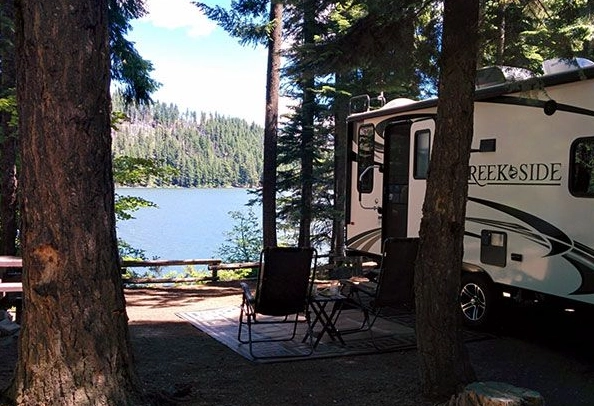
The Mandatory Add-Ons (Where the Price Creeps Up)
This is where they get you. You've picked your site for $24. Great! Now, add these on top.
- Reservation Fee: This is non-negotiable if you book online or by phone. It's $8 per transaction, not per night. So if you book a 7-night stay, it's still just one $8 fee. Small mercy. If you roll up hoping for a first-come, first-served site (increasingly rare), you avoid this.
- Extra Vehicle Fee: Your site fee covers one vehicle. Got a second car? That's usually an extra $7 per night. They're strict about this, and rangers do check.
- Day Use Parking Pass: If friends are visiting you for the day, their car needs a pass. You can buy a $5 daily pass or they can use your annual pass if you have one (more on that later).
So, let's do a real-world example. You book a standard RV site with no hookups at a coastal park for 3 nights. Site fee: $24/night x 3 = $72. Reservation fee: +$8. You have two cars: +$7/night x 3 = $21. Total: $101. That's $34 per night, not $24. See how it works?
The Reservation System: Your Key to Actually Getting a Spot
Gone are the days of just driving up. For most Oregon State Parks, especially from May through September, you must reserve ahead. The primary system is ReserveAmerica. It's... functional. Let's just say its user interface hasn't won any design awards, but it gets the job done.
Some parks offer "First-Come, First-Served" (FCFS) sites, but these are a gamble. In summer, they're often taken by early afternoon on Thursday for the weekend. If you're flexible mid-week, FCFS can be a great way to snag a spot without the 6-month planning stress.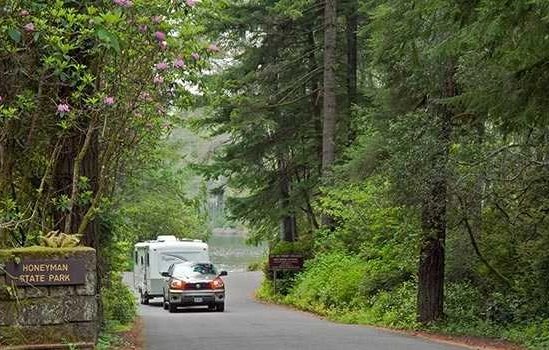
Annual Passes & Discounts: Are They Worth It?
This is a huge piece of the Oregon State Park camping fees puzzle. Depending on how often you go, these can save you a ton.
The 12-Month Parking Pass ($30)
This is a no-brainer for any Oregon resident who visits parks more than a few times a year. It covers day-use parking for one vehicle at any state park for a full year. Since daily parking is $5, it pays for itself after 6 visits. If you camp, your overnight fee includes parking for that day, but this pass is essential for your day trips to other parks. You can buy it online or at most park offices.
The 24-Month Camping Pass ($50)
Now this is interesting. For a one-time fee of $50, you get a pass valid for two years that waives the $8 reservation fee on every booking you make. Do the math. If you make just 7 reservations over two years, you've saved money ($8 x 7 = $56 vs. $50 cost). If you're a frequent camper, this is pure gold. It also gets you 10% off at most park gift shops and some events.
My take? If you plan on more than one camping trip a year, buy the 24-Month Pass immediately. It's the best-kept secret for cutting down your overall Oregon State Park camping fees.
Discounts for Seniors and Disabled Campers
Oregon offers a 50% discount on the nightly site fee (but not on reservation or extra vehicle fees) for Oregon residents who are 64+ or who have a valid disability parking permit. You need to apply for a special permit card through the Oregon State Parks website. It's a bit of paperwork, but the savings are substantial for eligible campers.
Beyond the Basic Campsite: Yurts, Cabins, and Glamping
Not everyone wants to sleep on the ground, and Oregon State Parks caters to that beautifully. This is where fees jump significantly, but so does comfort.
- Yurts: Those cool circular tents with wood floors, furniture, and heat? They typically run $50 to $65 per night. You still need your own bedding and cooking gear, but they're a game-changer in rainy weather.
- Deluxe Cabins & Houses: Some parks, like Beverly Beach or Cape Blanco, have full-fledged cabins or even historic houses. These can range from $80 to over $150 per night, sleep more people, and often have full kitchens and bathrooms. They book up insanely fast.
- Tipis and Covered Wagons: Unique options at select parks. Usually in the $45-$55 range. Fun for kids, but remember, it's still essentially a tent experience with a fun shape.
My Top Tips for Managing (and Reducing) Your Camping Fees
After years of camping here, here's my unofficial list of how to make the most of your budget.
- Camp Sunday-Thursday. The nightly rate is the same, but parks are quieter, and you have a much better chance of getting a prime site without the 6-month-in-advance scramble. The vibe is more relaxed.
- Buy the 24-Month Pass if you're a repeat visitor. I said it before, but it's worth repeating. The $8 savings every time adds up fast and feels psychologically better.
- Explore the less-famous parks. Everyone wants the coast. The parks in the Willamette Valley, Southern Oregon, and Eastern Oregon are stunning, often cheaper, and have way more availability. Think Catherine Creek in the gorge or LaPine near Bend.
- Go in the shoulder seasons. April-May and September-October. The weather can be a coin flip (pack a rainfly!), but the crowds are gone, and nature is putting on a show. Fees are the same, but the experience is richer.
- Share costs with friends. Splitting the site and vehicle fees between two families on one large site can cut everyone's cost in half. Just make sure the site allows the total number of people and vehicles.
What about winter camping? Some parks close loops, but many remain open. The Oregon State Park camping fees are the same, but you often have the place to yourself. Just be prepared for cold, wet conditions and check that water is still available (some spigots are turned off to prevent freezing).
Common Questions About Oregon State Park Camping Fees
Per site. The nightly fee covers the site for a specified number of people (usually 6 or 8). After that, there might be a small extra person charge. But for 99% of family or small group trips, you're paying for the site, not a per-person rate.
This is important. Cancel 3 or more days before your arrival, and you get a refund minus the $8 reservation fee. Cancel within 2 days, and you forfeit the first night's fee plus the reservation fee. No-shows lose everything. Read the fine print on ReserveAmerica.
No. The Hiker/Biker camps are the cheapest at ~$10/person, but they are not free. For truly free, dispersed camping, you need to look into National Forests or Bureau of Land Management (BLM) land, which have their own (usually simpler) rules.
For day use, sometimes—it may cover the $5 parking fee at parks that have a federal land connection (like at the John Day Fossil Beds). But for camping? No. The America the Beautiful Pass does not give you a discount on Oregon State Park camping fees. That's a common misconception.
Most parks with shower facilities include them in your camping fee. However, some might have coin-operated showers for day users. As a registered camper, you should get a code or free access. Always ask the camp host.
Putting It All Together: A Sample Budget
Let's plan a realistic 4-night trip for a family of four with one dog, two cars, and a desire for a bit of comfort.
- Accommodation: Yurt at a mid-coast park @ $60/night x 4 = $240
- Reservation Fee: $8 (but WAIVED because we bought the 24-Month Pass! Savings: $8)
- Extra Vehicle: $7/night x 4 = $28
- 24-Month Camping Pass: $50 (one-time cost, prorated over many trips)
- 12-Month Parking Pass: $30 (for future day trips)
- Firewood: Usually $6-$8 per bundle, say $30 for the trip
Total for this trip: $240 + $28 + $30 = $298 (plus the upfront $50 for the camping pass). That's about $75 per night for a unique, comfortable, and memorable experience in a fantastic location. Compared to a hotel, it's a steal. Compared to a basic tent site, it's a splurge. You decide what's worth it.
The best advice I can give is to use the official Oregon State Parks website as your primary source. It has the most current fee tables, park maps, and alerts about closures. Double-check everything there before you book.
Planning around Oregon State Park camping fees is the first step to an unforgettable adventure. With a little knowledge and strategy, you can spend less time worrying about cost and more time sitting by the fire, listening to the waves or the wind in the pines. That’s what it’s really all about.