Quick Navigation: Your Power Camping Roadmap
I still remember that night in the Blue Ridge Mountains when my RV's lights flickered and died. I'd assumed the campground's electricity hookup was reliable, but a faulty connection left us in the dark. That experience taught me that camping with electricity hookups isn't just about plugging in—it's about knowing the ins and outs to avoid surprises. Whether you're in a massive RV or a cozy tent, this guide will help you harness power safely and smartly, blending outdoor adventure with modern convenience. Let's dive in.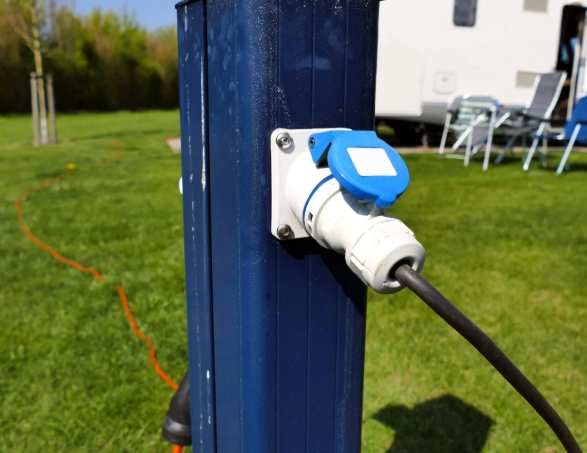
What Electricity Hookups Really Mean for Campers
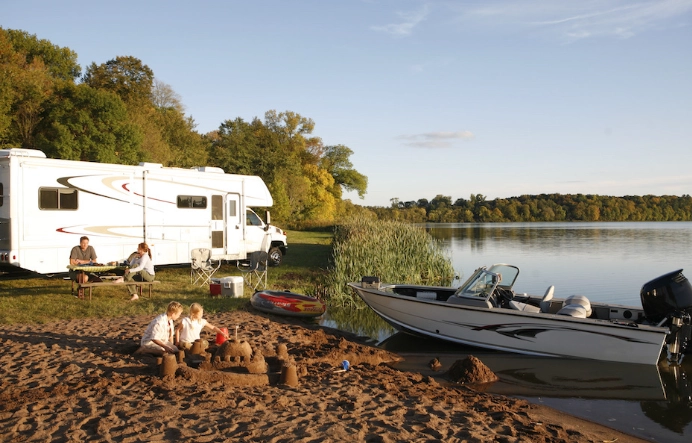
Electricity hookups at campgrounds are those metal pedestals with outlets you see near RV sites. They provide grid power, so you can run appliances, charge devices, and have lights without draining batteries. Most common in North America are 30-amp and 50-amp services. A 30-amp hookup uses a three-prong plug and delivers 120 volts, enough for basics like a fridge and lights. A 50-amp hookup has a four-prong plug and offers two 120-volt legs, ideal for big RVs with air conditioning or multiple gadgets.
But here's something many beginners miss: not all hookups are created equal. In Europe, you might encounter 16-amp or 230-volt systems. I once traveled to a campground in France with my American RV and had to scramble for adapters. Always check the local standards before you go.
Why does this matter? If you plug a 30-amp RV into a 50-amp outlet without an adapter, it might work, but reverse it, and you could overload the circuit. Understanding these details saves you from blown fuses or worse.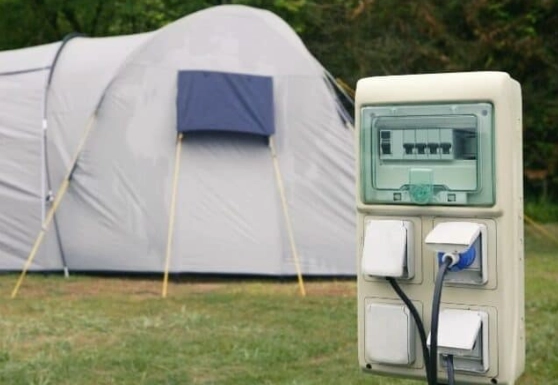
How to Find Campgrounds with Electricity Hookups
Finding a campground with electricity hookups is easier than ever, but it requires a bit of strategy. Start with online resources. Websites like Recreation.gov for U.S. national parks or provincial park sites in Canada let you filter for "electric hookups." Private chains like KOA or Good Sam often list amenities clearly. Don't just rely on photos—read the description. Some places advertise "partial hookups," which might mean water only, no electricity.
I recommend calling the campground directly, especially for popular spots. Last summer, I booked a site at Yellowstone's Fishing Bridge RV Park online, only to find out later that the 50-amp hookups were all taken. A quick call would have saved me the hassle.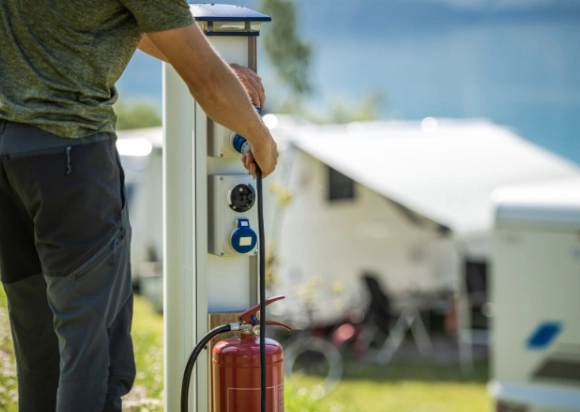
Here's a comparison of platforms to help you search effectively:
| Resource | Best For | Electric Hookup Info | Example Site |
|---|---|---|---|
| Recreation.gov | U.S. federal lands (national parks, forests) | Detailed filters for amp type | Yosemite's Upper Pines Campground |
| KOA Website | Private campgrounds with full amenities | Lists 30-amp/50-amp availability | KOA Holiday sites in Texas |
| State Park Websites | Affordable local options | Varies; often specifies in site details | Florida's Anastasia State Park |
Pro tip: Look for campgrounds with "full hookups," which include electricity, water, and sewer. These are pricier but worth it for longer stays. If you're tent camping, many public campgrounds offer electrical outlets at shared pedestals—just bring a long, outdoor-rated extension cord.
Essential Gear for Camping with Electricity
You can't just show up with a random cord. The right gear makes all the difference between a smooth trip and a frustrating one. Based on my years of camping, here's what you absolutely need:
- Heavy-Duty Power Cord: Get an outdoor-rated extension cord that matches your amp needs. For RVs, a 25-foot cord is standard, but I carry a 50-foot one for tricky site layouts. Brands like Camco are reliable.
- Adapter Set: A set of adapters to convert between 30-amp, 50-amp, and standard 15-amp household outlets. I've seen campers stuck because they only had one type.
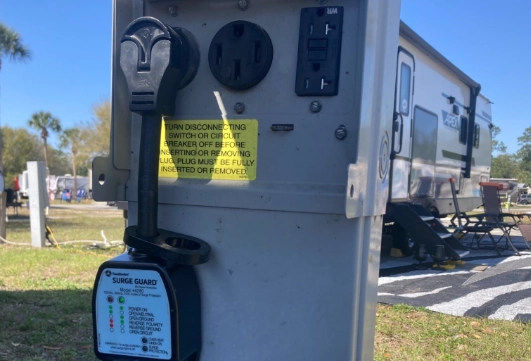
- Surge Protector: This is non-negotiable. Campground power can spike or dip, damaging your electronics. A quality surge protector, like those from Progressive Industries, monitors voltage and shuts off if unsafe.
- Voltage Meter: A simple plug-in meter lets you check the outlet's voltage before connecting. I found one at a hardware store for under $20—it saved my RV's converter from low voltage at a remote site.
- GFCI Outlet for Tents: If you're tent camping, a portable GFCI outlet adds safety near damp ground. It cuts power if there's a fault, preventing shocks.
Don't forget a basic toolkit with screwdrivers and pliers. I once had to tighten a loose connection at the pedestal, and my multi-tool came in handy.
Step-by-Step Guide to Setting Up Your Campsite Power
Setting up electricity at your campsite isn't hard, but doing it wrong can be dangerous. Follow these steps, and you'll be powered up safely in no time.
- Inspect the Hookup Pedestal: When you arrive, look at the power pedestal. Check for visible damage, like cracked covers or exposed wires. Use your voltage meter to test the outlet—it should read around 120 volts for a 30-amp or 240 volts for a 50-amp. Turn off the breaker at the pedestal before touching anything.
- Connect the Surge Protector: Plug your surge protector into the campground outlet first. This device will act as a gatekeeper, ensuring clean power flows to your gear.
- Attach Your Power Cord: Connect your RV's power cord or extension cord to the surge protector. Make sure the connections are snug and dry. If it's raining, use a waterproof cover—I've seen sparks from wet plugs.
- Turn on the Power: Switch on the breaker at the pedestal. Then, check the surge protector's display. It should show normal voltage and no error lights. If there's an issue, turn off the breaker and reassess.
- Test Your Appliances Gradually: Don't blast everything at once. Start with lights, then add the fridge, and finally high-draw items like air conditioners. This prevents overloading the circuit.
Imagine arriving after sunset. You're tired, and it's dark. Instead of fumbling, use a headlamp and take it slow. I've rushed this process and tripped breakers, leaving my family annoyed. A methodical approach saves time in the long run.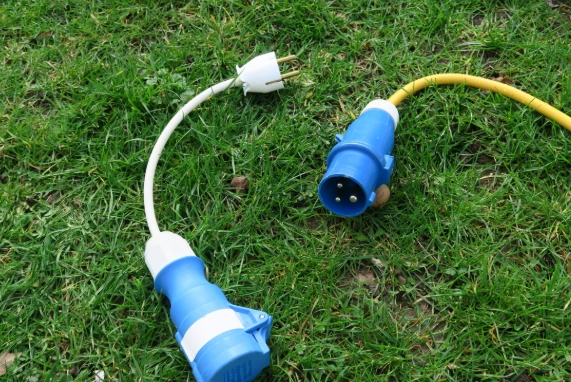
Common Mistakes and Expert Tips from a Seasoned Camper
Even experienced campers slip up with electricity hookups. Here are common pitfalls and how to avoid them, plus some non-obvious advice from my decade of camping.
- Using Indoor Cords Outdoors: Indoor extension cords aren't weatherproof. They can overheat or cause shorts. Always use cords rated for outdoor use, with a thick jacket and UV resistance.
- Ignoring Grounding: Many hookup pedestals have a grounding rod. Ensure your setup is grounded—I've seen campers skip this and risk electrocution, especially in wet areas.
- Overloading the Circuit: Know your amp limit. A 30-amp circuit gives about 3,600 watts. Running an air conditioner (1,500 watts), microwave (1,000 watts), and hair dryer (1,500 watts) simultaneously will trip the breaker. Spread out usage.
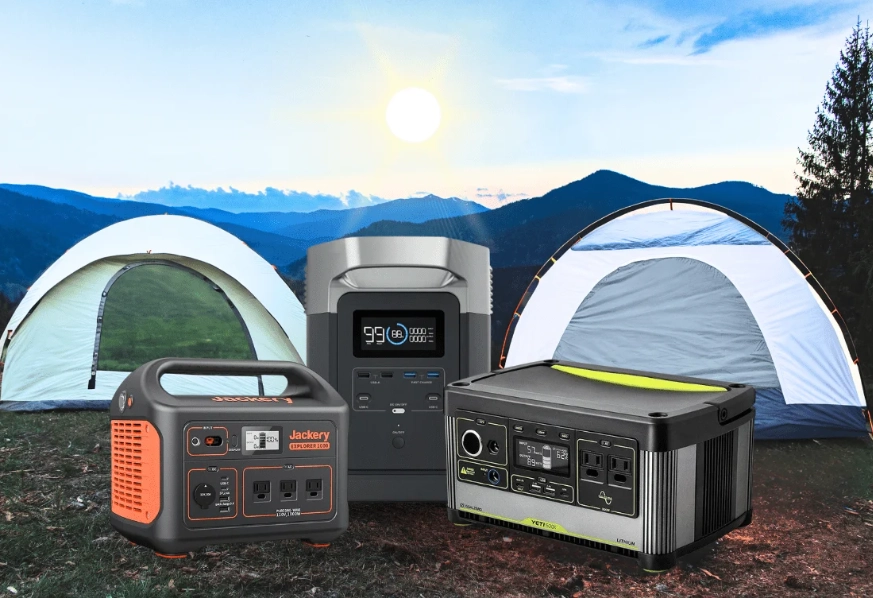
My expert tip: bring a portable solar panel as a backup. Even with hookups, power outages happen. During a storm in the Rockies, the campground lost electricity for hours, but my 100-watt solar panel kept phones charged and lights on. It's a game-changer for remote sites.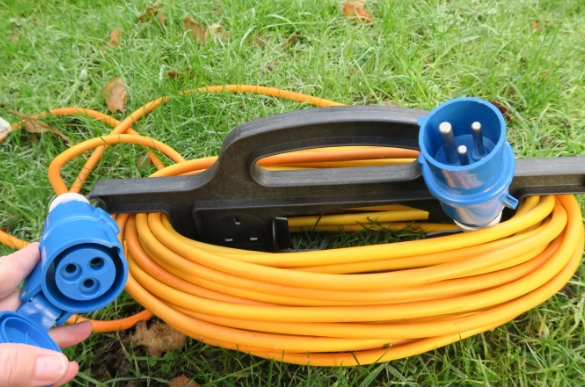
Another subtle mistake: assuming all outlets at a pedestal work. Sometimes, one outlet is faulty while others are fine. Test each one before settling on a site.