Quick Navigation
- Why Choose a Tarp Over a Tent? The Real Trade-Offs
- Tarp Types, Materials, and Shapes: Picking Your Weapon
- The Essential Gear List: Beyond Just the Tarp
- Your First Pitch: A Step-by-Step A-Frame Setup
- Advanced Tips & Tricks From the Trail
- Common Questions (And Straight Answers)
- Wrapping It Up: Is a Tarp Right for You?
Let's be real, the first time you see someone sleeping under a piece of fabric tied to some trees, it looks a bit... minimal. Maybe even sketchy. I thought the same thing. Why ditch a perfectly good tent for what seems like a fancy picnic blanket setup? Well, after my first tent pole snapped on a remote trail, leaving me with a saggy, useless mess, I gave a camping tarp shelter a desperate try. That was years ago, and I haven't looked back since.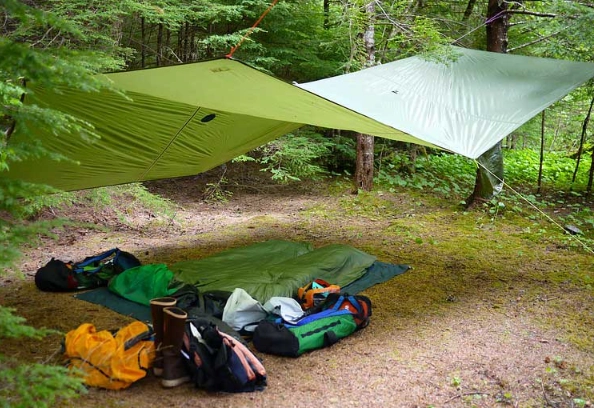
A camping tarp shelter isn't just a backup plan; for many, it's the main event. It’s about freedom, weight savings, and a direct connection to your surroundings that a tent walls off. But it’s also about skill. It’s not a pop-up solution. You need to know what you’re doing. This guide is here to walk you through every step, from buying your first tarp to pitching it in a downpour, based on real trail miles, not just theory.
Why Choose a Tarp Over a Tent? The Real Trade-Offs
This is the first question everyone has. It's not that one is universally better, but one might be better for you. A tent is a complete, enclosed system. A tarp is a versatile tool. Your choice hinges on what you value most out there.
The Good Stuff (Why You'll Love It):
- Weight & Pack Size King: This is the big one. A quality ultralight tarp, guylines, and stakes can easily weigh under a pound (450g). My main silnylon tarp shelter setup is 14 ounces. Compare that to even the lightest solo tents. The space savings in your pack is just as dramatic—it rolls or stuffs down to the size of a water bottle.
- Unbeatable Versatility & Space: You're not confined by pole structure. On a clear night, pitch it high for stargazing. When storm clouds roll in, drop it low and tight to the ground. You can create massive covered living areas for cooking in the rain, or configure it in a dozen ways to fit the terrain. The usable space under a well-pitched 8x10 tarp often feels larger than a 2-person tent.
- Connection to Nature: This is subjective but powerful. You have views, breezes, and sounds. You feel more “in” the environment rather than in a nylon capsule. Waking up to a 180-degree sunrise without fumbling with a zipper is magical.
- Durability & Simplicity: Fewer parts mean fewer things to break. No poles to snap, no zippers to fail. A tear in the field is usually a quick fix with some tape.
The Not-So-Good Stuff (The Honest Truth):
- No Built-in Bug Protection: This is the dealbreaker for many. In mosquito season, you must pair it with a separate bug net inner, a bivy sack, or rely on copious repellent. It's an extra piece of gear and planning.
- Learning Curve & Weather Exposure: You can't just stake out the corners and call it good. A bad pitch will flap, sag, or leak. Wind and driven rain from certain angles can be a challenge. You need to understand weather patterns and site selection.
- Less Privacy & Security: You're more exposed. This matters in crowded campgrounds or areas with curious wildlife. The psychological feeling of “security” a tent provides is absent.
- Condensation Management: While generally better than a single-wall tent due to vast airflow, if you pitch it too low on a cold, humid night, condensation can drip on you. Airflow is both your best friend and something you must actively manage.
So, who is it for?
Think about it. If you're a weight-conscious backpacker, a minimalist, someone who hikes in drier climates, or just wants to expand your outdoor skills, a tarp shelter is a brilliant choice. If you primarily car-camp with the family in buggy lakeside spots, maybe stick with the tent for now.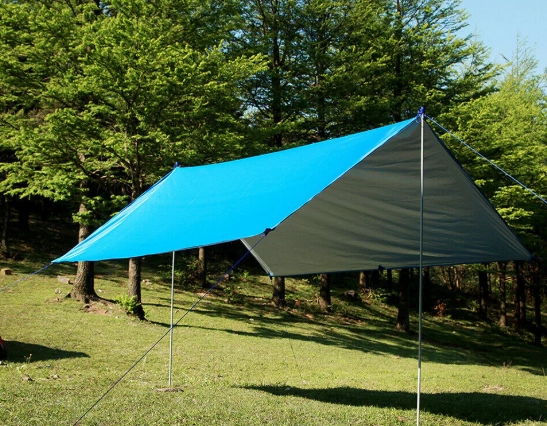
Tarp Types, Materials, and Shapes: Picking Your Weapon
Walk into any gear shop online, and the options are overwhelming. Let's break down what matters.
Fabric & Coatings: The Techy Stuff Simplified
This determines weight, waterproofness, and how it handles.
- Silnylon (Silicone-Impregnated Nylon): The classic. It's strong, relatively affordable, and has a great drape for tight pitches. The downside? It absorbs water and can sag when wet, requiring you to re-tension your lines. It's also a bit heavier than its newer cousin.
- Silpoly (Silicone-Impregnated Polyester): My personal favorite for a general-use camping tarp. It doesn't absorb water, so no wet-weather sag. It's often more resistant to UV degradation. It can be a tad less elastic than silnylon, which some see as a benefit for a stable pitch.
- Dyneema Composite Fabric (DCF, formerly Cuben Fiber): The ultralight champion. It doesn't absorb water, doesn't sag, and is incredibly strong for its weight. The catch? It's very expensive, less abrasion-resistant, and can be annoyingly crinkly/noisy. It's for gram-counters who have the budget.
- Polyethylene (Poly Tarps): The blue hardware store tarp. Cheap, heavy, bulky, and loud. Don't use this for backpacking. It's fine for car-camping or emergency use, but that's it.
For a deeper dive into fabric science from a trusted source, the experts at Ripstop by the Roll have an incredible library of information that's way more detailed than I can get here.
Shape & Cut: Flat vs. Cat-Cut vs. Shaped
This affects how easy it is to pitch taut.
- Flat Tarp (Rectangular/Square): The most versatile and my recommendation for beginners. An 8x10 foot flat tarp is the gold standard. You can create any configuration. The trade-off? It has more slack to manage and requires more skill to get drum-tight.
- Cat-Cut Tarp: The edges (ridgeline and/or sides) have a slight curve (catenary cut). This removes inherent slack, making it easier to pitch tightly against wind. However, it's slightly less versatile—it's optimized for specific pitches like the A-frame.
- Shaped Tarps (Pyramid/Hex/Mid): These have integrated geometry, like a pyramid (a square tarp with a center pole) or a hex shape. They are extremely stormworthy and simple to pitch (often one pole, four stakes), but offer less configuration flexibility. A popular hybrid is the “flat tarp with beak” which adds a small front awning for weather protection.
Size: How Big is Big Enough?
This depends on you, your gear, and the weather.
A solo hiker in fair weather can get away with a minimalist 5x9 or 6x9 tarp. But it's cramped. For a reliable one-person camping tarp shelter that can handle bad weather and keep your pack dry, 8x10 is the sweet spot. For two people, you'd want at least a 10x10 or an 8x10 pitched wide.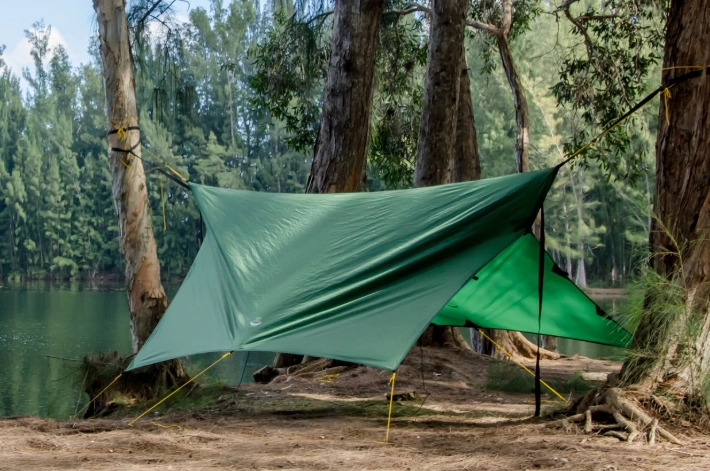
Here’s a quick reference table for solo use:
| Tarp Size | Best For | Weight (approx., Silnylon) | Pitch Flexibility | My Take |
|---|---|---|---|---|
| 5x9 ft | Ultralight fastpacking, emergency shelter, minimalists. | 8-10 oz | Low. Primarily A-frame. | Feels like a coffin in the rain. Too small for comfort, but saves weight. |
| 7x9 ft | Solo hikers in predictable, dry climates. | 12-15 oz | Moderate. Good A-frame, limited others. | The floor space is okay, but splash protection is minimal. A fair compromise. |
| 8x10 ft | The Goldilocks Choice. Solo all-weather, cozy for two. | 16-20 oz | High. All classic pitches work well. | My most-used size. Enough room to sit up, cook, and store gear out of the rain. Highly recommended. |
| 10x10 ft | Two-person comfort, luxury solo palace, group cooking area. | 22-28 oz | Very High. Massive coverage. | Heavy for one, but the coverage in a storm is phenomenal. A great 2-person shelter base. |
The Essential Gear List: Beyond Just the Tarp
Your tarp is useless without its supporting cast. Skimping here is where most people fail.
- Stakes: Carry at least 6-8, and make them good ones. Needle stakes are light but bend in hard ground. V-shaped Y-stakes or mini groundhogs offer the best hold-to-weight ratio. I carry a mix.
- Guylines: 50 feet of reflective cord is a good start. I pre-cut lines of different lengths (e.g., two 12ft ridgelines, four 6ft corner lines, a couple 3ft ones). Reflective is a lifesaver at night.
- Tensioners: Line locs are foolproof and fast. A simple slippery hitch (like the trucker's hitch) is a versatile, no-hardware knot alternative. Practice it.
- Ridgeline (Continuous): A separate, strong cord (like 2-3mm Dyneema) run between two trees or poles, over which you drape your tarp. This protects the tarp fabric from abrasion and makes adjustment super easy. I use one almost always.
- Bug Protection: This is non-negotiable for many. Options: a full bug net inner (adds weight but most comfort), a head net (minimalist), or a waterproof-breatheable bivy sack (adds warmth and splash protection too).
- Groundsheet: A simple piece of polycryo or Tyvek keeps you and your sleeping bag clean and dry from ground moisture. Weighs almost nothing.
Your First Pitch: A Step-by-Step A-Frame Setup
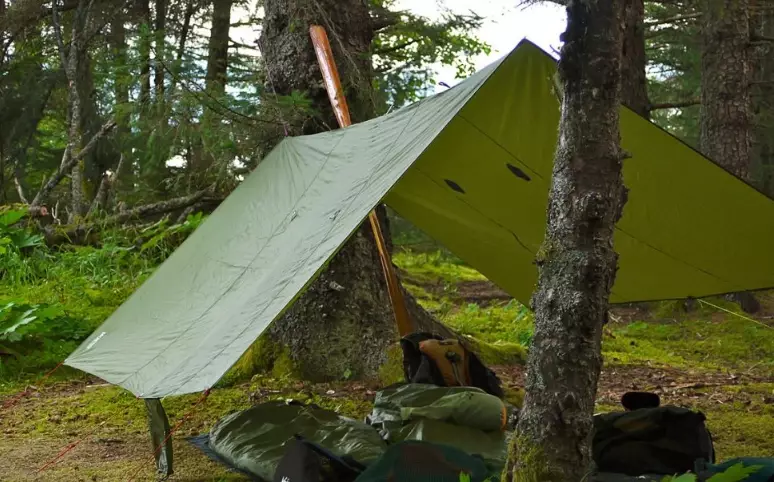
The A-frame is the bread and butter of tarp setups. Let's walk through it slowly.
- Find Your Spot: Look for two sturdy trees about 10-12 feet apart. Clear the ground of sharp sticks and pine cones. Consider the wind direction—do you want the open ends facing away from the likely wind? Also, think about water flow. Is it a potential riverbed if it rains?
- Set the Ridgeline: Tie your continuous ridgeline between the two trees at about chest height. Use a tensioning knot like a trucker's hitch on one end to get it tight. Or, if not using a ridgeline, you'll attach the tarp's center points directly to the trees.
- Drape & Attach: Drape your tarp over the ridgeline, centering it. If your tarp has center loops, clip or tie them to the ridgeline. This stops it sliding around.
- Stake the Corners: Pull the four corner tie-outs down and out at about a 45-degree angle from the tarp. Stake them down firmly. Don't pull them straight out—pulling down and out creates tension across the whole panel.
- Add Mid-Panel Guyouts (The Secret to Tightness): Most tarps have tie-outs along the sides. Stake these out too, creating a “wall” effect. This pulls the slack out of the middle of the panel and is crucial for a stormworthy pitch.
- Fine-Tune & Tension: Walk around and tighten every line. The fabric should be taut, with no major flappy sections. A well-tuned tarp shelter sounds solid in the wind.
My Experience: The first few times, this will feel slow and fiddly. It took me 20 minutes the first time. Now, in good conditions, I can have a bomber A-frame up in under 5 minutes. Practice in your backyard or a local park. Seriously, do it. It makes all the difference when you're tired and it's getting dark.
Beyond the A-Frame: Other Essential Configurations
Different weather, different needs.
- The Storm (Flying Diamond) Pitch: Use one corner as the high point, stake the opposite corner downwind, and peg out the other two corners low. Creates a low, sleek profile perfect for high winds and driven rain. Coverage is smaller, but it's incredibly stable.
- The C-Fly or Lean-To: Attach one long edge high between two trees, stake the opposite edge low to the ground on one side only. Creates a huge covered area on one side for cooking or lounging with a view. Useless if the wind shifts, but great for fair-weather camps.
- The Enclosed Pyramid (with a trekking pole): Use the center tie-out (if your tarp has one) and prop it up with a trekking pole. Stake out all corners and mid-points. Creates a fully enclosed, storm-ready palace. Great when there are no trees.
For visual learners, the REI Expert Advice library has excellent diagrams and tutorials that complement this text perfectly.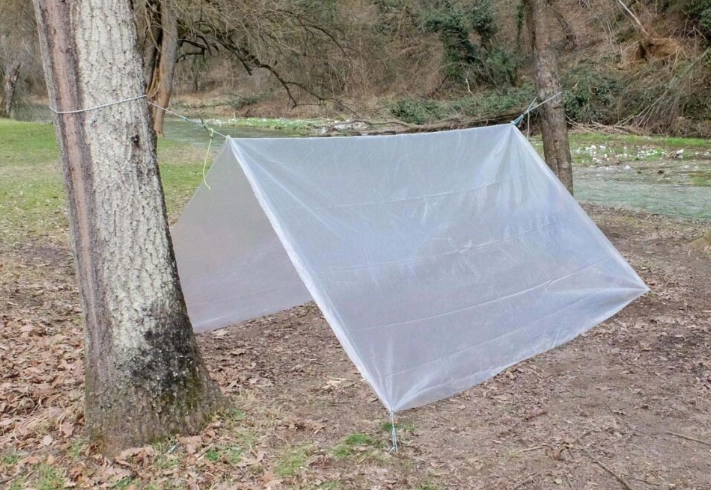
Advanced Tips & Tricks From the Trail
This is the stuff you learn by doing it wrong first.
Dealing with Weather
Rain: Pitch it low. Angle it so the prevailing wind hits a side, not an open end. Make sure your groundsheet is inside the drip line of the tarp. If water starts running down a guyline and into the shelter (it will), tie a “drip line” – a short loop of string – on the guyline a few inches from the tarp. Water will follow the string and drip off before reaching the fabric.
Wind: A taut pitch is everything. Use all tie-outs. Point the low, narrow end into the wind. Consider the storm pitch. Bury your stakes or tie them off to logs/rocks if the ground is soft.
Cold & Condensation: Maximize airflow. A higher pitch allows more air movement. If you're using a bivy, leave the head end open. In freezing temps, be aware of spindrift (blowing snow) which can come in from the sides.
Site Selection is 90% of the Battle
Look for natural windbreaks like a line of bushes or a small rise. Avoid valley bottoms where cold air pools. Find flat ground, but with a very slight slope so water doesn't pool under you. Always, always look up for “widowmakers” – dead branches hanging in trees above your site.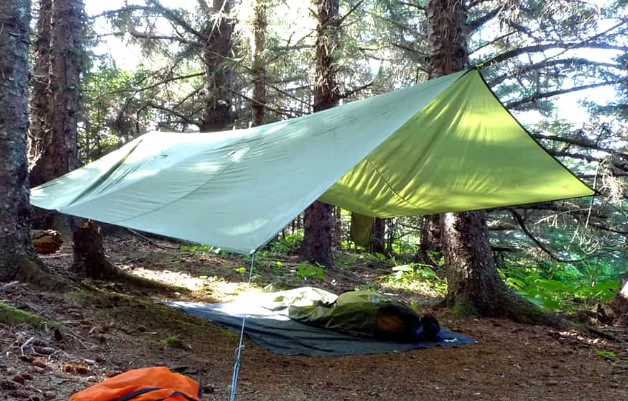
Sleep System Synergy
Your tarp is just the roof. Your sleep system needs to handle the rest. A good sleeping pad with a high R-value is critical for ground insulation. In cold/wet conditions, a waterproof-breatheable bivy sack is a fantastic partner to a tarp, adding a few degrees of warmth and blocking splashback. In bug season, the integrated bug netting of a bivy or a separate inner net is a must.
I once tried a diamond pitch in high wind on a coastal bluff, thinking I was clever. I didn't stake the upwind side low enough. The wind got underneath and turned my tarp into a giant, flapping sail that pulled up three stakes in the middle of the night. Lesson learned: in high wind, get it LOW and make sure the windward edge is sealed. I spent a damp, noisy night holding the corner down with my hand. Not my finest hour.
Common Questions (And Straight Answers)
Wrapping It Up: Is a Tarp Right for You?
Moving to a tarp shelter isn't just a gear change; it's a mindset shift. It asks more of you. It demands that you pay attention to the land, the weather, and your own skills. In return, it gives you immense freedom, a lighter pack, and a raw, rewarding experience that feels more like true camping.
Don't jump in blind.
Buy a cheap blue tarp and some rope. Practice in your yard. Get a feel for the tension, the angles. See if you enjoy the puzzle of it. If you do, then invest in a good silnylon or silpoly flat tarp, some decent stakes, and hit the trail for a one-nighter in good weather.
You might just find, like I did, that your old tent starts gathering dust. There's a unique satisfaction in creating your own home for the night with nothing but some fabric and cord. That's the real magic of the humble camping tarp shelter.