Quick Navigation
Let's be honest. The idea of bushcraft camping in heavy rain sounds, to most people, like a special kind of misery they'd pay good money to avoid. I get it. I've been there—huddled under a dripping tarp, questioning all my life choices as water finds its way into places it definitely shouldn't be. But here's the thing no one tells you: mastering bushcraft in a downpour is where you go from being someone who camps in the woods to someone who truly understands them. It's the difference between just surviving and actually thriving when the sky opens up. This isn't about enduring the rain; it's about learning to work with it, to build a dry haven right in the middle of it, and coming out the other side with a confidence that fair-weather campers will never know.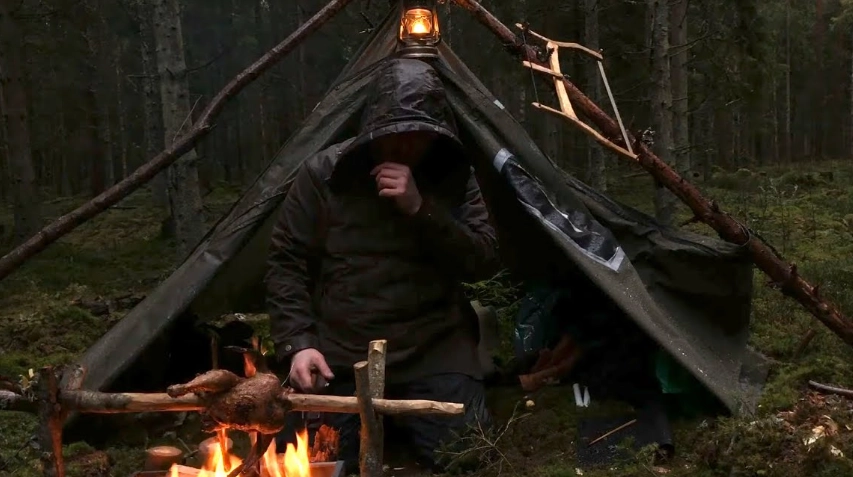
That feeling of being dry, warm, and secure while the storm rages outside your hand-built shelter? It's unbeatable. It's the core of what bushcraft is all about. So, if you're staring at a weather forecast full of little rain clouds and wondering if you should cancel your trip, don't. This guide is for you. We're going to strip away the fear and the hype and talk about the real, practical steps for successful bushcraft camping in heavy rain.
Your Foundation: Shelter is Everything (No, Really)
Forget about your fancy sleeping bag for a second. If your shelter fails in a rainstorm, nothing else matters. Everything gets wet, morale plummets, and hypothermia becomes a real risk. Your first and most critical job when the rain starts—or better yet, before it starts—is creating an impenetrable roof over your head. Bushcraft camping in heavy rain demands that your shelter isn't just good, it's bombproof.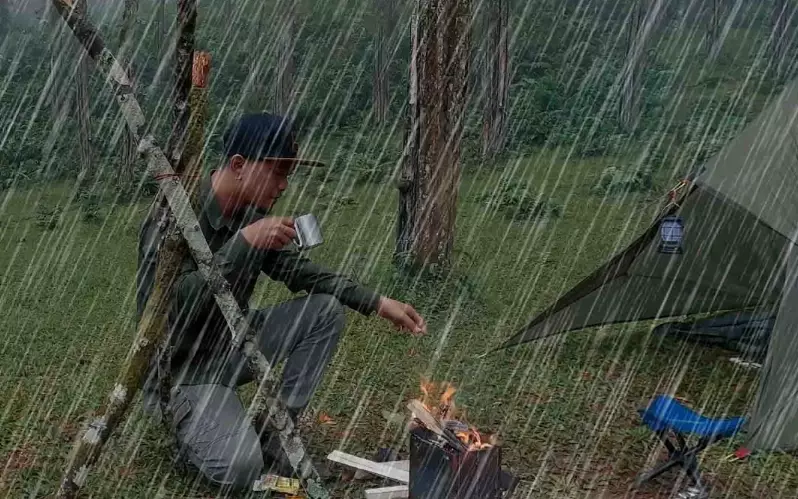
Choosing and Preparing Your Site: The First Critical Decision
This is where most mistakes happen. You see a nice flat spot and drop your pack. Stop. Look up. Look down. Look around.
Avoid these spots like the plague:
- **Under dead or leaning trees (widowmakers).** This is non-negotiable. Wind and rain combine to bring down branches and whole trees. The U.S. Forest Service has clear warnings about the dangers of dead trees, especially in storms. - **At the bottom of a hill or in a dry creek bed.** Water flows downhill. You are camping in a riverbed waiting to happen. - **On hard, compacted ground.** Water won't soak in; it will pool under you.
What you want:
- **Slight elevation.** Even a few inches can make a huge difference in directing water away. - **Natural windbreaks.** Dense, healthy bushes or a solid rock face can break the wind-driven rain. - **Soft, absorbent ground.** Pine duff or leaf litter drains better than clay or hardpack. - **A natural "roof" or anchor points.** Look for two sturdy trees the right distance apart for a ridge line, or a strong, low-hanging branch you can use.
Shelter Designs That Laugh at the Rain
For bushcraft camping in heavy rain, you need a design with a steep pitch. A low, flat roof will sag, pool water, and eventually leak or collapse. Here are the top contenders, from my experience.
The A-Frame (The Classic Workhorse): Simple, fast, and highly effective. Your ridge line must be taut, and your tarp must be stretched tight to create that sharp angle. Guy out all four corners and the mid-panel tie-outs if you have them. This creates multiple rain-shedding surfaces.
The Flying V / Diamond Setup: Fantastic for heavy, wind-driven rain. You orient the point into the wind, creating a sleek, aerodynamic shape that deflects rain and wind. It gives you great coverage at the head end but less living space.
The Wedge or Lean-To (with a major upgrade): A basic lean-to is terrible in rain unless the wind is perfectly consistent. The upgrade? Add a second, lower tarp in front as a "door" or windbreak, or angle a large piece of bark or a poncho to close off one side. This turns it into a more enclosed space.
The Debris Hut (The Ultimate Bushcraft Test): This is pure, unadulterated bushcraft. Building a weatherproof debris hut in the rain is a monumental task, but if done correctly with a thick enough layer of leaves, ferns, and bark (think 3 feet thick!), it can be incredibly warm and dry. It's a last-resort or skills-practice shelter for a rainy day, not something you want to start as the first drops fall.
The Gear That Won't Let You Down
Okay, shelter's up. Now let's talk about what you bring inside it. Your gear list for bushcraft camping in heavy rain isn't just your standard list with a poncho thrown in. Every item has to be scrutinized through the lens of relentless moisture.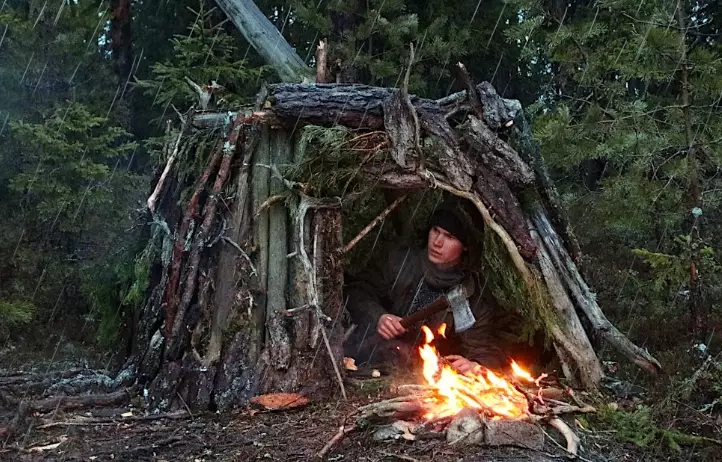
| Gear Category | Essential Choice for Rain | Why It's Critical | Common Mistake |
|---|---|---|---|
| Rain Layer | 3-Layer Gore-Tex or similar hardshell jacket & pants; Durable Rain Poncho (for over gear) | You need breathable waterproofing you can work in. A poncho is great for quick coverage and can double as an emergency shelter extension. | Using a cheap, non-breathable rain suit. You'll sweat yourself wet from the inside in minutes. |
| Footwear | Full-Grain Leather Boots (well waxed) or Quality Waterproof Hiking Boots; Multiple Wool/Synthetic Socks | Leather, when properly treated, is more durable and water-resistant than most fabrics. The goal is to keep water out as long as possible and manage moisture when it gets in. | Wearing cotton socks. They retain water, lose insulation, and cause blisters faster than anything. |
| Pack Protection | Internal Pack Liner (heavy-duty trash compactor bag) AND a Pack Cover | The liner is your fail-safe. Even if the cover fails and your pack fabric soaks through, everything inside the liner stays dry. Double-bag your sleeping bag. | Relying solely on a pack cover. Water runs down your back and under the cover. |
| Sleep System | Synthetic Sleeping Bag (or down with absolute confidence in your bag's dry-sack); Closed-Cell Foam Pad | Synthetic insulation retains warmth when wet. A foam pad provides guaranteed insulation from the cold, wet ground, even if punctured. | Using an inflatable pad alone. A puncture on wet ground means zero insulation. |
| Fire Kit | Multiple Methods: Ferro Rod, Stormproof Matches/Lighter, Cotton Balls soaked in Vaseline, Fatwood | You must assume everything is wet. Your fire-starting ability is your ultimate safety net. Have backups for your backups. | Having only one disposable lighter. It will fail when you need it most. |
The mental shift here is from "water-resistant" to "water-management." You will get damp. The goal is to have dry sanctuaries (your skin layer, your sleep system) and systems to manage the wetness everywhere else.
Core Skills for a Soggy World
Gear is just stuff. Skills are what turn that stuff into security. When you're bushcraft camping in heavy rain, these skills move from "handy to know" to "utterly essential."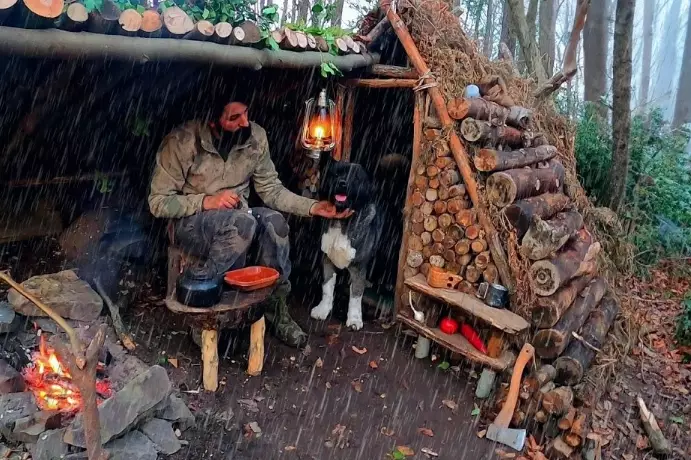
Firecraft: Making Fire When Everything is Soaked
This is the pinnacle skill. If you can make fire in the rain, you can handle anything. It's not magic; it's a process.
First, find dry tinder. Look inside things. Peel the wet outer bark off a dead standing stump to find dry, punky wood inside. Look for fatwood—the resin-soaked heartwood of pine trees. That resin will burn even when wet. Birch bark, if you can find it, contains oils that ignite easily. I always carry a few homemade vaseline-soaked cotton balls in a tiny waterproof container. They're my guaranteed first stage.
Second, prepare your site. Use a knife to shave off the wet outer layer of sticks to reveal dry wood beneath. Build a small platform of wrist-thick sticks to keep your fledgling fire off the soggy ground. Have all your fuel—from pencil-lead size up to wrist-thick—prepared and under cover before you strike the first spark.
Third, protect your flame. Use your body, your tarp, or a piece of bark as a wind/rain break while you nurse the initial ember. Blow gently on the base of the tinder, not directly into the flames. Start small and build it up slowly, adding thicker wood only when you have a strong, hungry bed of coals.
Water Management and Staying Hydrated
It's ironic—you're surrounded by water but can easily become dehydrated. You're working hard, maybe sweating under your layers, and you might not feel thirsty in the cool, damp air. Drink consciously. Set a timer if you have to.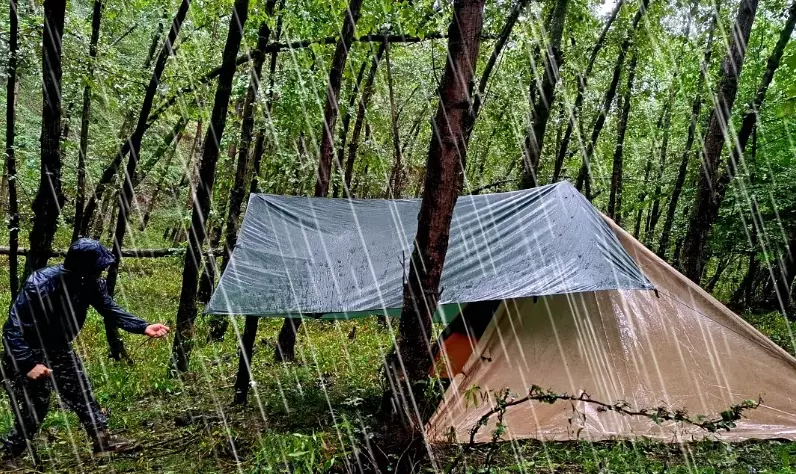
Collecting water is easy, but purification is still a must. Rainwater collected directly from your tarp into a clean pot is usually safe to boil and drink. Streams and ponds are more suspect. Boiling is the most reliable method in wet conditions where chemical tablets might be less effective in cold water. A good bushcraft pot is worth its weight in gold here.
The Mental Game: Staying Sane in the Drumming Rain
This might be the most important section. You can have the best shelter and gear, but if your mind goes to a dark place, the trip is ruined. The constant drumming on the tarp, the limited visibility, the feeling of being confined—it gets to people.
Embrace the slowdown. Rain forces a different pace. This isn't a weekend for epic hikes or ambitious projects. It's a time for detailed camp chores, whittling a spoon, brewing endless cups of tea, reading, or just listening. And I mean really listening. The sound of rain in the forest is one of the most complex, beautiful soundscapes there is. Different leaves make different sounds. It hits the canopy first, then drips down to the understory.
Create routines. A hot drink first thing in the morning and last thing at night is a huge morale booster. Keep your living space organized. A cluttered, damp shelter feels chaotic. Have a designated "dry zone" for your sleep clothes and bag that you never enter with wet gear on.
Short, strategic venturing. You don't have to be a prisoner. Throw on your rain layers and go for a 15-minute walk. You'll see the forest in a way few people do—the colors are deeper, the smells are richer, and you might spot animals moving about. Then come back to your dry sanctuary. The contrast makes it all the sweeter.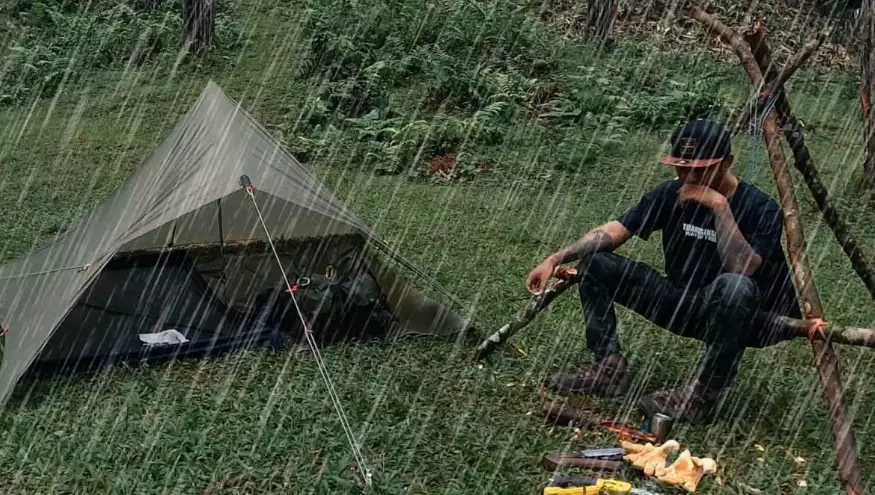
Answering Your Questions (The Real Stuff You Worry About)
Let's tackle some specific worries head-on.
Packing It In: Turning Knowledge into Experience
Bushcraft camping in heavy rain isn't about conquering nature. It's about developing a profound partnership with it. You learn to read the land for drainage, the trees for shelter and fuel, and yourself for limits and resilience. You stop seeing rain as an adversary and start seeing it as a condition—a powerful, shaping force that reveals a different, more intimate side of the wilderness.
The skills you build on a wet weekend—the patience for firecraft, the meticulousness of shelter building, the calm to sit and listen—will make you a more capable and confident outdoors person in any weather. Start with a single overnight close to home when rain is forecast. Test your gear, practice your setups, and learn your lessons where the car is a short, soggy walk away.
Then, when you're sitting dry under your tarp, sipping a hot drink as the world washes clean outside, you'll understand. The challenge of bushcraft camping in heavy rain isn't a barrier. It's the doorway to a deeper, richer way of being in the woods.