Quick Guide
- What Exactly Is a Survival Camping Bicycle? It's More Than a Name
- Choosing Your Foundation: The Frame and Bike Type
- The Non-Negotiable Modifications and Gear
- The Survival Camping Bicycle Gear Checklist: What to Actually Pack
- Skills and Mindset: The Human Element
- Answering Your Burning Questions (FAQs)
- Final Thoughts: The Journey is the Point
Let's be real for a second. When you think of heading out into the wild, surviving off the land, or just getting far away from the noise for a few days, what's the first vehicle that comes to mind? Probably a big 4x4 truck, loaded to the brim with gear. But what if I told you there's a quieter, cheaper, more reliable, and honestly more rewarding way to do it? That's where the whole idea of a survival camping bicycle comes in.
I'm not talking about your average weekend trail bike. I mean a purpose-built, or purpose-modified, machine that's as much a tool for living as it is for moving. A bike that can carry your shelter, your food, your water, and your safety gear over terrain where roads are just a memory. It's part transportation, part pack mule, and part survival kit on two wheels.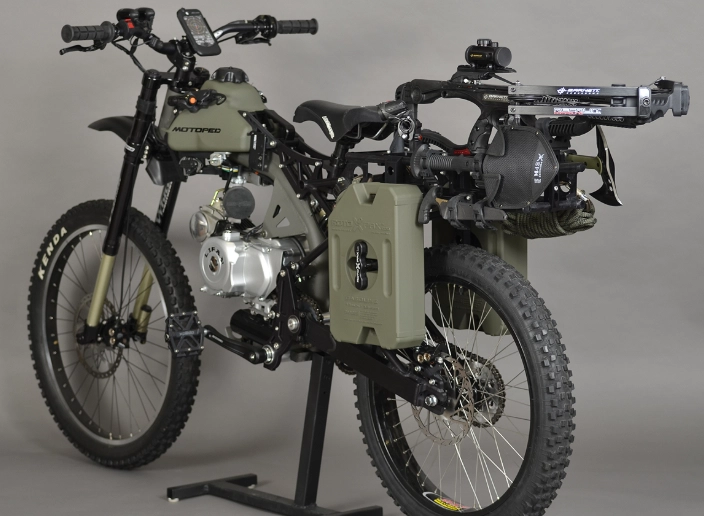
I got into this years ago, not from some prepper mentality, but from pure frustration. My car broke down on the way to a remote camping spot, and I ended up having to hike the last 10 miles with a heavy pack. It was miserable. On the walk, I kept thinking, "A bike would be perfect for this last stretch." That thought snowballed. What if the bike wasn't just for the last stretch, but for the whole journey? What would that bike need to be?
That's what we're diving into here. This isn't a theoretical exercise. It's a practical guide to understanding, choosing, and using a survival camping bicycle. Whether you're a seasoned bikepacker looking to add a survivalist edge, or a camper curious about ditching the gas pump, this is for you.
What Exactly Is a Survival Camping Bicycle? It's More Than a Name
Calling it just a "bike" feels inadequate. A survival camping bicycle is defined by its intent and its capability. The core idea is simple: a human-powered vehicle capable of extended, self-sufficient travel and living in remote or unpredictable environments. It's preparedness on wheels.
The philosophy hinges on a few key principles that separate it from a casual ride:
- Durability Over Lightweight: While weight matters, reliability is king. This bike needs to withstand rocks, mud, sand, and loaded weight without complaining. A few extra pounds of sturdy frame is a good trade for a breakdown 50 miles from nowhere.
- Versatility Over Specialization: It might not be the absolute best at climbing sheer rock faces or winning a road race, but it must be competent on forest trails, gravel roads, broken pavement, and even the occasional stretch of sand or grass. It's a generalist.
- Carrying Capacity is Non-Negotiable: This is the big one. You need to haul gear—water, shelter, tools, food, a first-aid kit. The frame must have ample mounting points for racks, bags, and cages. The geometry must remain stable when loaded.
- Serviceability in the Field: Can you fix a flat, adjust the brakes, or tighten a bolt with the basic tools you carry? Simplicity often wins. Complex, proprietary components can be a liability when you're your own mechanic.
So, it's a mindset as much as a machine. You're building a partnership with this bicycle. You learn its sounds, its feel. You know exactly what's in every bag strapped to it. That knowledge is a huge part of the survival aspect.
Choosing Your Foundation: The Frame and Bike Type
This is where most people start, and it's easy to get lost in the options. You can adapt many types of bikes, but some are born for this. Let's break down the main contenders.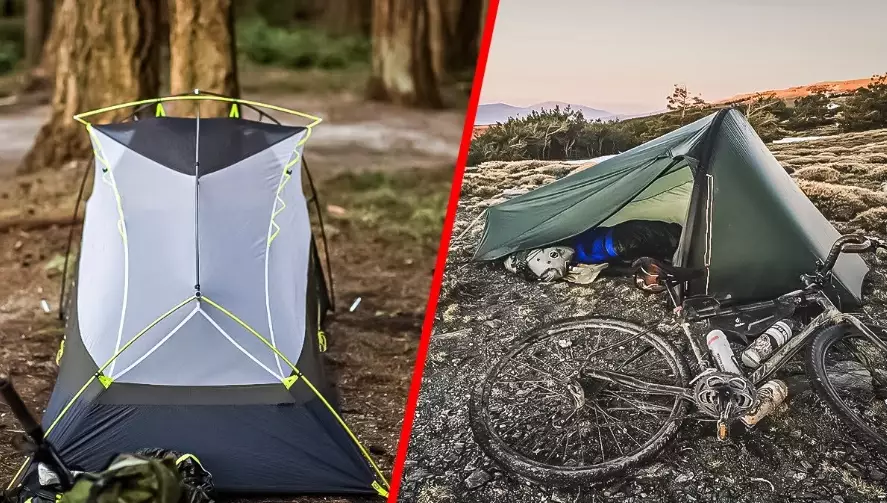
The Top Contenders for Your Survival Bike Build
| Bike Type | Best For Terrain | Key Strengths | Potential Drawbacks | My Personal Take |
|---|---|---|---|---|
| Touring Bicycle | Paved roads, hard-packed gravel, rail trails. | Incredibly stable when loaded, designed for long distances, comfortable geometry, tons of mounting points. | Limited on rough singletrack or mud. Thin tires can sink. | The classic choice. Feels like a trusty workhorse. If your routes are mostly stable surfaces, this is hard to beat. |
| Hardtail Mountain Bike (no rear suspension) | Everything from trails to gravel to rough roads. | Robust frame, wide tire clearance, front suspension smoothes out bumps, great control off-road. | Suspension fork adds weight and can be another thing to maintain. Riding posture is more aggressive. | My go-to. The versatility is unmatched. You can always lock out the fork on smooth sections. It just handles uncertainty well. |
| Gravel/Adventure Bike | The "in-between" zone: gravel, dirt roads, some rough pavement. | Lightweight, fast, more agile than a tourer, good mounting options, comfortable for all-day riding. | Not as robust as a MTB for true rock gardens. Less stable under extreme load than a dedicated tourer. | The popular kid. Great if you value speed and distance over ultimate ruggedness. A fantastic "do-most" bike. |
| Fat Bike | Sand, snow, mud, extremely soft or unstable ground. | Monstrous traction, incredibly stable, can go where others fear to tread. | Slow on hard surfaces, heavy, can feel sluggish, fewer off-the-shelf bag options. | A specialist tool. If you live near beaches, snow, or swamps, it's a game-changer. Otherwise, it's overkill and tiring. |
See what I mean? There's no single "best" survival camping bicycle. It depends on your local landscape and where you picture yourself going. I started with an old hardtail mountain bike I got second-hand. It was cheap, tough, and forgiving as I learned what I was doing. That's a great strategy—don't drop thousands on a dream bike immediately. Start with a solid used platform and upgrade as you learn.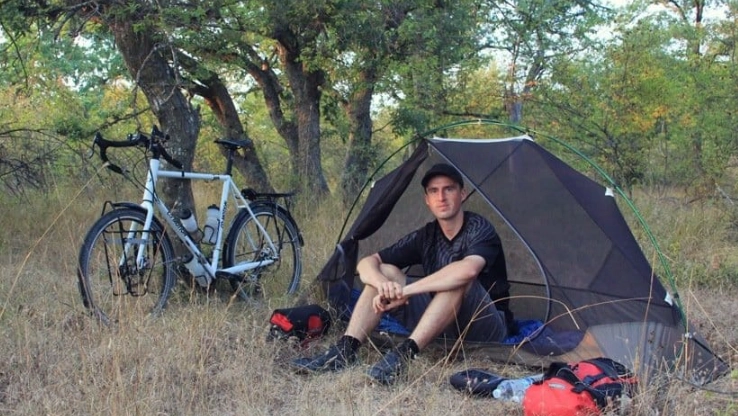
One thing I'll stress: steel frames. Aluminum is lighter, carbon is fancier, but steel has a soul. It's durable, repairable (a skilled welder can fix it in a pinch, which is harder with aluminum), and it has a slight flex that takes the edge off bumps. For a bike that might take a beating, steel's resilience is a big plus.
The Non-Negotiable Modifications and Gear
This is where you turn a bike into your survival camping bicycle. Stock bikes aren't set up for this life. Here's the stuff that truly matters.
The Holy Trinity of Survival Bike Upgrades
If you do nothing else, focus on these three areas. They impact reliability and capability more than anything.
- Tires & Tubes: This is your contact with the world. Skip the fancy, lightweight race tires. You want tires with a robust casing, good puncture resistance (look for terms like "Endurance" or "Protection"), and a tread pattern suited for mixed terrain. Go as wide as your frame allows. For a hardtail MTB, that's often 2.2 to 2.4 inches. Consider going tubeless—it eliminates pinch flats and allows you to run lower pressure for more traction and comfort. It's a bit messy to set up, but for avoiding trailside repairs, it's worth it.
- Gearing (Drivetrain): You will be climbing hills with a heavy bike. You need low, low gears. A small chainring in the front and a large cog in the back. Don't let anyone tell you it's "too easy." When you're exhausted, facing a steep grade, and miles from camp, that easy gear is your best friend. I swapped my mountain bike's crankset for one with a smaller ring, and it was the single best upgrade I made.
- Brakes: You're heavier. Your bike is heavier. Your speed needs to be controllable on descents. Hydraulic disc brakes are the gold standard for consistent, powerful stopping in all weather conditions. If you have rim brakes, make sure they are high-quality and your rims are true. But really, if you're building from scratch, aim for discs.
Carrying Your Life: Racks and Bags
Panniers (the bags that hang on racks) are the traditional touring method. They're great for capacity. But for a survival camping bicycle that might see rougher trails, a low center of gravity is key. Panniers can make a bike feel top-heavy and wide.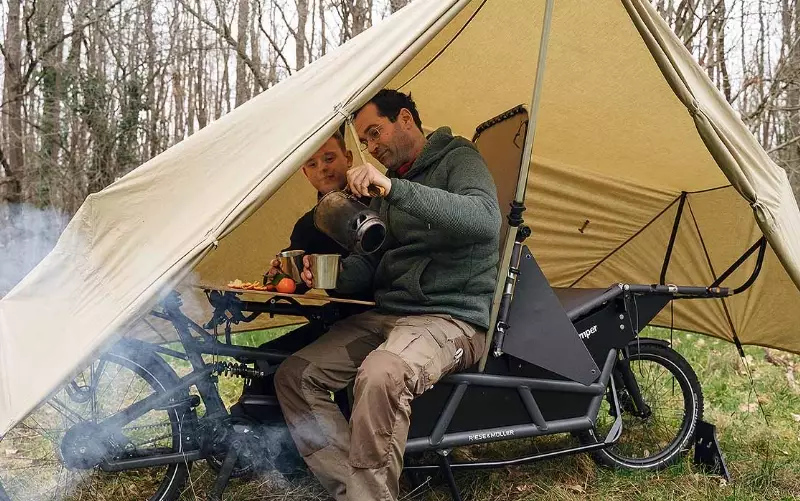
That's why the bikepacking style has exploded. It uses frame bags, handlebar rolls, and seat packs that strap directly to the bike, keeping the weight centered and low. It's more stable on technical terrain. My current setup is a hybrid: a lightweight rear rack with a small, dry bag strapped to it (for my sleeping bag and pad), a large frame bag for tools and food, and a handlebar roll for my shelter. It keeps things tight and balanced.
Whatever you choose, practice loading it. Balance the weight left-to-right. Put heavy items (tools, water) low in the frame bag. Keep frequently needed items (rain jacket, snacks) accessible.
The Survival Camping Bicycle Gear Checklist: What to Actually Pack
This is the fun part—and the part where you can go overboard. The key is multi-use items. Every ounce should earn its place. Here’s a categorized breakdown of what’s on my bike for a 3-5 day trip.
Shelter & Sleep System
- Shelter: A lightweight backpacking tent, tarp, or bivy sack. I use a one-person trekking pole tent. It's compact and saves weight by using my hiking poles (which I also carry) for structure.
- Sleeping Bag/Quilt: Rated for the coldest temperatures you expect. Down is lighter and packs smaller, but synthetic insulates when wet.
- Sleeping Pad: Inflatable for comfort and compactness, or a closed-cell foam pad that you can strap outside your pack (and can double as a sit pad).
Water & Food
- Water Capacity: At least 3 liters. I use two bottle cages on the frame and a 2-liter hydration bladder in my frame bag. Consider a frame-mounted water bottle cage that can hold a giant 1.5L Nalgene bottle.
- Water Filtration: A Sawyer Squeeze or Katadyn BeFree filter is small, light, and reliable. Chemical tablets (like Aquamira) are a vital backup. Never assume water is safe. The CDC has clear guidelines on backcountry water treatment.
- Food: High-calorie, dense, no-cook or simple-cook options: nuts, jerky, energy bars, peanut butter, instant oatmeal, dehydrated meals. A small backpacking stove (like a PocketRocket) and a single pot if you want hot meals/coffee.
Tools & Repair (The "Get Home" Kit)
This kit lives permanently on my survival camping bicycle, in a small bag under my seat or in the frame bag.
- Multi-tool with chain breaker
- Spare inner tube (even if tubeless) and tire levers
- Patch kit
- Small pump or CO2 inflator
- Spare brake pads
- Spare derailleur hanger (this specific piece is fragile and unique to your bike; breaking it can leave you stranded)
- Zip ties, duct tape (wrapped around a pump or water bottle), a few feet of paracord
- Spare chain links (quick links)
Safety & Navigation
- First-Aid Kit: Don't buy a pre-made mini one. Build your own with gauze, adhesive bandages, antiseptic wipes, blister care, pain relievers, and any personal meds.
- Navigation: A physical map and compass, and the skill to use them. A GPS device or smartphone with offline maps (like Gaia GPS) is fantastic, but batteries die. The U.S. Forest Service often sells excellent topographic maps for specific regions.
- Lighting: A powerful headlight (for seeing) and a blinking taillight (for being seen).
- Communication: A fully charged power bank. In truly remote areas, consider a satellite communicator like a Garmin inReach.
- Fire Starting: A lighter and waterproof matches in a sealed bag.
- Multi-tool/Knife: A sturdy folding knife or a multi-tool with a good blade.
It looks like a lot, but when packed efficiently, it all fits. The goal is to be self-sufficient for your planned trip duration, plus a little extra for the unexpected.
Skills and Mindset: The Human Element
The fanciest survival camping bicycle is useless if you don't know how to use it or yourself. This is where EEAT (Experience, Expertise, Authoritativeness, Trustworthiness) comes in—not just for Google, but for your own safety.
Bike Maintenance Skills: Can you fix a flat in the rain? Adjust your derailleur when it starts skipping? Lube a chain? These aren't YouTube fantasies; they are necessary. Start in your driveway. Practice taking your wheel off and putting it back on. Practice patching a tube. Local bike co-ops or shops often offer classes. The Adventure Cycling Association is a treasure trove of resources for long-distance cycling know-how.
Camping & Outdoor Skills: Know how to choose a safe, Leave-No-Trace campsite. Understand basic weather prediction. Know how to hang a bear bag if you're in bear country. These skills transfer from backpacking and are critical.
Fitness & Pacing: Riding a loaded bike is a different sport. It's slower. Hills are harder. Start with overnight trips close to home. Learn what a sustainable daily distance is for you (for me, with hills and gear, it's 30-40 miles max). Listen to your body. Pushing too hard leads to mistakes and injury.
Answering Your Burning Questions (FAQs)
I get asked these all the time. Let's tackle them head-on.
Isn't a survival camping bicycle just a heavy, slow mountain bike?
It can be based on one, yes. But the intent is different. A trail mountain bike is optimized for agility and fun on specific terrain. A survival bike is optimized for reliable, long-distance travel over mixed terrain while carrying everything you need to live. The priorities shift from play to practical endurance.
How much does a good setup cost?
It's a huge range. You can start with a $300 used hardtail, add a $100 rack and bags, use gear you already own, and be functional for under $500. A purpose-built, new adventure bike with high-end bags and camping gear can easily surpass $3,000. My advice: start modestly. The experience will teach you what you truly value, and you can upgrade strategically.
What's the biggest mistake beginners make?
Overpacking. It's so tempting to bring that "just in case" item. The problem is, ten "just in case" items add 10 pounds. That weight makes every hill miserable, saps your joy, and can even make handling dangerous. Do a shakedown cruise. Pack your bike, ride 20 miles on a local trail, and camp in your backyard. You'll immediately identify what you didn't touch and what you missed.
Can I use an e-bike for this?
Electric bikes add a fascinating layer. The motor assist can help with massive loads and huge hills, extending your range. But they add complexity, weight, and a critical dependency on battery power. If you're planning a trip with reliable charging points, and you treat the motor as an assist rather than the primary power, it can work. But for a pure survival tool where simplicity and reliability are paramount, the dependence on electronics gives me pause. It's a different philosophy.
How do I secure my bike when I'm away from camp?
This is a real concern. I use a heavy-duty U-lock (like a Kryptonite New York) to lock the frame and rear wheel to a solid tree or post. I also run a lightweight cable lock through the front wheel and the U-lock. It's not theft-proof against an angle grinder, but it's a significant deterrent in the backcountry. Out of sight is best—camp away from trails or roads where opportunistic passersby might see it.
Final Thoughts: The Journey is the Point
Building and riding a survival camping bicycle isn't really about preparing for an apocalypse. For me, it's been about rediscovering a sense of capability and adventure that feels genuine. It's problem-solving, it's physical, it's quiet. You see the gradient of a hill not as an obstacle, but as a puzzle your gearing and legs need to solve. You find campsites you'd never see from a road.
The bike becomes an extension of your intention to be more self-reliant. You learn what you truly need, and what you can do without. That's a valuable lesson on or off the bike.
So, dig that old bike out of the garage, or start browsing the used listings. Think about the trails or backroads you've always wanted to explore. Start with one overnight. You might just find that this slow, deliberate, and deeply satisfying way of moving through the world is exactly what you've been looking for. Your perfect survival camping bicycle is waiting, not in a showroom, but in the process of you building it, ride by ride.
Now, if you'll excuse me, I need to go oil my chain. A storm's coming this weekend, and I hear the gravel roads calling.