There's a moment, just after you kill the engine, when the silence rushes in. The road hum fades, replaced by wind in the trees and maybe a distant creek. This is the motorcycle camper's reward. You haven't just arrived at a location; you've earned a destination. But between that dream and reality sits a pile of gear, a chaotic map, and one nagging question: how do you fit a campsite onto two wheels?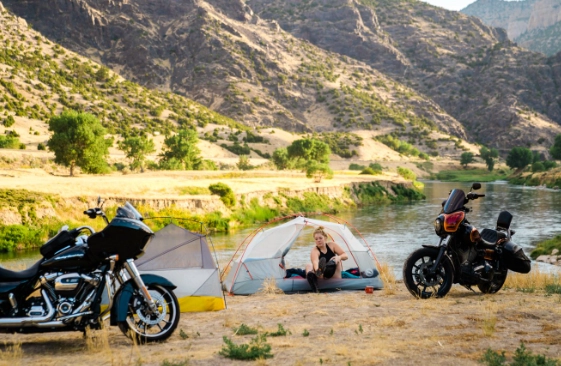
I learned the hard way. My first trip involved a motel laundry bag bungeed to the sissy bar, a bulky family tent, and enough canned food for a siege. The bike handled like a drunk whale. I spent more time wrestling with gear than enjoying the fire.
What You'll Learn in This Guide
The Motorcycle Camper's Gear Philosophy: Small, Tough, Multi-Use
Forget backpacking ultra-light dogma. On a bike, packed volume is king. A bulky item that weighs nothing can still ruin your trip by blocking a tail light or making your luggage lopsided. Every item must justify its space.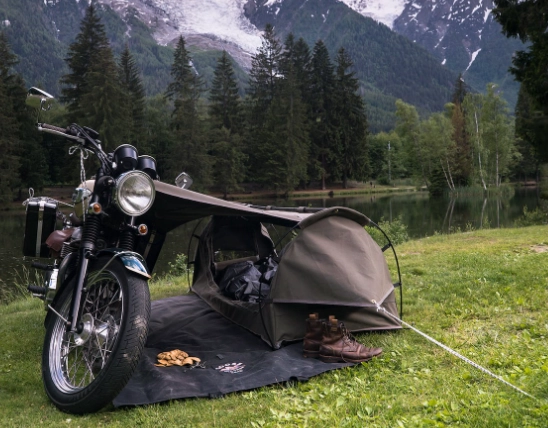
The core of your kit is the shelter-sleep system. Here's where most people get it wrong.
Shelter: It's Not Just About Weight
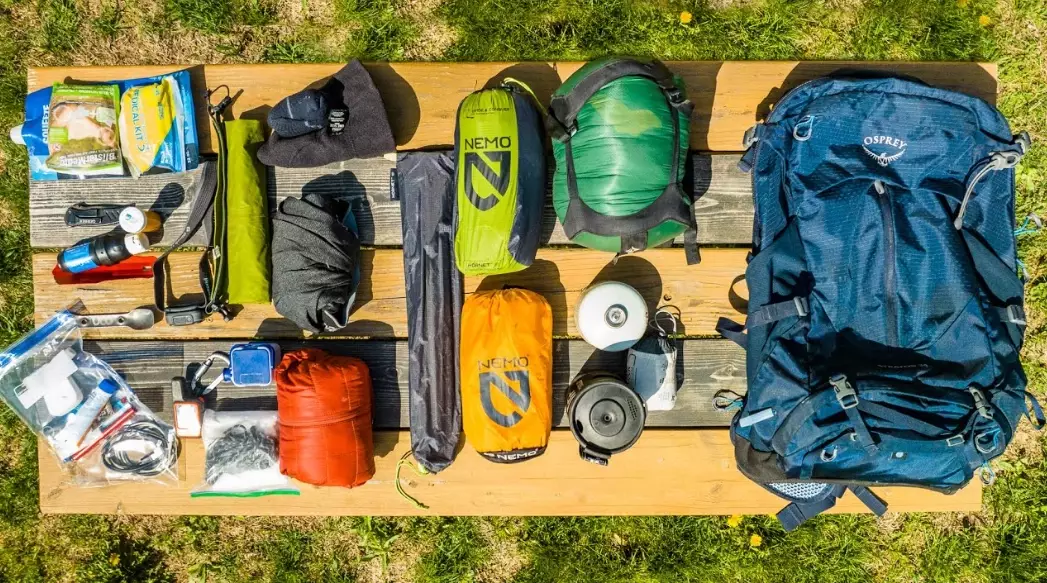
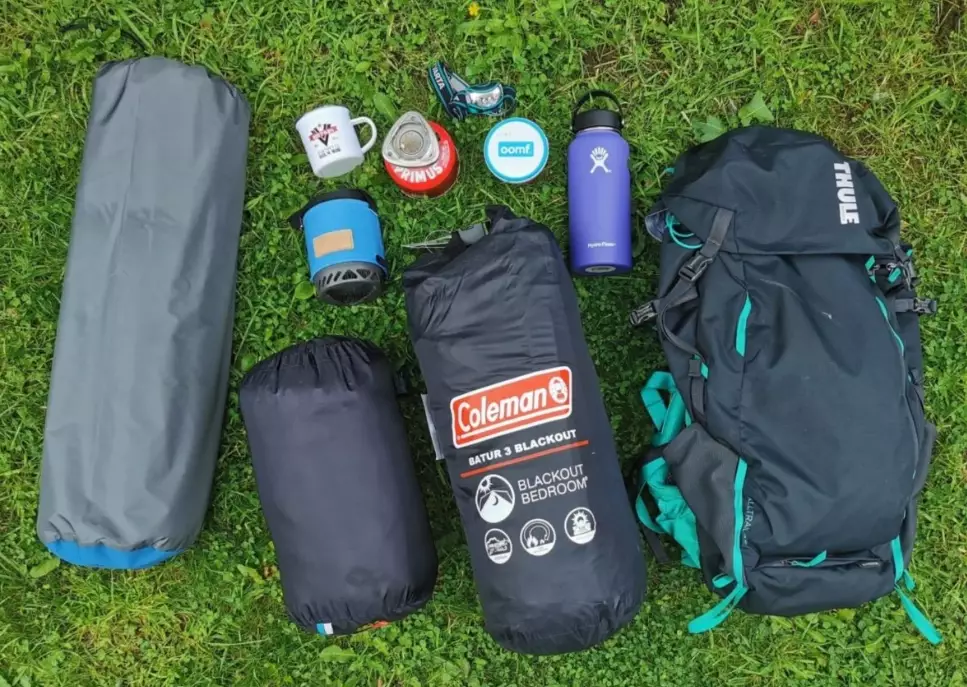
You see a 2-person backpacking tent advertised as "3 lbs." Great, right? Maybe not. Unfold those poles. Are they 20 inches long or 40? A 40-inch pole tube won't fit neatly in a pannier or strap well to a rack. I made this mistake. I now use a tent with short, interconnected poles that pack into a bundle the size of a large water bottle. Brands like Alps Mountaineering and some MSR models design with this in mind.
A good motorcycle camping tent prioritizes a small pack size, a quick pitch (you might be doing it in the rain), and durability against wind. A full-coverage rainfly is non-negotiable.
Sleep and Kitchen: The Efficiency Game
Your sleeping bag should be rated for temperatures about 10°F colder than you expect. Mountain passes get cold. A compression sack is your best friend here, squeezing a puffy bag into a dense football.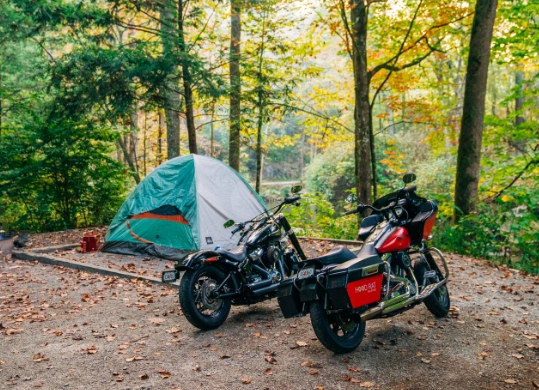
For cooking, complexity is the enemy. I ditched my multi-pot system for a single 1-liter titanium pot and a simple canister stove like the MSR PocketRocket. It boils water for coffee, dehydrated meals, and the occasional ramen. That's all you need. A lightweight plastic spork and a small sponge complete the kit.
| Gear Category | Smart Choice for Bike Camping | Why It Works Better |
|---|---|---|
| Sleeping Pad | Self-inflating (e.g., Therm-a-Rest ProLite) | More durable against punctures from bike tools/gravel than an ultralight inflatable. Packs reasonably small. |
| Water Storage | 1L Flexible water bladder + 1 Hard bottle | Bladder saves space when empty, fits anywhere. Hard bottle (like a Nalgene) is for clean drinking and can be used with a hot water bottle on cold nights. |
| Lighting | Headlamp + Small LED Lantern | Headlamp for hands-free camp chores. A tiny, packable lantern (Luci Solar is great) creates ambient light for the tent vestibule, eliminating the "cave" feeling. |
| Tool Kit | Bike-specific tools + Multi-tool | Don't just bring generic tools. Bring what fits YOUR bike's axle sizes, chain, etc. A Leatherman or similar handles camp repairs. |
Mastering the Art of Motorcycle Packing
Packing isn't just about fitting it all on. It's about balance, access, and security.
The golden rule: heavy items go low and centered. Think engine block. If you use soft panniers, put your tool roll, stove fuel, and water bladder in the bottom, against the bike. Lighter items like your sleeping bag and clothes go on top and towards the outside.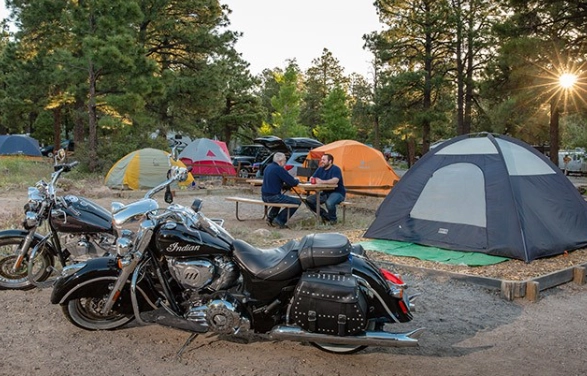
I organize by time of need. My tent, rain gear, and headlamp are always at the very top of my tail bag or in an easily accessible outer pocket. I don't want to unpack my entire bike in a thunderstorm to get to the tent.
Waterproof everything individually. Even if your luggage is "waterproof," trust me, it isn't. Use dry bags or heavy-duty contractor bags inside your main luggage compartments. Roll the tops down tightly.
Here’s a visual I use: your bike has zones.
- Tail Bag/Rack: Tent, sleeping pad, items needed first at camp.
- Left Pannier/Saddlebag: Kitchen kit, food, camp supplies.
- Right Pannier/Saddlebag: Clothing, personal items.
- Tank Bag: Essentials: phone, wallet, maps, snacks, rain gear top layer.
Before you leave, sit on the loaded bike. Rock it side to side. Does it feel balanced? Any obvious top-heaviness? A quick test ride around the block can reveal a poorly packed bike instantly.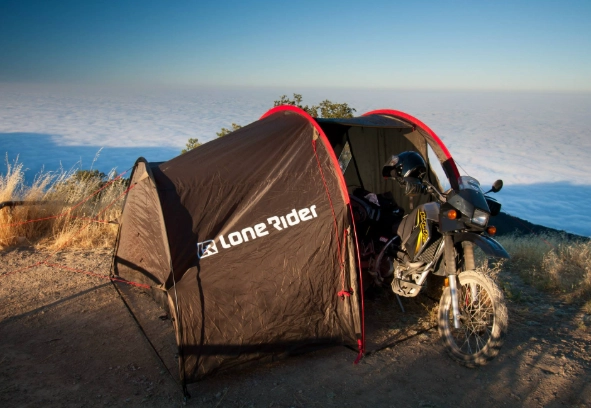
Planning Routes That Lead to Adventure, Not Frustration
Google Maps' "fastest route" is your enemy. It will put you on interstates and boring highways.
You need layers of planning. First, the macro route: your general direction, aiming for public lands. In the US, target National Forests (USDA Forest Service) or Bureau of Land Management (BLM) land. These areas often allow dispersed camping—free camping outside of designated campgrounds. This is the holy grail for motorcycle camping.
Second, the daily ride. On a loaded bike, 250-300 miles on scenic backroads is a full, satisfying day. More than that becomes a chore. Use resources like the Butler Motorcycle Maps or the National Scenic Byways website to find great roads.
Third, the campsite search. Apps like Gaia GPS or OnX Offroad are invaluable. They show land ownership (so you know you're on public land) and often have user-marked dispersed campsites. Look for forest service road numbers (e.g., "FR 455"). A general rule: the farther you go down a decent gravel road, the better your chances of finding a secluded spot.
Always have a Plan B campsite. Maybe a state park or a cheap private campground 30 minutes away. When you're tired, hungry, and it's getting dark, having a known fallback saves the day.
Setting Up Camp: The First Hour Arrival Ritual
You've found your spot. Don't just start unpacking. Follow this ritual.
1. Park the Bike Strategically. On level ground, pointed so you can ride out easily if needed. Use your side stand puck if the ground is soft.
2. Walk the Site. Look for dead branches overhead ("widowmakers"), ant hills, and drainage channels. Feel the ground where the tent will go.
3. Pitch the Tent First. Get your shelter up immediately. Now, even if it rains, your dry home is ready. Put your sleeping bag and pad inside.
4. Create a Kitchen Zone. Away from the tent and any dry grass. Unpack your stove, food, and water.
5. Relax. Only now do you change out of your riding gear, get the chair out, and make that well-earned drink or meal.
This order turns a potentially chaotic arrival into a smooth, calming transition from rider to camper.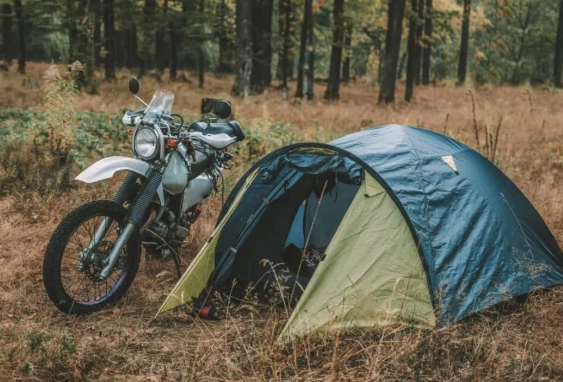
Your Motorcycle Camping Questions, Answered
The beauty of motorcycle camping is the simplicity it forces upon you. You carry less, so you focus more. The road isn't just a connector between points A and B; it's the main event, and the campsite is its perfect, quiet finale. Start small—a one-nighter close to home. Dial in your kit. Learn what you actually use. Then point your front wheel down a road you've never taken. The silence at the end of that ride is waiting for you.