Quick Navigation
- What Exactly Is a King Camping Mattress, and Why Do You Need One?
- The Big Three: Understanding Camping Mattress Types
- Beyond the Type: The Make-or-Break Features to Scrutinize
- How to Pick YOUR Perfect King Camping Mattress: A Simple Guide
- Top Contenders: A Look at Some Standout King Camping Mattresses
- Care, Maintenance, and Making It Last
- Answers to Your Burning Questions (FAQ)
- The Bottom Line
Let's be honest for a second. How many camping trips have been nearly ruined by a terrible night's sleep? You're tossing and turning on a thin, lumpy pad, feeling every single root and pebble beneath you, while your partner's every move sends shockwaves across your shared sleeping space. Morning arrives, and you're more exhausted than when you went to bed, with a back that feels like it's been used as a percussion instrument. Sound familiar? I've been there more times than I care to admit. That's precisely why the decision to invest in a proper king camping mattress isn't just about gear—it's about salvaging your enjoyment of the great outdoors.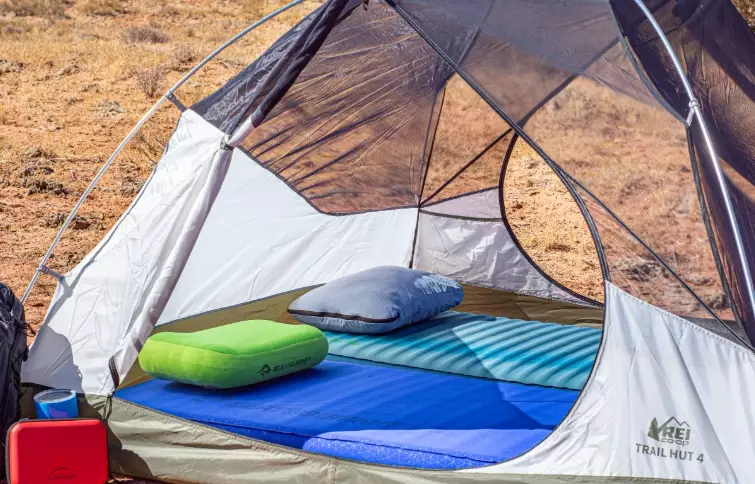
It's the difference between dreading bedtime in your tent and actually looking forward to a cozy, restorative sleep under the stars. A king camping mattress offers that coveted space, turning your tent into a genuine bedroom away from home. But here's the tricky part: the market is flooded with options. Inflatable, self-inflating, foam, thick, thin, lightweight, luxurious... how on earth do you choose the right one without wasting a ton of money on something that'll fail you on night two?
That's what this guide is for. We're going to cut through the marketing jargon and get down to what really matters. I'll share what I've learned from years of testing, from blissful sleeps to miserable failures (yes, I've had a mattress deflate on me at 3 AM in the mountains—not fun). We'll look at the different types, the critical features you must consider, and I'll even point you toward some of the top-performing models that actually live up to the hype. Forget just surviving your camping trip; let's talk about thriving.
What Exactly Is a King Camping Mattress, and Why Do You Need One?
First, let's clear up the sizing, because it can be confusing. A standard king size camping mattress typically measures about 76 inches wide by 80 inches long (that's roughly 193 cm x 203 cm). Sometimes you'll see "Double" or "Queen" sizes, but a true king gives you the maximum real estate for two adults to sleep comfortably without the dreaded "middle sag" or edge roll-off. It's essentially the same sleeping area as a king-sized bed at home, just portable.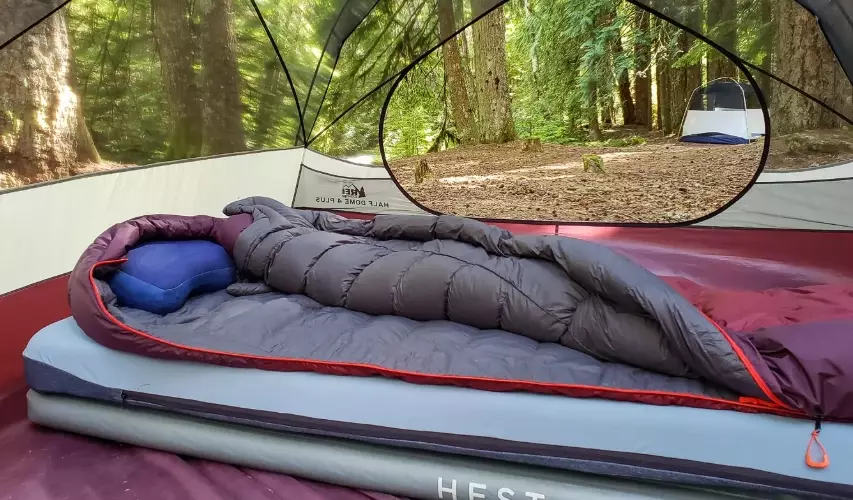
Why go king? Well, if you're camping solo and love to sprawl out, it's pure luxury. But its real magic is for couples or families with small children who end up in the bed. The extra width means no one gets elbowed in the ribs. You can actually move without creating a mini-earthquake for your partner. For family camping, it can be a game-changer, creating a comfortable communal space for reading or playing cards before bed. The psychological comfort of having your own defined, ample space shouldn't be underestimated either. It just feels more like a real bed, and that does wonders for relaxation.
My first upgrade from two janky singles to a proper king air mattress for camping was a revelation. No more gap in the middle collecting cold air and dampness. No more waking up clinging to the very edge of my pad. It felt decadent, sure, but it also meant we both woke up refreshed and ready to hike, not bicker about who stole the covers.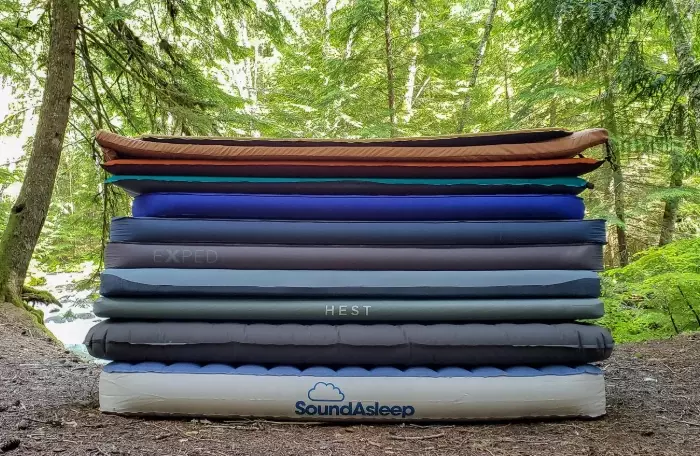
The Big Three: Understanding Camping Mattress Types
All king camping mattresses fall into three main categories, each with its own personality, pros, and cons. Picking the right type is your first and most important decision.
Air Mattresses (The Inflatables)
These are what most people picture: vinyl or TPU chambers you blow up. Modern ones are far cry from the wobbly pool floats of the past. High-end models have internal baffles, coils, or even air springs to mimic a real mattress feel.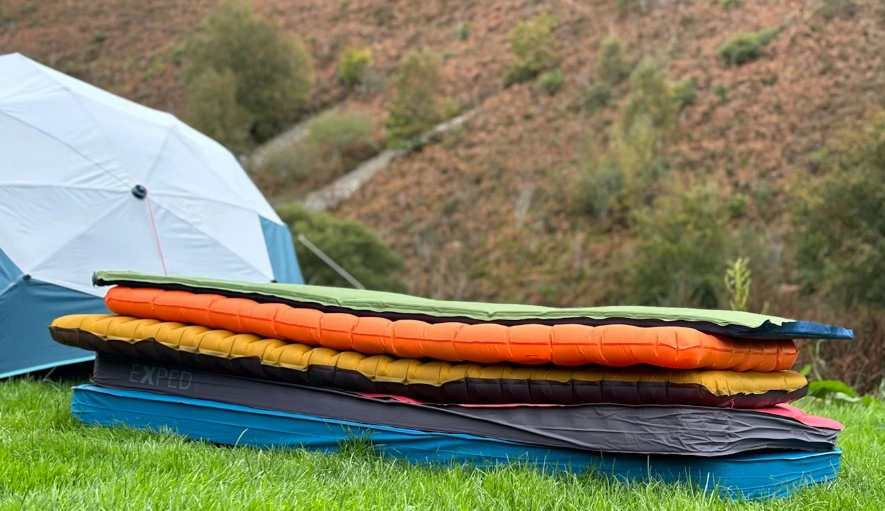
The Good: They often pack down the smallest and are very lightweight. You can adjust the firmness to your liking—softer for side sleepers, firmer for back sleepers. They usually offer the most height off the ground, which feels more bed-like and provides storage space underneath.
The Not-So-Good: The obvious one: they can puncture. They also have zero insulation value on their own—the air inside gets cold fast. You must pair them with a separate sleeping pad or insulated blanket underneath for cold-weather camping. Some cheaper models are noisy (that crinkly sound) and can develop slow leaks. I've also found that the very thick, tall ones can feel a bit unstable, like you're sleeping on a waterbed.
Self-Inflating Mattresses
These are the clever hybrids. They have an open-cell foam core inside an airtight shell. You open the valve, the foam expands and sucks in air, then you top it off with a few breaths to reach desired firmness.
The Good: They strike a fantastic balance. The foam provides inherent cushioning, insulation (R-value), and structure. They're more comfortable on uneven ground than pure air mats. Setting up is easier—less huffing and puffing. They're also generally more durable and quieter.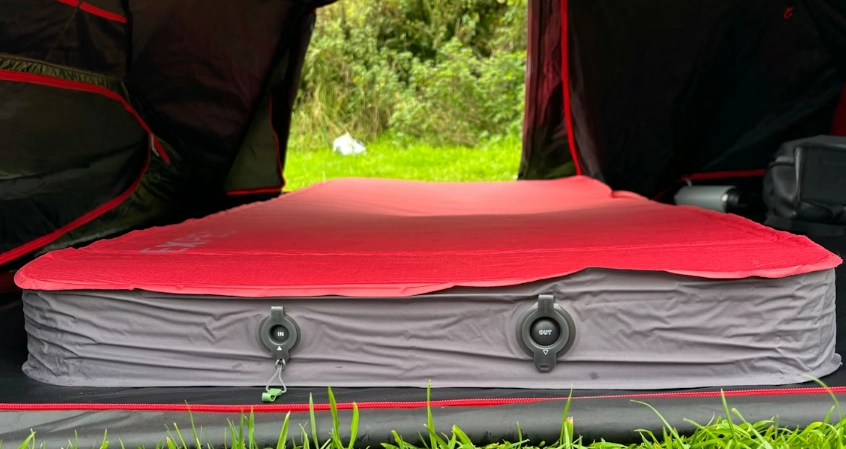
The Not-So-Good: They are bulkier and heavier when packed than air mattresses. The foam can absorb moisture over a very long time if not stored properly. They can be more expensive upfront. A king self-inflating mattress is a substantial piece of gear.
Closed-Cell Foam Pads
The classic, simple option. Think of the iconic blue or silver foam pads. They are just solid slabs of foam.
The Good: They are virtually indestructible. No risk of punctures. They provide consistent insulation from the ground. They are the lightest and cheapest option. You can just roll them out and sleep—no setup.
The Not-So-Good: They are the least comfortable for most people. Thin, with minimal cushioning. They are extremely bulky—a king size one is like carrying a giant roll of carpet. They offer no height or "bed" feeling. For side sleepers, they're often a no-go.
Here’s a quick head-to-head comparison to help you visualize the trade-offs:
| Feature | Air Mattress | Self-Inflating Mattress | Foam Pad |
|---|---|---|---|
| Comfort & Feel | Plush, adjustable, bed-like | Supportive, balanced, quiet | Firm, minimal cushioning |
| Pack Size | Very Small | Medium to Large | Very Large (Bulky) |
| Weight | Light | Medium to Heavy | Light |
| Setup | Requires pump/inflation | Easy self-inflation + top-up | Instant (roll out) |
| Insulation (R-Value) | Very Low (needs separate pad) | Good to Excellent | Good (consistent) |
| Durability | Risk of punctures | High | Extremely High |
| Best For | Car campers, fair-weather, comfort seekers | All-season campers, backpackers (lite versions), comfort + warmth | Ultralight backpackers, rough use, base layer |
See? It's all about trade-offs. You can't have the pack size of an air mattress with the insulation of a self-inflator. Which leads us to the next big question...
Beyond the Type: The Make-or-Break Features to Scrutinize
Okay, so you're leaning towards a type. Now, you need to look at the specifics. Two mattresses that both call themselves "king air mattresses for camping" can be worlds apart in quality.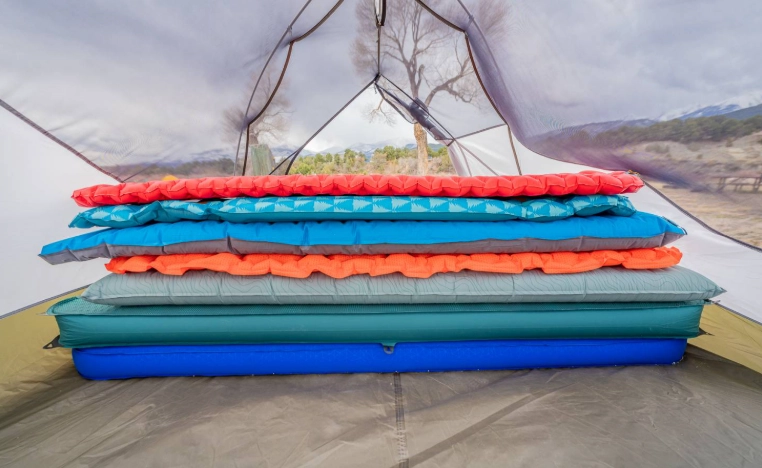
For air mattresses, avoid cheap PVC or vinyl. It's heavy, smells bad, and cracks over time. Look for TPU (Thermoplastic Polyurethane) or laminated fabrics. They're more puncture-resistant, lighter, and don't have that toxic smell. For self-inflaters, the denier (D) of the outer fabric matters. A 75D or 100D polyester is tough. The foam density is key too—higher density foam lasts longer and insulates better.
R-Value is your warmth number. This is a measure of insulation resistance. The higher the R-Value, the better it insulates you from the cold ground. The ASTM International sets the standard for this measurement (F3340-18), so look for brands that use this standardized test. For summer camping, R-1 to R-3 might suffice. For three-season use, aim for R-3 to R-5. For true winter camping, you need R-5 or higher. Remember, an air mattress with an R-value of 1 will suck the heat right out of you on a cool night, regardless of your sleeping bag.
Valves and Pumps. A good valve is crucial. It should be easy to open/close, seal perfectly, and allow for fine-tuning of air pressure. For pumps, built-in battery pumps are super convenient but add weight and a potential point of failure. External foot pumps or 12V car pumps are reliable backups. I'm a fan of models with a dual-valve system—one for fast inflation/deflation and one for fine-tuning.
Surface Texture and Stability. Does it have a brushed top to keep your sheets in place? Does it feel stable, or do you sink into a valley? Internal structures like I-beams, coils, or vertical walls prevent that "balloon" feeling and keep sleepers separated. For a king camping mattress, this internal structure is non-negotiable for couple's comfort.
How to Pick YOUR Perfect King Camping Mattress: A Simple Guide
Don't just buy the top-rated one. Ask yourself these questions:
- Where and how do I camp? Car camping at a drive-in site where space/weight doesn't matter? Go for the thickest, most comfortable self-inflating or air mattress you can afford. Hauling gear in a kayak or on a motorbike? Pack size becomes critical—a high-end compact air mattress might win.
- What seasons? Mostly summer? You can prioritize comfort over high R-value. Spring and fall? Insulation is a must. That pushes you towards a well-insulated self-inflator or an air mattress paired with a dedicated insulated pad (like those from REI, which has extensive testing data).
- Who's sleeping on it? Two average-sized adults? A standard king works. Two taller adults? Look for a "Long" version. Adults plus a kid or a dog? Maybe consider an even larger model or plan for a separate kid's pad.
- What's your sleeping style? Side sleepers need more cushioning (4+ inches thick). Back and stomach sleepers can often get away with less. Combination toss-and-turners need a stable surface with edge support.
- What's the budget? You can spend $50 or $500. A $50 king air mattress is a gamble—it might last one season. $200-$300 is the sweet spot for durable, comfortable, feature-rich models that will last for years.
My personal rule? Invest in what separates you from the ground: tires, shoes, and your camping mattress. Skimping here is a false economy.
Top Contenders: A Look at Some Standout King Camping Mattresses
Based on personal use, extensive research, and scouring countless user reviews (focusing on long-term durability reports), here are a few models that consistently rise to the top. This isn't an exhaustive list, but it gives you a benchmark.
| Model Name | Type | Key Features & Specs | The Vibe (Pros/Cons) |
|---|---|---|---|
| KingCamp Deluxe Double Camping Mat | Self-Inflating | ~4" thick, 75D fabric, R-value ~4.5, comes with repair kit & bag. | Pros: Fantastic value for money. Surprisingly good comfort and warmth for the price. Durable fabric. Cons: On the heavier side. Self-inflates slowly; needs a good top-off breath. |
| EXPED MegaMat Duo 10 | Self-Inflating | 3.9" thick, 75D polyester, R-value 8.1, built-in micro pump option. | Pros: The gold standard. Incredible comfort and legendary warmth for winter. Luxurious. Cons: Very expensive. Heavy. The pump is an extra-cost accessory. It's an investment piece. |
| SoundAsleep Dream Series Camping Air Mattress | Air Mattress | 9" tall, 1-click internal pump, "SureGrip" bottom, flocked top. | Pros: Extremely comfortable, home-bed feel. Easy, integrated inflation/deflation. Very stable due to coil construction. Cons: Zero insulation (COLD!). Pump requires AC power or a large inverter. Bulky when packed. |
| Therm-a-Rest MondoKing 3D | Self-Inflating | 4" thick, 3D foam construction, R-value 7.0, 75D polyester. | Pros: Excellent all-season insulation. Great comfort with a unique foam feel. Durable and trusted brand. Cons: Very high price point. Pack size is quite large. Valve system is good but not the fastest. |
I own the KingCamp model for casual summer trips with friends—it's a workhorse. I've used a friend's EXPED MegaMat on a cold-weather trip, and it was, frankly, absurd how good it was. Like sleeping in a cloud while frost formed on the tent. The SoundAsleep is the go-to for my in-laws who only camp in their RV with hookups; they love it, but I'd freeze on it in my tent.
Care, Maintenance, and Making It Last
A good king camping mattress is an investment. Treat it right.
- Ground Protection: Always use a footprint or tarp underneath your tent. Inside the tent, lay down a blanket or a dedicated ground cloth. This protects the bottom from abrasion and punctures.
- Cleaning: Wipe down with a damp cloth and mild soap. Never use harsh chemicals. For self-inflators, make sure the valve is CLOSED before cleaning. Air it out completely before packing away.
- Storage: This is critical. Never store it rolled up tight in its stuff sack long-term. For air mattresses, fold loosely or store partially inflated. For self-inflators and foam, store them fully open and flat if possible (under a bed is perfect), or at the very least, loosely rolled or folded with the valve open in a large, breathable cotton sack. Storing compressed kills the foam's resilience.
- Repairs: Every mat should come with a patch kit. Learn how to use it. For small punctures, it's an easy fix. Clean the area well, apply glue, let it cure. For seam failures on cheap mats, it's often a lost cause.
Answers to Your Burning Questions (FAQ)
The Bottom Line
Choosing the right king camping mattress boils down to aligning the type and features with your specific camping style, season, and budget. There is no single "best" one for everyone.
For the car-camping couple who values comfort above all and camps in mild to cool weather, a high-quality, insulated self-inflating king camping mattress is your holy grail. It's the set-it-and-forget-it solution that delivers night after night.
If you're all about that plush, home-bed feel and mostly camp in warm weather or have a separate insulated pad, a well-made king air mattress with a good internal structure will be your paradise.
Whatever you choose, do your homework, read recent long-term reviews, and protect your investment with proper care. The goal is to wake up in the woods feeling so good that you forget you're not in your own bed—until you open the tent flap to a sunrise no hotel can match. That's the magic a great king camping mattress unlocks.
Now, go get some sleep out there.