Quick Navigation
- Why You Might Actually Need a Camping Hammock with Net
- Types of Camping Hammocks with Nets: Which One Fits You?
- Picking the Right Material: It's More Than Just Fabric
- The Support System: Straps, Ropes, and Carabiners
- The Real-World Setup: A Step-by-Step Walkthrough
- Gear That Makes It Better: Beyond the Basic Kit
- Common Questions (The Stuff You Actually Search For)
- Maintenance and Care: Making It Last
- Wrapping It Up: Is a Camping Hammock with Net Right for You?
Let's talk about camping hammocks with nets. You've probably seen pictures of them—those sleek, suspended cocoons strung between trees, promising a night under the stars free from mosquito bites. They look amazing, right? But between the marketing photos and actually getting a good night's sleep in the woods, there's a lot to figure out.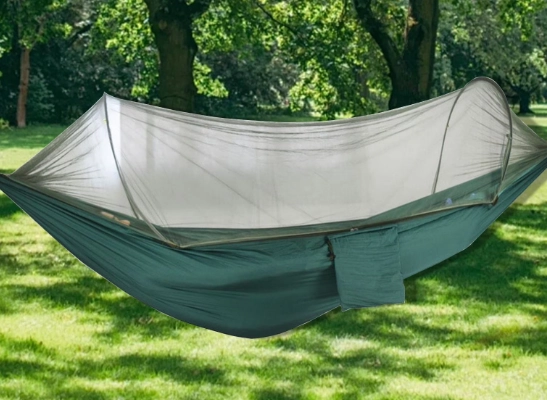
I remember my first time using one. I bought a cheap model on a whim, got to the campsite as dusk was falling, and spent what felt like hours fumbling with straps and cords while mosquitoes had a feast. The net was tangled, the hammock sagged like a potato sack, and I ended up just using it as a ground tarp. Not ideal. Since then, I've learned—sometimes the hard way—what actually makes a good camping hammock with a mosquito net work.
This isn't just about listing products. It's about giving you the real, practical knowledge you need to make a smart purchase and, more importantly, to use it successfully. Whether you're a backpacker counting every ounce, a car camper wanting maximum comfort, or a family looking for a fun sleeping option, a well-chosen camping hammock with net can be a game-changer.
Why You Might Actually Need a Camping Hammock with Net
Sure, a regular tent works. But a hammock? It offers something different. First off, you're off the ground. That means no more sleeping on roots, rocks, or uneven terrain. No more worrying about ground moisture seeping in during a damp night. The airflow underneath you is a blessing in warm, humid climates—it keeps you cooler than a tent can.
But the real magic is the view. Falling asleep looking up at the stars or the canopy of trees? Waking up to sunrise without unzipping a door? That's the stuff.
Now, add the net. This is non-negotiable in most camping scenarios unless you enjoy being a blood donor. Mosquitoes, no-see-ums, flies—they can ruin a trip faster than a rainstorm. A good integrated net keeps them out while maintaining that open, airy feel. It turns the hammock from a fair-weather lounger into a legitimate shelter.
Think of it as your floating, bug-proof bedroom.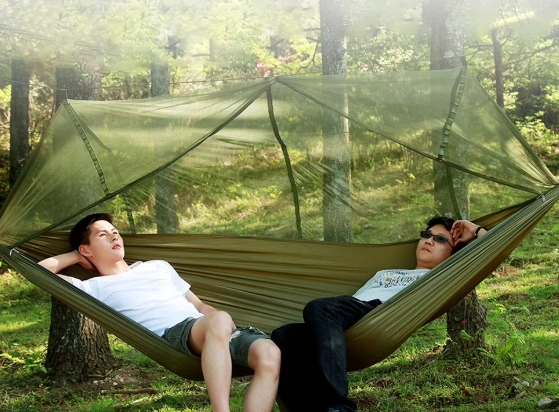
Types of Camping Hammocks with Nets: Which One Fits You?
Not all are created equal. The main split is between integrated and separate net systems.
Integrated Net Systems (The All-in-One)
This is the most common type you'll see. The mosquito net is permanently attached to the hammock body, usually with a zipper running along one or both sides. It's designed to be deployed as one unit.
- Pros: Super convenient. Set up the hammock, and the net is already in place. No separate pieces to lose. The seal is typically very good, with bug-proof zippers and often a bathtub-style floor in the netting to prevent insects from crawling under.
- Cons: You can't use the hammock without the net if you don't need it (like on a bug-free day for lounging), unless the net can be stowed away in a pocket. They can also be slightly more expensive.
My go-to for backpacking is an integrated model. When I'm tired and just want to sleep, the last thing I want to do is rig a separate net.
Separate Net Systems (The Modular Approach)
Here, you buy a standard camping hammock and a separate bug net that hangs over it, often called a "fronkey" style net or a net with a ridgeline.
- Pros: Maximum flexibility. Use the hammock alone anytime. If the net gets damaged, you only replace the net. Sometimes, you can find lighter-weight combinations by mixing and matching.
- Cons: More fuss during setup. You have to hang the net separately, and ensuring a good seal at the ends can be tricky. In a hurry or bad weather, it's an extra step.
Picking the Right Material: It's More Than Just Fabric
This is where specs get real. The material determines comfort, durability, weight, and even how much you'll sweat.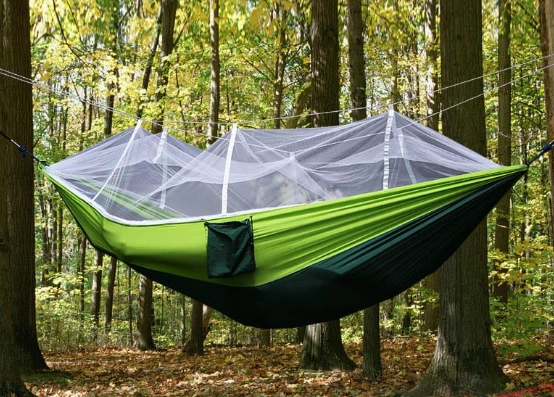
| Material | Best For | Feel & Characteristics | Weight & Packability | Durability Note |
|---|---|---|---|---|
| Ripstop Nylon | Most backpackers, general campers. The all-rounder. | Smooth, slightly slippery. Can feel a bit cold. Has a visible grid pattern that stops tears. | Very light. Packs down incredibly small. | Great for its weight. Susceptible to UV degradation over many seasons. |
| Parachute Nylon | Budget buyers, casual car campers. | Softer, more breathable than ripstop. Has a distinctive "parachute" feel. | Light, but often less densely woven than ripstop. | Less tear-resistant than ripstop. Fine for occasional use. |
| Polyester | Campers in humid/wet climates, long-term durability seekers. | Firmer, less stretchy than nylon. Dries very fast. | Slightly heavier than nylon for comparable strength. | Champion of UV and moisture resistance. Won't sag when wet. |
Here's a personal take: I've owned both nylon and polyester camping hammocks with nets. The nylon ones are undeniably lighter and pack smaller, which is huge for backpacking. But on a week-long canoe trip in a humid environment, my polyester hammock felt better. It didn't absorb moisture from the air, and after a rain shower, it was dry in minutes. The nylon one always felt a tiny bit damp.
Denier (D) is the thread thickness. A 70D fabric is thicker and more durable than a 30D fabric, but also heavier. For most people, a 40D-70D ripstop nylon or polyester hits the sweet spot.
What About the Netting Itself?
Look for "no-see-um" mesh. Standard mosquito netting has holes about 1.2mm wide. No-see-um mesh has holes around 0.6mm—it keeps out those tiny, annoying biting midges that can fit through regular netting. It's slightly less breathable, but the trade-off is worth it if you camp near water or in areas known for these pests.
The Support System: Straps, Ropes, and Carabiners
This is the most critical part for safety and tree health. Never use rope that can cut into bark.
Tree Straps: These are wide, flat nylon or polyester webbing straps that distribute the load over a large area of the tree bark, preventing damage. They are an absolute must. Most good camping hammock kits come with them now.
Suspension Types:
- Simple Cinch Buckle Straps: Easiest to use. Loop around the tree, thread through a buckle, and adjust. Very beginner-friendly.
- Whoopie Slings: Lightest option. Made of adjustable, high-strength cord. They have a learning curve but are a favorite of ultralight backpackers.
- Continuous Loops & Carabiners: A simple, reliable system. You use a knot (like a Beckett hitch) to attach the hammock to the strap. Requires knowing a knot or two.
I made the mistake of using cheap, narrow straps once. Not only did they dig into a beautiful birch tree (I felt terrible), but they were also a pain to adjust. I switched to 1-inch wide polyester straps with sewn-in loops and haven't looked back. The extra few ounces are worth the ease and peace of mind.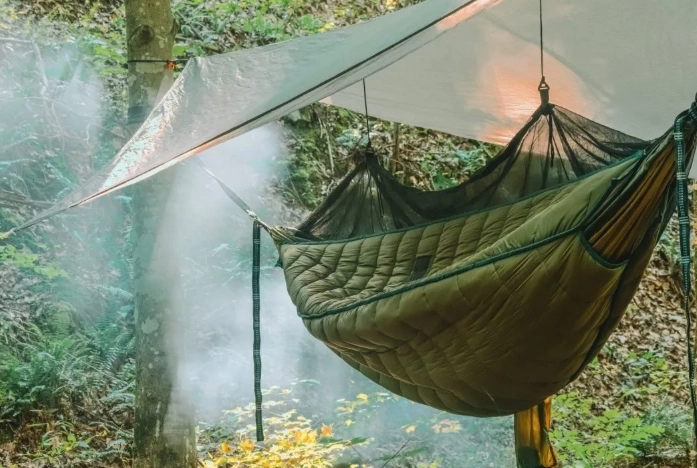
The Real-World Setup: A Step-by-Step Walkthrough
Okay, you've bought your camping hammock with net. You're in the woods. Now what? Let's break down the process beyond the manual's diagrams.
Step 1: Finding the Right Trees
Look for healthy, living trees at least 6 inches (15 cm) in diameter. Dead trees or branches can fall. Aim for a distance of about 12-15 feet (3.5-4.5 meters) apart. Check above you for "widowmakers"—dead branches that could fall.
Step 2: Hanging the Hammock
Attach your straps at roughly eye level. The magic is in the sag. You don't want the hammock tight like a guitar string. When you sit in the center, it should sag down into a gentle curve, with the ridgeline (if it has one) or the center about chair-seat height off the ground. A good starting angle between the strap and the tree is 30 degrees.
Too tight = uncomfortable, unstable, and puts huge stress on the fabric and trees. Too loose = you'll be folded like a taco.
Step 3: Deploying the Net
For integrated models, unzip and shake it out. Ensure the netting is spread out underneath the hammock body. Many have a small hook or loop at each end to connect to your suspension ridgeline, which lifts the net up and away from your face and body. This is crucial. A net lying on you will let bugs bite through the fabric.
For separate nets, hang your hammock first. Then, string the net's ridgeline above the hammock (many have a built-in cord), and let the netting fall over the hammock like a curtain. Tuck the bottom edges under the hammock or use the integrated shock cord to seal it.
Step 4: Getting In and Out
Sit on the hammock like a chair, then swing your legs in. To exit, reverse the process. It feels awkward at first but becomes second nature. Always try to enter and exit near the center to avoid flipping. And zip the net all the way behind you. I've let one mosquito in by being lazy with the zipper, and it found me all night long.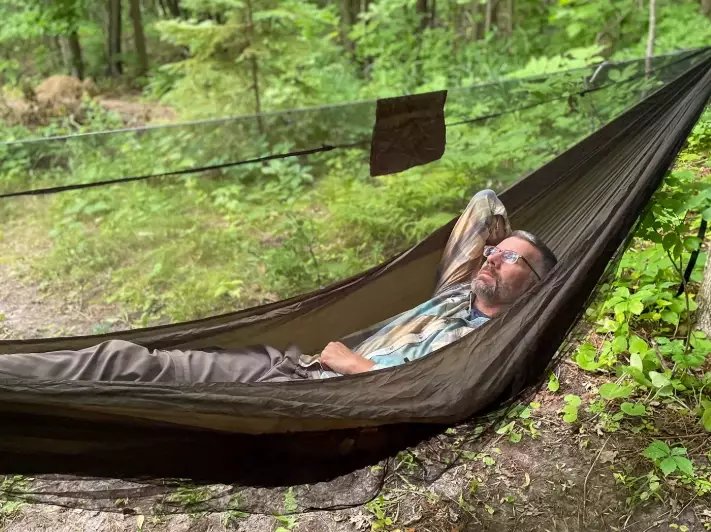
Gear That Makes It Better: Beyond the Basic Kit
A camping hammock with net is a system, and these add-ons solve common problems.
- Underquilt or Sleeping Pad: This is the biggest surprise for new hammock campers. Even in mild weather (think 65°F/18°C), your backside will get cold because the compressed sleeping bag underneath you provides no insulation. An underquilt hangs beneath the hammock, trapping warm air. A foam sleeping pad slipped inside the hammock also works. This isn't optional for three-season camping; it's essential.
- Rain Fly/Tarp: Your net won't stop rain. A waterproof tarp hung above your hammock on its own ridgeline is your roof. Get one that's larger than your hammock length to cover you at an angle in windy rain.
- Ridgeline Organizer: A simple sleeve that hangs on the ridgeline inside your net. It holds your phone, glasses, headlamp, book—keeping them off you and from falling to the sides.
- Double-End Stuff Sack: Many hammocks pack into a sack that can then be used as a gear sling when hung from the hammock's end. It's a clever bit of multi-use design.
Common Questions (The Stuff You Actually Search For)
Maintenance and Care: Making It Last
These things are simple, so taking care of them is easy. Always air-dry your hammock completely before storing it long-term to prevent mildew. Spot clean with mild soap and water; avoid harsh detergents. For the netting, be gentle with the zippers—don't force them if fabric is caught. Check the suspension for fraying or wear before each trip. Storing it loosely in a breathable bag (like an old pillowcase) in a cool, dry place is better than keeping it crammed in its stuff sack for months on end.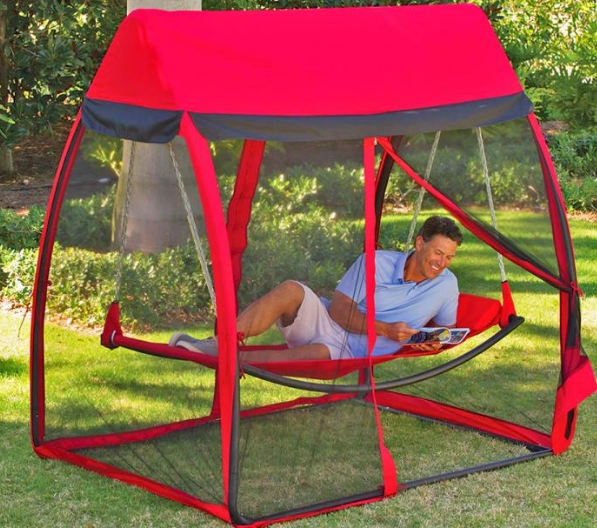
Wrapping It Up: Is a Camping Hammock with Net Right for You?
It's not a perfect solution for everyone. If you need to change clothes in a completely private space, or if you camp exclusively in wide-open deserts with no trees, a tent is still king. But for forest, woodland, and many coastal campers, the benefits are huge.
The feeling of sleeping in a good camping hammock with net is hard to beat. It's a lighter, often more compact system than a comparable tent. It's more comfortable on uneven ground. And the experience of being cradled off the earth is uniquely relaxing.
My advice? If you're curious, don't start with the most expensive model. But don't buy the absolute cheapest either—the suspension will be bad, and the netting will be fragile. Get a mid-range, well-reviewed integrated camping hammock with net from a reputable outdoor brand. Practice setting it up in your backyard or a local park a few times. Figure out your diagonal lay. Get the hang (pun intended) of the net.
Once you do, you might find yourself looking at those beautiful, bug-free nights under the stars in a whole new way. It's more than just a piece of gear; it's a different way to connect with the outdoors. And honestly, after a long day on the trail, there's nothing better than climbing into that secure, suspended cocoon and zipping the world—and the mosquitoes—out.