You know that feeling when you're out on a lake, miles from the nearest road, and you spot a perfect little beach tucked into a pine-covered cove? That's the magic of camping with boating. It's not just camping, and it's not just boating. It's a whole different game where your boat is the key to places most campers never see. I've spent over a decade chasing this combo, from the Boundary Waters to the Florida mangroves, and I'm still hooked. Forget the crowded drive-in campgrounds. This is about waking up to water lapping at the shore and having your own private slice of wilderness.
Your Quick Journey Map
Why Choose Camping with Boating?
Let's be real. Hauling gear into a boat is more work than parking at a campsite. So why do it? The payoff is immense.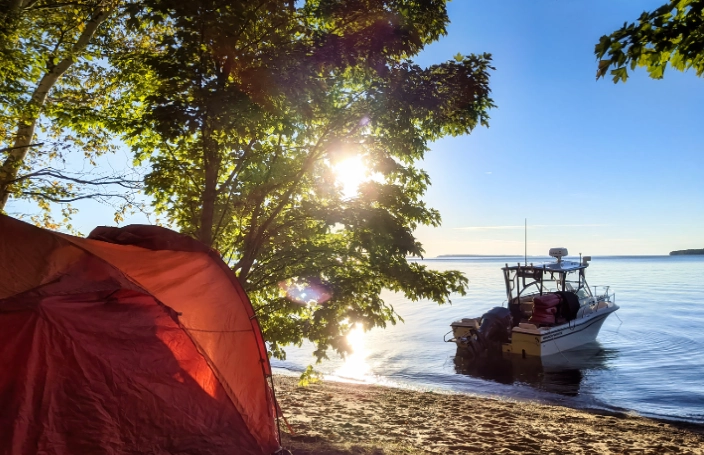
First, you get to explore. Your campsite isn't limited to a parking spot. See an interesting island? Go camp there. Find a secluded riverbank? That's home for the night. According to trip reports from the U.S. Forest Service, water-access-only campsites in places like the Boundary Waters see less than 20% of the visitor traffic of road-accessible sites. You get solitude.
Second, it's two adventures in one. The journey across the water is part of the fun. You might spot eagles, otters, or manatees you'd never see from land. The rhythm of paddling or the hum of a small motor becomes part of the trip's soundtrack.
But here's a non-consensus point I learned the hard way: people focus too much on the boat and not enough on the camp. A miserable night's sleep in a damp tent will ruin the best boating day. The real skill is balancing both halves of the equation.
How to Plan the Perfect Camping with Boating Trip
Planning is everything. You can't just drive to a marina and wing it.
Step 1: Pick Your Vessel. Your boat dictates everything. A canoe or kayak is quiet, cheap, and can go almost anywhere, but you're limited on gear weight and speed. A small jon boat with an outboard motor lets you cover more water and carry coolers, but you need launch ramps and gas. Inflatable boats are a great compromise for car-campers but worry about punctures. Match the boat to the water and your group's skill.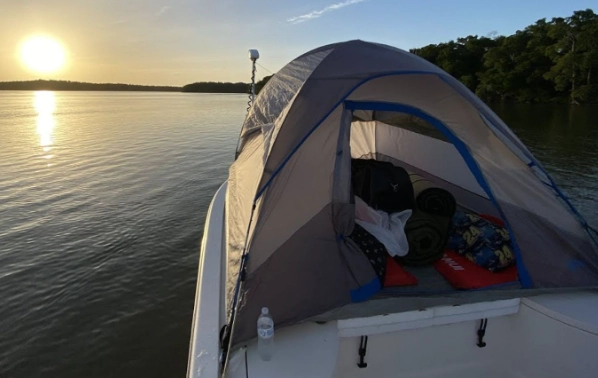
Step 2: Master the Logistics. Where do you launch? Is there a fee? Where do you leave your car safely overnight? You must know this. Call the managing agency—whether it's a national park, state forest, or local marina. Don't rely on blog posts from three years ago; rules change.
Step 3: Plan a Realistic Itinerary. On water, distance feels different. A 5-mile paddle against the wind can be a brutal half-day. Factor in weather, currents, and the fact you're loaded with gear. For a first trip, plan a short hop to a campsite, spend two nights, and day-trip from there. Here's a solid 3-day template:
- Day 1: Launch mid-morning. Paddle/motor 2-4 hours to your base camp. Set up camp thoroughly. Fish or explore the immediate area.
- Day 2: Day trip. Leave your camp set up. Take the boat out with just day gear, lunch, and water. Explore further, hike a shoreline trail, or just fish.
- Day 3: Break camp, pack carefully, and return to the launch. Always aim to be off the water before afternoon winds pick up.
The Non-Negotiable Gear List
This isn't your backyard camping list. Every item must earn its place in the boat. Waterproofing is not a suggestion; it's a requirement. I still cringe remembering a friend whose phone died in a "waterproof" bag that wasn't.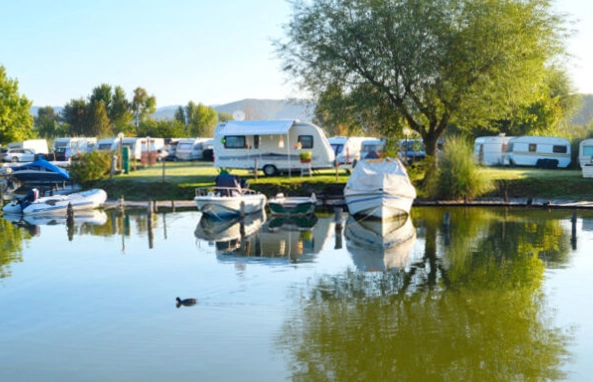
| Category | Essential Items | Pro-Tip / Common Mistake |
|---|---|---|
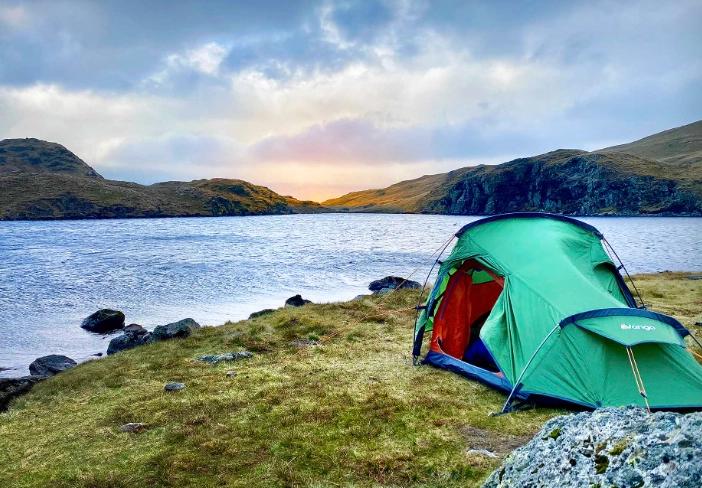
| Shelter & Sleep | Backpacking tent (small footprint), sleeping bag rated 10°F below expected low, sleeping pad, compact pillow. | Big family tents are a nightmare to fit in a canoe. A 3-person backpacking tent is ideal for 2 people + gear. Practice setting it up on uneven, rocky ground. |
| Kitchen & Food | Compact camp stove + fuel, lighter, pot/pan set, spork, biodegradable soap, bear canister or hang bag. | Pre-cook and freeze meals in bags. They act as ice blocks day 1 and just need reheating. Saves fuel, time, and messy cleanup. |
| Water & Safety | Water filter or purification tablets, TWO ways to make fire (lighter, matches), headlamp, whistle, detailed map + compass. | Assume lake water isn't drinkable. A filter like a Sawyer Squeeze is lightweight and foolproof. GPS phones fail; know how to read a paper map. |
| Boat & Water Specific | PFD (life jacket) for EVERY person, bilge pump/sponge, 50+ ft of rope, dry bags in multiple sizes, waterproof phone case. | Your PFD should be worn, not stored. Use rope for securing boat to shore (bow AND stern lines) and hanging food. Pack everything inside dry bags, then into your pack. |
| Clothing | Quick-dry layers (NO cotton), rain jacket & pants, warm hat, camp shoes (crocs/water shoes), sun hat, sunglasses. | Cotton kills when wet. Bring one set of "camp clothes" kept dry in its own bag to change into at night. It's a morale saver. |
Top Camping with Boating Destinations in the US
Not all waterways are created equal for this. You need legal, established water-access campsites. Here are three classics, each with a different flavor.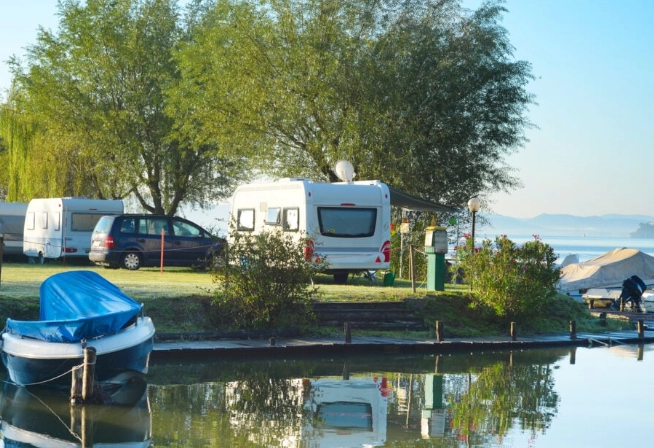
Boundary Waters Canoe Area Wilderness (BWCAW), Minnesota
This is the holy grail for canoe camping. Over a million acres of interconnected lakes and rivers. You portage (carry your canoe and gear) between lakes to go deeper.
- The Vibe: Remote, quiet, pure wilderness. Moose, loons, pine forests.
- Best For: Canoeists and kayakers seeking solitude and challenge.
- Need to Know: Permits (quotas fill fast, book early via Recreation.gov), mandatory orientation. No motors on most lakes. Campsites are first-come, first-served with a fire grate and latrine.
- Sample Route: Enter at Entry Point #30 (Lake One). Paddle through Lakes One, Two, Three to a campsite. Allows for great day trips.
Everglades National Park, Florida
A completely different world. Paddle through mangrove tunnels, across vast bays, and camp on wooden chickees (platforms) or beach sites.
- The Vibe: Subtropical, wildlife-rich (dolphins, manatees, birds), expansive water trails.
- Best For: Sea kayakers and skilled canoeists. Tides and wind are major factors.
- Need to Know: Permits required for all backcountry sites (National Park Service). Chickees must be reserved. Bring bug spray year-round. Freshwater is scarce—plan to bring or filter all you need.
- Sample Route: The 99-mile Wilderness Waterway is the epic route. A beginner-friendly option is to paddle from the Gulf Coast Visitor Center to the Lopez River chickee.
Acadia National Park & Surrounds, Maine
Coastal island camping. Paddle among granite islands in the cold, clear Atlantic. Watch seals and lobstermen.
- The Vibe: Rugged coastline, island-hopping, fresh seafood potential.
- Best For: Experienced sea kayakers with proper cold-water gear. Water temps are frigid even in summer.
- Need to Know: Many island sites are managed by the Maine Island Trail Association (membership helps). Weather changes fast. A wetsuit or drysuit is highly recommended. You can often combine paddling with hiking on islands.
- Sample Area: The islands around Stonington/Deer Isle offer numerous MITA sites. Launch from Old Quarry Ocean Adventures.
A quick note on motors: If you're using a motorized boat, regulations are strict. Always check local rules for horsepower limits, no-wake zones, and invasive species inspections. Many pristine lakes ban motors entirely to preserve the experience.
Camping with Boating: How to Stay Safe on the Water
Safety gets real when you're miles from help. I've been caught in sudden squalls that turned a glassy lake into a washing machine in minutes.
Rule 1: Wear the Life Jacket. Not in the boat. On you. Always. This is the single most ignored rule by experienced boaters who think they can swim. Cold water shock or a head knock from a tipped canoe doesn't care how well you swim.
Rule 2: Know the Weather, Really. Don't just check the morning forecast. Understand the local patterns. On big lakes, afternoon winds are a given. In mountains, storms roll in fast. Have a NOAA weather radio. If the sky looks questionable, don't push your luck. Wait it out.
Rule 3: File a Float Plan. Tell someone reliable exactly where you're launching, your planned route, which campsite you're aiming for, and when you'll be back. Text them when you're off the water. The U.S. Coast Guard emphasizes this as a primary tool for search and rescue.
Rule 4: Pack a Real First-Aid Kit. Include items for blisters, cuts, sprains, and allergic reactions. Add a space blanket for hypothermia. Know how to use it all.
The biggest safety mistake I see? Overloading the boat. The gunwales (sides) should not be near the waterline. Keep weight low and centered. If it looks tippy, it is.
Your Questions, Answered
Look, camping with boating asks more of you. The packing is a puzzle, the weather matters more, and there's no quick escape if you forget the coffee. But the reward is a level of freedom and connection that standard camping can't touch. You earn those quiet mornings on your own private shore. Start small, respect the water, and you'll be hooked. Now go find that cove.