In This Guide
- What Exactly Is Free River Camping?
- The Real Pros and Cons (No Sugarcoating)
- How to Actually Find Free River Camping Spots (The Step-by-Strategy)
- Essential Gear for a Successful Free River Camping Trip
- The Unwritten Rules: Leave No Trace & River Etiquette
- Top Free River Camping Regions in the U.S. (With Specific Spot Ideas)
- Common Free River Camping Questions Answered
Let's be honest. When you picture free river camping, you probably imagine a perfect scene straight out of an outdoor magazine. The gentle sound of water, a crackling fire, stars overhead with no one else around. Sounds amazing, right? It can be. But the journey from that daydream to actually finding a good spot, packing the right gear, and not accidentally breaking a bunch of rules? That's where most people get lost.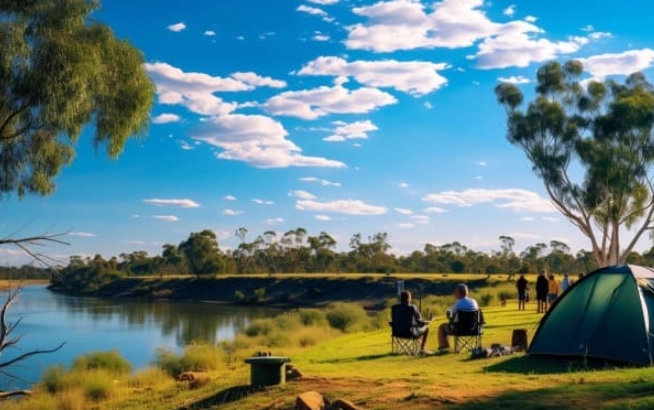
I've been there. I've spent hours scrolling online, getting conflicting advice, and driving down questionable forest roads only to find a spot that was either closed, trashed, or already taken. It's frustrating. But over the years, through plenty of trial and error (mostly error at the start), I've figured out a system. This guide is that system. It's the stuff I wish someone had told me before my first trip. We're not just talking about a list of spots—those change, get overcrowded, or get shut down. We're talking about how to think about free river camping, how to find your own hidden gems, and how to do it without being "that person" who ruins it for everyone else.
What Exactly Is Free River Camping?
First things first, let's clear up the confusion. When people search for "free river camping," they usually mean one of two things, and the difference is huge for planning.
Dispersed Camping on Public Land
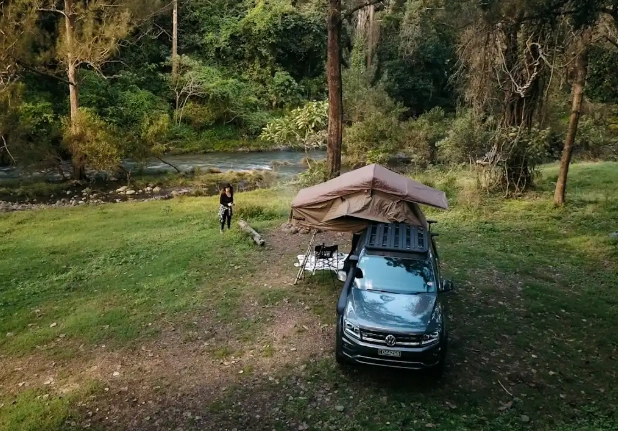
This is the classic, true form of free camping. It's camping outside of a designated campground on land managed by agencies like the U.S. Forest Service (USFS) or the Bureau of Land Management (BLM). There are no services—no bathrooms, no picnic tables, no trash cans, no water spigots. You find a flat, durable spot (often an existing pull-off or clearing), and that's your home. This is where you get that ultimate solitude. The key here is that it's usually allowed unless specifically posted otherwise. You have to know the rules for that specific forest or district.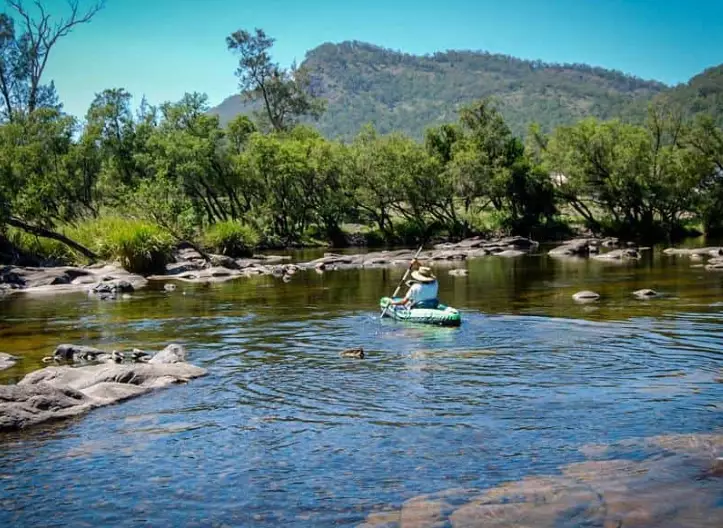
Free Designated Campgrounds
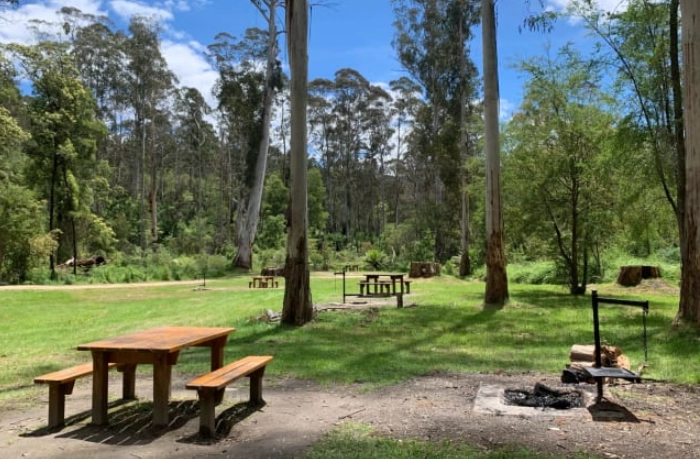
Yes, these exist, but they're unicorns. Some very remote areas, often managed by county agencies or small forestry departments, might have primitive campgrounds with a fire ring and maybe a pit toilet that don't charge a fee. They're rare, often first-come-first-serve, and can be crowded on weekends. Don't bank your entire trip on finding one of these.
So, which one is better? It depends on what you want.
| Feature | Dispersed Free River Camping | Free Designated Campground |
|---|---|---|
| Cost | Free | Free |
| Privacy & Solitude | High (if you know where to look) | Low to Medium (shared space) |
| Amenities | Zero. You bring everything. | Minimal (maybe a table, fire ring, toilet) |
| Finding a Spot | Requires research & exploration | Easier to locate on maps |
| Rules & Regulations | Strict "Leave No Trace" principles apply | Campground-specific rules |
| Best For | Experienced campers, solitude seekers, small groups | Beginners, families wanting a defined space, quick overnighters |
The Real Pros and Cons (No Sugarcoating)
Let's be real, it's not all sunshine and rainbows. Free river camping has its downsides. I love it, but I go in with eyes wide open.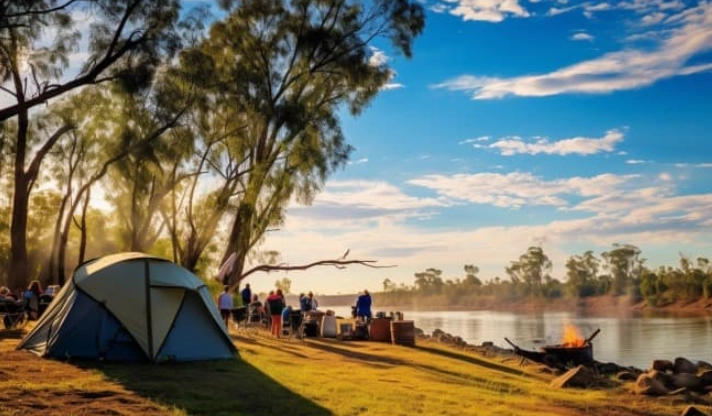
The Good Stuff:
- It's Free. Obvious, but huge. This opens up travel for people on tight budgets. A multi-day trip costs little more than gas and food.
- Unbeatable Scenery and Privacy. You can camp right by that babbling brook or with a view of a rushing river canyon. No neighbors 10 feet away.
- Spontaneity. See a beautiful spot? If it's legal and safe, you can often just stop. No reservations needed (most of the time).
- Connection to Nature. Without the infrastructure of a campground, you feel more immersed. The river's sound is your soundtrack, not someone else's generator.
The Not-So-Good Stuff:
- Zero Amenities. Need water? Filter it from the river (properly!). Need a bathroom? Dig a cat hole 200 feet from water. This isn't for everyone.
- Finding a Spot is Work. It requires maps, research, and sometimes a willingness to turn around if a spot is taken or unsuitable.
- Safety is On You. No camp host, often no cell service. You need self-reliance, good first-aid knowledge, and to tell someone your plans.
- Weather Vulnerability. Exposed spots can be windier, and proximity to water can mean more bugs (mosquitoes, I'm looking at you) and potential flash flood risk in certain areas.
- Getting Misinformation. The worst. An online forum says a spot is great, but you get there and it's closed due to fire restrictions or habitat protection.
How to Actually Find Free River Camping Spots (The Step-by-Strategy)
This is the core of it. Throwing "free camping near me" into Google will get you spammy websites and outdated lists. You need a hunter's mindset.
Step 1: Identify the Managing Agency
Who owns the land by the river you want to camp near? This is question number one.
- U.S. Forest Service (USFS): Your best bet for free river camping. National Forests often allow dispersed camping along most forest roads. Check the specific Ranger District website for Motor Vehicle Use Maps (MVUMs) and any alerts. The main USFS website is the gateway to all local forest sites.
- Bureau of Land Management (BLM): Huge amounts of land, especially in the West, are BLM-managed and open to dispersed camping. Their state office websites are goldmines for info.
- State Forests or Wildlife Management Areas (WMAs): Rules vary wildly by state. Some allow free primitive camping, others require a permit or fee. Dig into your state's Department of Natural Resources (DNR) website.
- Army Corps of Engineers & Other Federal Lands: Sometimes manage land around reservoirs and rivers. Rules are specific, so always check.
Step 2: Master the Maps
Paper maps are not old-school; they're essential. Digital tools get you 90% there, but that last 10% requires a physical map when you have no signal.
- Google Maps/Earth: Scout in satellite view. Look for forest roads (dirt lines) branching off main highways and ending near blue squiggles (rivers). Look for clearings or pull-outs. Switch to Street View if the road is paved to get a feel.
- OnX Hunt or Gaia GPS: These paid apps are game-changers. They show you clear land ownership boundaries (so you don't trespass on private land) and have layers for public land, trails, and often MVUMs. Worth every penny for serious explorers.
- Avenza Maps: This app lets you load official georeferenced PDFs, like USFS MVUMs. You can see your location on the official map in real-time, even offline. It's a lifesaver.
- The Physical MVUM: Download and print the Motor Vehicle Use Map for the forest you're targeting. It shows exactly which roads are open for travel and often indicates where dispersed camping is permitted.
Step 3: The On-The-Ground Scout
You've identified a promising area. Now what? You drive. But smartly.
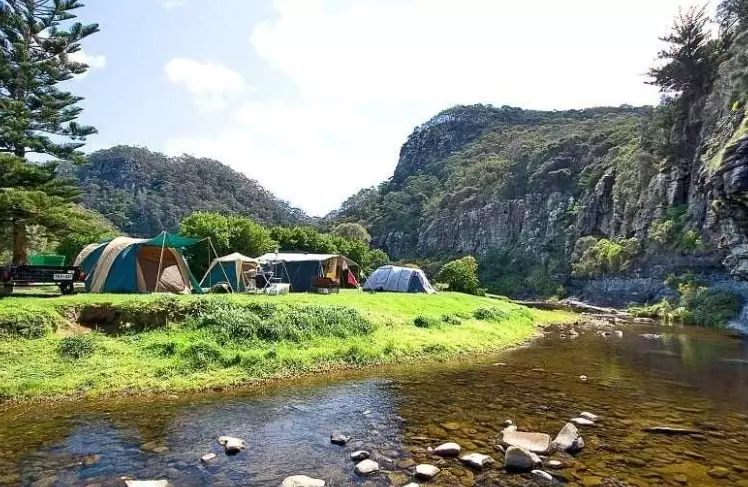
Look for established pull-offs with existing fire rings (use only if allowed and safe!). A good rule is to camp on sites that are already impacted to avoid damaging new vegetation. Is the ground level? Is there enough room for your tent away from the road? Is there obvious trash or human waste? If so, move on—that's a bad sign. Look for "No Camping" or "Camp in Designated Sites Only" signs. Respect them immediately.
Essential Gear for a Successful Free River Camping Trip
Forget the glamping checklist. This is about necessity and self-sufficiency. Missing one of these can turn your trip from fun to miserable.
| Category | Essential Items | Why It's Critical for River Camping |
|---|---|---|
| Water & Filtration | Water filter/purifier (e.g., Sawyer Squeeze, Katadyn), extra water bags, backup purification tablets. | You cannot drink river water untreated. Giardia is real and will ruin your week. Have a backup method. |
| Navigation & Comms | Paper map & compass, fully charged GPS device/app, power bank, satellite messenger (like Garmin inReach) for remote areas. | Cell service is often non-existent. You must be able to navigate out and signal for help in an emergency. |
| Waste Management | Trowel, biodegradable toilet paper in a zip bag, heavy-duty trash bags (pack out ALL trash). | Leave No Trace is law here. Human waste must be buried 6-8" deep and 200+ ft from water. Pack out your TP. |
| Shelter & Sleep | Tent with a good rainfly, sleeping bag rated for expected lows, sleeping pad, ground tarp. | Rivers create microclimates—it can be colder and damper. A good pad insulates you from the cold ground. |
| Fire & Cooking | Camp stove & fuel, lighter/matches in waterproof case, firewood (buy it locally, don't transport). Know the fire regulations! | Campfires are often restricted. A stove is reliable. If fires are allowed, use an existing ring, keep it small, and drown it dead out. |
| Safety & Tools | Comprehensive first-aid kit, headlamp with extra batteries, multi-tool, duct tape, tire repair kit, shovel. | You are your own first responder. A shovel helps with cat holes, car recovery, and fire management. |
The Unwritten Rules: Leave No Trace & River Etiquette
This is the most important part of the guide. Abuse leads to closures. Period. I've seen beautiful free river camping areas get shut down because people treated them like dumps.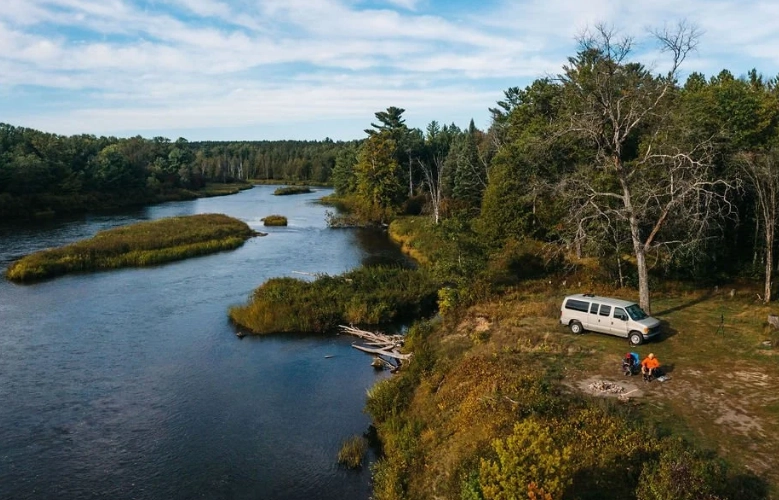
1. Camp 200 Feet from Water: This is a golden rule. It protects riparian zones (fragile plant life along the bank), prevents water contamination, and gives wildlife access to the water. Pace it out. It's farther than you think.
2. Use Existing Sites: Don't create a new clearing. Use spots that already look camped-on. This concentrates impact.
3. Pack Out EVERYTHING: This includes all food scraps, twist ties, cigarette butts, and yes, even the ash from your fire if it's not completely natural. If you brought it in, it leaves with you.
4. Human Waste: Already mentioned, but worth repeating. 200 feet from water, trails, and camp. Dig a hole 6-8 inches deep. Cover it completely. Pack out your toilet paper in a dedicated baggie. It's not gross; it's responsible.
5. Respect Noise and Light: Sound travels far over water. Keep music off or use headphones. Keep voices down at night. Use soft red lights in your headlamp to preserve night vision for you and others.
6. Wildlife: Store all food, trash, and scented items (toothpaste, deodorant) in a bear-resistant container or locked in your car. Never feed animals.
Top Free River Camping Regions in the U.S. (With Specific Spot Ideas)
Instead of giving you static coordinates that might be overrun tomorrow, here are regions known for great opportunities. The real secret is using the methods above to explore within these areas.
The Rocky Mountains (Colorado, Montana, Wyoming)
National Forest land is abundant here. Look along rivers like the Taylor River in Gunnison National Forest (CO) or countless creeks off the Beartooth Highway in Custer Gallatin National Forest (MT). The key is finding a forest service road that follows a river upstream. I've had incredible luck along the Madison River in Montana, finding quiet pull-offs miles from any paid campground. Be bear-aware.
The Pacific Northwest (Washington, Oregon)
Dense forests and countless rivers. The Gifford Pinchot National Forest in WA near the Lewis River has options. In Oregon, check out BLM land along the Deschutes River east of the mountains. A word of warning: the popularity of these areas means spots close to major cities get hit hard. Go further, hike in a bit, and you'll be rewarded. The damp climate means a good rainfly is non-negotiable.
The Southwest (Arizona, Utah, New Mexico)
BLM land reigns supreme. The area around Lee's Ferry on the Colorado River in AZ has dispersed camping (permits needed for some zones). Southern Utah is a paradise for this—think along the Escalante River or near Moab (though it's competitive). The stark beauty is unreal, but summer heat is brutal. Spring and fall are ideal. Water sources are scarce, so you must carry or know how to find reliable rivers.
Common Free River Camping Questions Answered
Check. The. Current. Restrictions. Always. Call the ranger station or check their website. In many western states, summer fire bans are the norm. You may only be allowed to use a pressurized gas stove. An illegal fire can lead to massive fines and, worse, a wildfire.
This is the risk you accept. Have a plan. A satellite communicator (Garmin inReach, SPOT) is the best insurance. At minimum, leave a detailed trip plan with someone: where you're going (specific forest road numbers), when you'll be back, and when to call for help. Stick to the plan.
Usually yes on public land, but they must be under control at all times. That means leashed or with impeccable voice command. You are responsible for packing out their waste, too—don't bag it and leave it on the trail.
Rivers mean mosquitoes and flies. A tent with good bug netting is key. Permethrin-treated clothing works wonders. Bring a head net for bad evenings. Accept it as part of the deal.
It can be, if you're an experienced camper and your kids are adaptable. The lack of facilities (especially bathrooms) is the biggest hurdle. Start with a single overnight close to home to test the waters. The freedom and exploration can be magical for kids.
The search for the perfect free river camping spot is a journey in itself. It teaches you map skills, self-reliance, and a deeper respect for the landscapes we get to enjoy. It turns a simple weekend away into a small adventure. So grab your map, do your homework, pack your trash bags, and go see what you can find. The river's waiting.