Quick Guide
- Why a Tarp Might Be Your Best Shelter Choice (And When It's Not)
- How to Choose Your Best Camping Tarp: The Decision Matrix
- Top Contenders: Breaking Down the Best Camping Tarp Brands & Models
- Essential Accessories: You Can't Just Have the Tarp
- Mastering the Pitch: Basic Setups for Real Conditions
- Care, Maintenance, and Making It Last
- Your Camping Tarp Questions, Answered (FAQ)
- Final Thoughts: Finding Your Shelter Soulmate
Let's be honest. The classic tent gets all the glory. You see it in every ad, perfectly pitched on a green meadow with a happy couple sipping coffee. But if you've spent more than a few nights in the backcountry, you know there's another hero in the shelter world. It's the humble tarp.
I remember my first "real" camping tarp experience. It was a cheap blue poly thing from a hardware store, and I was car camping with friends. A surprise downpour hit. While others scrambled to fix leaky tent flies, we just sat under our rigged-up tarp, dry and smug, watching the rain. That's when it clicked. This wasn't just a piece of plastic; it was freedom. Freedom from condensation, from claustrophobia, and from a single way of doing things. But that blue tarp was heavy, noisy, and frankly, ugly. Finding the best camping tarp for real adventures? That's a different story.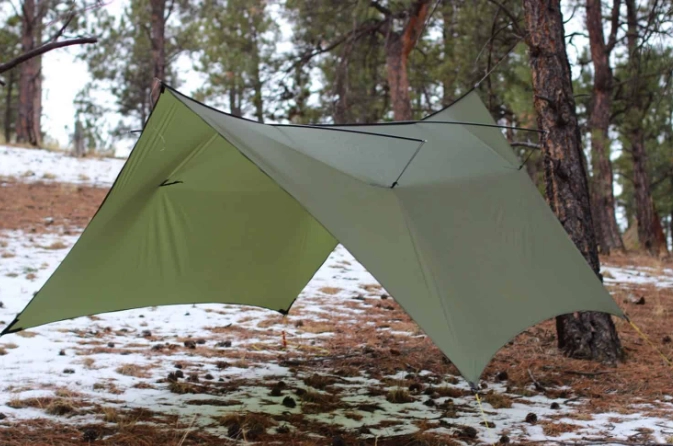
This guide isn't about selling you a specific brand. It's about giving you the knowledge to choose your own perfect shelter. We'll tear apart the jargon, compare materials you've probably never heard of, and look at setups that go way beyond a simple A-frame. Whether you're an ultralight gram-counter, a family car camper wanting a sunny kitchen area, or a bushcrafter testing your skills, the right tarp can be the most versatile piece of gear you own.
Why a Tarp Might Be Your Best Shelter Choice (And When It's Not)
So, why go for a tarp over a trusty tent? The benefits are pretty compelling, but they come with trade-offs. It's not a perfect solution for everyone, and I'll be the first to point out the downsides.
The Good Stuff (The Pros)
- Weight & Packability: This is the big one. A good backpacking tarp can weigh less than a pound and pack down to the size of a soda can. Compare that to even the lightest tents. For thru-hikers, that weight savings is everything.
- Ventilation & Views: No more waking up to a wet sleeping bag from condensation. Tarps are open, airy, and let you connect with your surroundings. Falling asleep under the stars with just a mosquito net between you and the sky is magical.
- Versatility: You can pitch it high, low, angled, diamond-shaped, lean-to style. One piece of gear, dozens of configurations. Need a covered cooking area? Done. Want to create a sun shelter on a beach? Easy.
- Space & Livability: For the weight, you get incredible covered space. You can sit up, move around, cook, and store gear all under cover without feeling like you're in a coffin.
- Cost: Generally, a high-quality tarp is less expensive than a high-quality tent with similar performance specs.
The Not-So-Good Stuff (The Cons & My Personal Gripes)
- Bugs & Critters: This is the #1 dealbreaker for many. A tarp alone offers zero protection from mosquitoes, ticks, or curious rodents. You must pair it with a bug net inner, a bivy sack, or use it in bug-free seasons/locations. I learned this the hard way in Minnesota in June. Never again.
- Exposure to Elements: Wind-blown rain (driving rain) can be a problem if your pitch isn't dialed in. A tent is more forgiving. You're also more exposed to spindrift (blowing snow) and dust.
- Skill Requirement: You need to know how to tie knots (or use modern tensioners) and find good anchor points. In a treeless alpine zone or on a beach, setting up can be a real puzzle. My first few tarp pitches were saggy, pathetic messes.
- Privacy & Security: There isn't any. You're on display. This can feel weird in busy campgrounds. It also offers less psychological security than a enclosed tent for some people (though I find hearing everything around me more reassuring).
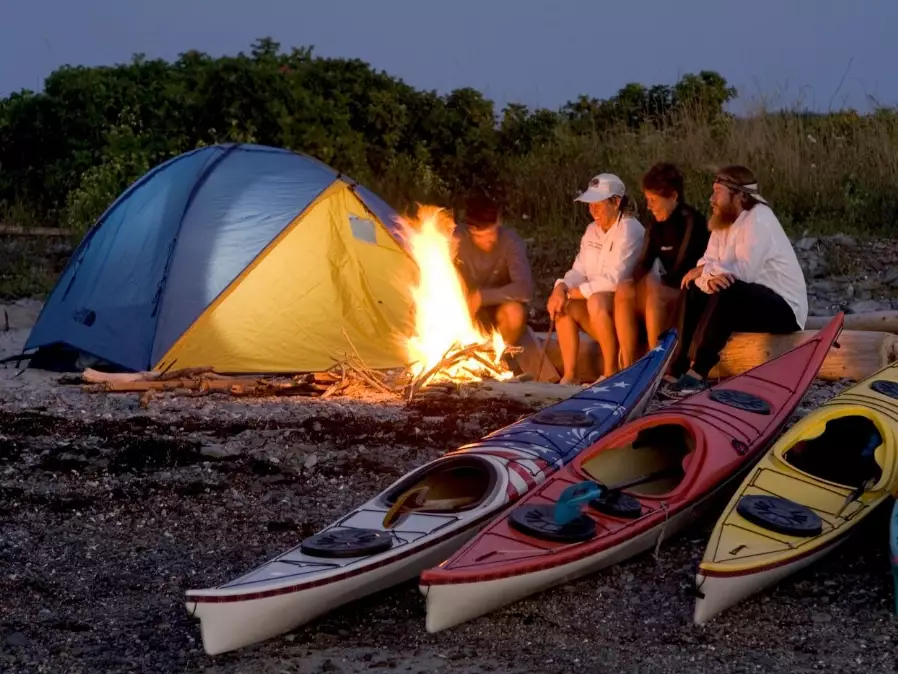
So, who is the best camping tarp for? Backpackers prioritizing weight, fair-weather campers, kayak campers with lots of gear, bushcraft enthusiasts, and anyone who wants a multi-purpose shelter add-on for their car camping kit. If you're camping in bug-heavy areas without a net, or in extreme, unpredictable weather where a fully enclosed shelter is safer, a tent is still king.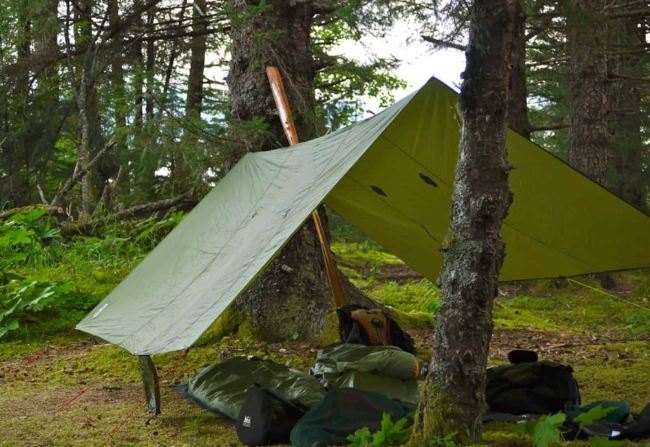
How to Choose Your Best Camping Tarp: The Decision Matrix
Walking into a store or browsing online, the options are overwhelming. Let's break down what actually matters. Forget marketing fluff; we're talking about material, size, shape, and features.
The Material Showdown: From Cheap Plastic to Space-Age Fibers
This is the heart of your tarp. The material dictates weight, durability, pack size, feel, and price. Here's a no-nonsense comparison.
| Material | Best For | Weight | Durability | Pack Size | Cost | The Real-World Take |
|---|---|---|---|---|---|---|
| Polyethylene (PE) / "Blue Tarp" | Car camping, construction, emergency use. | Heavy | Low (rips easily, degrades in UV light) | Bulky | $ | It's cheap and waterproof, but it's loud, stiff when cold, and eco-unfriendly. I keep one in the trunk for emergencies, but I'd never backpack with it. |
| Polyurethane (PU) Coated Nylon | Budget-friendly backpacking, general purpose. | Medium | Good (coating can peel over time) | Medium | $$ | The workhorse. Most common. Reliable, relatively light, and affordable. The coating gives it a slightly sticky feel. A solid choice for your first real tarp. |
| Silicone-Coated Nylon (SilNylon) | Ultralight backpacking, thru-hiking. | Very Light | Very Good (high tear strength) | Very Small | $$$ | Softer, quieter, and more packable than PU. Has a bit of stretch when wet, so you need to re-tension your guylines. The gold standard for years. The best camping tarp for weight-conscious folks for a long time. |
| Polyester (e.g., PU Coated Polyester) | Car camping, base camps, where sag resistance is key. | Medium-Heavy | Excellent | Medium | $$ | Doesn't absorb water, so it doesn't sag when wet. Heavier than nylon, so less common for backpacking. Great for a permanent-feeling camp. |
| Dyneeema® Composite Fabric (DCF, formerly Cuben Fiber) | Ultralight elite, fastpackers, weight-obsessed. | Extremely Light | Good (puncture resistant, but can develop pin-holes) | Extremely Small | $$$$ | The spaceship material. Incredibly strong for its weight, zero stretch, completely waterproof. But it's expensive and has a crinkly sound. It's a luxury performance choice. You can learn more about its unique properties from the manufacturer, DSM. |
| Canvas or Cotton | Historical reenactment, bushcraft, glamping. | Very Heavy | Excellent (when treated) | Very Bulky | $$$ | Breathable, quiet, and has a wonderful traditional feel. But it's massively heavy, takes forever to dry, and needs regular re-treatment to stay waterproof. A specialty item. |
Size and Shape: It's Not Just a Rectangle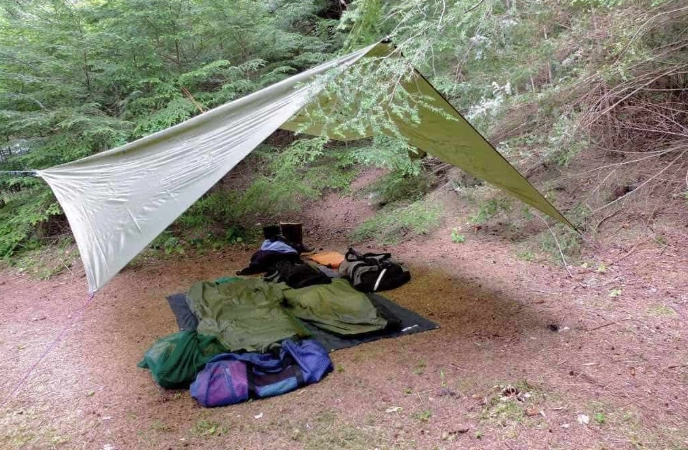
Bigger isn't always better. A massive tarp is harder to pitch taut and more vulnerable to wind. Think about how many people and gear need coverage.
- Solo: An 8' x 10' rectangle is the classic, versatile choice. A 9' x 9' square or asymmetrical shape (like a hex) can also work well and save a bit of weight.
- Duo: You'll want at least a 10' x 10' or, even better, a 10' x 12'. This gives room for two sleepers and gear at the ends.
- Group/Car Camping: Go big. 12' x 12', 16' x 16'. These are for creating living spaces, not just sleeping cover.
Shape matters too.
Rectangles offer maximum versatility for different pitches. Squares are symmetrical and simple. Asymmetrical/Cat-Cut Tarps (like a hex shape with curved edges) are designed to be pitched incredibly taut without saggy edges, but they are less versatile in their configurations. They're often the choice of ultralight purists.
Features That Actually Matter (And Gimmicks to Avoid)
Look at the details. A poorly made tarp will fail you when it counts.
- Reinforced Tie-Outs (Grossgrain Loops): These are the loops for your guylines. They MUST be reinforced with extra layers of fabric (grossgrain ribbon) and bartacked (multiple rows of stitching). I've seen cheap tarps where these pull right off. Check the stitching.
- Number of Tie-Outs: More tie-outs = more pitching options and better stability in wind. Look for mid-panel tie-outs on the sides, not just at the corners.
- Seam Sealing: Is it factory-sealed? If not, you MUST seal the seams yourself with a silicone sealant (like SilNet) for it to be waterproof. This is a messy, crucial step many forget. A pre-sealed seam is worth the extra $20, in my opinion.
- Doors/Beaks: Some tarps have optional flaps that can be closed to block wind and rain from the ends. In bad weather, these are a game-changer, adding nearly tent-like protection.
- Center Line / Ridge Line Reinforcements: A reinforced ridge line is essential for durability if you pitch it with a central ridge line.
Top Contenders: Breaking Down the Best Camping Tarp Brands & Models
Alright, let's get specific. Here are some of the most respected names in the game. This isn't an exhaustive list, but these are models and brands that consistently come up when experienced campers talk about the best camping tarp they've used.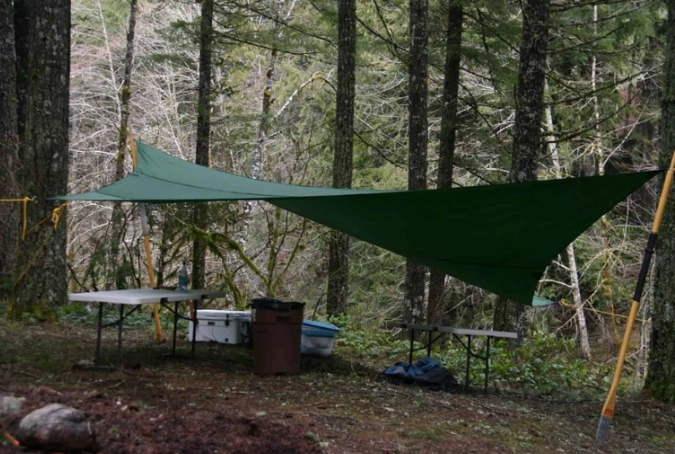
The Ultralight Champion: Zpacks Hexamid Pocket Tarp with Doors
Made from Dyneeema® Composite Fabric, this is the pinnacle of minimalist shelter. It weighs a jaw-dropping 5.1 ounces. The included doors make it surprisingly stormworthy for its size. It's designed to be paired with a matching bug net. The downside? The price will make your eyes water, and the living space is very much solo-oriented. This is for the hyper-efficient hiker who counts every gram.
The Versatile Workhorse: MSR Thru-Hiker 70 Wing Tarp
MSR is a giant in the tent world, and their tarp expertise shows. The Thru-Hiker 70 is SilNylon, asymmetrical, and designed for easy, taut pitches. It's not the absolute lightest, but it's incredibly well-made with lots of well-placed tie-outs. It feels durable and trustworthy. I've used an older version of this for probably 200 nights, and it's never let me down. A fantastic all-arounder.
The Bushcraft & Survival Favorite: Aqua Quest Defender Tarp
This one is heavier (meant more for canoe/kayak or car camping) but built like a tank. It's made from high-denier polyester with a TPU lamination, claiming a ridiculous 20,000mm waterproof rating. It has a ton of tie-outs, including webbing loops that are super easy to use. It's not for the ultralight crowd, but if you need a bombproof shelter for a base camp or rough conditions and weight isn't a concern, this is a top contender. The green/brown camo version is popular with hunters.
The Budget-Friendly Performer: Paria Outdoor Products Sanctuary SilTarp
This is the one I recommend to friends who want to try tarps without a huge investment. It's SilNylon, well-constructed with reinforced tie-outs, and comes in several practical sizes. It's a fraction of the cost of some cottage brands but doesn't feel cheap. For the price, it's incredibly hard to beat and punches way above its weight class. A perfect first best camping tarp.
The Innovative Hybrid: Mountain Laurel Designs Grace Tarp (DCF or SilNylon)
MLD is a beloved cottage manufacturer. Their Grace Tarp is a simple, elegant, cat-cut hex tarp designed for a perfect pitch. It comes in both SilNylon and DCF versions. The craftsmanship is exceptional. It has fewer tie-outs than some, favoring simplicity and a perfect shape over infinite configurability. It's a favorite among Appalachian Trail and Pacific Crest Trail thru-hikers for its reliability and light weight.
Remember, the "best" is subjective. The best camping tarp for backpacking on the Appalachian Trail is different from the best waterproof tarp for camping with your family at a drive-in site.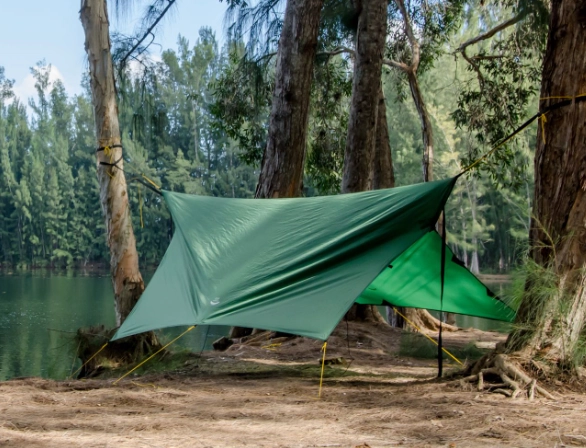
Essential Accessories: You Can't Just Have the Tarp
A tarp is useless without a way to hang it. Don't rely on the cheap, brittle cord that sometimes comes included.
- Cordage: Get 50-100 feet of quality, low-stretch utility cord (like Lawson Equipment's Glowire or Paracord 550). For guylines, I prefer reflective line so I don't trip at night.
- Tensioners/Line Locs: These little plastic devices make tightening your guylines a one-handed, 2-second job. They're worth their weight in gold, especially in the rain when you don't want to fuss with slippery knots.
- Stakes: A mix is good. 6-10 total. Get some sturdy, long stakes (like MSR Groundhogs) for main tie-outs and some lighter ones for次要 points. In soft ground, you might need snow/sand stakes.
- Bug Protection: This is non-negotiable for most trips. Your options are a bug bivy (a netted cocoon for your sleeping pad), a net tent (a floorless inner tent), or a full inner tent with a floor. Companies like Sea to Summit, Borah Gear, and Six Moon Designs make great ones.
- Groundsheet: A simple piece of Tyvek or Polycryo (window film) to keep your sleeping bag and gear clean and dry. Much lighter and cheaper than a tent footprint.
Mastering the Pitch: Basic Setups for Real Conditions
You don't need to know 50 knots. Learn these three: the bowline (for tying to trees), the taut-line hitch (an adjustable knot for guylines, though tensioners are easier), and the clove hitch. That's it.
Here are two fundamental, reliable pitches:
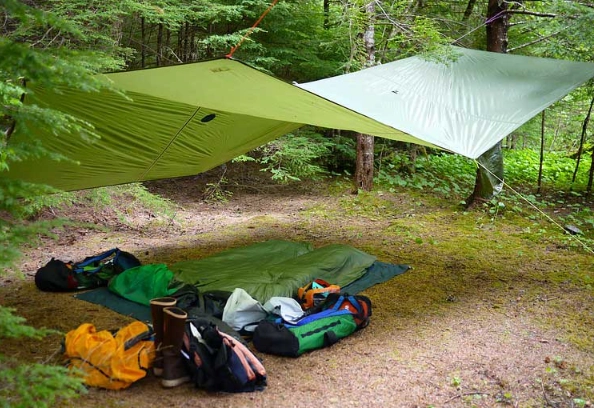
The A-Frame (Ridge Line Pitch): The classic. Run a cord between two trees (or use trekking poles). Drape the tarp over it and stake out the four corners. Pitch it low and angled into the wind for storm mode, or high for more living space. This is your bread and butter.
The Lean-To: Perfect for sun or light rain when you want a view. Tie one side (the ridge) high between two trees or to a single tree, then stake out the two corners of the opposite side lower to the ground. Great for cooking under or watching a sunset.
From these two, you can invent countless variations. Need one side closed? Stake it to the ground. Want a porch? Raise one corner with a trekking pole.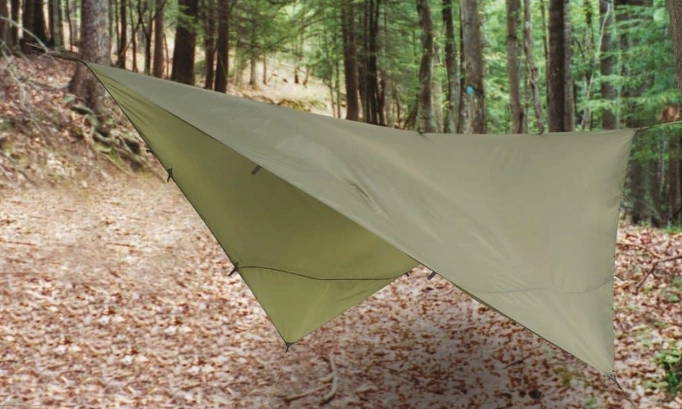
Care, Maintenance, and Making It Last
A good tarp is an investment. Treat it right.
- Cleaning: Never machine wash. Gently wipe it down with a soft sponge, lukewarm water, and a tiny bit of mild soap (like Nikwax Tech Wash) if needed. Rinse thoroughly. Never use detergents or bleach.
- Drying: This is critical. ALWAYS dry your tarp completely before storing it, even if it's just "a little damp." Mildew will destroy coatings and fabrics. Hang it in a shaded, breezy area (sun degrades fabrics).
- Storage: Store it loosely in a large breathable cotton sack or pillowcase—not compressed in its tiny stuff sack. The stuff sack is for travel only.
- Re-Waterproofing: Over time, the DWR (Durable Water Repellent) coating on the fabric will wear. Water will stop beading and start soaking in (wetting out). Reapply a DWR treatment like Nikwax TX.Direct Spray-On following the instructions.
- Seam Sealing (if needed): If your tarp didn't come sealed, do it. It's a messy, tedious job, but it's essential. Follow a guide from a reputable source like the gear care experts at REI.
Your Camping Tarp Questions, Answered (FAQ)
Final Thoughts: Finding Your Shelter Soulmate
Choosing the best camping tarp is a personal journey. It's about balancing weight, space, weather protection, and your own comfort level with a more open shelter.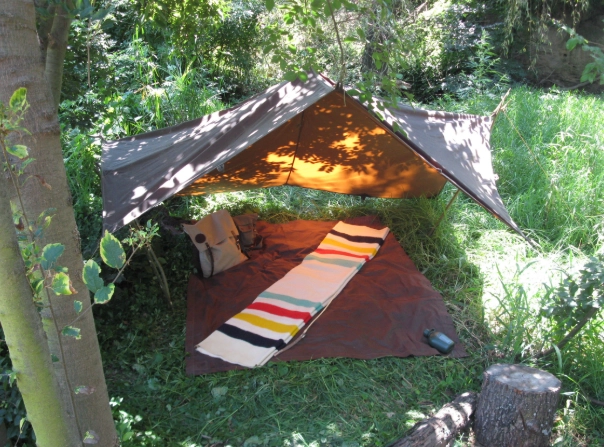
My advice? Start simple and moderately priced. Get a solid 8'x10' or 10'x10' SilNylon tarp from a reputable brand, some decent cord, stakes, and a bug bivy. Go on a few overnighters in good weather. Experiment with pitches. See how it feels.
You might find you love the openness and never go back to a tent. You might decide you miss the enclosed security and only pull out the tarp for specific trips. Or, like me, you'll probably end up with a small quiver: a DCF tarp for big miles, a sturdy SilNylon one for base camping with friends, and that old blue poly tarp still rattling around in the garage for messy jobs.
The goal isn't to have the objectively best gear. It's to have the gear that's best for you and the adventures you want to have. A tarp opens up a different, more connected way to experience the outdoors. It's less about being in a portable bedroom and more about being under the sky, just with a good, dry roof when you need it.
Now, get out there and find your perfect pitch.