Explore This Guide
- Why Your Phone Isn't Enough: The Non-Negotiable Case for a Physical Compass
- Anatomy of a Hiking Compass: Know Your Tool
- The Core Skill: Taking a Bearing from the Landscape
- The Magic Trick: Using a Compass WITH a Map (Orienteering)
- The Declination Demon: Conquering the Difference Between True and Magnetic North
- Choosing Your Compass: A Buyer's Quick Guide
- Practical Drills & Common Scenarios
- Putting It All Together: A Sample Navigation Plan
- Final Thoughts & Your Next Steps
Let's be honest. Most of us toss a compass into our backpack because it feels like the "outdoorsy" thing to do. It sits there, a little round piece of metal and plastic, next to the half-eaten energy bar and the extra socks. We have this vague idea that if our phone dies, this thing will save us. But when you actually pull it out, staring at the spinning needle and the confusing degrees, it might as well be written in ancient Greek. Sound familiar?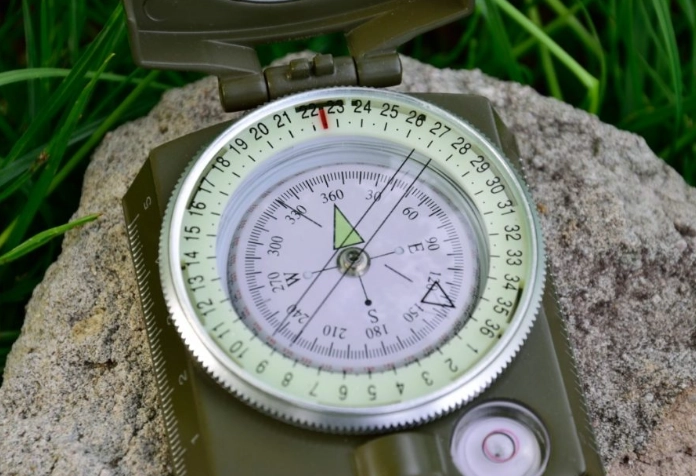
I've been there. I remember a hike a few years back in the White Mountains. Clouds rolled in faster than forecasted, the trail markers vanished in the fog, and my phone's GPS became a useless brick. I had a compass. I just had no real clue how to use it beyond "the red part points north." That was a long, anxious afternoon.
That experience flipped a switch for me. Learning proper camping compass use isn't about memorizing complex formulas—it's about understanding a few core principles that turn this simple tool into your most reliable trail partner. This guide is everything I wish I'd known back then. We'll ditch the jargon and break it down step-by-step.
Why Your Phone Isn't Enough: The Non-Negotiable Case for a Physical Compass
I love my smartphone's mapping apps. Gaia GPS, AllTrails—they're fantastic. But relying on them solely for backcountry navigation is a recipe for trouble. Batteries die, screens crack, signals drop in deep valleys or under thick canopy cover. A compass has no battery. It has no signal to lose. It works in a torrential downpour, in a blizzard, or under a blazing sun. It just works.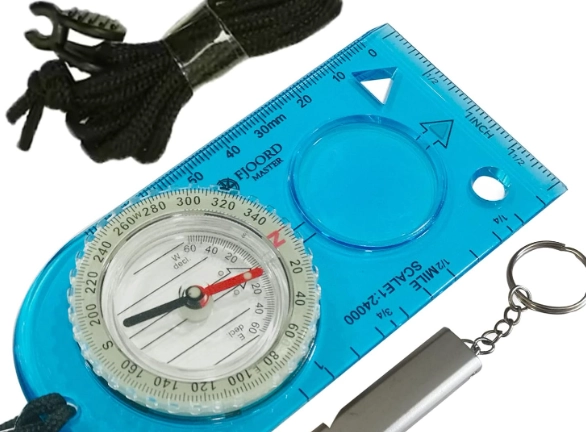
The U.S. National Park Service consistently lists "carrying a map and compass and knowing how to use them" as a top-10 essential for safe hiking. They see the results of when people don't. It's not just about getting slightly turned around; it's about preventing serious search-and-rescue situations. A compass is your primary, fail-safe tool. Everything else is a backup.
Think of it this way: learning camping compass use is like learning to swim. You might always choose to use a pool noodle or floaties (your phone GPS), but knowing the fundamental skill means you won't panic if they're suddenly gone.
Anatomy of a Hiking Compass: Know Your Tool
Before we make it point anywhere, let's name the parts. Don't worry, there aren't many. Most quality hiking compasses, like the classic Silva Type or Suunto models, share the same basic layout.
- Baseplate: The clear, rectangular plastic body. It has a ruler on the edges for measuring map distances and a direction-of-travel arrow printed on it pointing straight ahead.
- Compass Housing (Bezel): The rotating, liquid-filled dial. This is the circle with the degree markings (0 to 360) and the cardinal points (N, E, S, W).
- Magnetic Needle: The red (or sometimes black) end that spins freely. The RED end is what points to magnetic north. Never forget that.
- Orienting Arrow & Lines: Inside the rotating bezel. You'll spin the bezel to align these with the needle during navigation.
- Orienting Lines: Parallel lines on the bottom of the rotating housing that help you align the compass with the map's north-south grid lines.
- Index Line: A small mark at the front of the bezel, right where the direction-of-travel arrow meets the housing. This is where you read your bearing.
The Core Skill: Taking a Bearing from the Landscape
This is the most fundamental action in camping compass use. A "bearing" is just a precise direction expressed in degrees. Let's say you're on a ridge and see a distinct, lone pine tree you want to hike to. How do you walk straight to it, even if you dip into a valley and lose sight of it?
- Hold It Flat: Hold the compass level in your palm, waist-high, with the direction-of-travel arrow pointing straight away from you.
- Aim: Physically turn your whole body until you are aiming the direction-of-travel arrow directly at your target—that lone pine tree.
- Spin the Bezel: Without moving the compass base, rotate the bezel (the dial) until the orienting arrow inside it is perfectly framed around the red end of the magnetic needle. Think of it as putting the red needle "in the shed."
- Read the Bearing: Look at the index line. The number you see there (e.g., 240°) is your bearing to that tree.
Now, you can look down, walk through thick brush, and as long as you occasionally stop, hold the compass flat, and rotate your body until the red needle is back "in the shed," the direction-of-travel arrow will be pointing right at your target. You're following the bearing.
The Magic Trick: Using a Compass WITH a Map (Orienteering)
This is where the real power lies. This is orienteering. You're not just sighting things you can see; you're using the map to navigate to places you *can't* see yet. It involves two main steps: (1) transferring a bearing from the map to the real world, and (2) transferring a bearing from the real world back to the map to find your location.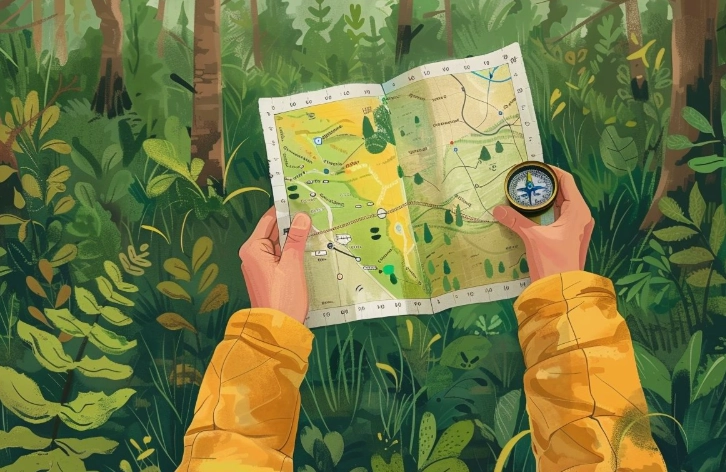
Step 1: Map to Ground – "I want to go to that lake on the map."
- Lay the Map Flat: On a rock, your pack, the ground.
- Place the Compass: Lay the compass on the map so the long edge of the baseplate creates a line connecting your current location (Point A) and your destination, the lake (Point B). The direction-of-travel arrow must point from A to B, toward the lake.
- Align with Grid North: This is the critical part. Holding the baseplate firmly in place, rotate the compass bezel until the orienting lines inside it are parallel with the map's north-south grid lines (the blue or black lines running top to bottom on a USGS map). The "N" on the bezel should point to North on the map (usually the top).
- Account for Declination: We'll get to this monster in a second. For now, just remember this step exists.
- Pick Up and Follow: Pick up the compass. Without touching the bezel (you've just locked in the map bearing), perform the "put the needle in the shed" move by rotating your body. When the red needle is framed inside the orienting arrow, the direction-of-travel arrow now points exactly to your lake. Start walking.
Step 2: Ground to Map – "Where the heck am I?" (Triangulation)
You're not lost, just temporarily uncertain of your precise location. If you can see two or three identifiable landmarks (a mountain peak, a radio tower, a distinct bend in a river), you can find yourself.
- Take a bearing to your first landmark (using the "Core Skill" above). Let's say you sight Bear Mountain and get a bearing of 300°.
- Now, on your map, place the compass so one corner is on the symbol for Bear Mountain.
- Rotate the entire baseplate (keeping the corner on the mountain) until the orienting lines are again parallel with the map's north-south lines AND the "N" on the bezel points to map north. The bearing (300°) should still be at the index line.
- Draw a line (or imagine one) along the edge of the baseplate, starting from Bear Mountain and going back in your general direction. You are somewhere on that line.
- Repeat this process for a second distant landmark. Where the two lines cross is your location. A third line will confirm it. It's like magic every single time.
The Declination Demon: Conquering the Difference Between True and Magnetic North
Alright, time for the topic that makes most people's eyes glaze over: declination. But stick with me—it's simpler than it sounds, and ignoring it can send you miles off course.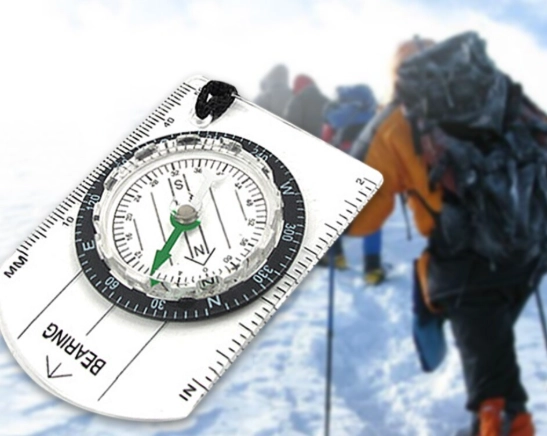
Here's the deal: Maps are drawn relative to True North (the geographic North Pole, the top of the map). Your compass needle points to Magnetic North (a wandering point in northern Canada, pulled by the Earth's magnetic fields). These two norths are not in the same place. The angular difference between them is called declination.
In the U.S., the declination varies wildly. On the West Coast, magnetic north might be 15 degrees east of true north. On the East Coast, it might be 10 degrees west. The map will tell you the declination for that specific area (look in the map margin).
How to handle it? You have two main schools of thought:
- Mental Math: Learn the rhyme: "Declination east, compass least. Declination west, compass best." If declination is 10°E, magnetic north is east of true north. So your compass reading is "least"—you need to *subtract* 10 degrees from your map bearing before you follow it. If it's west, your compass is "best"—you *add* the degrees.
- The Pro Method (Setting Your Bezel): Most good compasses have a tiny screw or adjustment tool that lets you physically offset the orienting lines inside the bezel by the declination amount. Once set for your region, you can ignore the math forever. You simply align the orienting lines with the map's grid, and you're done. This is, in my opinion, the only way to fly. It removes the single biggest source of error in camping compass use.
You can find your exact local declination using the NOAA Magnetic Field Calculator. It's an authoritative source from the National Oceanic and Atmospheric Administration. Bookmark it.
Choosing Your Compass: A Buyer's Quick Guide
Not all compasses are created equal. Here’s a breakdown to help you choose.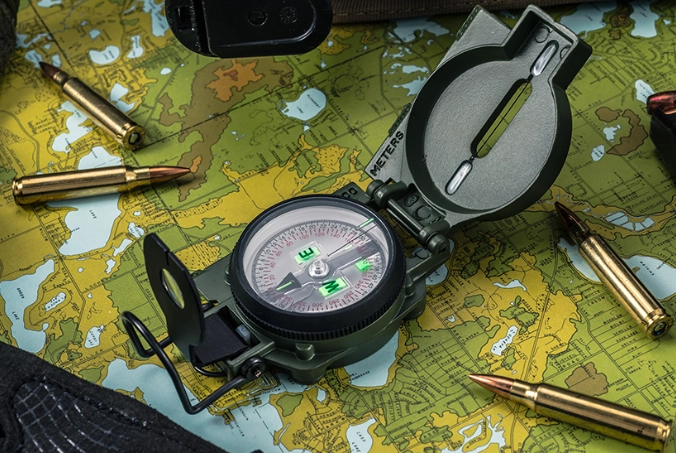
| Type | Best For | Key Features | My Personal Take |
|---|---|---|---|
| Baseplate Compass | Beginners & most hikers. The standard. | Clear rectangular base, ruler edges, declination adjustment. Simple, reliable. | This is the workhorse. A Silva Ranger or Suunto M-3 is perfect for 95% of needs. Don't overcomplicate it. |
| Mirror Sighting Compass | More precise navigation, off-trail travel. | Has a flip-up mirror for taking super accurate bearings by sighting over the hinge. | Fantastic for accuracy, but a bit more fiddly. I find them slower to use for quick checks. |
| Lensatic Compass (Military-style) | Durability, rough conditions. | Metal casing, sighting wire, tritium for night viewing. Very rugged. | Overkill for casual camping. Heavy, and not as easy to use with a map. Cool factor is high, practicality for most hikers is low. |
| Smartphone Compass App | Backup only, casual use. | Convenient, often free. | I have them. I use them for quick checks. I never rely on them. Phone sensors can be thrown off by metal. They are a toy compared to a real compass. |
Practical Drills & Common Scenarios
Reading is one thing. Doing is another. Here are a few drills you can practice in a park or even your backyard:
- The Square Exercise: Pick a starting point. Use your compass to walk a bearing of 0° for 100 paces. Then turn to 90°, walk 100 paces. Then 180°, then 270°. You should end up back where you started (more or less). It teaches pacing and turning precise angles.
- The "Lost" Game: Have a friend place a small object (a water bottle) in a wooded area. They give you a starting point and a bearing/distance from a map. You have to find it using only your compass and pacing.
What about common real-world questions?
Putting It All Together: A Sample Navigation Plan
Let's walk through a quick scenario from planning to execution, highlighting good camping compass use.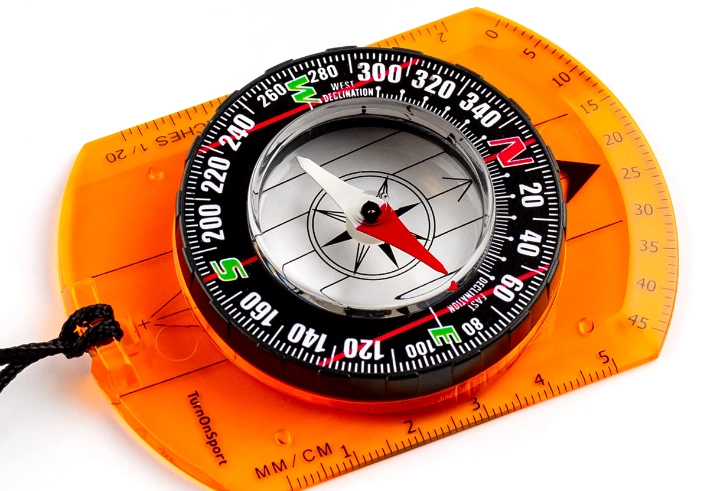
You're planning a day hike to a waterfall not on a maintained trail. First, you study your USGS map at home. You note the declination is 12° East. You adjust your compass's bezel accordingly. You plot your route: from the trailhead (Point A) to a saddle between two hills (Point B), then a bearing of 145° for 0.8 miles to the creek, then follow it upstream.
At the trailhead, you orient your map with the compass (so the map aligns with the real world). You see the saddle is at a bearing of 60° from you. You set that bearing on your compass, put the needle in the shed, and start walking, counting your paces (you've calibrated how many paces you take per 100 meters).
You reach the saddle. Now, you set your second leg: 145°. You follow it, checking your compass every 50 paces or so. The terrain is brushy, and you lose sight of the saddle behind you. No problem. You trust the bearing. After roughly the right number of paces, you hear the creek. Success. The map and compass worked as a team.
Final Thoughts & Your Next Steps
Mastering camping compass use isn't about becoming a wilderness scout overnight. It's about building a foundational skill, one step at a time. Start by simply carrying your compass and map on every hike, even familiar ones. Practice taking bearings to random trees or rocks. Get comfortable with the feel of it.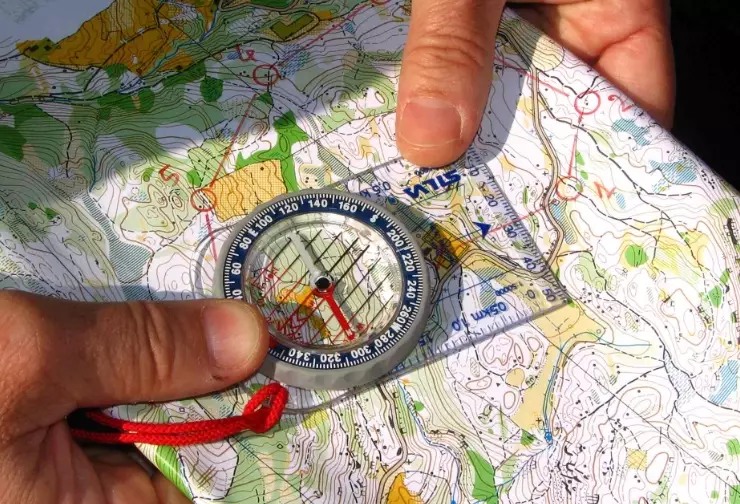
Then, tackle declination. Set your compass for your local area. Finally, practice the map-to-ground and ground-to-map exercises in a safe, known area. The National Park Service's guide to trail navigation is another excellent, free resource to reinforce these concepts.
Remember, the goal isn't to abandon technology. It's to build a self-reliant skillset so that when technology fails—and it will—you have the knowledge to find your way home. That little round piece of metal and plastic in your pack stops being a token and starts being a trusted guide. And that makes all the difference.
Now, go get slightly lost (on purpose) in a safe place, and find your way back. That's the best practice there is.