Quick Guide
- Why "Is Bushcraft Camping Legal?" is a Tricky Question
- The Land Manager Breakdown: Where Can You Actually Practice?
- The Activity Audit: What Exactly Are You Planning to Do?
- Your Action Plan: How to Legally Plan a Bushcraft-Style Trip
- The Ethical Bridge: Beyond Legality
- Final Verdict: So, Is Bushcraft Camping Legal?
Let's be real. You've seen those videos. Someone builds an incredible shelter from fallen logs, cooks over a fire they started with a ferro rod, and sleeps under the stars. It looks like pure freedom. But then a nagging thought hits you: is bushcraft camping legal? Can I just walk into the woods and start notching logs?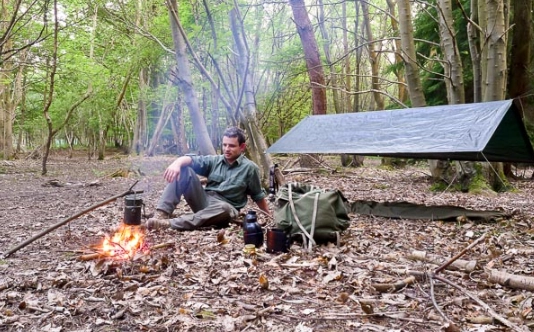
The short, frustrating answer is: it depends. It's not a simple yes or no. Asking "is bushcraft camping legal" is like asking "is driving okay?" Well, it is if you have a license, follow the road rules, and don't do it on someone's private lawn. Bushcraft is the same. Its legality hinges entirely on where you are, what you're doing, and whose land you're on.
I learned this the hard way years ago. I was young, inspired, and armed with a new hatchet on what I thought was generic public land. I found a perfect spot, started clearing some small deadfall for a shelter frame, and was feeling like a modern-day frontiersman. Until a ranger showed up. It was a polite but firm conversation that ended with a warning, not a ticket, but it was a major wake-up call. The land wasn't just "public"—it was a specific State Recreation Area with very strict "leave no trace" rules that prohibited any alteration of the landscape, even with dead wood. My dream of a debris hut was a violation.
That experience sent me down a rabbit hole of regulations, agency websites, and phone calls. What I found was a complex patchwork of rules. This guide is the result of that research and over a decade of practicing bushcraft legally across the U.S. We're going to strip away the confusion and give you the clear, actionable knowledge you need.
Why "Is Bushcraft Camping Legal?" is a Tricky Question
First, we need to define our terms. "Bushcraft" isn't a legal term. A park ranger won't have a statute titled "Bushcraft Prohibition Act." Instead, your activities are judged by a series of separate, specific rules. When you ask is bushcraft camping legal, land managers hear: Is cutting vegetation legal? Is building structures legal? Is harvesting natural materials legal? Is having a fire legal?
Each of those actions has its own rule. The legality of bushcraft camping is the sum of those parts. If any one part is illegal in that location, your whole trip might be.
So, the real question isn't just "is bushcraft camping legal?" It's "Where can I do specific bushcraft activities legally?" Let's break down the biggest factor: who owns and manages the dirt under your feet.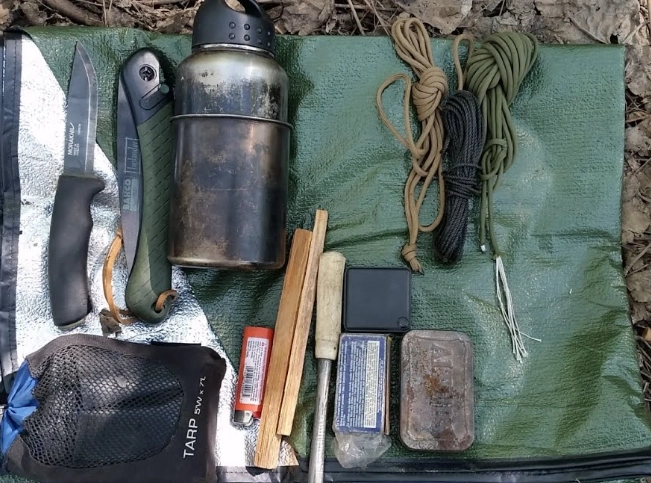
The Land Manager Breakdown: Where Can You Actually Practice?
This is the most important section. Forget "public land" as one thing. It's a collection of different agencies with wildly different missions and rules. Your first step for any trip is identifying the exact managing agency.
| Land Type / Managing Agency | Typical Bushcraft Friendliness | Key Rules & Restrictions | How to Find the Specific Rules |
|---|---|---|---|
| U.S. National Forests (USFS) | **Most Permissive (Generally)** | Often allows dispersed camping, dead wood gathering for fires, and sometimes even limited green wood cutting with a permit. Structure building is almost always prohibited. Fire bans are common in dry seasons. | Check the website for the specific National Forest you're visiting (e.g., "White Mountain National Forest rules"). Look for "Dispersed Camping" and "Firewood" pages. The US Forest Service site is the portal. |
| Bureau of Land Management (BLM) Land | **Very Permissive (Generally)** | Similar to National Forests. Dispersed camping is widely allowed for 14-day stays. Gathering dead fall for campfires is usually okay. Permanent alterations (ditches, structures) are not. Always check for Area of Critical Environmental Concern (ACEC) restrictions. | Visit the state or district BLM website. e.g., "BLM Colorado camping rules." |
| U.S. National Parks & National Monuments (NPS) | **Strictly Prohibitive (Almost Always)** | This is a big NO for bushcraft. Camping only in designated sites. No gathering of any natural materials (rocks, plants, wood). No cutting, carving, or altering vegetation. Fires only in established grates. Preservation is the prime mission. | The National Park Service site for each park lists all regulations. Assume everything is forbidden unless explicitly stated otherwise. |
| State Parks & State Forests | **Wildly Variable** | This is the trickiest category. Some state forests (e.g., in Michigan, Maine) allow primitive camping and firewood gathering. Most State Parks are as restrictive as National Parks. Rules change at every state line and even between parks in the same state. | You must research the specific park/forest website. Search "[State Name] DNR camping regulations" or "[Park Name] rules." |
| Wildlife Management Areas (WMAs) | **Usually Restrictive** | Primary purpose is wildlife conservation. Camping may be limited or banned. Disrupting habitat (cutting trees, building shelters) is typically not allowed. Always check for seasonal closures during hunting or breeding seasons. | Managed by state fish & game departments. Their websites have WMA-specific brochures and maps with rules. |
| Private Land | **Entirely Up to the Owner** | The only place where bushcraft might be fully legal, if you have explicit, written permission. Never assume. Trespassing laws are serious. | Get a signed agreement. Discuss boundaries, activities allowed (fire, cutting), and liability. |
See the pattern? The mission dictates the rules.
National Forests and BLM land are often managed for "multiple use," which includes recreation. That's your best bet. National Parks are for preservation—look, don't touch. State lands are a mixed bag that requires diligent homework. So, when someone asks is bushcraft camping legal, my first response is always: "Tell me which forest you're going to, and I'll look up the district ranger's orders."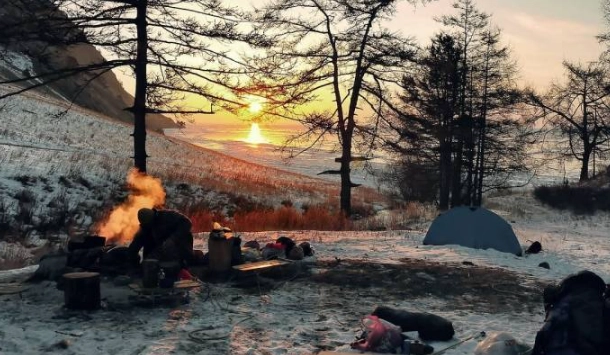
The Activity Audit: What Exactly Are You Planning to Do?
Let's get granular. Saying "I want to do bushcraft" is too vague. Break your plan down into activities and check the legality of each one for your chosen location.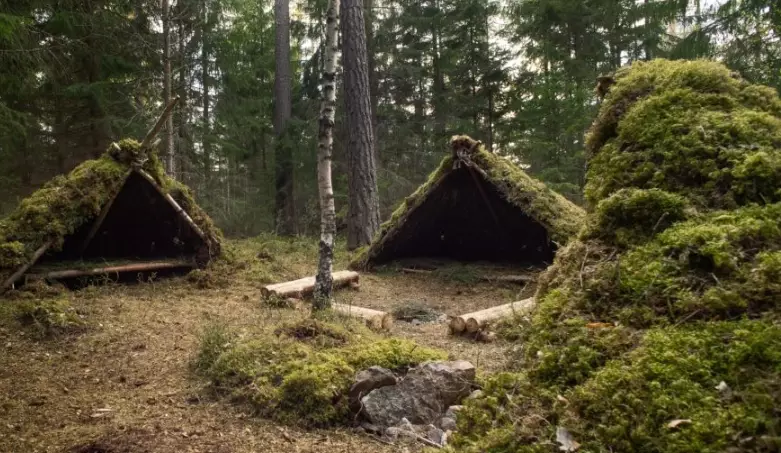
Shelter Building
This is the biggest red flag for land managers. Building any structure from natural materials is problematic on most public land.
- Illegal (Almost Everywhere): Building a semi-permanent shelter (lean-to, debris hut, A-frame) that alters the site and uses cut logs or lashed poles.
- Gray Area / Sometimes Tolerated: Using a pre-existing natural shelter (rock overhang, fallen tree cavity) and perhaps adding a few loose branches for additional windbreak, if you dismantle it completely before leaving.
- Legal Alternative: Practice campcraft instead. Perfect your tarp setups—a-frames, lean-tos, flying Vs—using a tarp and cordage you brought. It teaches the same knots and design principles without harming anything.
Firecraft
Fire is heavily regulated for obvious safety reasons.
- Legal Checkpoints: 1) Are fires currently allowed? (Check for seasonal bans.) 2) Can you gather wood, or must you bring it? 3) Are there designated fire rings?
- Wood Gathering: On National Forests/BLM land, gathering dead and down wood for a small campfire is often permitted. Cutting standing trees (even dead ones) almost always requires a permit, if it's allowed at all. Never strip bark from live trees.
- Fire Construction: Practicing feather sticks, shavings, and laying a fire is fine if fires are allowed. Building a Dakota fire hole or other ground-altering fire pit is usually not allowed under LNT principles.
Foraging & Plant Use
Tread very carefully here. This is where you can unknowingly break serious laws.
Crafting with natural cordage (like inner bark) usually means damaging a plant, which is prohibited. Practice these skills with materials you bring (jute, hemp, paracord) or with invasive species like English Ivy if you're absolutely certain of identification and it's legal to remove.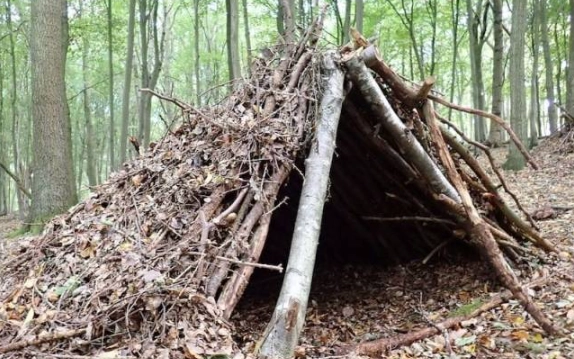
Tool Use (Knives, Axes, Saws)
Carrying tools is rarely the issue. Using them on the landscape is.
You can almost always have a knife on your belt. Using it to carve your name into an aspen tree is vandalism. Using it to make tent stakes from a dead branch you found on the ground? That might be okay in a National Forest but not in a State Park. The tool isn't illegal; the action is.
Your Action Plan: How to Legally Plan a Bushcraft-Style Trip
Feeling overwhelmed? Don't be. Here's a simple, step-by-step checklist I use for every single trip. It makes answering "is bushcraft camping legal for my plan?" straightforward.
- Pinpoint the Land: Don't just say "the mountains north of town." Get the exact name. Is it the "San Juan National Forest, Columbine Ranger District"? Or "Pisgah National Forest, Grandfather Ranger District"?
- Go to the Source: Find the official website for that specific forest, BLM district, or park. Use the links to the USFS, BLM, or NPS as your starting point to navigate to the right place.
- Search for Key Documents: Look for:
- "Dispersed Camping Guidelines"
- "Firewood Cutting Permit" or "Fuelwood Gathering"
- "Motor Vehicle Use Map (MVUM)" – shows where you can drive/camp off-road.
- "Supervisor's Order" or "District Orders" – these are the legal rulings for that area.
- Call for Clarification: If the website is unclear (and it often is), call the district ranger office. Ask direct questions: "I plan to camp away from developed sites. Am I allowed to gather dead branches for a small campfire in the area near Trailhead X?"
- Get Permits if Needed: Some areas require free, self-issue permits for backcountry camping (like many Wilderness Areas). Some sell permits for firewood gathering. Have it in hand.
- Have a Plan B: What if you get to your spot and there's a new "No Fires" sign? Or the area is closed? Always have a backup location or a switch to a low-impact car camping mode.
The Ethical Bridge: Beyond Legality
Even if you find a legal gray area, you should consider ethics. Laws are the minimum. Our responsibility as people who love the outdoors is to go beyond that.
I've seen legal but ugly campsites—places where every piece of deadfall within 100 yards was scavenged for a huge, unnecessary fire, leaving the area barren. Technically, they might have been following the rules. Ethically, they failed.
Ask yourself: Is my action sustainable if 100 people did it this weekend?
If the answer is no, scale it back. Use less wood. Camp on durable surfaces. Practice carving on wood you brought. Dismantle any windbreaks you make. The goal is to hone your skills while leaving the forest as if you were never there. That's the highest form of the craft, in my opinion. It proves your skill isn't dependent on exploiting the environment.
Final Verdict: So, Is Bushcraft Camping Legal?
Here's the honest conclusion. The romantic ideal of heading into the woods with just an axe and living off the land by building a shelter and foraging? That is largely illegal on the public land most of us have access to.
However, the spirit of bushcraft—self-reliance, woodcraft, skill-building, and connecting with nature—is absolutely attainable within the law. It just requires a shift in approach.
- Focus on Skills, Not Scars: Practice fire lays with twigs you bring. Practice knot-tying on your own rope. Carve a spoon from a piece of basswood from the craft store.
- Target the Right Land: Focus your trips on National Forests and BLM land that explicitly allow dispersed camping and dead wood gathering. Treat these places with immense respect.
- Embrace "Campcraft": Mastering a tarp shelter in the rain is a more valuable and universally legal skill than building a debris hut.
- When in Doubt, Leave it Out: If you're unsure if an action is legal, don't do it. The woods will still be there to enjoy.
The bottom line is that asking is bushcraft camping legal forces you to become a more informed, responsible outdoor user. It's not a barrier to the experience; it's the first, most important skill to learn. Do the research, follow the rules, and you'll find a lifetime of deep, rewarding, and lawful connection with the wild places we're all trying to enjoy.