In This Guide
- The Shelter System: Your First Line of Defense
- The Water System: Finding, Carrying, and Making It Safe
- The Fire System: More Than Just Matches
- The Food & Nutrition System: Fuel for Body and Mind
- The Tool & Utility System: Your Mechanical Advantage
- The First Aid & Health System: Prepared for the Inevitable
- The Navigation & Signaling System: Don't Get Lost, Get Found
- Putting It All Together: Your Personal Survival Pack
- Survival Camping Equipment: Your Questions Answered
Let's be honest. A quick search for survival camping equipment can leave you drowning in pictures of fancy paracord bracelets and overpriced multi-tools that promise to do everything but cook you breakfast. It's overwhelming, and half the stuff seems designed for a movie, not a real trip where the weather turns or you take a wrong turn off the trail.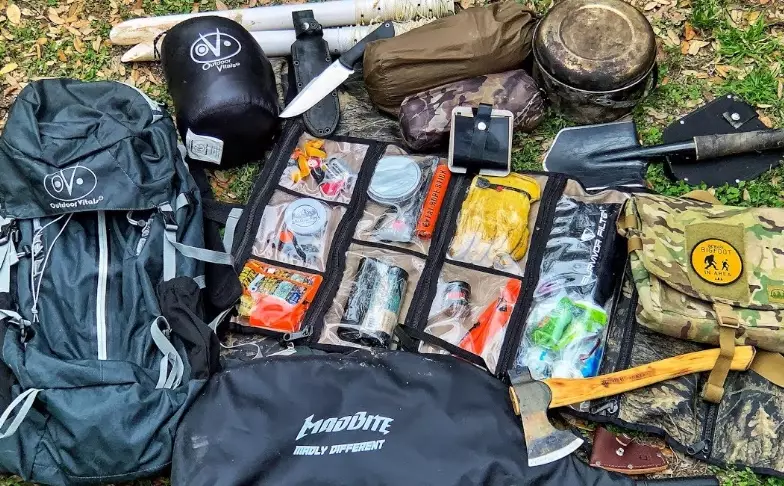
I've been there. I've packed too much, I've packed too little, and I've learned the hard way what actually matters when you're miles from the nearest road. This isn't about building a bunker; it's about smart, practical preparedness that lets you enjoy the wilderness with confidence. We're going to cut through the noise and talk about the core systems that keep you safe, warm, dry, and found.
Think of it this way. You wouldn't build a house without a foundation, walls, and a roof. Your survival camping gear works the same way—it's a set of interconnected systems. If one fails, you lean on another. We'll break it down piece by piece, based on the classic "Rule of Threes": you can survive three minutes without air, three hours without shelter (in harsh conditions), three days without water, and three weeks without food. Our gear list prioritizes based on that brutal logic.
The Shelter System: Your First Line of Defense
Hypothermia doesn't care if it's summer. A cold rain and wind can sap your body heat faster than you think. Your shelter system is your most critical piece of survival camping equipment after the air in your lungs. This isn't just a tent; it's everything that keeps you dry and insulated from the elements.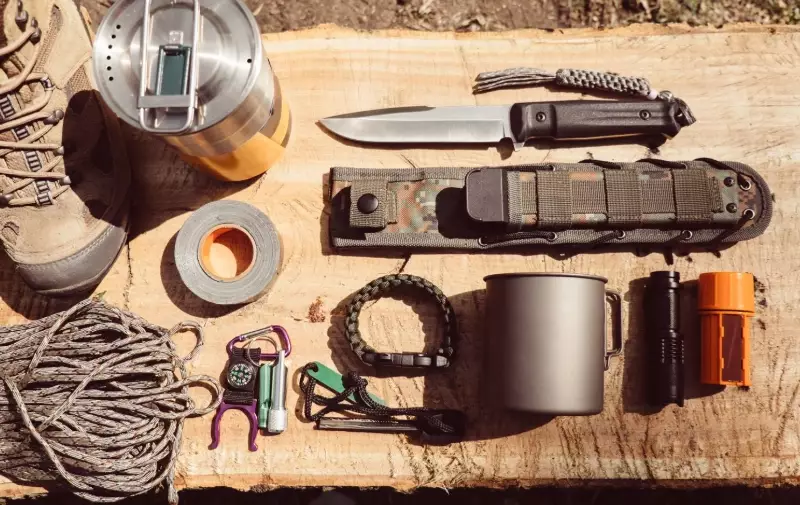
For planned trips, a good 3-season tent is your best bet. But survival gear thinks about backups. That's where a emergency bivvy sack or a heavy-duty tarp comes in. I always have one stuffed in the bottom of my pack. They weigh almost nothing and can be a lifesaver if your tent fails or you get stuck out overnight unexpectedly.
Insulation is part of this system too. A sleeping pad isn't just for comfort—it's a vital thermal barrier against the cold ground. Pair it with a sleeping bag rated for temperatures colder than you expect. I made the mistake of taking a 40°F bag on a trip where nights hit 35°F. I spent those nights wearing every piece of clothing I had, shivering and miserable. Lesson learned.
My Go-To Shelter Combo for Backpacking
- Primary: A lightweight but stormworthy 2-person tent (the extra space for gear is worth the slight weight).
- Backup: An SOL Emergency Bivvy (the orange one, it's more durable than the super-cheap versions).
- Sleep: An inflatable sleeping pad with a decent R-value (insulation rating) and a sleeping bag rated 10°F below the forecast low.
What if you have nothing? Knowing how to build a natural shelter—a lean-to, a debris hut—is a skill that weighs nothing. Practice it once in a while. It's harder than it looks on YouTube, I promise you.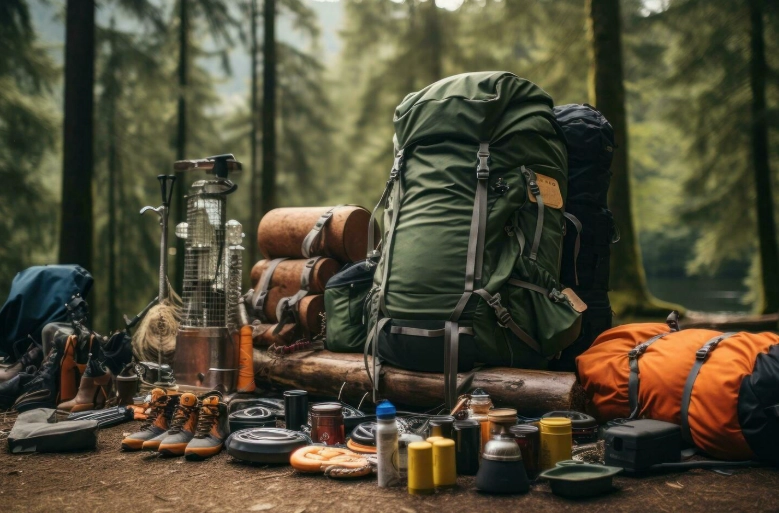
The Water System: Finding, Carrying, and Making It Safe
You can't just drink from any stream anymore. Giardia and other nasties are everywhere. Your water system solves three problems: collection, storage, and purification. This is one area where I think a lot of pre-made "survival kits" fall short—they include a few purification tablets and call it a day.
You need a robust method. My personal hierarchy for water treatment goes like this:
- Filter First: A quality pump or squeeze filter (like a Sawyer Squeeze or Katadyn BeFree) removes bacteria and protozoa. It's fast and doesn't leave a chemical taste. This is my workhorse.
- Chemicals as Backup/Second Stage: Iodine or chlorine dioxide tablets (like Aquamira) are tiny, lightweight, and kill viruses, which some filters don't. They're perfect as a backup if your filter freezes and cracks, or to treat water you've collected in a dirty container.
- Boiling as the Surefire Method: If you have fire and time, a rolling boil for 1 minute (3 minutes at high altitude) is the gold standard. It kills everything. But it requires fuel and time.
Don't forget storage. A couple of durable, BPA-free water bottles and a collapsible water bladder for camp are key. I also carry a few large, food-grade plastic bags. They're ultralight and can be used to collect rainwater or solar-still water in a real pinch.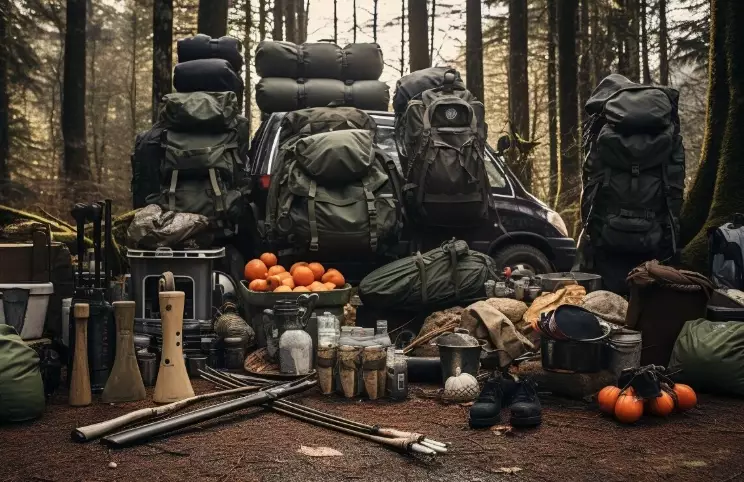
For in-depth guidance on waterborne pathogens and treatment, the Centers for Disease Control and Prevention (CDC) has excellent backcountry water treatment guidelines that are worth reviewing.
The Fire System: More Than Just Matches
Fire is a morale booster, a signal, a water purifier, and a source of warmth. Relying on a single Bic lighter is a gamble. What if it gets wet or runs out of fluid? Your fire kit should be redundant and weather-resistant.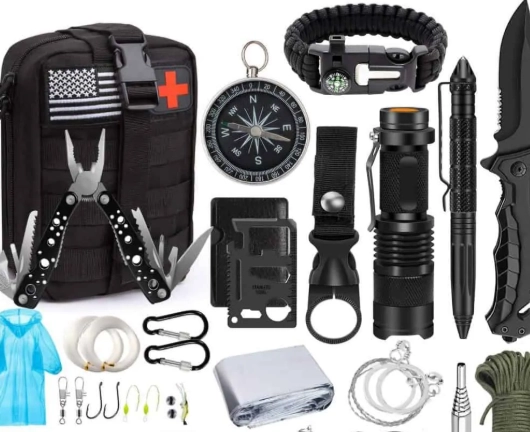
Here's what's in my fire tin:
- Primary: Two Bic lighters (store one separately in a zip-lock bag).
- Secondary: A ferrocerium rod (ferro rod) and striker. These things spark even when soaking wet and work at any altitude. They take practice, but they're utterly reliable.
- Tertiary: Waterproof matches in a sealed case.
- Tinder: Commercial tinder cubes (like WetFire) or DIY cotton balls soaked in petroleum jelly. Dry tinder is the missing link in most failed fire attempts.
A small, fixed-blade knife or a sturdy knife on your multi-tool is essential for processing wood—shaving feather sticks, splitting kindling. Trying to light a thick log with a match is a fool's errand.
The Food & Nutrition System: Fuel for Body and Mind
We're talking survival here, not gourmet. Your food should be calorie-dense, non-perishable, and require minimal preparation. Forget about cans—they're too heavy.
My survival food stash includes:
- Energy bars and nut butter packets.
- Dehydrated meals (just add boiling water).
- Trail mix with nuts, seeds, and dried fruit.
- Hard cheeses and jerky for shorter trips.
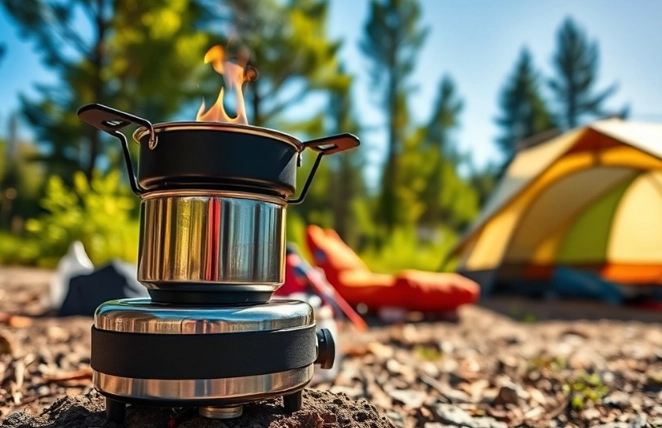
A small, simple cookset is part of this. A single pot with a lid and a spork is enough to boil water for purification and rehydrate meals. An alcohol stove or a small canister stove is efficient for this purpose. Is a stove survival gear? In cold, wet conditions where finding dry tinder is impossible, the ability to reliably boil water for warmth and hydration absolutely makes it so.
And hey, a little luxury goes a long way for morale. I always pack a few packets of instant coffee or hot cocoa. A warm drink on a cold morning can reset your whole outlook.
The Tool & Utility System: Your Mechanical Advantage
This is where the "survival" part of survival camping equipment often gets over-commercialized. You don't need a $300 tactical shovel. You need a few versatile, durable tools.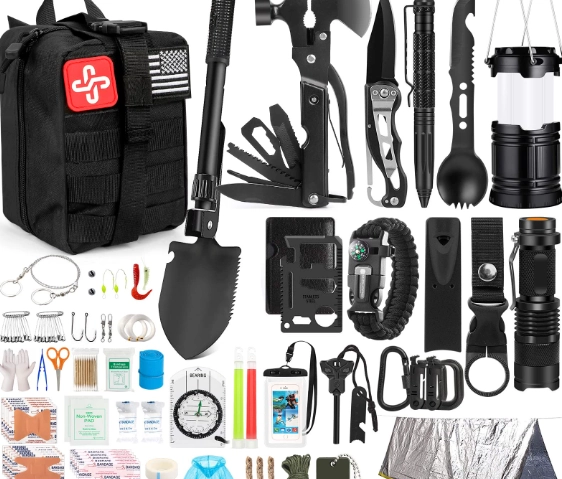
A Good Knife: This is your most important tool. A fixed-blade knife with a full tang (the metal runs the whole length of the handle) is superior for heavy tasks like batoning wood to get to dry kindling inside a wet log. A folding knife is fine for lighter duty, but don't trust it for survival tasks.
A Multi-Tool: The pliers, screwdrivers, and can opener on a quality multi-tool like a Leatherman or Victorinox are endlessly useful for gear repair, food prep, and a hundred little tasks.
Cordage: At least 50 feet of 550 paracord. It's for building shelters, securing gear, making repairs, replacing broken shoelaces. Its inner strands can be used for fishing line or sewing thread.
Illumination: A headlamp (with red-light mode to preserve night vision) and extra batteries. Always. A small backup flashlight is smart too. Trying to set up camp or tend to a task in the dark is frustrating and dangerous.
Repair Kit: Duct tape (wrapped around a water bottle or trekking pole), a few safety pins, a needle and strong thread, and a small tube of super glue. Gear fails. Being able to MacGyver a fix is a real survival skill.
The First Aid & Health System: Prepared for the Inevitable
You will get blisters. You might get a cut. A pre-assembled first-aid kit is good, but you need to know what's in it and how to use it. A kit you've built yourself is always better.
My kit focuses on trauma and common backcountry issues:
| Category | Items | Why It's There |
|---|---|---|
| Wound Care | Various adhesive bandages, gauze pads, roll of gauze, medical tape, antiseptic wipes, antibiotic ointment | Clean and protect cuts, scrapes, and blisters to prevent infection. |
| Blisters | Moleskin or specialized blister pads (like Compeed) | Blisters can stop a hike in its tracks. These provide relief and protection. |
| Medications | Ibuprofen (pain, inflammation), Antihistamine (allergies), Anti-diarrheal, Personal prescriptions | Manage pain, allergic reactions, and stomach issues that can dehydrate you. |
| Tools & Extras | Tweezers, safety pins, small scissors, nitrile gloves, emergency whistle, CPR face shield | Tick removal, cutting tape/bandages, hygiene, signaling for help. |
Knowledge is the most important tool here. Consider taking a wilderness first aid course. It changes how you see risks and responses out there. For official first aid protocols, resources from organizations like the American Red Cross are foundational.
The Navigation & Signaling System: Don't Get Lost, Get Found
Even on a familiar trail, things look different in fog, rain, or darkness. Your navigation system prevents a mishap from becoming an ordeal.
The Non-Negotiables:
- A detailed physical map of the area in a waterproof case.
- A baseplate compass (and knowing how to use them together).
GPS devices and phone apps (like Gaia GPS or OnX) are fantastic—I use them all the time. But electronics fail. Batteries die. Phones break or get wet. Your map and compass don't need a signal or a charge. The U.S. Forest Service emphasizes the importance of carrying physical maps, especially in areas with poor cell reception.
Signaling is how you call for help if prevention fails. A loud whistle (pea-less so it works when wet) carries farther than your voice and takes less energy. A small signal mirror can flash sunlight for miles. The LED strobe function on your headlamp is a great night signal. Keep these items accessible, not buried in your pack.
Putting It All Together: Your Personal Survival Pack
Now, how do you carry this survival camping equipment? It depends. For a day hike, you might have a lightweight "daypack" version. For a multi-day backpacking trip, these items are integrated into your full pack. For a dedicated "get home bag" or vehicle kit, they might live in a dedicated backpack in your car.
The key is that these systems are modular and adaptable. You don't need three different versions of everything. You need to know what your core essentials are and make sure they're with you based on the trip's risk level.
Let's tackle some common questions that pop up when people are choosing their survival camping equipment.
Survival Camping Equipment: Your Questions Answered
What's the one piece of survival gear I shouldn't skimp on?
Your knife. A cheap knife will fail when you need it most—the blade might snap, the handle might break. It's a tool, not a toy. Invest in a quality, full-tang fixed blade from a reputable outdoor brand. It's a lifetime purchase.
Is a satellite messenger (like a Garmin inReach or SPOT) worth it?
Absolutely, especially for solo travel or trips in extremely remote areas. It's the single biggest technological advancement for backcountry safety in decades. It allows two-way texting and SOS signaling from anywhere on the planet. It's not a replacement for skills and the right gear, but it's a powerful safety net. I rent one for big solo trips and it gives my family (and me) huge peace of mind.
How often should I check and update my survival gear?
At least once a season, and before any major trip. Check expiration dates on medications, water filters, and chemical treatments. Test your fire starters. Replace used or worn items. Rotate food stocks. An outdated first-aid kit or a filter past its prime is just dead weight.
Survival knife vs. multi-tool: which is better?
This is a classic debate. My take? You ideally want both for a complete kit. If I had to choose one for a survival scenario, I'd take the robust fixed-blade knife. It's better for processing wood, which is critical for fire and shelter. The multi-tool is a fantastic supplement for its versatility, but its small knife blade and pliers aren't suited for heavy survival tasks.
What's a common mistake people make with their survival kits?
They buy a pre-made kit, throw it in their pack or car, and forget about it. They never open it, never learn what's inside or how to use it, and never customize it for their personal needs and environment. A kit is useless if you don't have the knowledge that goes with it. Building your own, even if you start with a pre-made core, is always the better path.
So get your systems in order. Think in layers. Prioritize shelter, water, and fire. Build redundancy. And then get out there and enjoy the wild places, knowing you're prepared for the unexpected turns that are just part of the adventure.